
When pursuing assisted reproductive technology in Georgia, what key legal, medical, and financial risks require thorough scrutiny? This article analyzes the eligibility criteria for surrogacy, agency qualifications, screening of egg donors and surrogate mothers, embryo traceability, contract payment terms, cost breakdowns, as well as birth registration and repatriation procedures. It aims to help intended parents establish a comprehensive decision-making framework for cross-border assisted reproduction.
Read allI. First, clarify Georgia’s legal boundaries: it is not that there are no rules, but rather that the rules are scattered
To determine whether Georgia is suitable for assisted reproductive technology, the first step is not to ask intermediaries "whether it can be done," but rather to confirm what is permitted under current law, what conditions apply, and how the relevant registration procedures are implemented.
1. What are the current legal provisions in Georgia regarding assisted reproductive technologies?
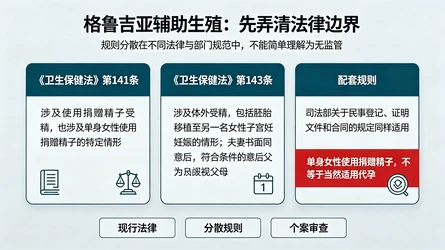
Articles 141 and 143 of Georgia’s Healthcare Law address different assisted reproductive scenarios, respectively:
Article 141 addresses fertilization using donated sperm and, in circumstances that comply with the provisions of this article, also covers the use of donated sperm by single women.
Article 143 concerns in vitro fertilization, including cases where embryos formed are implanted into the uterus of another woman for pregnancy due to the absence of a uterus in the female.
Article 143 stipulates that written consent from both spouses is required in the relevant circumstances; after the child’s birth, spouses who meet the requirements of this article are recognized as the parents, and neither the donor nor the surrogate mother can be deemed to be the child’s parent on that basis.
Here is a point that can easily cause confusion:
The regulations permitting single women to use donated sperm do not imply that single women are automatically entitled to have children through surrogacy.
The two involve different legal provisions and conditions of application, so the scope of Article 143 cannot be inferred from Article 141.
Additionally, Article 143 is not a comprehensive surrogacy-specific law. In practice, it also involves complementary regulations issued by the Ministry of Justice concerning civil registration, documentation for assisted reproductive technologies, and related contracts.
Therefore, a more accurate statement is: Georgia has laws and accompanying regulations related to assisted reproductive technology, but the specific provisions are dispersed across different laws and departmental norms, so it cannot be simply interpreted as "lacking legal regulation."
2. Who is eligible for surrogacy in Georgia?
In addition to the Healthcare Law, attention must also be paid to relevant amendments to the civil registration rules issued by the Ministry of Justice of Georgia.
According to the 2020 amendment by the Ministry of Justice to Order No. 18, intended parents in surrogacy agreements are couples composed of a man and a woman, applicable under the following circumstances:
Married for at least one year;
or having been in a de facto cohabitation relationship for at least one year prior, and providing the corresponding public documents as proof in accordance with the regulations.
Therefore, it cannot be broadly stated that "only married couples who have registered their marriage are eligible for surrogacy," as the supporting regulations also encompass de facto cohabitation relationships that meet specific conditions.
However, this provision should not be interpreted expansively to mean that all applicants may enter into surrogacy arrangements through contractual agreements. In cases involving single individuals or same-sex couples, eligibility under current surrogacy contracts and registration requirements should not be determined solely on the basis of verbal assurances from intermediaries.
Before signing the contract, a qualified Georgian attorney must provide a written opinion on the applicant’s actual marital or cohabitation status.
Key verification:
Whether the applicant falls within the scope of eligible entities as defined by the relevant rules;
What proof is required for marriage or cohabitation relationships?
Whether the supporting documents require notarization, authentication, or translation;
Whether the time conditions are met at the time of contract signing;
Whether it is necessary to resubmit materials for embryo establishment, transplantation, and birth registration.
Do not wait until the embryo has been established or the surrogate mother is already pregnant to discover that the applicant entity or documentation requirements do not meet the necessary criteria.
3. Is Georgia's surrogacy policy likely to change?
On June 14, 2023, the Government of Georgia submitted to Parliament a draft Medical Assisted Reproduction Law and accompanying legislative amendments, which further regulate assisted reproductive activities.
As of June 2026, the official records of the Georgian Parliament still show that a request had been submitted to extend the review period for the bill by 90 days. This article does not consider the draft to be an enacted law.
This means that the proposed restrictions cannot be directly codified as current prohibitions, nor can the mere existence of existing provisions be taken to imply that future policies will remain unchanged.
Key considerations in actual decision-making:
Do not judge policies solely based on intermediary promotional pages;
One cannot look solely at the legal status on the day of signing;
It is necessary to confirm the rules applicable at each stage: embryo establishment, transplantation, pregnancy, and birth registration.
If the law changes during the project, the contract should clearly specify how it handles embryos that have already been formed, costs that have already been incurred, and medical procedures that have already been initiated.
It is recommended to include policy change clauses in the contract and have local counsel clarify which changes may lead to project suspension, termination, or the need to re-perform compliance procedures.
II. First, verify the four parties: the contracting party, the payee, the healthcare provider, and the actual service provider
Cross-Border Assisted Reproductive TechnologyOne of the most common structural issues is having only a single "service brand" externally, while actually involving multiple distinct entities.
For example:
Company A is responsible for signing the contract.
Company B is responsible for collecting payments;
Clinic C is responsible for egg retrieval, embryo culture, and transfer.
Team D is responsible for searchingEgg donationthe individual or the mother;
Agency E is responsible for prenatal care and delivery arrangements.
These entities may be separately registered and operated, or managed by different teams.
In the event of medical disputes, misappropriation of funds, withdrawal by surrogate mothers, or failure in document processing, consumers may face not a single entity but multiple responsible parties shifting blame among themselves.
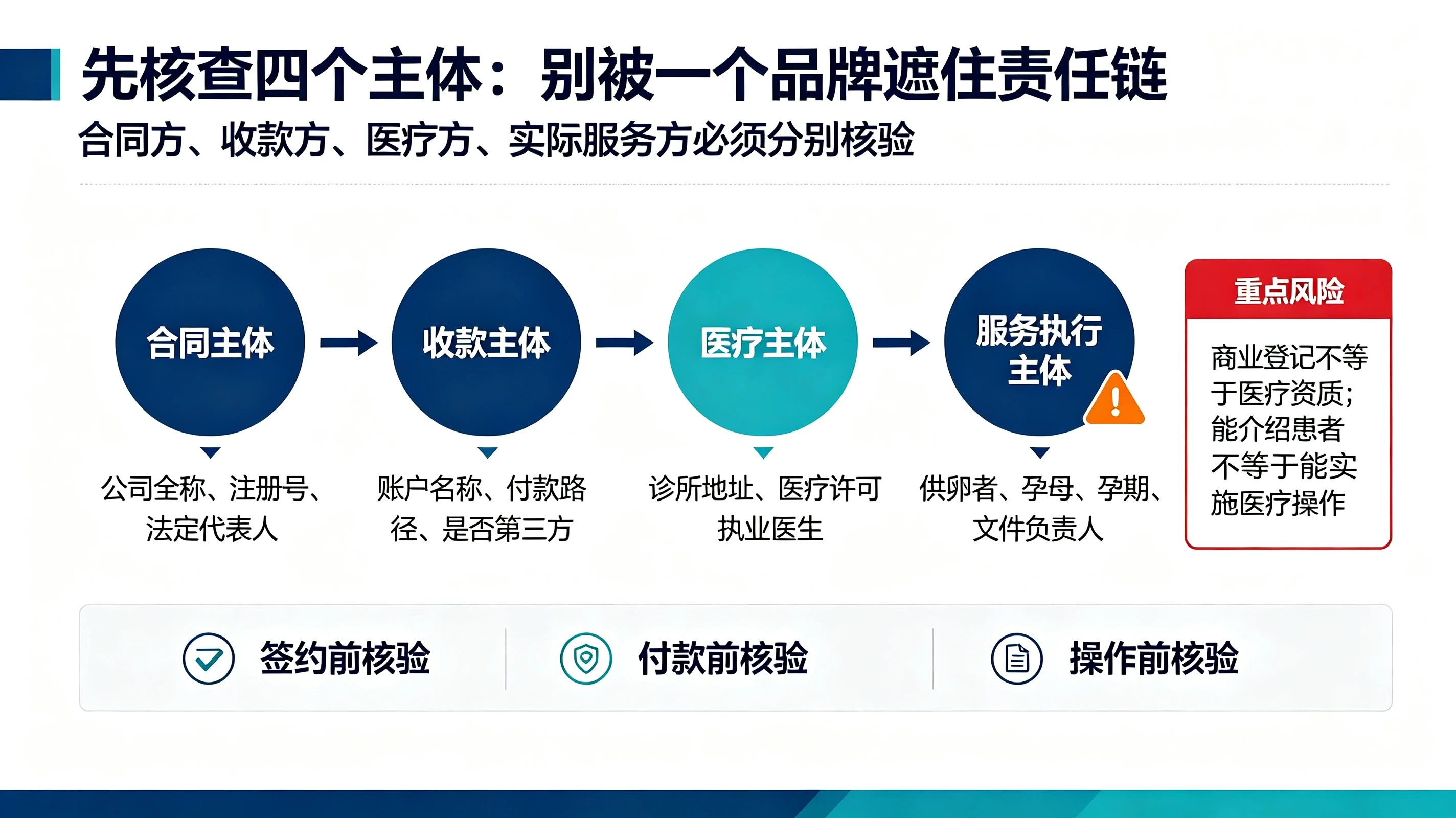
1. It is mandatory to verify that the four entities are consistent.
Subject of Verification | Items to be confirmed | Key Risks |
|---|---|---|
Contracting Parties | Full company name, registration number, registered address, and legal representative | Whether the contracting entity actually exists |
Payee | Bank account name, account holder, payment path | Whether to make payments to unrelated individuals or third parties |
Healthcare providers | Clinic name, address, medical license, or relevant authorization | Whether the operation is performed by an actual medical institution |
Service Execution Entity | Actual person in charge of egg donation, surrogate management, pregnancy services, and document processing | Is anyone held accountable when problems occur? |
Pay particular attention to:
Company registration does not equate to obtaining assisted reproductive medical qualifications; being able to refer patients does not equate to being authorized to perform medical procedures.
Commercial registration information from the Georgian National Agency of Public Registry can be used to verify whether a company is registered, its basic details, and certain registered matters; however, commercial registration alone cannot prove that the company is qualified to conduct specific medical activities.
2. Do not mistake business registration for a medical license
It is recommended to verify each separately:
Whether the enterprise is genuinely registered and currently in normal status;
Whether the medical institution has the necessary licenses, authorizations, or registrations to conduct the corresponding medical activities;
Whether the attending physician possesses independent practice qualifications recognized under Georgian law;
Embryology Laboratorywhether it is indeed operated by the institution;
Whether egg retrieval, embryo culture, freezing, and transfer are performed at the address specified in the contract;
If outsourcing exists, are the outsourcing agency and its scope of responsibilities clearly defined?
If the other party provides only business registration documents, brochures, awards, or membership certificates but fails to provide information on actual medical institutions and licensed physicians, this should not be considered as having completed the qualification verification.
3. When the four subjects are inconsistent, further inquiry is required.
The following situations are particularly worth being wary of:
The contract is signed by an overseas company, but the fees are required to be transferred into a personal account;
The contract specifies one hospital, but the actual examination is arranged at a different institution.
The intermediary promised that a specific doctor would be responsible, but it cannot be confirmed whether the doctor actually participated;
The clinic does not provide medical records directly to patients; it only allows intermediaries to relay the information.
The service provider cannot explain who is responsible for surrogacy management, prenatal checkups, and delivery.
Entity separation does not necessarily imply illegality, but it must be supported by clear contractual relationships, authorization arrangements, payment justifications, and allocation of responsibilities.
III. How to Choose a Medical Institution: Don’t Just Focus on Success Rates and Technical Jargon
The outcomes of assisted reproductive technology are influenced by age, ovarian reserve,Sperm qualityIt is influenced by multiple factors, including embryo quality, uterine conditions, laboratory standards, and treatment protocols.
Without a clearly defined statistical methodology, the "success rate" cited in institutional marketing is virtually useless for actual comparisons.
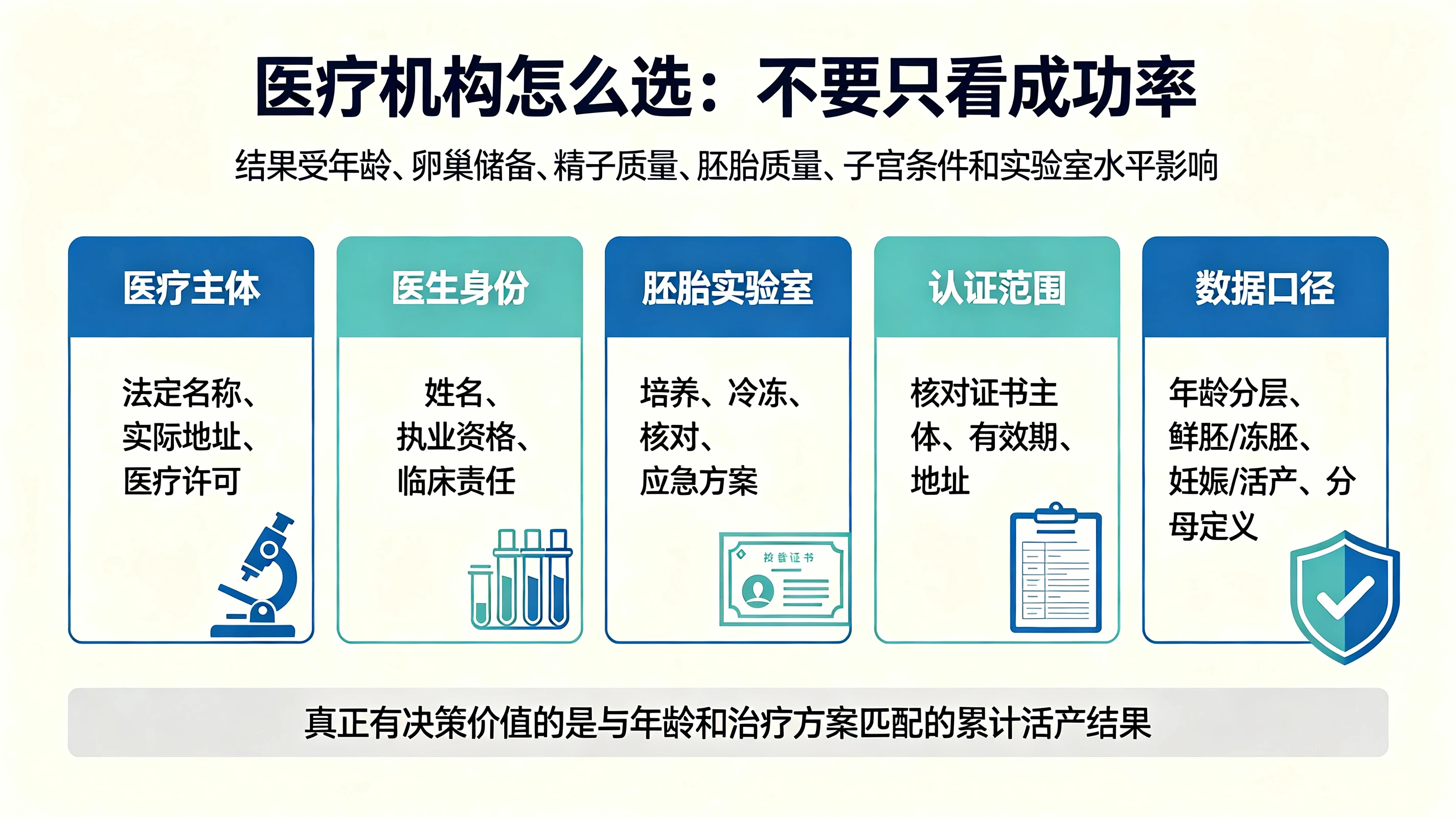
1. Five Key Areas for Inspecting Medical Institutions
First, verify the medical entity.
Provide the institution's legal name, physical address, and medical license or relevant authorization documents, and verify them through the competent Georgian authorities or official registration channels.
Second, verify the doctor's identity.
Confirm the attending physician's name, professional background, medical license, actual involvement in care, and who assumes clinical responsibility in the event of a medical issue.
Third, verify the embryo laboratory.
Key questions:
Whether embryo culture is performed by the laboratory of this hospital;
Is there an independent director of the embryo laboratory?
Whether a system for verifying the identities of samples and embryos has been established;
Whether to use barcodes, double-checking by two personnel, or other identity verification mechanisms;
Embryo cryopreservationhow to record thawing, transfer, and destruction
Is there an emergency plan in place for equipment failures or power outages in the laboratory?
Fourth, verify the specific scope of the laboratory accreditation.
ISO 15189 primarily concerns the quality and competence of medical laboratories and cannot be directly equated with the overall medical qualifications of assisted reproductive centers.
Membership in ESHRE, participation in professional conferences, or involvement in academic activities cannot directly prove that a clinic has obtained any medical quality certification.
If an institution claims to hold CAP, ISO, or other certifications, you should verify the certificate holder, validity period, scope of certification, and the actual laboratory address covered, rather than relying solely on promotional images.
Fifth, verify the data definitions of medical outcomes.
Request for institutional clarification:
Statistical year;
Patient age stratification;
Use of one’s own eggs or donor eggs;
Should fresh embryos be used orFrozen Embryo Transfer;
whether biochemical pregnancies, clinical pregnancies, or live births are counted;
Is the denominator per transplant cycle, per egg retrieval cycle, or per patient?
Whether to include patients with cancellation cycles and those who failed to produce transferable embryos.
The truly decision-relevant metric is the cumulative live birth rate tailored to your age and treatment plan, not a high success rate figure lacking a denominator or clear statistical definition.
2. Do not pay for technical terms
PGT-A/ICSITechniques such as time-lapse imaging and assisted embryo hatching do not mean that every patient needs to use them.
Doctor's explanation required:
Why the use of this technology is recommended;
Applicable to which types of patients;
What problems are expected to be solved;
Is there clear evidence of clinical benefit;
whether it will increase costs or affect embryo manipulation;
Are there reasonable alternatives when not in use?
For example, PGT-A does not guarantee a healthy live birth and cannot be simply equated with an increased cumulative live birth rate for all patients. The decision to use it should be based on age, embryo status, previous treatment history, and physician assessment.
IV. Screening of Egg Donors and Gestational Surrogates: Verification Goes Beyond Age and Medical Examination Reports
The egg donor and the gestational carrier are two entirely distinct roles in the assisted reproductive process, with different screening priorities.
Egg donors require a thorough assessment of ovarian reserve, genetic risks, and infectious disease risks; gestational carriers require a comprehensive evaluation of their capacity for pregnancy, obstetric history, physical health status, and psychosocial factors.
The two must not be conflated, and a single medical examination report cannot be used to prove that all risks have been eliminated.
1. What do egg donors need to be screened for?
Recommended areas of focus:
Age and identity information;
Personal and family history of genetic diseases;
Infectious Disease Screening Results;
Ovarian reserve assessment;
Ultrasound examination and antral follicle count;
Previous records of ovarian stimulation and oocyte retrieval;
relevant psychological counseling and informed consent documents;
Does the egg donor understand the egg retrieval process, potential risks, and personal rights?
The American Society for Reproductive Medicine (ASRM) 2024 guidelines on gamete and embryo donation recommend that egg donors typically be evaluated within the age range of 21 to 34 years and undergo medical, genetic, infectious disease, and psychosocial screening.
This recommendation constitutes professional clinical guidance and is not a uniform age standard mandated by Georgian law.
Additionally, one cannot conclude that egg quality is necessarily excellent solely based on the youth of the egg donor. A comprehensive assessment must consider age, ovarian reserve, prior response to treatment, and genetic risks.
2. What needs to be verified for the pregnant mother?
Prenatal screening should not be based solely on whether a woman has previously given birth.
At least the following should be noted:
Age and obstetric history
Previous mode of delivery and obstetric complications;
Uterine and reproductive system assessment;
Chronic diseases and current medications
Infectious disease screening
Psychological Assessment
whether there are factors such as economic coercion, family control, or other involuntary elements;
Whether there is a sufficient understanding of the health risks that may occur during pregnancy, childbirth, and the postpartum period.
The 2022 Professional Practice Committee opinion by ASRM on gestational carriers recommends that the carrier should typically be between 21 and 45 years old, with priority given to individuals who have had at least one full-term pregnancy without major complications, while also conducting medical, psychological, and related risk assessments.
These are clinical recommendations from professional organizations and should not be written into mandatory legal requirements in Georgia.
3. How can we confirm that the surrogate mother's consent is truly voluntary?
This is an issue that is even easier to overlook than a medical checkup report.
The gestational carrier’s consent must be a decision made voluntarily by the individual, with full informed understanding and capacity to comprehend. A signature from an intermediary, family approval, or a standard-form contract cannot substitute for the person’s genuine intent.
Suggested requirements:
The surrogate mother is able to accept independent communication without the influence of intermediaries or intended parents;
He personally understood and signed the important contracts;
Have a clear understanding of medical risks, cost arrangements, and exit mechanisms;
access to independent legal advice or appropriate psychological support;
Be able to directly communicate physical discomfort, refuse medical interventions, or raise questions with healthcare providers.
If the service provider does not allow the surrogate to communicate independently with medical personnel, or requires her to route all questions through an intermediary, cooperation should be suspended.
It should also be noted that a surrogate’s bodily autonomy cannot be superseded by punitive clauses in the contract. While contracts should clearly define the responsibilities of all parties, they must not simply transfer the surrogate’s medical decision-making authority to the intended parents or intermediaries.
V. Embryo Identity and Laboratory Records: The most important thing is traceability, not creating an additional certificate
Cross-border assisted reproductive technology involves eggs, sperm, embryos, and various medical procedures, making sample identity management critically important.
What the patient needs to confirm is not a single individual test report, but the complete chain of identity from sample collection to embryo transfer.
1. Establish complete embryo identity records
It is recommended to require healthcare institutions to clearly provide:
Sample IDs of sperm and ova;
Records of the corresponding egg donors and sperm sources;
Fertilization date and embryo number;
Embryo Culture Records
Embryo freezing and storage records;
Embryo Thawing and Transfer Record;
PGT test report (if applicable);
Sample and embryo handover records;
Identity verification procedures and records of abnormal event handling.
Special confirmation is required: whether the number on each document corresponds to the same sample or embryo.
2. PGT reports are not equivalent to identity verification
PGT is primarily used to analyze embryo-related genetic information and cannot simply replace sample identity confirmation.
If the institution provides a PGT report, further verification should be conducted:
Who is the testing agency?
What exactly are the testing items?
How to collect and submit samples for testing
Whether the report number is consistent with the embryo number;
Assess whether the testing laboratory has the corresponding capabilities and a quality management system.
If patients wish to undergo other identity or kinship testing, qualified professionals should explain its legality, technical feasibility, sampling requirements, and privacy implications.
It is not advisable to designate a specific type of blood sample, blood card, or so-called "independent verification" as the sole mandatory method for all projects. The purposes, sample requirements, and legal conditions vary across different tests.
3. Focus on checking three types of anomalies
The embryo numbers do not correspond to the laboratory records.
The clinic refused to provide medical records that the patient has a right to access;
Intermediaries hold all the documents, and patients cannot directly verify with the laboratory.
If an institution cannot provide basic embryo traceability records, you should not continue making payments based solely on its verbal assurances.
VI. Cost Verification: Don't just ask about the total package price; inquire about when each expense occurs
Assisted Reproduction in GeorgiaThere is no official, unified package price in the market that directly applies to all patients.
Costs are influenced by factors such as the treatment protocol, egg donation arrangements, number of embryos, PGT testing, prenatal care, delivery method, and neonatal medical conditions.
Therefore, it is inappropriate to treat a fixed amount as an industry floor price, nor can one simply assert that any amount below a certain threshold necessarily constitutes fraud.
What truly needs to be compared is whether, for the same scope of medical and legal services, the quotes are comprehensive, the payment terms are clear, and additional costs are predictable.
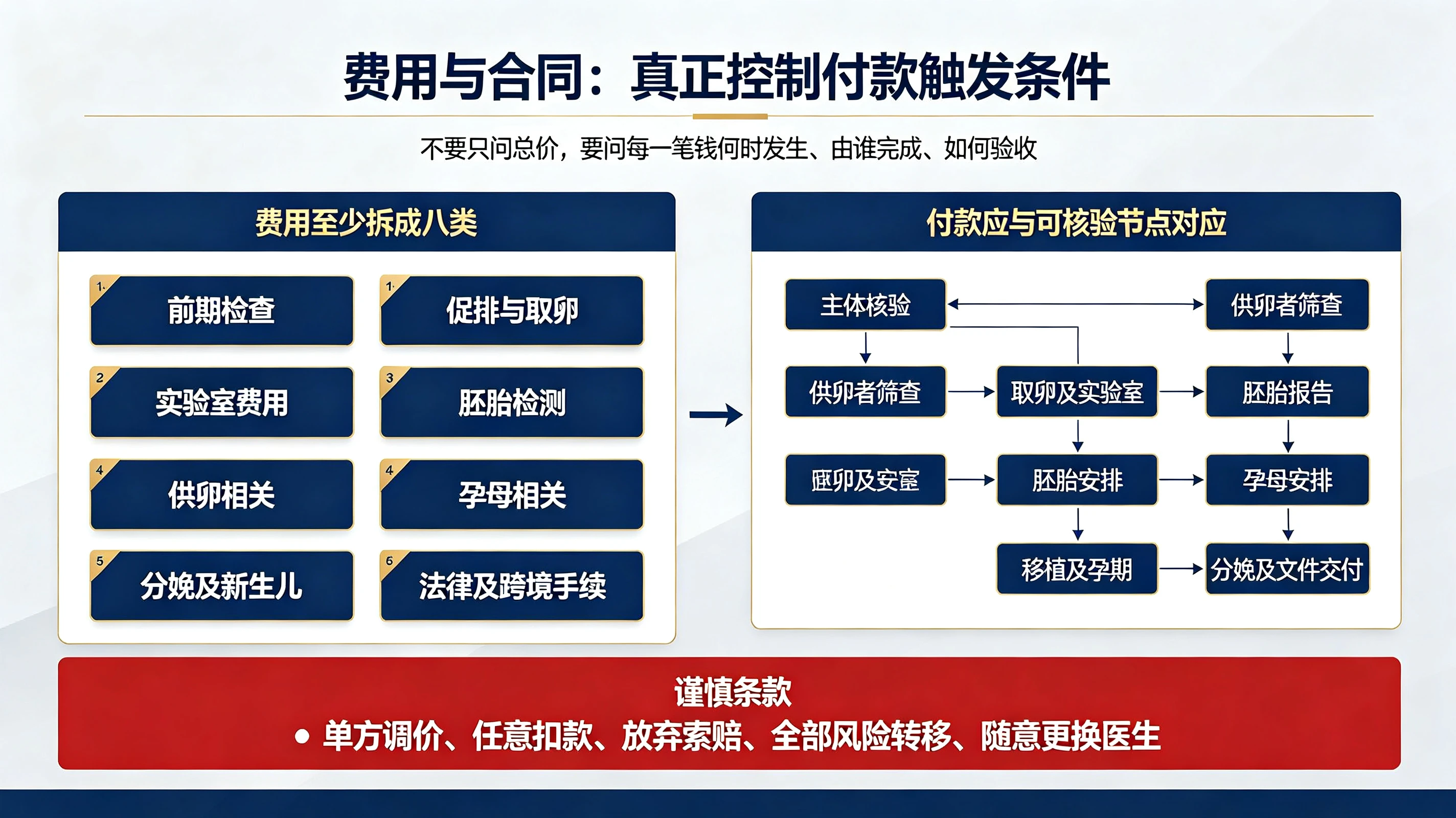
1. Costs should be broken down into at least eight categories.
Expense Category | Items to be confirmed |
|---|---|
Preliminary inspection | Costs for mutual examinations, genetic screening, infectious disease screening, and follow-up visits |
Ovarian Stimulation and Egg Retrieval | Ovulation induction medications, monitoring, anesthesia, egg retrieval surgery |
Laboratory Fees | Fertilization, ICSI, embryo culture, cryopreservation and storage |
Embryo testing | PGT testing, additional embryo testing, and report fees |
Egg donation related | Expenses related to egg donor screening, medical costs, and legal agreements |
Maternal-related | Screening of surrogate mothers, pregnancy management, contractual compensation, and medical expenses |
Childbirth and Newborn | Childbirth, Cesarean Section, Premature Birth, Neonatal Intensive Care, and Specialized Treatment |
Legal and Cross-Border Procedures | Contracts, notarization, translation, authentication, birth registration, and travel document processing |
The following issues also need to be clarified:
Does the package include more than one egg retrieval or embryo transfer?
How fees are charged when the number of embryos exceeds the agreed-upon quantity;
Are there annual fees for embryo freezing and storage?
Who bears the costs when a surrogate mother experiences pregnancy complications;
How to settle payments when premature infants or newborns require special treatment;
Is re-matching required after the gestational carrier withdraws or upon medical failure?
How to handle costs already incurred when a project is suspended due to policy changes;
Whether unused services are refunded.
2. Request a written quotation instead of chat records
A quotation suitable for decision-making should at least include:
Service Name;
Service Provider;
Unit price and quantity;
Whether taxes are included;
Payment Time;
Items not included;
Potential additional costs;
Cancellation or Refund Conditions.
If the other party provides only a total price but cannot explain which items are included, it is advisable not to sign the contract.
3. Reserve an emergency budget, but do not apply a uniform ratio
Cross-border projects may involve medical failures, additional examinations, pregnancy complications, premature births, and document delays.
Setting aside emergency funds is essential, but a fixed ratio such as 20%, 30%, or any other should not be treated as a one-size-fits-all standard for all households.
A more reasonable approach is to estimate potential expenses item by item based on the specific medical plan, insurance coverage, pregnancy risks, delivery arrangements, and neonatal care capabilities.
VII. Contract and Payment: What Really Needs to Be Controlled Is the Trigger Conditions for Payment
This is the part of the entire project that most warrants focused review.
Many consumers focus on the total price, overlooking a more critical issue: after paying, can they verify that the service has actually been completed?
From a risk management perspective, the core of a contract is not how many services are listed, but clearly defining who is responsible for each service, how acceptance is determined, and how disputes are resolved.
1. The contract shall cover at least ten categories of matters.
First, the subject and authorization.
Specify the contracting parties, medical institutions, actual service providers, payees, and the respective responsibilities of each party.
Second, the scope of services.
Clearly define who is responsible for egg donation, egg retrieval, embryo culture, embryo transfer, prenatal care, delivery, and document processing.
Third, medical decision-making.
Clearly define the scope of physicians' clinical judgment, patients' right to informed consent, pregnant women's medical autonomy, and procedures for handling emergencies.
Fourth, personnel exit.
Clearly define how costs already incurred, subsequent arrangements, and responsibilities are handled when egg donors or surrogate mothers withdraw at different stages.
Fifth, embryo disposal.
Define the procedures for storage, renewal of fees, transfer, destruction, and disposal under special circumstances for remaining embryos.
Sixth, fees and refunds.
Clearly define payment milestones, receiving accounts, fee breakdowns, refund conditions, and dispute resolution procedures.
Seventh, medical anomalies.
Clarify the responsibilities and cost arrangements for situations such as multiple pregnancies, miscarriages, preterm births, severe complications, and special neonatal care.
Eighth, policy changes.
Clarify how to suspend, terminate, settle, and handle embryos already formed when changes in laws or administrative regulations render the project unable to continue.
Ninth, files and data.
Clarify which medical records, laboratory records, and contractual documents patients are entitled to access, as well as how personal information is stored, used, and transferred across borders.
Tenth, dispute resolution.
Clearly specify the applicable law, venue for dispute resolution, jurisdictional method, address for service of notices, and requirements for evidence preservation.
2. Payments should correspond to verifiable service milestones
It is recommended to avoid paying the full fee upfront at the initial stage of the project.
You can require that payments be tied to specific service stages, for example:
Complete the entity verification and contract signing;
Complete donor screening and confirmation
Complete oocyte retrieval and laboratory procedures;
Complete embryo culture and related reports;
Complete surrogate screening and contractual arrangements;
Complete embryo transfer and prenatal management milestones;
Complete the delivery and the agreed-upon document handover.
Each payment milestone should have corresponding supporting documents, receipts, and payment vouchers.
If third-party escrow or supervised accounts are involved, their legal nature, the entity controlling the funds, release conditions, and bankruptcy remoteness arrangements should first be verified. The mere use of terms such as "escrow" or "supervised" by the counterparty does not imply that the funds are adequately protected.
3. Exercise extreme caution if the following contract terms appear
The institution may unilaterally adjust prices;
The institution may withhold all paid amounts without providing a reason;
In the event of a dispute, patients must waive their right to claim compensation.
All medical risks are borne by the patient;
All medical decisions for the surrogate mother must be approved by the intended parents.
Institutions may freely change healthcare facilities or physicians;
Patients do not have the right to directly obtain their medical records;
The institution shall not assume responsibility for fund management or disbursement.
All losses are borne by the patient following policy changes.
These clauses do not necessarily mean they are invalid, but they may result in a serious imbalance of rights; therefore, they should be reviewed by an independent lawyer before signing.
VIII. Warnings from Real Cases: The Existence of a Company and a Contract Does Not Guarantee Fund Security
The officially disclosed cases in Georgia provide consumers with a very specific sample of risks.
1. Kinderly Georgia Case: Risks in the Management of Intermediary Funds
The Georgian Prosecution Office announced on June 30, 2026, that the founders of Kinderly Georgia LLC were each sentenced to 10 years in prison.
The official announcement stated that the court found relevant individuals had used their positions to jointly embezzle a substantial sum of funds, amounting to over 2,060,006.5 Georgian lari, involving intended parents and surrogate mothers. The case pertains to assisted reproductive technology intermediary services, with the related company having signed contracts with intended parents and committed to arranging surrogacy and assisted reproduction services.
It is necessary to accurately distinguish the nature of the cases:
The official notice confirms criminal convictions related to embezzlement of funds, not a determination that the case constitutes human trafficking.
What truly deserves attention in this case is that a company may have legitimate registrations, genuine contracts, and actual service operations, yet still face significant issues with cash management.
Therefore, consumers should not only verify whether a company exists, but also check:
Into whose account the money goes;
Who actually controls the money;
Whether the compensation for the surrogate mother and medical expenses are accounted for separately;
Are there any payment vouchers and detailed expense breakdowns?
Whether the intermediary can arbitrarily divert project funds;
Whether there are enforceable refund and recovery arrangements in the event of default.
2. 2025 Thailand Survey on Women: Personnel Rights Should Not Rely Solely on Contracts
The Georgian Ministry of Internal Affairs issued a notice on February 6, 2025, stating that the police, based onBangkokThe investigation was initiated based on information provided by Interpol, with legal grounds under the human trafficking provisions of Georgian criminal law.
The report noted that police questioned nearly 70 foreign nationals, three of whom were Thai women who stated they did not wish to continue serving as surrogates or remain at their original residences. Police subsequently transferred them to victim shelter facilities.
It should be emphasized that at the time of the notice’s release, the case was still under investigation, and it cannot be directly concluded on this basis that all relevant individuals or institutions have committed crimes.
But this incident reminds consumers that the recruitment, accommodation, transportation, medical care, and compensation arrangements for egg donors and surrogates should be subject to independent verification.
If a project exhibits any of the following situations, heightened vigilance should be immediately exercised:
The personnel’s passport or personal identification documents have been held under the long-term control of others;
Unable to freely leave one's residence;
The job promised during recruitment is inconsistent with the actual assignment.
The medical procedure is inconsistent with the content of the patient's informed consent;
Unable to directly contact medical institutions;
Remuneration and fees are withheld by a third party;
A person is still subjected to threats or coercion after refusing.
These issues should not be treated as ordinary contract disputes, but rather prioritize the personal safety and autonomy of the parties involved.
9. Registration and Return Home After the Child’s Birth: A Birth Certificate Does Not Mean All Procedures Are Automatically Completed
One of the most frequently underestimated aspects of cross-border assisted reproduction is the legal documentation required after the child's birth.
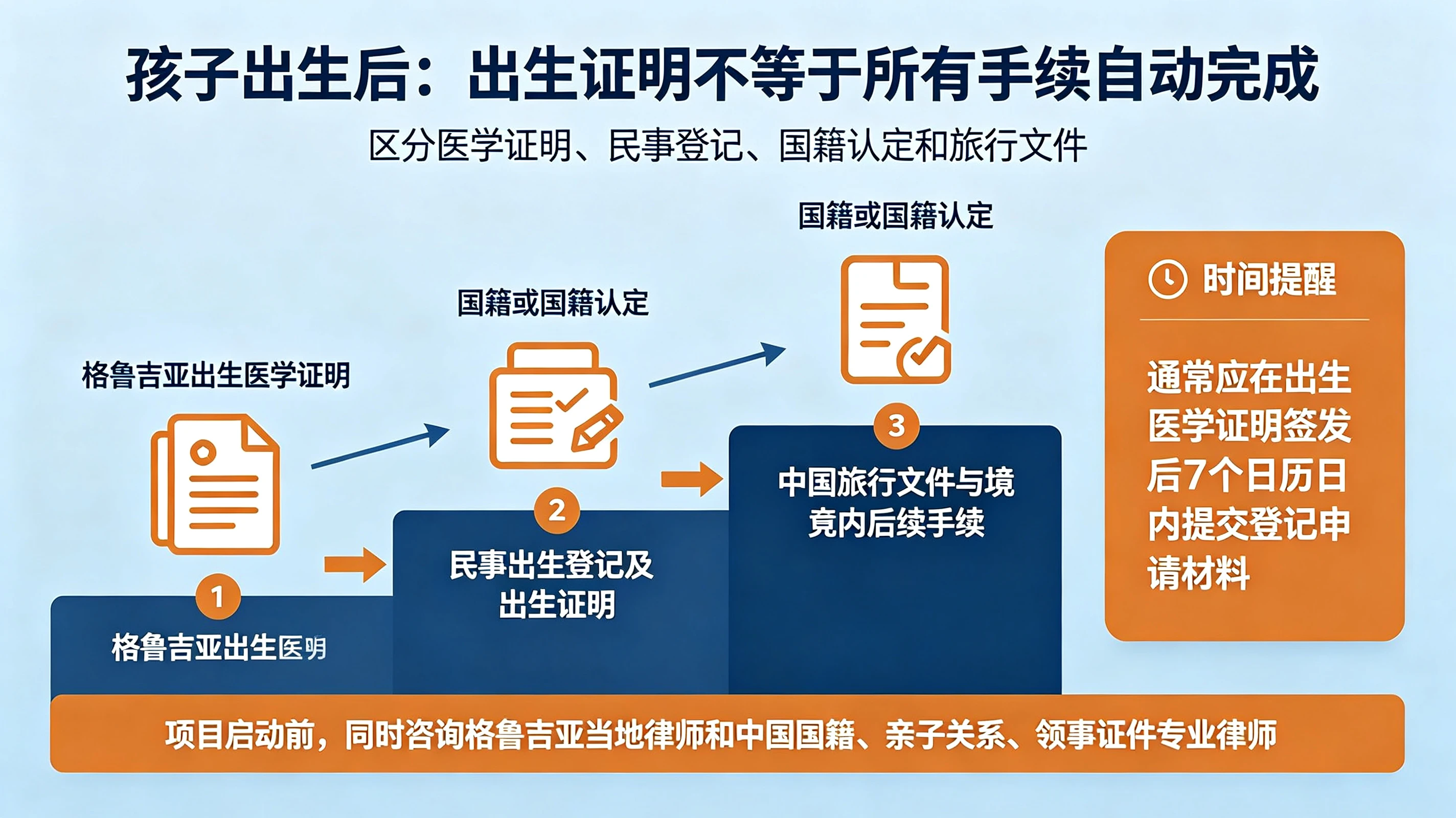
Four distinct matters need to be clearly differentiated:
Georgian birth medical certificate;
Civil birth registration and birth certificates in Georgia;
The child's nationality or determination of nationality;
Required for returning to one's home countryTravel Documentand subsequent procedures within China.
These four stages are interconnected but not identical.
1. The timing of contract signing is very important
The Georgian Ministry of Justice’s implementing regulations on civil registration cover assisted reproductive technology contracts and related supporting documents.
Under general rules, surrogacy agreements must be signed before the embryo is established and comply with prescribed formal requirements; for embryos that have already been cryopreserved, specific exceptions apply under ancillary regulations, requiring determination based on the timing of embryo establishment and the relevant provisions.
Therefore, it cannot be simply assumed that the registration issue can be resolved by signing a supplementary contract after the child is born.
A local lawyer should verify the following before signing:
Does the contract need to be notarized?
Whether the contract signing time meets the requirements;
Whether the embryo falls under the special category of a cryopreserved embryo;
Whether a specific certificate issued by a medical institution is required;
Whether the applicant's identity and proof of relationship are complete.
2. Birth registration has specific time requirements
The ancillary rules on birth registration for assisted reproduction issued by the Ministry of Justice of Georgia stipulate that the relevant registration materials must be submitted within the prescribed period after the medical institution issues a birth certificate.
In accordance with the relevant rules, application materials are typically required to be submitted within seven calendar days after the issuance of the Medical Birth Certificate.
If the deadline is missed, it may result in the intended parents’ information not being directly recorded in the birth registration as expected, requiring subsequent processing in accordance with applicable rules.
Therefore, it is recommended to complete this before the due date:
Verification of contracts and notarized documents;
Proof of identity for prospective parents
Proof of marriage or cohabitation;
Certificate of Assisted Reproductive Technology from a Medical Institution
Translation and necessary certification procedures;
Preparation of application materials for birth registration.
Do not wait until after the child is born to start looking for lawyers, translators, and processing personnel.
3. Georgian birth registration does not automatically entitle one to Chinese travel documents.
The regulations governing assisted reproductive technology and surrogacy within China are not part of the same legal framework as Georgia's local birth registration system.
Article 3 of the Measures for the Administration of Human Assisted Reproductive Technology issued by China’s National Health Commission explicitly stipulates that medical institutions and healthcare personnel shall not implement any form of surrogacy technology.
Meanwhile, Article 153 of China's Civil Code addresses the validity of civil legal acts that violate public order and good morals. SpecificallyCross-border surrogacyThe legal validity of the contract, determination of parent-child relationships, and processing of nationality and travel documents shall still be assessed separately based on the actual facts, applicable laws, and requirements of the competent authorities.
Therefore, it cannot be simply inferred that:
A Georgian birth certificate can be directly used for household registration in China.
The parental identity recognized by Georgia shall be directly accepted by all competent authorities in China;
A child can obtain Chinese travel documents immediately after birth.
All cross-border surrogacy contracts are either automatically valid or automatically invalid in China.
It is recommended that, prior to the commencement of the project, you consult both a local Georgian lawyer and a professional lawyer specializing in Chinese nationality, parent-child relationships, and consular authentication affairs.
In particular, confirm in advance: if disputes arise regarding birth registration, proof of parentage, or travel document applications, who will be responsible for the child's local residency, medical care, and guardianship.
10. How to preserve evidence and minimize losses after a dispute arises?
One of the greatest challenges in cross-border disputes is that parties are often located in different countries, with contracting entities, paying entities, and service providers potentially dispersed.
Therefore, evidence management should begin at the start of the project, rather than being retroactively addressed after a dispute arises.
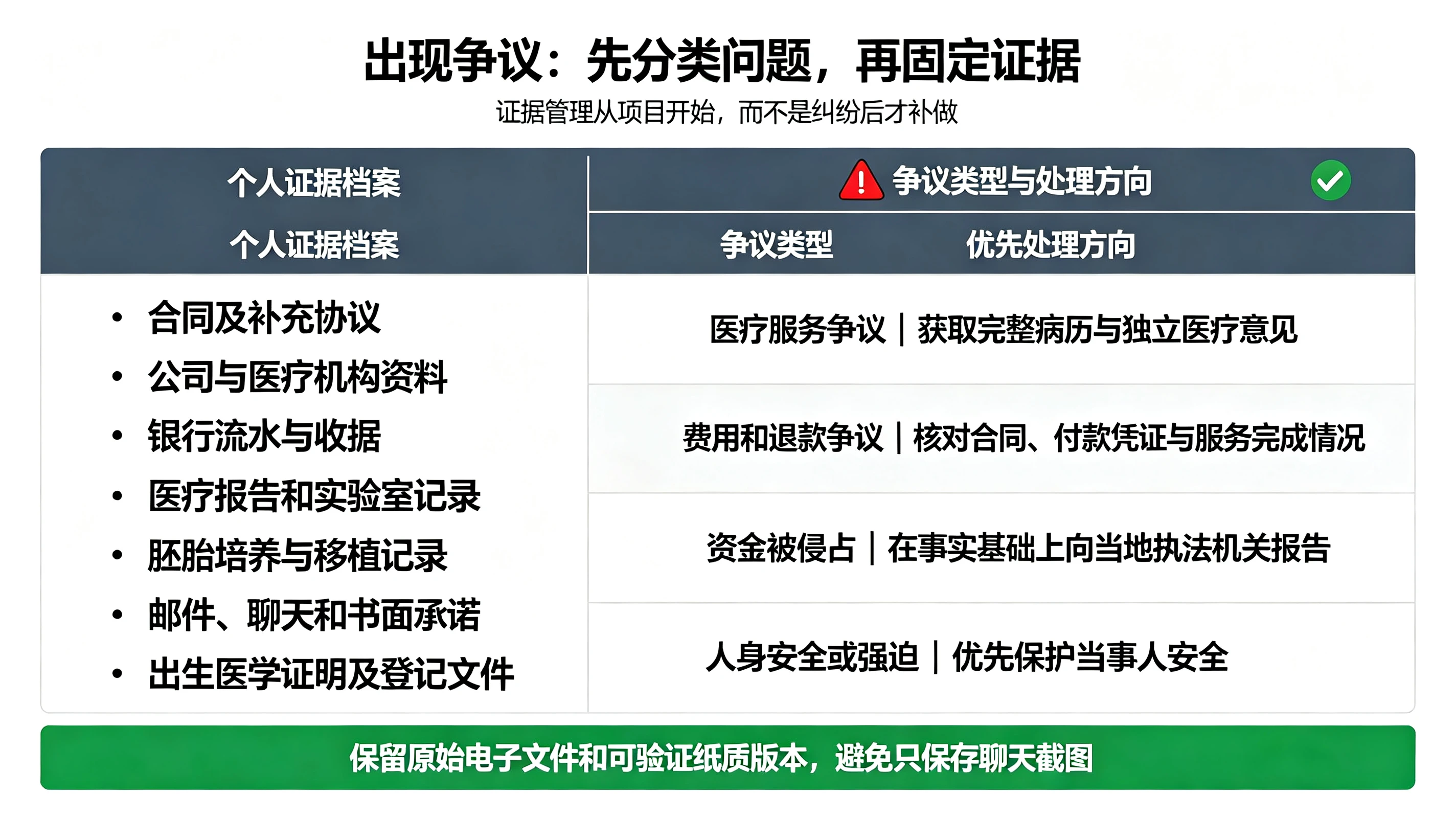
1. Build a personal evidence file
Suggested to be retained:
All contracts and supplementary agreements;
Company registration information and medical institution data;
Bank statements for each payment;
Receipts, invoices, and expense statements;
Screening documents for egg donors and surrogates;
Medical reports and laboratory records;
Records of embryo culture, freezing, thawing, and transfer;
Important emails, chat records, and written commitments;
Refund request and the other party's reply;
Birth Medical Certificate and Registration Documents.
Important materials should be retained in their original electronic files and verifiable paper versions, avoiding reliance solely on chat screenshots.
2. When a dispute arises, first determine which category the issue falls under
Dispute Type | Priority Handling Direction |
|---|---|
Medical Service Disputes | Obtain the complete medical records and seek an independent medical opinion |
Fee and Refund Disputes | Verify contracts, payment vouchers, and service completion status |
Broker's breach of contract | Assess contractual liabilities and recovery pathways with local counsel |
Funds were embezzled | Report to local law enforcement authorities when there is a factual basis |
Personal safety or coercive behavior | Prioritize the safety of the parties involved and contact local law enforcement and protection agencies. |
Birth Registration Dispute | Handled by local lawyers familiar with civil registration rules |
Do not readily trust unverified promises from legal service providers, such as "guaranteed resolution within a few months" or "cases below a certain amount can be processed through expedited procedures."
The specific processing time, costs, and likelihood of success depend on the nature of the case, the evidence, the competent authorities, and judicial procedures.
XI. Georgia Assisted Reproduction Pitfall Avoidance Checklist: Essential Verifications to Complete Before Signing
The following checklist can serve as a practical decision-making tool.
Legal Level
The scope of application of Articles 141 and 143 of the current Health Care Act has been verified.
The individual has confirmed whether they meet the eligibility requirements for being a party to a surrogacy contract.
The requirements for proof of marriage or cohabitation have been verified.
The signing dates and notarization requirements of the relevant contracts have been confirmed.
The latest developments in the draft legislation related to Georgia have been noted.
Professional advice has been sought from the Chinese side regarding nationality, parent-child relationships, and travel documents.
Institutional level
The contracting party and business registration information have been verified.
The actual medical institutions and their relevant authorizations have been verified.
The attending physician's professional qualifications have been verified.
The actual address and person in charge of the embryo laboratory have been confirmed.
We verified the scope of the laboratory's accreditation, rather than just looking at its promotional certificates.
It has been clarified who is responsible for egg donation, surrogacy, and prenatal services.
Personnel and Medical Aspects
Necessary medical, genetic, and infectious disease screening information from the egg donor has been obtained.
The egg donor's informed consent and identity records have been verified.
The pregnancy history and health assessment of the pregnant mother have been verified.
It has been confirmed that the pregnant woman has the right to independently express her wishes and refuse medical interventions.
It has been confirmed that the sample, embryo, cryopreservation, and transfer records correspond to each other.
Funding and Contract Level
A complete itemized quotation has been obtained.
All excluded items and potential additional costs have been clearly identified.
The receiving account and the actual recipient have been verified.
The service milestones and acceptance criteria for each payment have been clearly defined.
The handling of refunds, personnel exits, medical failures, and policy changes has been clearly defined.
The contract has been reviewed by an independent lawyer.
Birth and Return
The required documents for birth registration have been verified.
The submission deadlines for the seven calendar days and their specific starting points have been clearly defined.
The application documents for birth registration have been prepared in advance.
The distinctions between birth registration, nationality determination, and travel documents have been confirmed.
Contingency plans for situations where file delays or parent-child relationship disputes have clearly emerged.
If any of these items remain unconfirmed, it is recommended to postpone signing the contract or making payment, rather than leaving uncertainties until after the embryo transfer.
12. The Final Judgment: Don’t Just Look for One “Reliable Agency”—Establish Your Own Control
The risks of assisted reproductive technology in Georgia do not stem from any single agency, clinic, or contract alone.
What truly needs attention is whether the entire project can establish a complete chain of responsibility:
Who is responsible for healthcare?
Who is responsible for personnel recruitment?
Who is responsible for financial management;
Who is responsible for pregnancy and childbirth;
Who is responsible for birth registration?
Who is held accountable when a project fails or policies change.
If all critical steps can only be relayed through intermediaries, it becomes difficult for patients to independently verify whether the services have actually been completed.
If all fees are paid in advance, it is difficult for patients to manage financial risk.
If medical records and embryo identity records are not directly accessible, patients will find it difficult to verify whether the treatment process complies with the agreed-upon terms.
If a contract lacks a clear exit mechanism, patients may lose their bargaining power precisely when they most need to cut their losses.
Therefore, when determining whether a Georgian assisted reproductive program is worth continuing, one should not simply ask “What is the price?” “What is the success rate?” or “Are there any successful cases?”
The more important question is:
Can I independently verify medical facts? Can I track every fund transaction? Can I confirm the true identity and voluntary consent of each participant? If the project changes midway, do I have a clear right to withdraw and access to remedies?
Only by answering these questions can you truly complete the preliminary risk assessment of the project.
There is no zero-risk solution in cross-border assisted reproductive technology. Rather than pursuing a package that sounds perfect, it is better to first establish a verification mechanism capable of identifying issues, limiting losses, and protecting the rights and interests of all parties involved.
Georgia's Healthcare Law (Consolidated Version of June 10, 2026)
Order No. 598 of the Ministry of Justice of Georgia (2020, amending Order No. 18)
Georgia’s Law on Civil Status Acts
Parliament of Georgia: Draft Law on Assisted Reproductive Technologies, Registration No. 07-2/299/10
Georgian Prosecution Office: Official Statement on the Kinderly Georgia Case, June 30, 2026
American Society for Reproductive Medicine (ASRM): Guidance on Gamete and Embryo Donation, 2024
National Agency of Public Registry of Georgia: Business Registration Services
Frequently Asked Questions
The content on this website is general educational material and compiled public information about IVF. It is provided for reference only, does not constitute a basis for diagnosis or medical decision-making, and does not constitute any medical advice or treatment recommendation. For policy and technical requirements, please refer to official publications issued by the relevant authorities and institutions. If you find any content errors, numerical inconsistencies, or outdated information, please contact us so we can verify and update it.
