
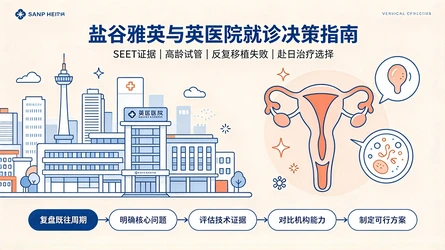
This document serves as a neutral reference for assisted reproductive technology (ART) treatment decisions, systematically analyzing the professional background, core technologies, clinical data, and patient care processes of In Hospital Japan and Dr. Masahide Shiroya. It aims to help patients make rational decisions about seeking treatment in Japan based on their individual medical conditions and evidence-based medicine, thereby avoiding blind choices driven by single-technology marketing or anecdotal reputation.
Read allI. Doctor and Institutional Background: The Core Positioning of Masahide Shiogaya and Ei Hospital
When selecting an overseas fertility clinic, the key is to assess whether the combination of physician expertise, laboratory standards, and clinical treatment systems aligns with your specific medical condition, rather than relying solely on the reputation of a single technology.
1. Professional Background of Masahide Shioya
Masahide Shiogaya(Masahide Shiotani) isJapan Ying HospitalChairman of the Group, a board-certified specialist and supervising physician in both reproductive medicine and obstetrics and gynecology by the Japanese Society for Reproductive Medicine and the Japan Society of Obstetrics and Gynecology, with nearly 40 years of extensive experience in clinical practice and research in assisted reproductive technology.
He graduated from Shimane Medical University (now the Faculty of Medicine at Shimane University) in 1985, and subsequently joined the Department of Obstetrics and Gynecology at Kyoto University Faculty of Medicine, where he has been engaged in clinical practice and research related to in vitro fertilization.
Won in 1994Doctor of Medicine, Kyoto UniversityHe earned his degree and worked in the Department of Obstetrics and Gynecology at Kobe City Central Citizens' Hospital from 1990 to 2000.
Founded in 2000Ying HospitalPredecessor institutions, with a long-standing focus on embryo implantation mechanisms, optimization of in vitro fertilization (IVF) techniques, and personalized diagnosis and treatment for infertility
SEET TherapyIt is a representative clinical research direction and also a core distinctive technology of the hospital.
Objective Note: A physician’s academic credentials and industry qualifications represent the professional entry threshold but do not directly equate to individual patient treatment success rates. Pregnancy outcomes are always influenced by factors such as the female partner’s age, ovarian reserve, embryonic chromosomal status, uterine environment,Sperm qualityand multiple core factors.
2. Institutional Scale and Layout of English Hospitals
Ei Hospital (Hanabusa Women's Clinic,Hanabusa Women's Clinic) is a large assisted reproductive medicine group located in Kobe City, Hyogo Prefecture, Japan, with services covering womenDiagnosis and Treatment of Infertility, assisted reproductive technology, and the full-process male infertility specialty. As of November 2026, the Group has six branches:
Ei Hospital Sannomiya 7F Clinic, Sannomiya 2F Clinic
Ei Hospital Kurumidani Clinic, Ei Hospital Esprit Nishi-Akashi
Male Fertility Clinic (Specializing in Male Infertility)
ENA Yamashita Women's Clinic
Important Notice: The clinical functions of different campuses within the groupEmbryology LaboratoryConfigurations and available services vary across projects. When making an appointment, patients must clearly specify the hospital campus where they will be seen, the attending physician, and the location of the embryology laboratory; it cannot be assumed that all campuses offer every technical service.
II. Analysis of Core Technologies: From SEET to Microinjection—Which Ones Are Truly Essential?
The technical protocols at IVF hospitals in the UK cover the entire process, from embryo culture and intracytoplasmic sperm injection (ICSI) to enhanced transplantation techniques. However, "advanced" technology does not necessarily mean it is "essential." The core criterion for decision-making is singular: whether the treatment addresses a clearly defined underlying cause of infertility and whether there is high-quality evidence supporting its ability to improve the final live birth rate.
1. SEET Therapy: A Representative Technique in Controversy
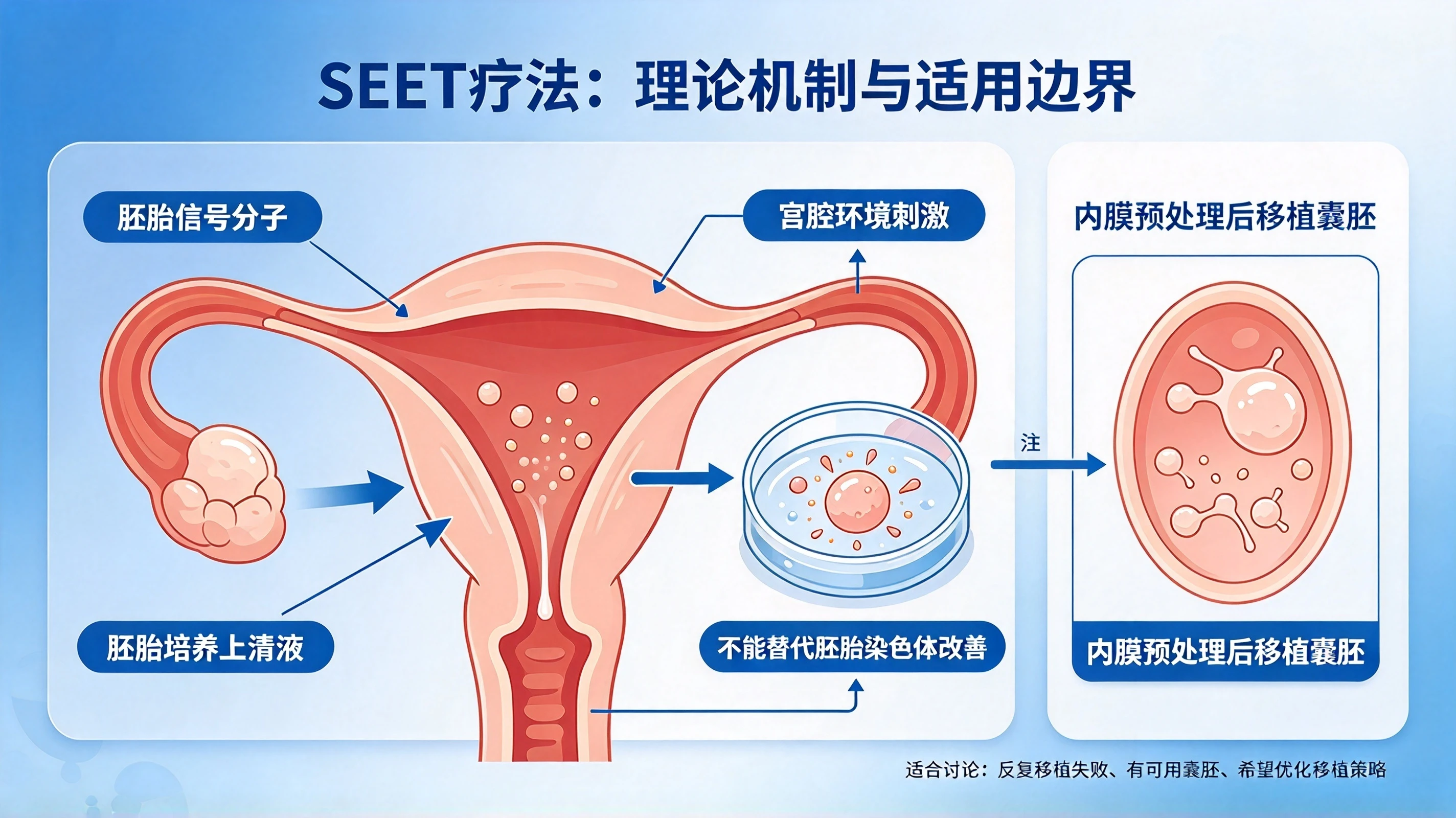
SEET (Stimulation of Endometrium Embryo Transfer) is the most renowned signature technology at Ying Hospital. Its core logic involves injecting supernatant generated during embryo culture into the uterine cavity in advance to stimulate the endometrium through signaling molecules within it, thereby mimicking the early signaling communication between embryos and the endometrium in natural pregnancies and enhancing synchronization between the endometrium and subsequently transferred blastocysts.
(1) Theoretical Foundations and Practical Boundaries
Theoretical JustificationIn natural pregnancies, embryos secrete signaling molecules such as cytokines and exosomes to regulate endometrial receptivity; SEET aims to induce the endometrium into a receptive state in advance without embryo transfer.
Current Status of Clinical EvidenceExisting studies have only confirmed that the technology is supported by biological mechanisms, but there are no high-quality, large-sample randomized controlled trials demonstrating its ability to consistently improve live birth rates across all populations; therefore, it is not included as a routine assisted reproductive procedure in global guidelines.
(2) Applicable and Inapplicable Scenarios
Discuss SEET with your doctor:
Multiple prior failures of high-quality embryo transfers, with known causes such as embryonic chromosomal abnormalities and intrauterine organic lesions already ruled out
There are available blastocysts, and we hope to assess the potential for refined optimization of the transplantation strategy.
I would like to learn about individualized protocols for endometrial preparation and timing of embryo transfer in hospitals.
Situations where blindly choosing SEET is not recommended:
The primary cause of failure is embryonic chromosomal abnormalities (SEET cannot alter the chromosomal status of the embryo).
Presence of definite intrauterine lesions such as endometrial polyps, intrauterine adhesions, and hydrosalpinx (primary disease must be addressed first)
Routine patients with first-time transplants and no history of failure
2. SEET ≠ Two-stage Embryo Transfer
Both are designed around "embryo-endometrial synchrony," but they differ fundamentally in operational logic, embryo usage, and risks; therefore, they should not be conflated.
Table
Technology | Operation | Core Features | Focus on risk management |
|---|---|---|---|
SEET Therapy | First inject the embryo culture supernatant, then transfer the blastocyst after an interval. | No additional embryo transfer; endometrial preparation only | No embryonic loss; limited evidence of clinical benefit |
Two-stage embryo transfer | First, transfer one cleavage-stage embryo, and then, several days later, transfer one blastocyst. | Simulating the in vivo developmental rhythm of embryos through two transplantations | Increased risk of multiple pregnancies and higher embryo usage |
Visit tip: If your doctor recommends a relevant plan, be sure to ask about the number of embryos transferred, their developmental stage, measures to mitigate the risk of multiple pregnancies, and the expected benefits compared with single blastocyst transfer.
3. Sperm and Fertilization-Related Technologies: Optimization for Male Factors
The multiple microinjection and sperm selection techniques disclosed by the hospital primarily address fertilization failures caused by male factors; not all patients require a combination of these methods.
Table
Technical Name | Core Role | Applicable Scenarios | Key Issues Patients Need to Confirm |
|---|---|---|---|
Piezoelectric pulse-assisted microinjection reduces mechanical damage to oocytes. | Conventional ICSI fertilization failure and abnormal zona pellucida of oocytes | Are there clear indications for difficult ICSI procedures? | |
IMSI | Sperm with normal morphology are selected under high magnification | Severe teratozoospermia and a history of repeated fertilization failure | Is abnormal sperm morphology the core cause of previous failures? |
ZyMōt | Microfluidic technology for screening sperm with high viability and good DNA integrity | Asthenozoospermia and significantly elevated sperm DNA fragmentation index | Whether it matches its own semen parameters and laboratory procedures |
Time-lapse | Real-time monitoring of embryonic development dynamics to assist in embryo grading and selection | Large number of embryos; precise selection required for embryo transfer | Does it directly alter transplant decisions and pregnancy outcomes? |
Core principle: All add-on technologies should correspond to a clearly defined etiology. For patients with no male factor and a history of normal fertilization, routinely applying high-cost sperm selection techniques is not necessary.
III. Recurrent Implantation Failure (RIF): Identify the underlying cause first, then apply advanced techniques
Recurrent transplant failureOne of the core concerns for patients seeking medical care in Japan, but "multiple failed conceptions" does not equate to "endometrial non-receptivity," nor does it necessarily imply an immediate need for ERA, immunotherapy, or SEET.
Core Consensus of the Authoritative Guide
The 2026 Committee Opinion on Recurrent Implantation Failure (RIF) from the American Society for Reproductive Medicine (ASRM) clearly states:
RIF has no globally unified definition and should be assessed comprehensively based on factors such as age, embryo quality, chromosomal status, and cumulative pregnancy probability, rather than being determined solely by the number of failed attempts.
In troubleshooting repeated failures, one should follow the sequence of "from common to rare, from non-invasive to invasive, and from evidence-based to controversial."
Routine use of controversial tests such as endometrial receptivity analysis and immunotherapy is not recommended as part of the standard workup for recurrent implantation failure (RIF).
1. Primary investigation: Embryonic chromosomal factors (highest prevalence among advanced-age patients)
Chromosomal abnormalities in embryos areRecurrent implantation failureThe most common cause, particularly in women over 35, is that the rate of oocyte aneuploidy increases significantly with age; even embryos with high morphological grades may have chromosomal abnormalities.
Core information to be reviewed during troubleshooting:
Maternal age at each oocyte retrieval, number of oocytes retrieved, number of mature oocytes, and normal fertilization rate
Blastocyst formation rate, embryo grade, and post-thaw survival rate
Is it okay?PGT-A(Preimplantation Genetic Testing for Aneuploidy) and Test Results
Embryo stage at each transfer (Day 3 / Day 5), number of embryos transferred, and endometrial preparation protocol
Objective note: PGT-A can identify chromosomally abnormal embryos and reduce ineffective transfers; however, the 2026 ASRM guidelines clearly state that there is currently no evidence to confirm that PGT-A improves live birth rates in patients with recurrent implantation failure (RIF). The decision to undergo testing should be made by comprehensively considering factors such as age, number of embryos, and economic costs, and its role should not be overstated.
2. Basic Investigation: Organic Lesions of the Uterus and Uterine Cavity
If embryonic factors cannot explain the failure, a systematic evaluation of the uterine cavity environment is required, with priority given to excluding correctable structural abnormalities:
Intrauterine lesions: endometrial polyps, submucosal fibroids, and intrauterine adhesions
Peripheral lesions: Hydrosalpinx (reflux is toxic to embryos), adenomyosis, endometriosis
Endometrial issues: chronic endometritis, abnormal endometrial thickness / heterogeneous echogenicity
Common diagnostic methods include transvaginal ultrasound, three-dimensional ultrasound, and hysteroscopy. Hysteroscopy is the gold standard for diagnosing intrauterine lesions; however, it is not routinely required for all patients with recurrent implantation failure (RIF) and should be performed only when clinically indicated.
3. Careful Selection: Endometrial Receptivity and Microbiome Testing
ERA (Endometrial Receptivity Analysis) and EMMA/ALICE (endometrial microbiome testing) are currently among the most widely commercialized tests, yet their clinical value remains highly controversial:
Position of International Guidelines: Neither ASRM 2026 nor ESHRE 2023 recommends the routine use of commercialized endometrial receptivity testing for patients with recurrent implantation failure (RIF).
Core limitation: Detecting abnormalities is not equivalent to identifying the cause of implantation failure, and the benefit in live birth rates after adjusting transfer timing has not been confirmed by high-quality studies.
Recommendation: Discuss only after excluding embryonic and intrauterine organic factors, with fully informed consent, and clearly establish whether the test results will directly alter the treatment plan.
4. High Alert: Immunotherapy Without Evidence
Some institutions recommend immune cell testing, intravenous immunoglobulin, or immunosuppressants for patients with recurrent implantation failure (RIF); however, current global guidelines do not support the use of immunotherapy as a routine treatment for RIF.
If a doctor proposes immune-related treatment, be sure to confirm four questions:
Is there a clear clinical indication such as autoimmune disease?
Is there an evidence-based medicine association between the detection indicators and implantation failure?
Is the treatment regimen supported by high-quality randomized controlled trials?
What adverse reactions and long-term risks are associated with the drug?
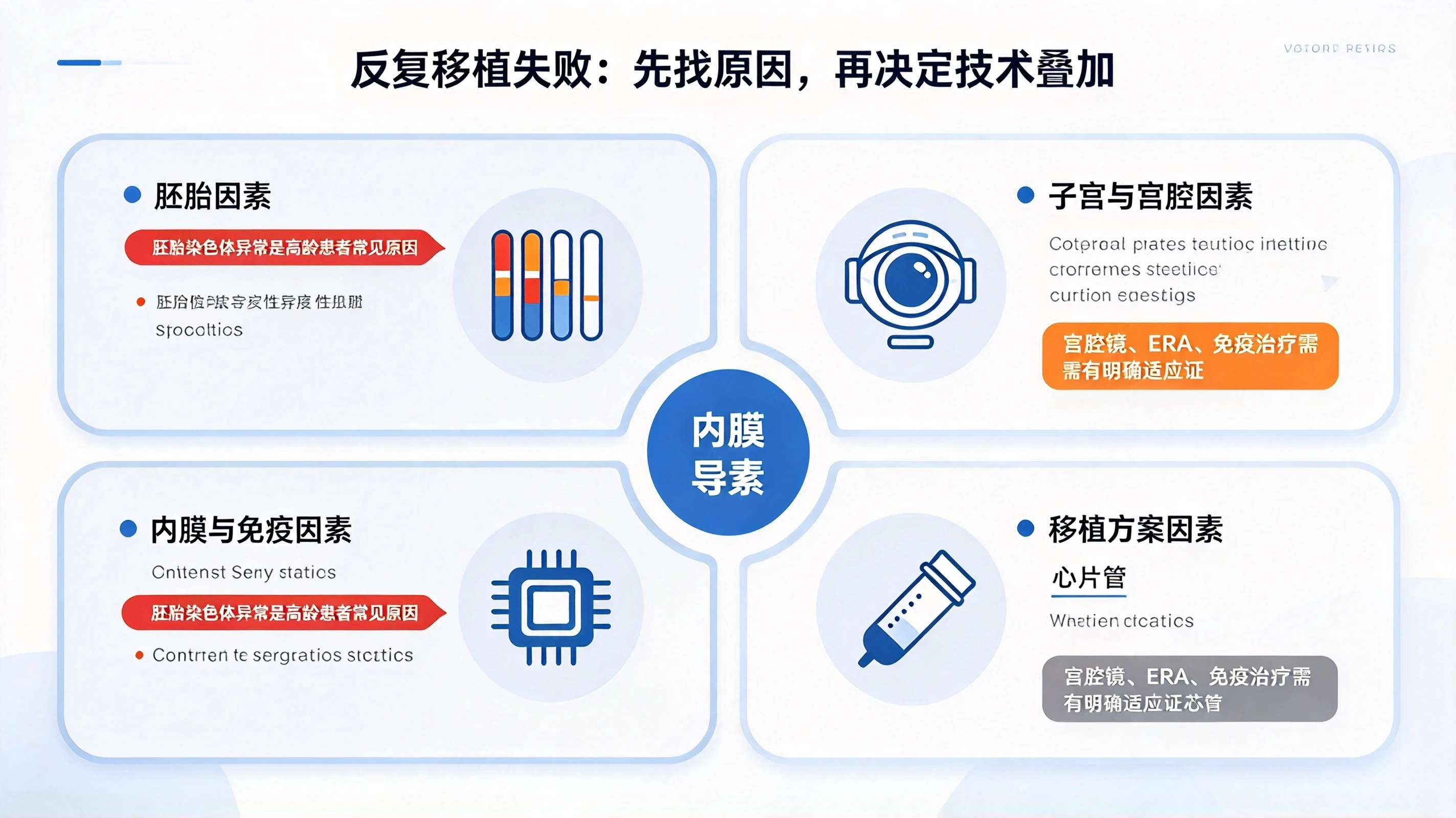
Key reminder: Do not assume that all additional treatments are worth trying simply because of repeated failures or a lack of alternatives; ineffective therapies not only increase financial burdens but may also pose unnecessary physical risks.
IV. Key Assessment Dimensions for Advanced-Age IVF Patients Before Traveling to UK Hospitals
For older patients (typically those over 35, and especially over 40), choosing a reproductive clinic should not focus on finding "high-tech solutions for advanced age," but rather on accurately assessing one's own fertility potential and developing a plan that offers the best cost-effectiveness and optimal time efficiency.
1. First, assess ovarian reserve to determine the ceiling for autologous oocyte treatment
Before visiting the hospital, please organize complete ovarian function assessment data, as this serves as the foundation for all treatment plans:
Endocrine markers: AMH, basal FSH/LH/estradiol
Imaging parameter: Antral Follicle Count (AFC)
Previous Treatment History: Ovarian Stimulation Protocol, Medication Dosage, Number of Eggs Retrieved, Number of Mature Eggs, Fertilization Rate, Blastocyst Formation Rate
Key insight: AMH and AFC reflect only ovarian responsiveness to controlled ovarian stimulation, not egg quality per se, and cannot independently predict live birth outcomes.
2. Must be included in decision-making: Embryonic chromosomal risk
Age is a core determinant of embryonic chromosomal abnormalities: the rate of aneuploidy in oocytes rises rapidly after age 35, exceeding 60% in women over 40 and reaching more than 90% in those over 45.
The key decision points for elderly patients include:
What are the expected number of oocytes retrieved and blastocysts formed in ongoing egg retrieval treatments?
Should multiple egg retrievals be performed to accumulate embryos and increase the probability of obtaining viable embryos?
Whether to choose PGT-A for embryo screening to reduce the time cost of ineffective transfers
If no viable blastocysts are obtained after multiple egg retrievals, should consideration be given toEgg donationAlternative options
3. View success rates correctly: Avoid being misled by average data
Success rate metrics vary significantly across institutions, making direct horizontal comparisons meaningless. Elderly patients should ask targeted questions:
Are the data reported by oocyte retrieval cycle, transfer cycle, or number of patients?
Are age brackets (e.g., 38–40 years, 40–42 years) distinguished? What is the corresponding data for your own age group?
Outcome measures include positive β-hCG levels, clinical pregnancy (visualized gestational sac), fetal heartbeat, or live birth.
Does it include multiple frozen-thawed embryo transfers from a single egg retrieval (cumulative pregnancy rate vs. per-cycle pregnancy rate)?
Whether to distinguish between autologous and donor eggs, and whether to perform PGT-A
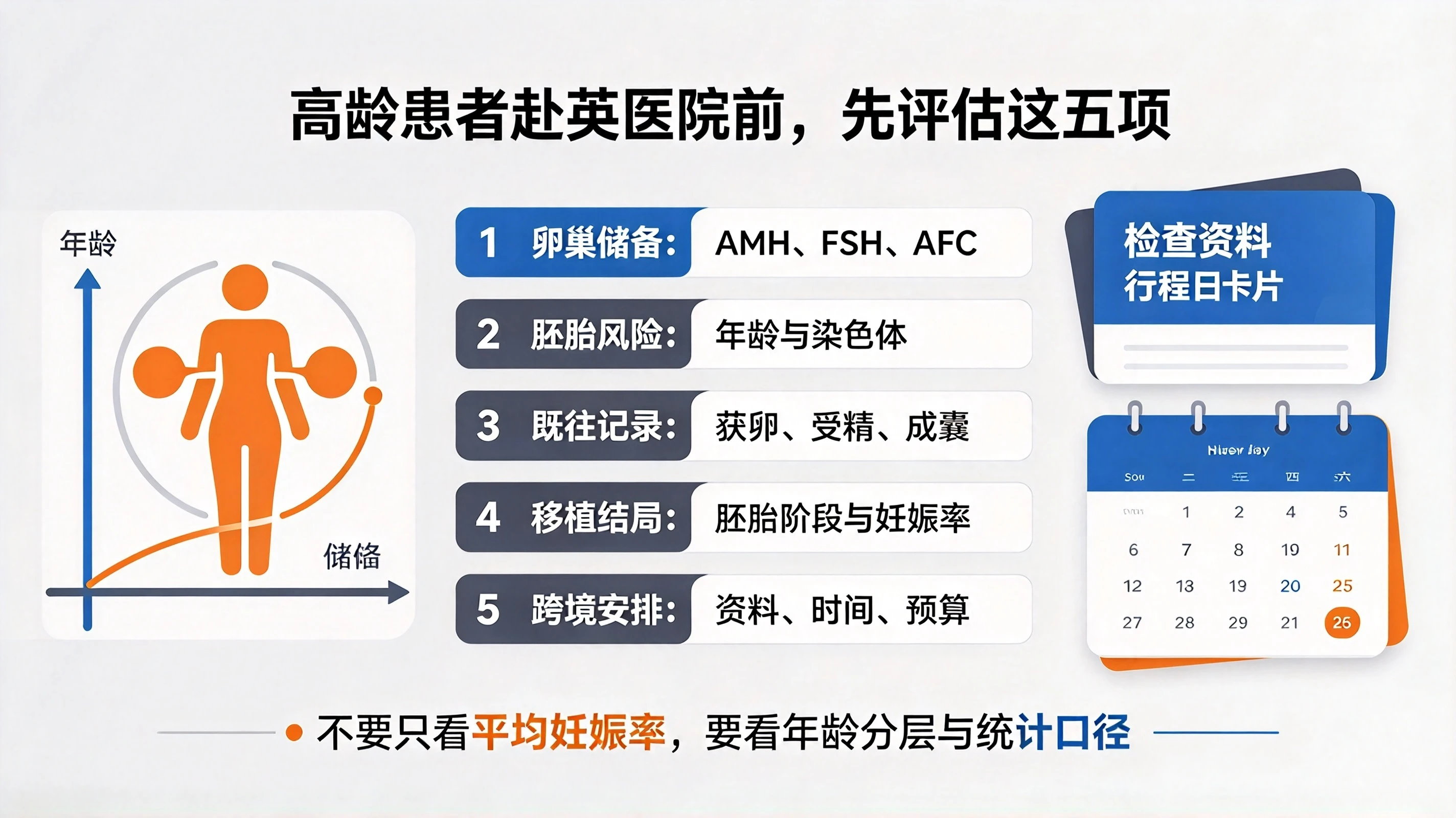
Pitfall warning: Do not calculate your personal success rate using the hospital's published "total number of pregnancy cases ÷ total number of transfer cycles," as the statistical definitions of these two metrics do not match.
V. Clinical Data from UK Hospitals: How to Interpret Correctly and Avoid Misjudgment
The hospital’s official website has disclosed clinical operational data from 2006 to 2024, with the core figures for 2024 as follows:
Table
Project | 2024 figures |
|---|---|
Number of pregnancy cases | 3,616 cases |
In vitro fertilization cycle | 1231 cycle |
Intracytoplasmic Sperm Injection (ICSI) cycle | 3728 cycles |
Frozen-thawed embryo transfer cycle | 4727 cycles |
3809 cycles |
Why can't we directly calculate the "success rate"?
The above data can only reflect the hospital's clinical scale and workload, and should not be used to directly calculate "3616 ÷ 4727."Frozen Embryo TransferSuccess rate, core reason:
Statistical scope mismatchThe number of pregnancy cases refers to the count of patients in whom a gestational sac was observed on ultrasound; for the same patient, multiple frozen embryo transfers following a single egg retrieval are counted as one pregnancy case. In contrast, the number of transfer cycles is the cumulative total of all transfer procedures performed.
No population stratification performed: Contains mixed data from different groups, including young women, older women, and egg donors, and therefore cannot represent individual circumstances
Not equal to the live birth rateThe official website defines pregnancy as "ultrasound-confirmed gestational sac," which does not represent the final live birth outcome.
5 Core Questions for Interpreting Clinical Data
When consulting, you can ask questions centered around the following 5 points to filter out data that is valuable for you:
Are there stratified data for patients with similar age and ovarian reserve status to mine?
Is the statistical denominator based on egg retrieval cycles, transfer cycles, or individual patients?
Does it include multiple frozen-thawed embryo transfers following a single egg retrieval?
Are the outcome measures gestational sac, fetal heartbeat, ongoing pregnancy, or live birth?
Does it distinguish between autologous oocyte/sperm and donor oocyte/sperm, and is PGT-A performed?
6. How to Objectively Compare English Hospitals with Other Japanese Fertility Centers
Japan has numerous assisted reproductive technology (ART) clinics, and there is no absolute "number one" ranking. The key to comparison lies in whether a clinic's capabilities align with your specific medical condition. Using well-known institutions such as Eichi Hospital and Kato Women's Clinic as examples, a systematic evaluation can be conducted across seven dimensions:
Table
Comparison Dimension | Core Verification Content |
|---|---|
Medical Team | The attending physician’s professional qualifications, years of clinical experience, and whether they were fully involved in the diagnosis and treatment throughout the process, rather than merely lending their name. |
Embryology Laboratory | Embryo culture systems, cryopreservation and thawing techniques, quality control standards, and laboratory staffing |
Clinical Data | Are the statistical definitions for age-stratified pregnancy and live birth rates transparent? |
Technical Features | Indication control for technologies such as SEET, PGT-A, and micromanipulation fertilization: Is there over-recommendation? |
Failed Diagnosis and Treatment Logic | Can you systematically review past cycles to identify the root causes of failure, rather than simply stacking technologies? |
Cross-border Services | Do you provide professional medical translation, remote medical record review, domestic collaborative monitoring, and follow-up appointment support? |
Fee System | Are the steps of monitoring, ovulation induction, egg retrieval, embryo culture, transfer, and additional services transparent item by item? Are there any hidden costs? |
Recommendation: For patients with recurrent implantation failure, a physician who thoroughly reviews previous cycles, clearly explains the causes of failure, and develops an individualized treatment plan is more valuable than an institution offering numerous advanced but flashy techniques.
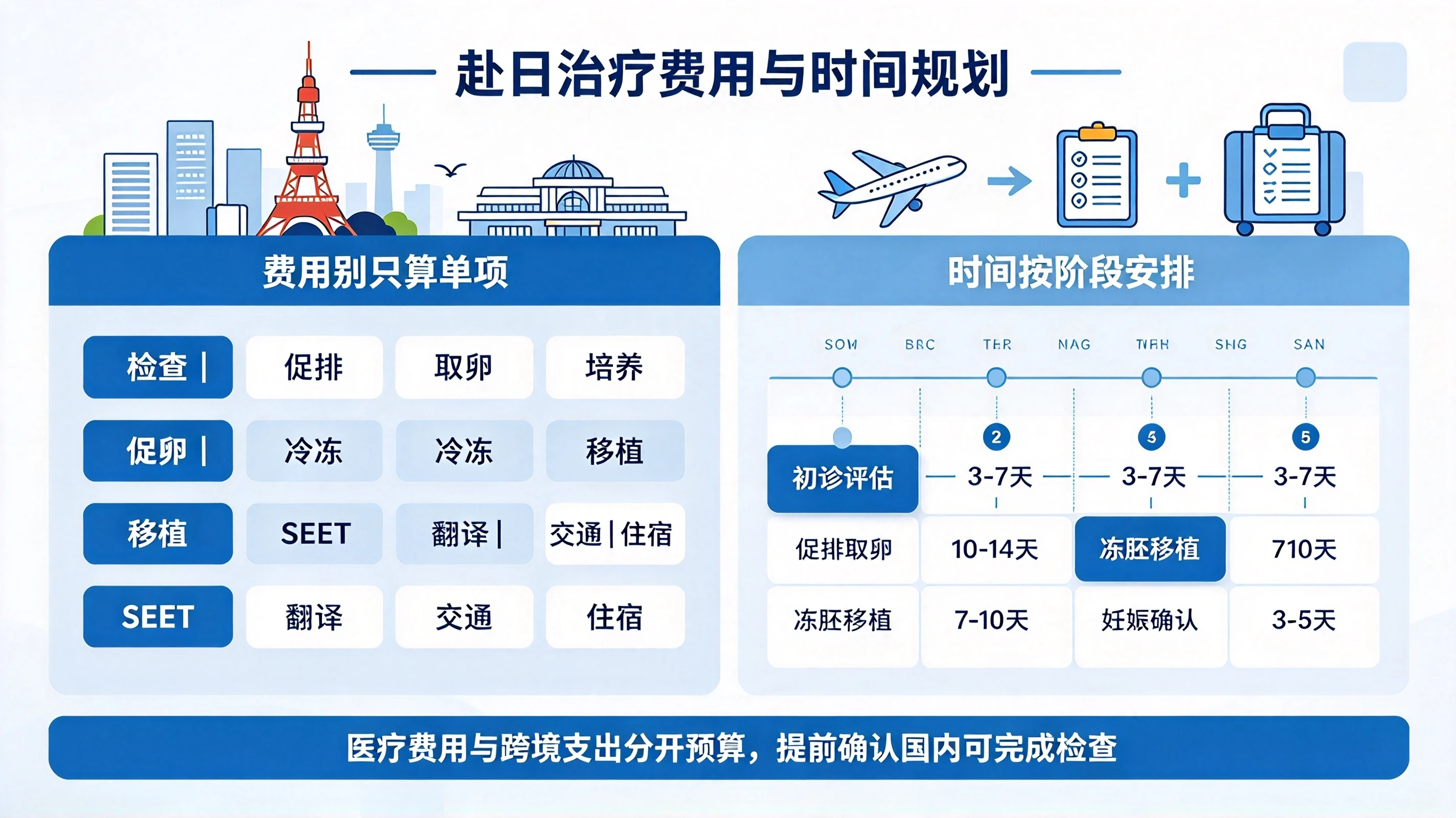
VII. Total Cost of Medical Treatment in Japan: Expense Breakdown and Time Planning
The total cost of cross-border treatment goes far beyond medical expenses. It is essential to prepare a dual budget for both medical costs and cross-border living expenses, while also planning the itinerary reasonably.
1. Reference Prices for Public Healthcare Projects
The following are the self-pay item prices (in Japanese yen) published on the English-language hospital’s official website in November 2026. These fees apply to individual items only and do not represent complete treatment packages.
Table
Project | Official website out-of-pocket price (JPY) |
|---|---|
SEET Therapy | 44,000 |
ERA Detection | 151,800 |
EMMA-ALICE Detection | 63,800 |
IMSI | 12,650 |
ZyMōt Sperm Sorting | 38,500 |
Frozen Embryo Transfer | 132,000 |
Two-step frozen-thawed embryo transfer | 132,000 |
Medical Insurance Notice: While some assisted reproductive treatments in Japan are covered by the National Health Insurance, foreign patients visiting Japan are generally not eligible for this coverage and must pay out-of-pocket. Please confirm the settlement rules before your appointment.
2. Easily overlooked cost items
A complete treatment budget must include the following to avoid overspending midway through:
Medical: Initial/Consultation Fees, Hormone Tests and Ultrasound Fees, Ovulation Induction Medication Fees, Egg Retrieval + Anesthesia Fees, Fertilization and Culture FeesEmbryo cryopreservationand annual fees, transplantation fees, and additional technology fees
Cross-border categories: round-trip airfare, accommodation, local transportation, medical interpretation, translation and organization of medical records, visa fees
Other: Repeated transportation and accommodation costs for multiple trips to Japan, embryo storage fees, and follow-up medical expenses after pregnancy
3. Planning for the Length of Stay in Japan
There is no absolute solution that allows the entire process to be completed in a single trip to Japan; the length of stay depends entirely on the treatment stages and scheduling.
Table
Treatment Phase | Core Content | Approximate Duration of Stay |
|---|---|---|
Initial Assessment | Medical record review, consultation, basic examination, and treatment plan development | 3-7 days |
Ovarian stimulation + Egg retrieval | Drug-induced ovulation stimulation, regular monitoring, and egg retrieval surgery | 10-14 days |
Frozen Embryo Transfer | Endometrial preparation, embryo thawing, and transfer procedure | 7-10 days |
Pregnancy confirmation | Blood tests and ultrasound confirm intrauterine pregnancy | 3-5 days |
Cross-Border Medical Care Tips: Before departure, be sure to confirm which tests can be completed domestically, whether remote consultations are supported, if domestic hospitals can assist with monitoring, and the exact time windows for each trip to Japan, in order to minimize unnecessary stays.
8. Pre-Appointment Document Preparation: A Complete Medical Record Is a Prerequisite for an Efficient Consultation
A complete and clear medical history enables doctors to quickly and accurately assess conditions, avoid redundant tests, and save time and costs during visits. It is recommended to organize the information according to the following categories:
1. Basic Information of the Female Party
Basic information: age, height and weight, regularity of menstrual cycle, obstetric history (pregnancies, miscarriages, deliveries)
Ovarian Function: AMH, Basal Sex Hormone Panel (Six Items), and Antral Follicle Count (AFC) Report
Uterine adnexa: Recent transvaginal ultrasound, 3D ultrasound reports, hysteroscopy, and hysterosalpingography results
Medical History: Gynecological surgical history, history of endometriosis/adenomyosis
Treatment History: Detailed records of all previous cycles, including ovarian stimulation, egg retrieval, and embryo transfer.
2. Basic Information of the Groom
Semen analysisSperm Morphology Analysis Report
Sperm DNA Fragmentation Index Report (if available)
History of previous reproductive system surgeries, records of micro-TESE and sperm cryopreservation
History of Diagnosis and Treatment of Andrological Diseases
3. Detailed Records of Embryos and Transplants
It is recommended to organize the information chronologically into a periodic table, with core components including:
Per egg retrieval: number of oocytes retrieved, number of mature oocytes, and number of normally fertilized eggs
Embryo Culture: Number of Blastocysts Formed, Embryo Grade, Cryopreservation/Thawing Status
Transplantation Record: Embryo Stage, Number, and Grade at Transplantation; Endometrial Preparation Protocol; Pregnancy Outcome
PGT-A Test Report (if available)
IX. Core Face-to-Face Consultation Question Checklist: Efficient Communication to Avoid Information Gaps
Since consultation time is limited, we recommend focusing your questions on four key areas: reasons for previous failures, rationale for the proposed plan, expected outcomes and prognosis, and cost and process details. Avoid getting bogged down in technical terminology.
1. Prognosis and Causes
Based on my age, ovarian reserve, and past records, what is the expected probability of egg retrieval and blastocyst formation if I continue with autologous egg treatment?
In your opinion, what is the primary cause of my previous repeated failures: more likely due to embryonic factors, uterine cavity factors, or other reasons?
2. Solutions and Technical
Do I need to have a follow-up examination of the uterine cavity first? How will the test results affect my treatment plan?
Am I a suitable candidate for SEET? What is the basis for this recommendation, and what clinical data are available for patients like me?
Is PGT-A recommended? What problems can it address, and what are its limitations?
Will ERA, microbiome testing, and immune-related tests actually change my treatment plan?
If the next cycle is still unsuccessful, what should be the next adjustment direction?
3. Fees and Procedures
What are the main cost components and the approximate total expense for a complete egg retrieval and frozen embryo transfer cycle?
Which items are mandatory, and which are optional add-ons?
What examinations and monitoring can I complete domestically? How many times do I need to travel to Japan, and how long is each stay?
X. Decision Boundaries: Who Should Go to UK Hospitals and Who Need Not Rush
Situations in which referral to a hospital in the UK for further assessment is recommended
Repeated failures in assisted reproductive treatments across multiple domestic cycles, with the core cause of failure remaining unidentified.
It is hoped that a third-party reproductive center will systematically review the previous embryo culture and transfer protocols to obtain a second medical opinion.
In cases of clear male factor infertility and repeated fertilization failure, evaluation of micro-ICSI and sperm selection protocols is required.
To fully understand the indications, evidence base, and scope of applicability for specialized technologies such as SEET
Able to bear the time and financial costs of cross-border treatment, and willing to comply with follow-up appointment arrangements
Situations where a hasty trip to Japan is not recommended
Only one transplant failure; the investigation of underlying causes has not yet been completed.
Incomplete records of prior treatments prevent a full review of failed cycles.
The original institution’s standard protocol still has room for optimization, as basic adjustments have not been fully explored.
The core demand is simply to "take on more high-priced projects to increase the success rate," without clearly identifying one's own underlying issues.
Unable to bear the time and financial costs of multiple trips to Japan, expecting to succeed on the first attempt
XI. Final Decision Framework: Clarify the Problem First, Then Select the Institution
Dr. Masahide Shioya and Ei Hospital are mature institutions with many years of experience in Japan's assisted reproductive field, featuring a comprehensive diagnostic and treatment system, specialized techniques, and publicly available clinical data. Technologies such as SEET also enjoy high recognition within the industry. However, when choosing to seek treatment at Ei Hospital, decisions should not be based solely on the fame of its technologies, but rather on rational assessment grounded in one's own medical condition and needs.
It is recommended to complete the decision-making process in the following five steps:
Review past cycles: Compile all records of egg retrieval, fertilization, culture, transfer, and outcomes to identify the core stages where failures occur
Clarify the core issueDistinguish between factors such as embryo quality, uterine cavity conditions, male factors, and technical procedures to avoid attributing all failures solely to endometrial receptivity.
Assess technical evidence: For all items including SEET, PGT-A, and ERA, individually verify the indications, levels of evidence, costs, and risks
Compare Institutional Capabilities: A multi-dimensional comparison based on age-stratified data, laboratory standards, primary physicians, cross-border services, and fee transparency
Develop a feasible planConfirm document review, domestic inspections, Japan itinerary, timeline arrangements, and total budget in advance to ensure the plan is feasible.
The core of assisted reproductive technology (ART) is individualized treatment. A truly high-quality plan is never the one with the most procedures or the latest technologies, but rather one that clearly explains "why it is being done, what problem it addresses, what outcomes are expected, and what its limitations are." Only by viewing technology rationally and respecting medical principles can individuals make the choices best suited to their own circumstances.
Frequently Asked Questions
The content on this website is general educational material and compiled public information about IVF. It is provided for reference only, does not constitute a basis for diagnosis or medical decision-making, and does not constitute any medical advice or treatment recommendation. For policy and technical requirements, please refer to official publications issued by the relevant authorities and institutions. If you find any content errors, numerical inconsistencies, or outdated information, please contact us so we can verify and update it.
