
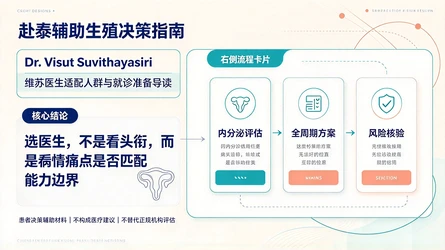
For patients traveling to Thailand for fertility treatment, this article explains in detail Dr. Visu's core competency boundaries, the patient groups best suited to his care, and his diagnostic and treatment characteristics. It also includes an in-person consultation verification checklist and risk warnings, helping patients with complex infertility cases rationally match physician resources.
Read allInstructions for Use: This document is a patient-oriented decision aid designed to help you assess whether your specific health concerns align with the expertise of certain physicians. It does not constitute medical advice and does not replace consultations with hospitals, second opinions, or evaluations by accredited institutions. All information regarding physician qualifications, success rates, costs, surgical indications, and scheduling should be verified directly with the hospital or the physician prior to your appointment.
Key Takeaways
Doctor Vesu(Dr. Visut Suvithayasiri) is101 Bangkok IVFFounder and reproductive medicine specialist, with core differentiated value based on a public teaching hospital clinical background +Reproductive EndocrinologySpecialized in endocrinology, with expertise in breaking down issues from an endocrine perspectiveComplex infertilityThis issue can be independently managed through endocrine regulation, ovulation induction protocol development, and full-cycle assisted reproductive treatment. This clinical approach is particularly suitable for patients with infertility related to endocrine disorders, repeated failures in assisted reproduction, advanced maternal age with diminished ovarian reserve, or unexplained infertility. It does not offer significant differentiated advantages for straightforward IVF cases involving young patients with a basic medical history or for infertility primarily driven by severe male factors. For patients planning to undergo assisted reproductive technology (ART) treatment in Thailand, the core logic for selecting a doctor should not be "the more titles, the better," but rather whether your specific medical concerns align precisely with the doctor's core areas of expertise. This article does not recommend a personalized treatment plan; instead, it provides a practical decision-making tool to help you assess whether Dr. Visuth's clinical model matches your needs, what specific issues it can address, and under what circumstances he may not be the preferred choice.
1. First, identify: The core target audience of this article
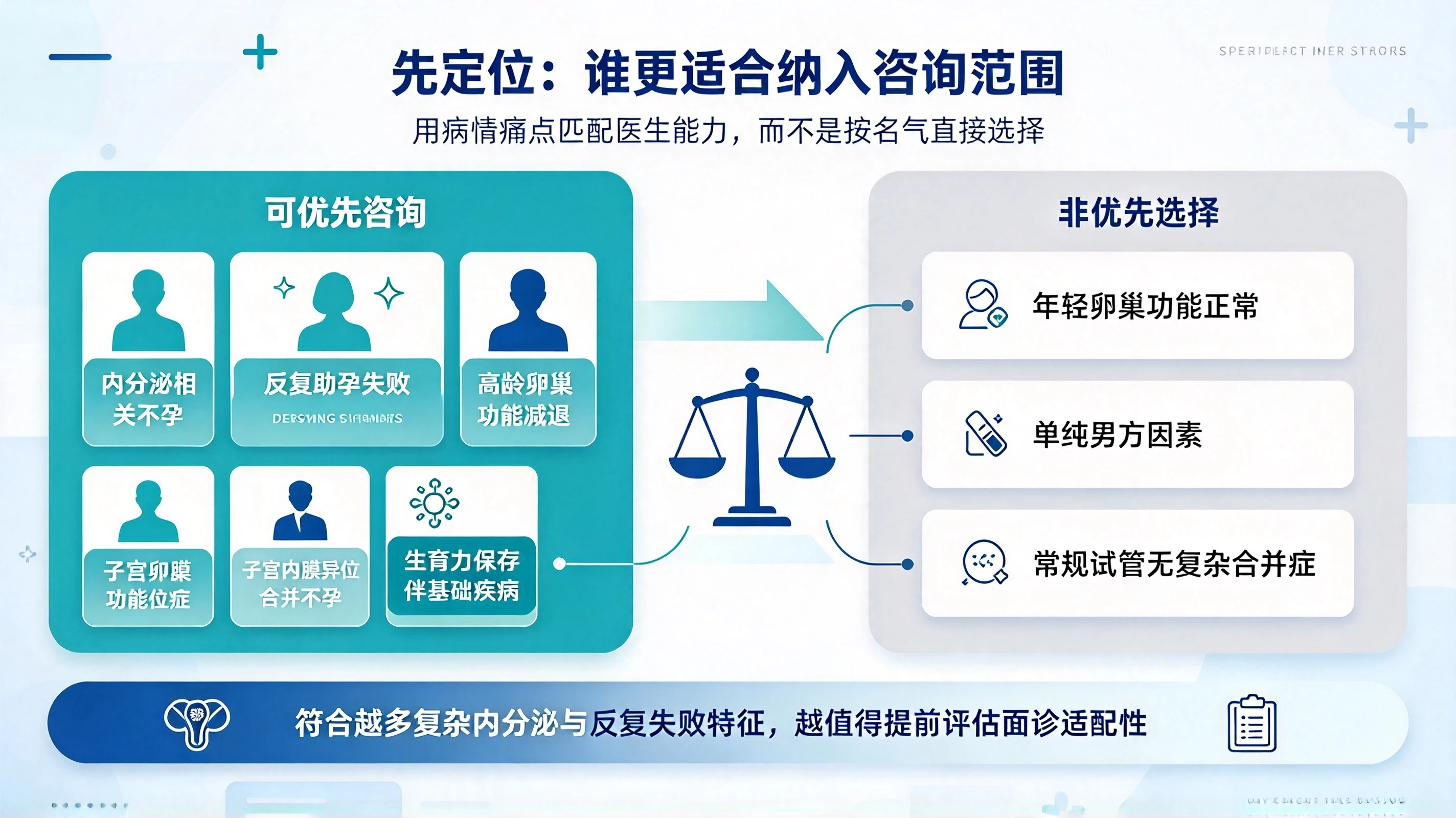
If you fall into any of the following categories, this decision-making reference will be highly valuable to you:
Individuals with endocrine disorders such as polycystic ovary syndrome, ovulatory dysfunction, and diminished ovarian reserve who have poor responses to conventional ovulation induction;
Infertile patients who have experienced one or more assisted reproductive technology (ART) failures without a clearly identified cause of failure.
Women aged 35 and older with diminished ovarian reserve who require individualized ovarian stimulation protocols for fertility planning;
Patients with underlying gynecological conditions such as endometriosis and uterine fibroids, who require concurrent evaluation of lesions and fertility-assistance strategies;
There isFertility Preservationthe population with needs who also have underlying gynecological conditions and require prior assessment of the impact of these diseases;
Individuals who hope to systematically review past medical records, adjust clinical approaches, and prefer evidence-based, standardized care.
Conversely, if your situation aligns with the following scenarios, this article’s purely educational background information will suffice: being young, having normal ovarian function, male-factor infertility only, and requiring routineIVFFor patients undergoing standard IVF or ICSI with no underlying gynecological conditions, this physician offers the lowest decision-making value. There is no need to pay a premium for "specialist expertise"; choosing a reputable reproductive center is sufficient.
II. Core Decision Basis: The Three Key Differences Between Him and Ordinary IVF Doctors
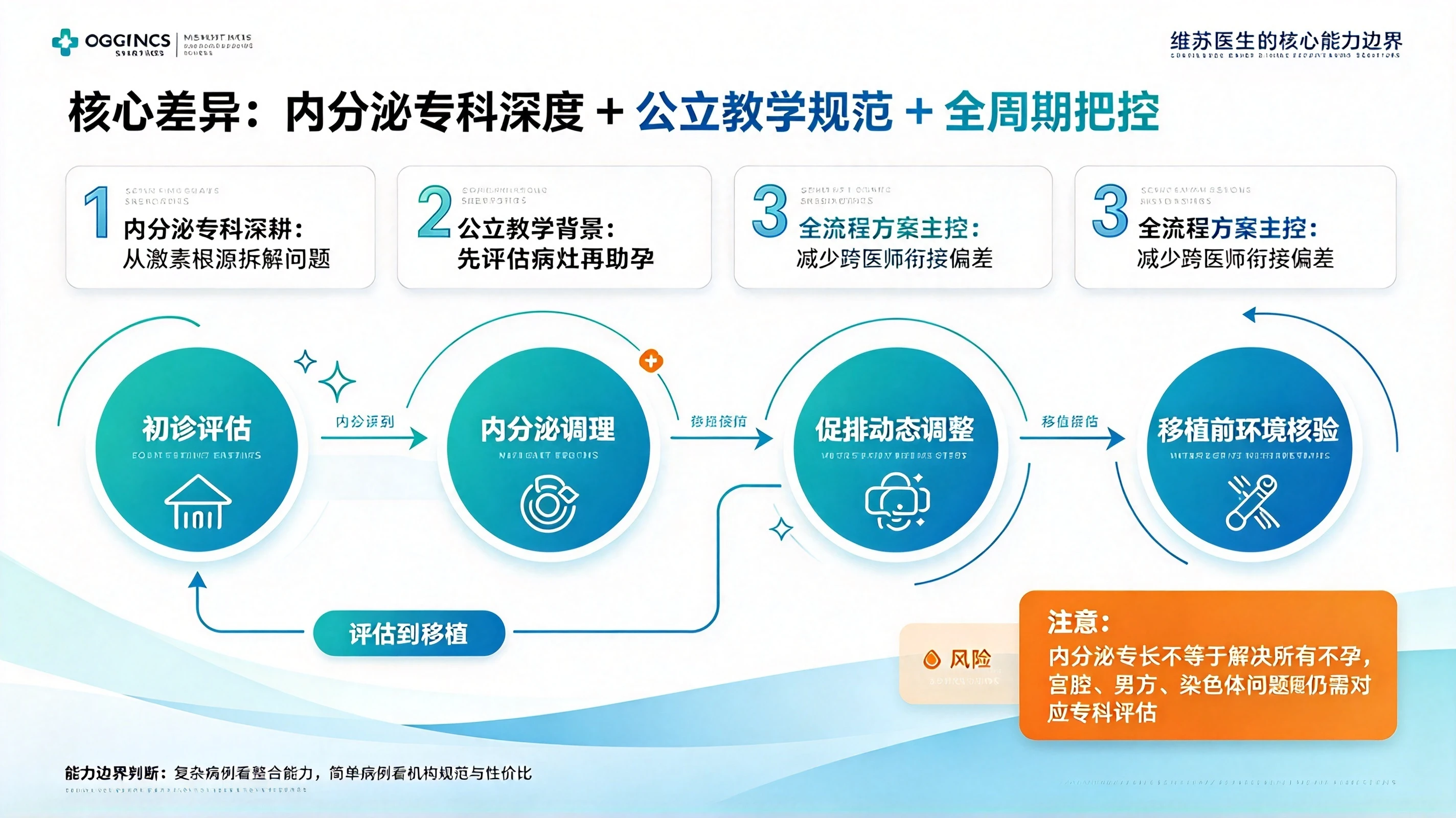
Assisted Reproductive Technology in ThailandThe field has many doctors. Dr. Veso’s differentiated strengths lie not merely in focusing on ovulation induction and embryo transfer procedures, but in combining deep expertise in gynecological endocrinology with a background in public teaching hospitals and comprehensive oversight of full-cycle treatment plans. The following three points are key areas patients should verify during their consultations.
1. Specialized expertise in endocrinology: Addressing infertility by targeting hormonal root causes, rather than relying solely on ovulation induction
In most Thai fertility centers, the core competencies of physicians are primarily focused on ovarian stimulation, egg retrieval, and embryo transfer. When patients present with comorbid endocrine disorders or abnormal ovarian function, referral to an endocrinology department or adjustment of treatment protocols is often required, which can lead to information discrepancies due to cross-departmental communication gaps. Dr. Visuth specializes in reproductive endocrinology, having completed specialist training in reproductive medicine at the University of Cambridge, UK. He previously served as Director of the Reproductive Endocrinology Department at a public teaching hospital. He develops treatment plans from dimensions including hormonal regulation, ovarian function assessment, and intervention for ovulatory disorders, integrating endocrine management with assisted reproductive cycles to minimize the need for repeated referrals and prevent disjointed treatment strategies.
An endocrinology specialty does not mean that “all cases of infertility can be resolved.” Its strengths lie primarily in addressing ovulation disorders, polycystic ovary syndrome (PCOS), and diminished ovarian reserve related to endocrine issues. Uterine cavity problems, male factor infertility, and chromosomal abnormalities still require evaluation by the corresponding specialized disciplines.
2. Public Teaching Hospital Context: Prioritizing Evidence-Based Standards, with Emphasis on Medical Record Review and Risk Management
Many institutions in the industry follow the conventional approach of “starting ovarian stimulation as soon as possible to obtain embryos first.” However, for patients with endocrine disorders or a history of repeated failures, rushing into stimulation often leads to higher cycle cancellation rates, poorer embryo quality, and increased risks of implantation failure. Dr. Veso’s public teaching hospital-based clinical philosophy prioritizes assessing reproductive endocrine fundamentals and identifying potential issues that may affect pregnancy. Treatment is initiated only after hormone levels and ovarian status are optimized to a relatively ideal state. This approach may extend the treatment timeline by 1–3 months but theoretically reduces the likelihood of repeated stimulation failures, making it particularly suitable for patients who have experienced multiple failed transfers without a clear cause—some underlying endocrine abnormalities require identification and management by specialized reproductive physicians. It should be noted, however, that not all cases necessitate pre-treatment optimization before stimulation; for patients with significantly diminished ovarian reserve who cannot tolerate prolonged preparatory phases, the benefits of optimization must be balanced against time-sensitive fertility windows through individualized assessment, avoiding rigid protocols.
3. Full-process Solution Master Controller: Reducing Deviations in Pipeline Diagnosis and Treatment
Dr. Visu has management experience at the reproductive center of a Thai public teaching hospital, having served as a core physician at Piyavate Hospital's reproductive center, and is currently a reproductive medicine specialist at 101 Bangkok IVF. Public information indicates that he personally oversees key clinical stages: from initial assessment, development and dynamic adjustment of ovarian stimulation protocols, to egg retrieval and embryo transfer procedures—all led by him rather than delegated to junior physicians. For older patients, those with poor ovarian response, or complex medical conditions, real-time adjustments to hormone levels and follicular development during ovarian stimulation require experienced clinical judgment. Full-process direct care helps minimize protocol deviations, improve oocyte quality, and enhance cycle controllability.
Verification prompt: At the initial consultation, directly confirm who performs each procedure (initial diagnosis, ovulation induction monitoring, egg retrieval, and embryo transfer); whether a designated primary physician follows you throughout the entire process; and what the staffing standards are for the laboratory and embryologist team.
III. Precise Matching: Highly Suitable Groups and Non-Priority Groups
5 priority groups for consultation
Infertile individuals with reproductive endocrine disorders: those with polycystic ovary syndrome, ovulatory dysfunction, diminished ovarian reserve, or hormonal imbalances resulting in prolonged unsuccessful attempts to conceive;
Patients with endometriosis-associated infertility: individuals requiring concurrent evaluation of lesion management, ovarian reserve protection, and fertility treatment strategies.
Individuals with repeated assisted reproductive failures or unexplained infertility: complex cases involving multiple unsuccessful IVF outcomes and prolonged conception attempts without a clear underlying cause, seeking systematic review of prior medical records and adjustment of clinical management strategies.
Advanced maternal age population: Individuals over 35 years old with decreased AMH and diminished ovarian reserve who wish to discuss individualized ovarian stimulation protocols and risk management;
Individuals with fertility preservation needs and underlying medical conditions: Consultation on eggEmbryo cryopreservation, while integrating endocrine disorders and underlying gynecological conditions, targeting populations that require prior assessment of disease impact.
Groups that do not need to be prioritized
Age < 30 years, normal ovarian function, no underlying gynecological diseases;
Infertility caused solely by male oligoasthenozoospermia, with the female partner in good health.
Standard second-generation IVF (ICSI) alone is sufficient, with no complex comorbidities. For such individuals, choosing a reputable, large-scale reproductive center typically yields stable clinical outcomes, making it unnecessary to pay higher costs for additional specialized expertise. If you still wish to select this physician, focus on comparing laboratory conditions, cost transparency, and convenience of access to care.
IV. Treatment Expectations: How His Clinical Process Differs from Standard IVF
If you decide to consult Dr. Vesu, you should first understand the differences between his treatment pathway and conventional IVF procedures, and prepare yourself both in terms of time and mentally:
During the initial consultation, a comprehensive assessment is prioritized rather than rushing into treatment: medications for ovarian stimulation are typically not prescribed at the first visit. Instead, fertility evaluation (including six hormone panels, AMH testing, transvaginal ultrasound, and pelvic environment assessment) is completed, along with screening for endocrine and gynecological issues that may affect pregnancy. If specific problems are identified, a treatment plan addressing these conditions is provided first, rather than proceeding directly to an ovarian stimulation cycle.
Dynamic protocol adjustments, not fixed dosages: Medication doses and protocols are adjusted in real time based on patients’ hormone monitoring results and follicular development, rather than maintaining a fixed dosage until egg retrieval. This approach is particularly suitable for patients with unstable ovarian responses. The overall communication and observation cycle for each monitoring and adjustment period is slightly longer.
Pre-Transfer Environmental Verification: Before embryo transfer, the uterine cavity and endocrine status are re-evaluated to confirm that conditions meet the required standards before scheduling the transfer, thereby reducing implantation failure caused by suboptimal environmental factors. Specific verification items, criteria, and associated costs should be confirmed in advance.
Individualized coordination between surgery and subsequent treatment: If preoperative procedures such as hysteroscopy are required, the operating surgeon determines postoperative recovery assessments and the timing for starting the treatment cycle, thereby avoiding protocol deviations due to handovers between different physicians.
V. Objective Trade-offs: Practical Factors to Consider Before Making a Choice
To help you make more rational decisions, the following practical issues require careful consideration:
The treatment cycle may be longer: Because it follows the logic of "assessing lesions before assisting conception," if your gynecological issues require surgical intervention, the overall treatment duration may be 1–3 months longer than direct ovulation induction. However, for patients with repeated failures, this approach may save more time overall compared to addressing lesions only after multiple failed attempts, though it also increases risks and costs associated with surgery and anesthesia.
The cost-effectiveness of a single cycle may be limited: his core value lies in managing complex comorbidities. If you have a straightforward infertility case, the marginal benefit of choosing him may not justify the cost, and you might prioritize more cost-effective standard clinics.
The initial consultation assessment is limited and requires advance booking: As the core procedures are personally conducted by me, the monthly patient capacity is restricted. It is recommended to submit your previous medical reports in advance before traveling to Thailand for treatment to complete the initial assessment and secure an appointment, thereby avoiding last-minute scheduling issues.
Risks associated with cross-border medical care must be self-assessed, including cost transparency, emergency response to complications, language communication barriers, embryo storage duration, legal and ethical requirements, and visa and travel arrangements. It is recommended to obtain written confirmation on key matters, while clearly defining refund policies and emergency contact procedures.
Legal and Rights Protection Costs: Medical disputes in Thailand are governed by the local legal system. Cross-border rights protection involves long timelines, high costs for evidence collection and communication, and relatively limited avenues for redress in cases of medical controversies or complications. It is recommended to familiarize yourself with complaint filing and dispute resolution channels in advance.
Post-operative follow-up coordination: If complications such as infection or abnormal bleeding occur after surgery, it is necessary to determine in advance who will lead the follow-up examinations and subsequent intervention plans after returning home, and whether domestic partner medical institutions can provide coordinated follow-up care, to avoid gaps in post-operative management.
VI. Quick Decision Checklist (For Direct Self-Review)
The more of the following criteria you meet, the higher the overall compatibility score, making Dr. Vesu a strong candidate for consultation; however, an in-person assessment and verification of credentials are still required: □ Presence of endocrine issues such as polycystic ovary syndrome (PCOS) or ovulatory disorders with poor response to conventional ovulation induction □ History of one or more failed IVF cycles without a clearly identified cause of failure □ Confirmed diagnosis of organic gynecological conditions such as endometriosis or uterine fibroids □ Age ≥35 years, low AMH levels, and diminished ovarian reserve □ Desire for the same physician to manage both the treatment plan and assisted reproduction process throughout, avoiding inter-facility referrals □ Need for fertility preservation alongside underlying gynecological conditions
If criteria 0–1 are met, you may first consider a reputable, conventional reproductive center; refer to or seek a second opinion when complex issues arise.
7. Checklist of Questions to Verify Before a Facial Diagnosis
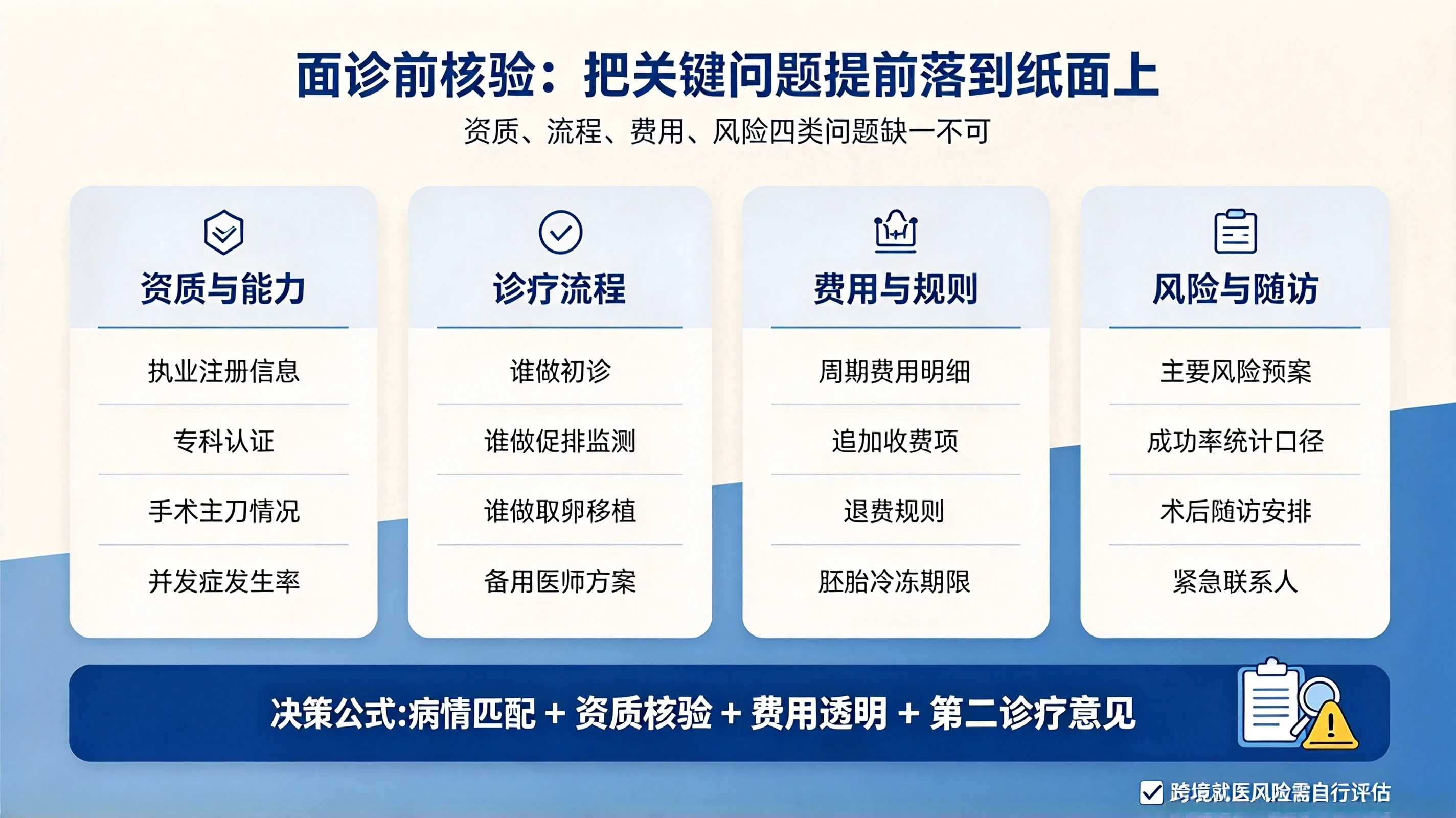
It is recommended to prepare questions in advance according to the following four categories to avoid missing core information:
Qualification and Competency Verification
What are the doctor's Thailand Medical Council practice registration details, obstetrics and gynecology specialty certification, and qualifications related to reproductive endocrinology?
What are the specific details regarding relevant academic research and paper publications? How can the corresponding relationships be verified?
Will complex surgeries be performed by the surgeon personally? What is the annual volume of similar procedures completed? What is the rate of serious complications?
Clinical Workflow and Treatment Plans
Who performs the initial assessment, ovarian stimulation monitoring, egg retrieval, and embryo transfer? In the event of a physician’s temporary absence, what are the contingency plans and the qualifications of the substitute physicians?
What is the key criterion for determining whether surgery is necessary? Can a second medical opinion be sought before making a decision?
If surgery is required, how long after the procedure can ovarian stimulation be initiated? What are the frequency and basis for adjusting the stimulation protocol?
What items are included in the uterine cavity environment assessment prior to embryo transfer, and what are the criteria for meeting standards?
Fees and Rules
What items are included in the cost breakdown for the complete treatment cycle? Which ones are potentially additional charges?
What are the fee standards and refund policies for cycle cancellation, embryo cryopreservation, and thawed embryo transfer?
What are the maximum storage period, renewal fees, and overdue handling rules for embryo cryopreservation?
Risk and Follow-up
What are the main risks of surgery and ovarian stimulation related to my condition, and what contingency plans are in place to address them?
What is the statistical definition of success rate (clinical pregnancy rate vs. live birth rate; egg retrieval cycles vs. embryo transfer cycles)? Is it stratified by age? What is the sample size?
What is the follow-up schedule after surgery and upon return to home country? What are the emergency contact details and management pathway in case of complications?
What are the qualifications and staffing configuration of the laboratory embryology team, and what corresponding professional competencies do they possess?
Choosing a doctor is, in essence, about matching the specific pain points of your medical condition with corresponding professional expertise. For patients with endocrine comorbidities,Recurrent implantation failureFor complex cases, a physician who can simultaneously manage lesion treatment and fertility assistance may offer greater practical value than one who relies solely on high success rate rhetoric. However, the final decision should be based on credential verification, cost transparency, and a second medical opinion, rather than on single promotional materials or intermediary referrals.
Frequently Asked Questions
The content on this website is general educational material and compiled public information about IVF. It is provided for reference only, does not constitute a basis for diagnosis or medical decision-making, and does not constitute any medical advice or treatment recommendation. For policy and technical requirements, please refer to official publications issued by the relevant authorities and institutions. If you find any content errors, numerical inconsistencies, or outdated information, please contact us so we can verify and update it.
