
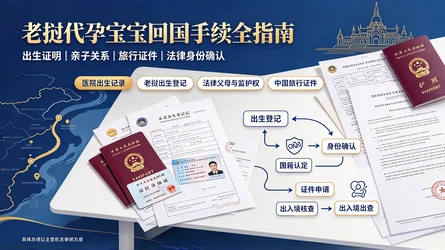
A Comprehensive Analysis of the Complete Process for Bringing Surrogacy-Born Children from Laos Back to China, Covering Obtaining Hospital Birth Records, Official Birth Registration, Legal Confirmation of Parent-Child Relationship and Custody, Determination of Chinese Nationality, Application for Travel Documents, Key Points of Entry-Exit Inspections, and Clarification of the Legal Risks Associated with Cross-Border Surrogacy.
Read allI. Clarification of Core Concepts: The Four Categories of Matters Are Not Interchangeable
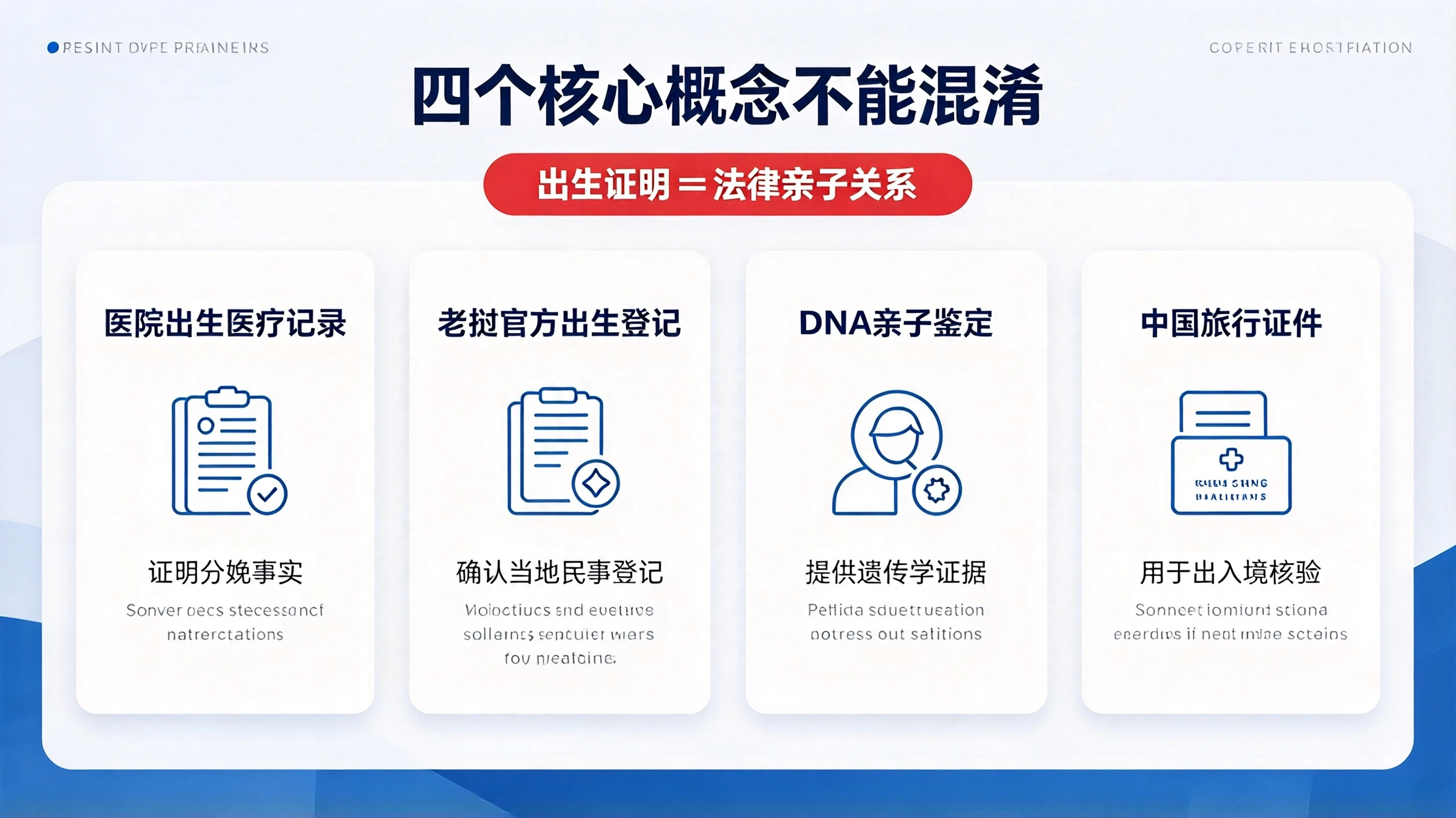
After a child is born in Laos, four distinct yet interconnected legal issues must be distinguished and not conflated:
Table
Matter | Function | Issuing Entity | Limitations |
|---|---|---|---|
Hospital Birth Medical Record | To prove the fact of delivery, the time of birth, and the health status of the newborn | Maternity care facilities | This is not equivalent to an official civil registration document and cannot directly prove a parent-child relationship. |
Official Birth Registration Certificate | Official Lao civil registration documents confirming the fact of birth and registered parental information | Office of Internal Affairs within Districts under the Ministry of Interior of Laos | The registered parental information does not equate to a parent-child relationship recognized under Chinese law. |
DNA paternity testing | Provide genetic evidence for parent-child relationships | Authorized testing institutions | Legal parenthood and custody cannot be established directly. |
ChinaTravel DocumentItem | Proof of a child's nationality for entry and exit | Chinese Embassy and Consulates in Laos | Issuance is contingent upon compliance with China’s nationality recognition and guardianship requirements. |
In short: Having a birth certificate does not mean there is a legal parent-child relationship; having a blood relation does not mean one can directly obtain a travel document; and obtaining the document does not guarantee smooth entry or exit.
II. Step 1: Obtain the Hospital Birth Medical Records
Immediately after the child is born, obtain complete medical documents from the hospital where the delivery took place, as these are the foundational materials for all subsequent registrations.
Core documents to be retained
Newborn Birth Medical Record: Includes accurate date of birth, time of birth, sex, weight, mode of delivery, and gestational age at birth
Inpatient and Delivery Records for Parturient Women
Official Birth Notification issued by the hospital (a mandatory prerequisite document for official birth registration in Laos)
All medical documents related to newborn screening, treatment, etc.
Notes
Ensure the documents bear the hospital's official seal and signatures of medical staff, and retain both the original copies and high-resolution scans.
Hospital documents are merely medical certificates and do not constitute legal birth certificates issued by the Lao government; civil registration must still be completed subsequently.
If the person giving birth is not the same as the commissioning party, hospital records typically document the information of the person who gave birth and do not directly reflect the identity of the commissioning party.
III. Step Two: Complete the Official Birth Registration in Laos
Official Processing Rules
Under Laos' Law on Household Registration, birth registration isCitizenship Management Division, Ministry of Home Affairs (MoHA)Coordination, specifically handled by theDistrict Office of Home AffairsAccepted.
Standard Process
The hospital shall issue a birth notification within 7 days of the child’s birth.
The parents or family members of the child shall report to the village administrative authority, and the village head shall issue a registration confirmation.
Within 30 days of birth, submit the required documents to the Office of Internal Affairs in your district to complete formal birth registration.
With all required documents in place, the official birth certificate will be issued within 5 business days.
Standard Application Materials
Hospital Birth Notification
Identification documents of both parents
Marriage Certificate (if applicable)
Confirmation document from the village administrative authority
Special Barriers in Surrogacy
Children born through surrogacy cannot directly follow the standard registration procedures. The core issues include:
The statutory applicants are the mother who gave birth or the biological father; the entrusting party has no statutory eligibility to apply.
If the birth mother is not the same as the commissioning party, the authorities will not directly register the commissioning party as the parents.
No dedicatedSurrogacy Birth RegistrationChannel: Information inconsistencies may result in registration rejection or the need to submit additional judicial documents
It is necessary to verify the case-specific handling procedures with the competent authorities through a locally licensed lawyer in Laos, and do not easily trust so-called "special channels" offered by intermediaries.
IV. Step 3: Confirmation of Legal Parentage and Custody
This is the most critical and easily overlooked step in the repatriation procedures for surrogate-born children, directly determining whether Chinese documents can subsequently be applied for.
The Essential Differences Between the Three Identities
Genetic parentsHaving a biological blood relationship with a child can be proven solely by DNA testing.
Legal parents: Recognized as the parents of a child under applicable law, enjoying parental rights and bearing parental obligations
Legal Guardian: Legally authorized to exercise civil rights and handle various procedures on behalf of minors
The three may overlap or remain entirely separate: having a biological connection does not make one a legal parent, and being a legal parent does not necessarily confer custody rights.
The Practical Role of DNA Testing
A paternity test can only establish genetic relationships and cannot, on its own, resolve the following issues:
Does Lao law recognize the commissioning party as the legal parents of the child?
Does the birth mother have legal maternal status and related rights?
Has the client obtained legal custody?
Do Chinese embassies and consulates recognize them as guardians for document applications?
If a subsequent paternity test is required, you must confirm in advance the testing institutions recognized by the competent authority, as well as the sampling procedures, identity verification standards, and report format; tests commissioned independently may not be accepted.
Core Recommendations
In surrogacy cases, legal parentage and custody are typically confirmed through local judicial proceedings in Laos, requiring a final court judgment. Without such judicial documentation, subsequent applications for official documents cannot be completed based solely on DNA reports and intermediary certifications.
V. Step 4: Determination of Chinese Nationality
Legal basis
According to Article 5 of the Nationality Law of the People's Republic of China: A person born abroad whose parents are both Chinese citizens, or one of whom is a Chinese citizen, shall in principle have Chinese nationality; however, such a person shall not have Chinese nationality if their parents (both or one) have settled abroad and the person acquires foreign nationality at birth. Chinese consular services...
Special Rules for Surrogacy
In nationality determination, "parents" refers toLegal parents, rather than the genetic parents, therefore:
One cannot directly presume that the child holds Chinese nationality solely on the basis that the entrusting party is a Chinese citizen.
If legal parentage is not established, the determination of nationality cannot be completed.
If a child has acquired Lao nationality in accordance with Lao law, and one parent is settled abroad, the child may lose eligibility for Chinese nationality.
The determination of nationality falls within the exclusive jurisdiction of Chinese embassies and consulates, which must make such determinations based on all submitted materials. No intermediary or individual has the authority to issue a definitive conclusion.
6. Step 5: Apply for Chinese Travel Documents
Processing Channels and Basic Rules
Starting July 20, 2026, the Chinese Embassy in Laos and the Consulate-General in Luang Prabang will fully implement online processing of passports and travel documents via the "Chinese Consular" app. Applications for newborn document issuance must also be submitted through the app; after approval, applicants are required to schedule an in-person interview at the mission for the People's Republic of China...
Processing time for ordinary travel documents: Pickup on the 4th working day after acceptance; expedited service allows pickup on the 3rd working day; urgent service allows pickup on the 2nd working day (urgent service is limited to emergency circumstances). The People's Republic of China...
Processing time for ordinary passports: 10 working days after the in-person interview; expedited service is not available.
Fees: Travel Document $18, Expedited Service $43, Rush Service $55; Passport $18
Basic Documents for a Travel Document for Ordinary Newborns
Refer to the "Notice on Travel Document Application Procedures" issued by the embassy in June 2026. A standard application for a newborn requires the submission of:
A fully completed passport/travel document application form (filled out and signed by the legal guardian)
3 specification-compliant child ID photos (48mm × 33mm, white background, dark-colored top)
Original Lao official birth certificate; if the document is in Lao, a Chinese or English translation must be attached
Valid passport information pages of both parents
The Lao visas or residence permits held by both parents at the time of the child’s birth
Parents' marriage certificate (if available)
The legal guardian must accompany the applicant to the office for an in-person interview and provide proof of guardianship under the People's Republic of China...
Additional Requirements for Children Born via Surrogacy
The Chinese Embassy in Laos does not list a separate application category for children born via surrogacy, but according to the general rules for processing consular documents in China,Surrogacy AbroadFor the application for a travel document by children born abroad, in addition to the basic materials, truthful declarations and supplementary submissions are required:
Surrogacy-related agreement documents
Proof of source of gametes (for those provided by the commissioning party, written confirmation is required; for donated ones, a donation agreement must be provided)
Parentage Testing Report (Issued by an Institution Recognized by Embassies and Consulates)
Effective judgment on custody and parent-child relationship issued by the local court
Declaration of Nationality and Residence Status of Both Parents
Additional supporting documents required by the embassy or consulate of the People's Republic of China...
Six Questions to Verify with the Embassy Before Applying
Whether births by surrogacy meet the eligibility criteria for issuing travel documents or passports
Who is eligible to act as a legal guardian and submit the application on behalf of the applicant
Is it mandatory to provide a paternity or custody judgment from a Lao court?
Requirements and Sampling Protocols for Paternity Testing Institutions
Whether a child has conflicting nationalities and which type of document applies
If a travel document cannot be issued, are there other legal pathways to obtain documents for returning home?
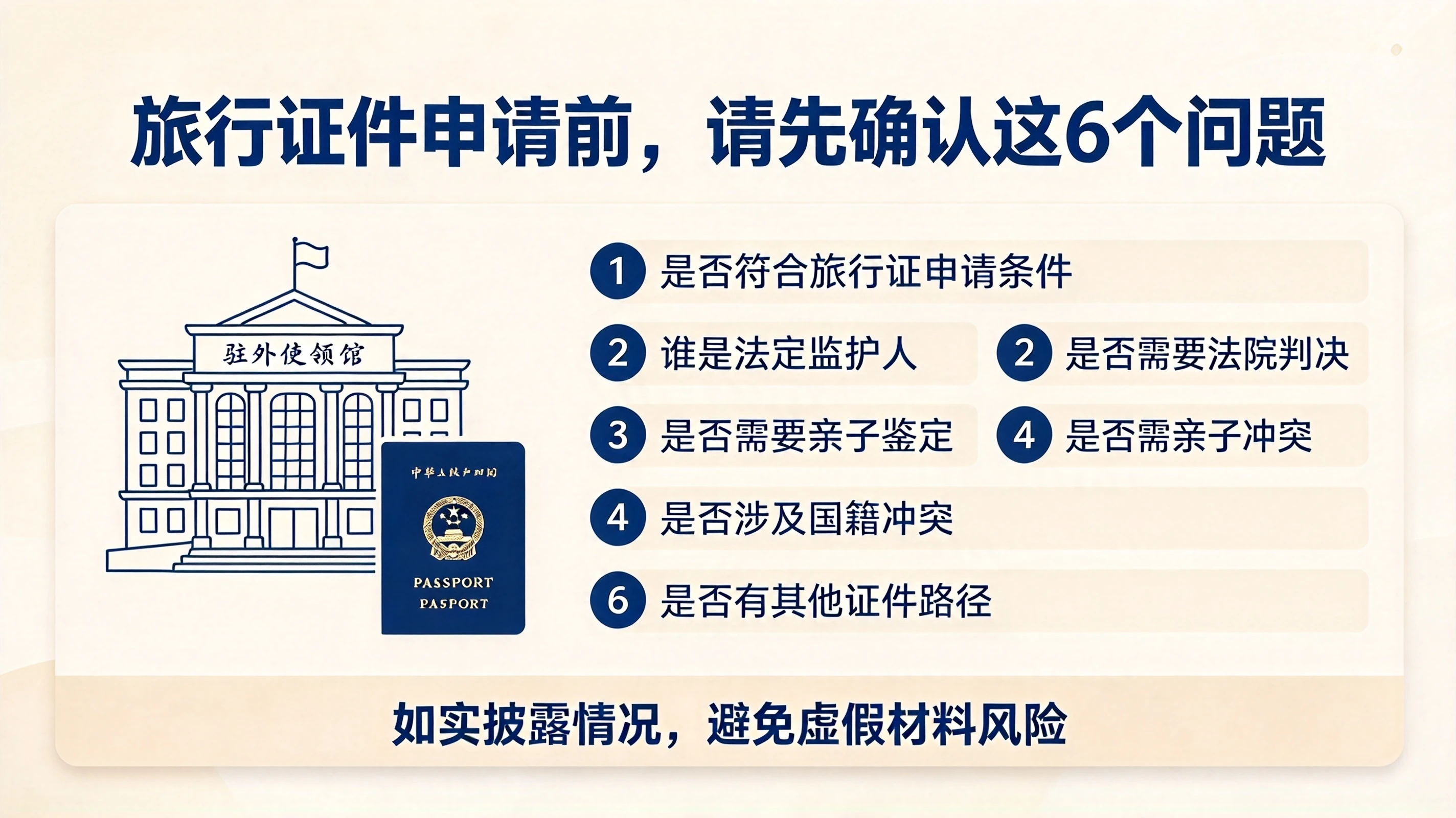
⚠Special Notice: Surrogacy facts must be truthfully declared. Submitting false marriage or parent-child relationship documents to fraudulently obtain certificates is suspected of certificate fraud and will result in legal liability.
VII. Step 6: Departure, Boarding, and Entry Inspection
Obtaining travel documents does not guarantee a trouble-free trip. Before departure, you must verify three key requirements one by one:
1. Laos Exit Inspection
Whether the child has completed all legally required birth registrations and has no unresolved civil or judicial disputes
Are there any restrictions on leaving the country, and is parental consent or court permission required?
Whether the birth mother has no objections to the child’s identity and international departure, in order to avoid disputes over rights of ownership
2. Airline Carriers and Layover Verification
Confirm the airline's documentation requirements for infant/child travel, including whether verification of birth certificates and guardianship relationships is required.
If a transit through a third country is involved, confirm the transit visa and child entry policies of that country in advance.
Infants traveling by air must be reported to the airline in advance to confirm services such as infant tickets and bassinets.
3. China Entry Inspection
Ensure that your travel documents are within their validity period and that the entry category is appropriate.
Carry a complete set of documents, including the birth certificate, proof of parent-child relationship, and custody documentation, for reference.
Cooperate with border inspection officers for identity verification and questioning upon entry
8. Processing Timeline and On-Site Arrangements
Time Period Description
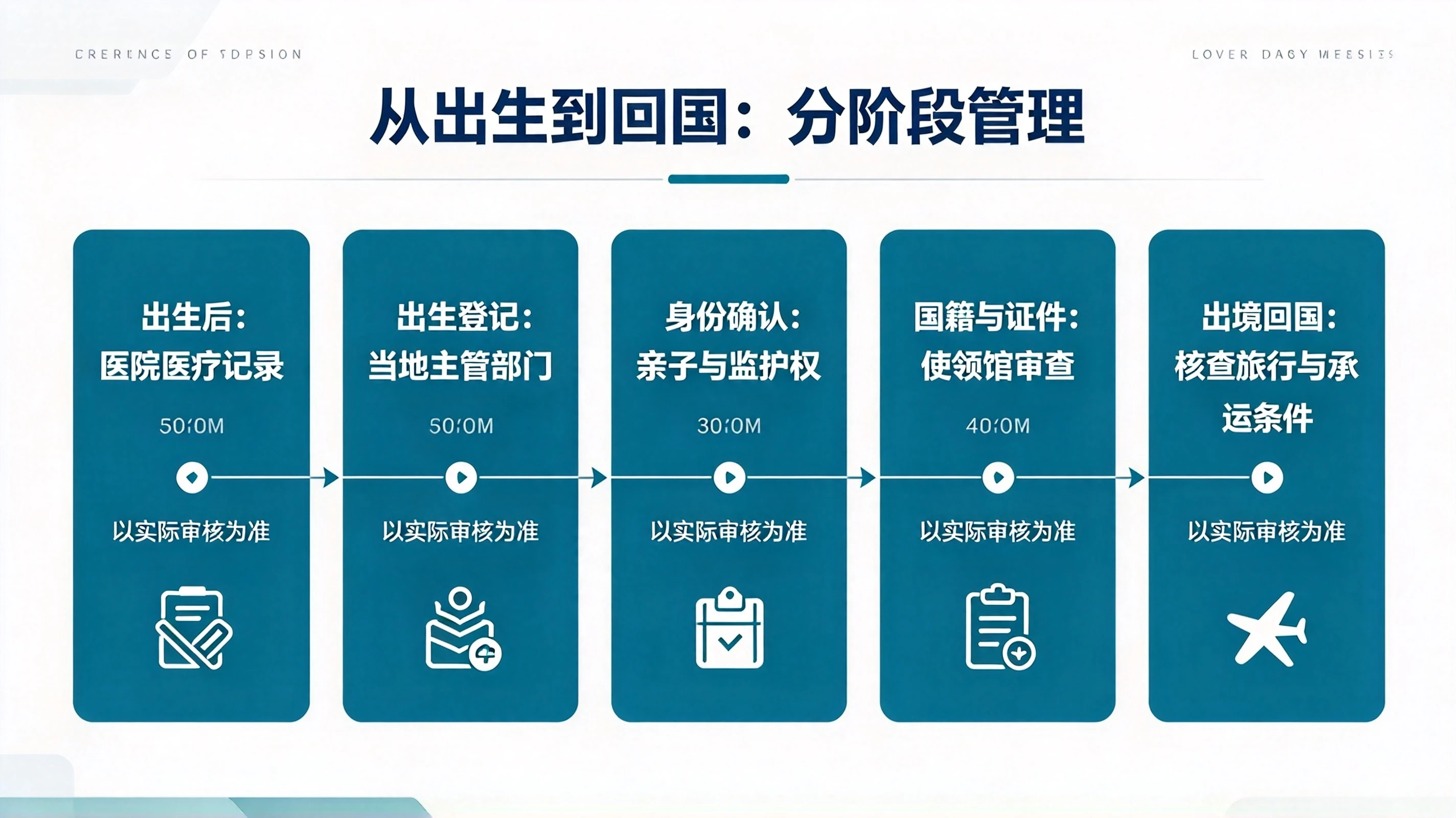
The 4-working-day processing timeframe for ordinary newborn travel documents does not apply to children born via surrogacy. If the case involves nationality determination, parentage verification, or supplementary judicial documentation, the review period will be significantly extended and cannot be guaranteed in advance. It is recommended to plan your schedule in stages and avoid booking non-refundable or non-changeable flights prematurely:
Table
Stage | Core Matters | Cycle Characteristics |
|---|---|---|
Birth Stage | Hospital medical records, newborn assessment | As per hospital arrangements, typically 1-3 days |
Birth Registration | Official Civil Registration Services | Standard processing takes 5 business days; there is no fixed time limit for surrogacy cases. |
Identity Verification | Parent-child relationships and judicial procedures for custody | Individual cases vary greatly and may take weeks or even months. |
Certificate Application | Nationality Determination + Travel Document Processing | The standard process takes 4 business days, while additional verification may extend the timeline. |
Travel Preparation | Verification of Departure, Airline, and Entry Procedures | As per the actual itinerary |
Number of Visits and Dwell Time
There are no official unified regulations; scenarios that typically require attendance include:
Signing of Medical Facility-Related Procedures (As Required by the Hospital)
Laotian birth registration or judicial proceedings (as required by local authorities)
In-person interview at a Chinese embassy or consulate (a legal guardian must accompany the child)
Supplementary materials, resampling, and other special cases
Whether the client possesses the status of a legal guardian directly determines eligibility to accompany the in-person interview; final arrangements for attendance cannot be confirmed until legal identity verification is completed.
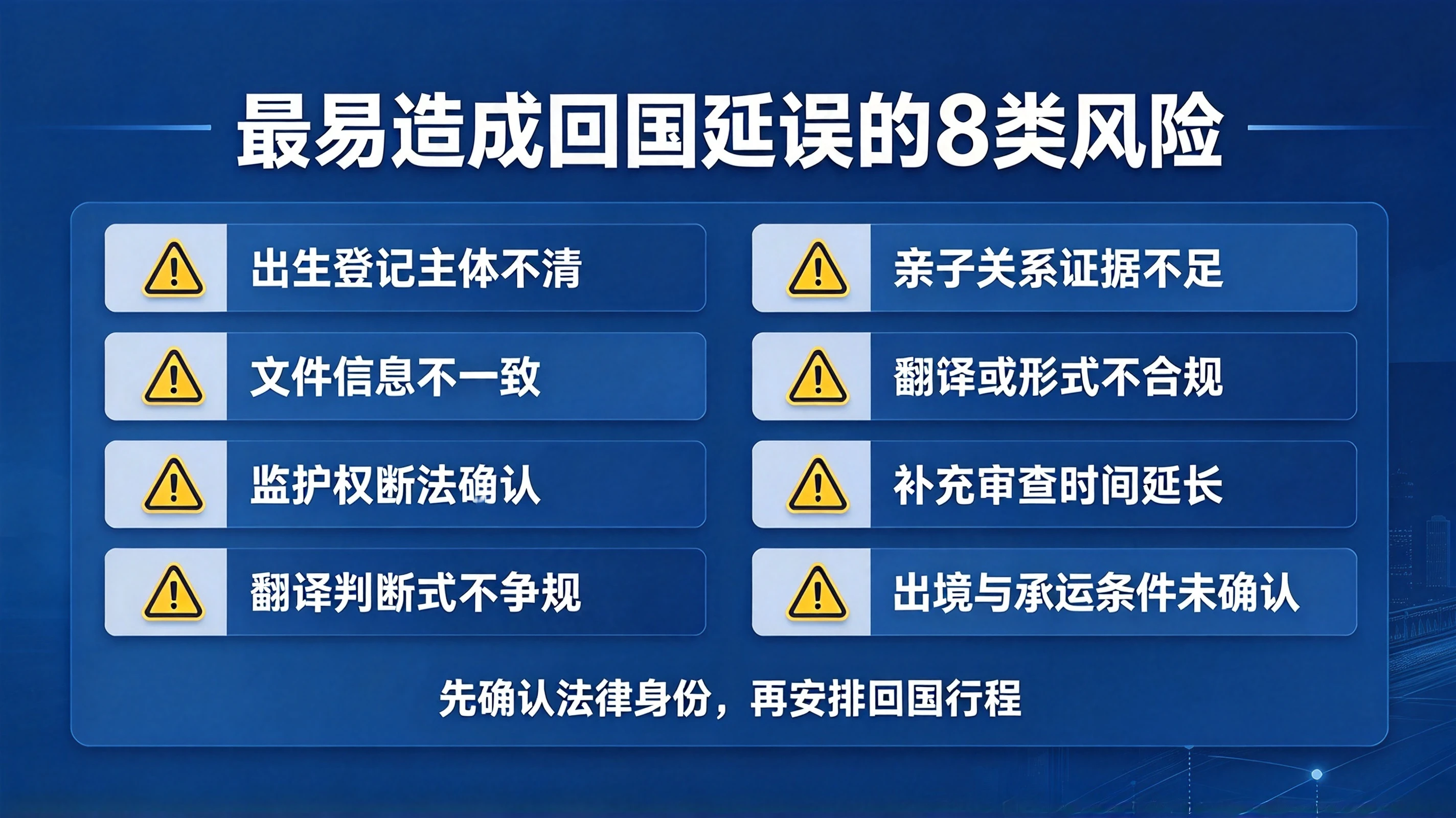
IX. The 8 Types of Risks Most Likely to Cause Delays in Returning Home
Discrepancy in the registered subject of birthThe birth mother and the intended parent are not the same, making it impossible to complete official registration directly; a judicial correction procedure is required.
File information inconsistency: Discrepancies in spelling or content of names, dates of birth, and parental information across different documents
Insufficient evidence of parent-child relationshipOnly DNA reports are provided; judicial documents cannot be issued, and these reports are not accepted by embassies or consulates.
Custody has not been establishedUnable to prove that the applicant has the right to apply for documents and handle entry/exit procedures on behalf of the child
Doubts regarding nationality determinationWhether the child has acquired Lao nationality and whether the parents are settled abroad need to be further verified.
Non-standard document format: The Lao-language document lacks a compliant translation and is missing the official seal and authentication procedures.
The supplementary review cycle is lengthySurrogacy cases are considered special individual cases and are not subject to standard processing time limits.
Exit restrictions not screenedThere are unresolved legal disputes locally, preventing the child from leaving the country normally.
X. Full-Process Material Archiving Checklist
Establish a complete file for the child from birth, categorizing and storing originals, scanned copies, and translated documents:
Medical
Hospital Birth Notification, Delivery Records, and Complete Inpatient Medical Records
Neonatal Examination and Treatment Reports
Local Registration and Legal Services
Original and translated copies of the official Lao birth certificate
Parentage Test Report (if applicable)
Court Judgment on Parent-Child Relationship and Custody
Legal opinions issued by lawyers and relevant notarized and authenticated documents
China Document Application Category
Passports of both parents, visa/residence documents
Parents' Marriage Certificate (if applicable)
Digital and Printed Versions of Children's ID Photos
Application Form, Consular Receipts, and Communication Records
Travel
Original child's travel document
Air tickets, itinerary
Supporting documents required for entry and exit
Conclusion
Surrogacy in LaosThe core of the process for returning overseas-born children to China has never been the simple three-step sequence of “obtaining a birth certificate, conducting a DNA test, and applying for a travel document,” but ratherThe process of confirming legal identity.
Frequently Asked Questions
The content on this website is general educational material and compiled public information about IVF. It is provided for reference only, does not constitute a basis for diagnosis or medical decision-making, and does not constitute any medical advice or treatment recommendation. For policy and technical requirements, please refer to official publications issued by the relevant authorities and institutions. If you find any content errors, numerical inconsistencies, or outdated information, please contact us so we can verify and update it.