
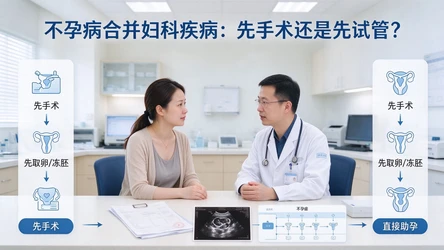
A comprehensive analysis of treatment pathways for infertility complicated by uterine fibroids, ovarian cysts, intrauterine adhesions, and endometriosis. Based on Dr. Xie Changzhi’s clinical background, this guide helps patients determine whether to prioritize surgery, egg retrieval, or direct assisted reproductive technology (ART), including preparation for consultation and references for cross-border medical care.
Read allI. Introduction: The Core Contradiction in Infertility Treatment Is Not Merely "Inability to Conceive"
Many women who have experienced repeated failures in conception and are preparing to undergo assisted reproductive technologies face a dilemma during the examination stage that is often more challenging than infertility itself: being diagnosed with endometrial polyps, uterine fibroids, ovarian cysts, intrauterine adhesions, or endometriosis. Physicians may present two possible approaches: either first surgically treating the gynecological lesions, or proceeding directly with egg retrieval and embryo cryopreservation to preserve fertility as early as possible. Each option carries its own trade-offs:
Surgery first: May damage ovarian reserve, delay fertility, and not all lesions affect pregnancy;
Pre-implantation assistance: If the lesion clearly affects implantation or pregnancy safety, it may reduce IVF success rates and even pose risks during pregnancy.
This "sequencing issue" is even more critical than the choice of IVF technique for women who are of advanced maternal age, have diminished ovarian reserve, a history of ovarian surgery, or multiple failed assisted reproductive attempts.
This paper focuses on Taiwan, ChinaWang Jiawei Obstetrics and GynecologyReproductive Medicine andTest tube babyDeputy Director of the CenterDr. Chang-Chih HsiehUsing publicly available clinical practice backgrounds as a reference, this article adopts the patient’s decision-making perspective to clarify the treatment logic for various gynecological comorbidities, criteria for selecting care pathways, and medical boundaries that patients should verify before seeking consultation, thereby helping patients make more rational choices in matching themselves with appropriate diagnostic and treatment plans.
II. Professional Background of Dr. Xie Changzhi: Combined Experience in Obstetrics, Gynecology, and Reproductive Medicine
Dr. Chang-Chih Hsieh currently serves as the Vice Director of the Wang Chia-Wei Obstetrics and Gynecology, Reproductive Medicine, and IVF Center in Taipei. His public educational background and professional experience are as follows:
EducationGraduated from the School of Medicine at Kaohsiung Medical University
Specialized TrainingResident and Chief Resident, Department of Obstetrics and Gynecology, Linkou Chang Gung Memorial Hospital
Obstetric ExperienceFormer Senior Obstetrician at Yonghe Kuei-Hsiang Women's and Children's Hospital
Reproductive Medicine TrainingResearch Physician, Department of Obstetrics and Gynecology, Infertility Division, Taipei Medical University Hospital
Professional QualificationsMember of the Taiwan Society of Reproductive Medicine and the Society for Maternal-Fetal Medicine
Based on their credentials, they possess a combination of systematic clinical training in obstetrics and gynecology, hands-on experience in obstetric practice, and specialized research background in reproductive medicine, giving them an inherent advantage in the diagnostic and therapeutic perspective for complex cases involving both gynecological conditions and fertility needs. However, three boundaries must be clearly defined to avoid misinterpretation of their qualifications:
Having received training ≠ Currently routinely performed: Specific surgical and diagnostic/treatment procedures are subject to the current outpatient schedules and service scope of the respective institutions;
Having a foundation in obstetrics and gynecology does not mean one can perform all complex surgeries.Publicly available career records cannot fully demonstrate independent qualifications for performing complex laparoscopic, hysteroscopic, and gynecologic oncology surgeries;
Having obstetric experience ≠ the institution can provide full-cycle obstetric services: Obstetric service capabilities of reproductive clinics,High-risk pregnancyHandling conditions must be verified separately.
If the primary reason for seeking care involves gynecological surgery, please confirm in advance: whether the surgery will be performed by the physician personally, the surgical facility, and the composition of the post-operative management team.
III. First, Identify Your Own Situation: Diagnostic and Treatment Decision Logic for Five Groups
1. Women with uterine fibroids and endometrial polyps who are trying to conceive
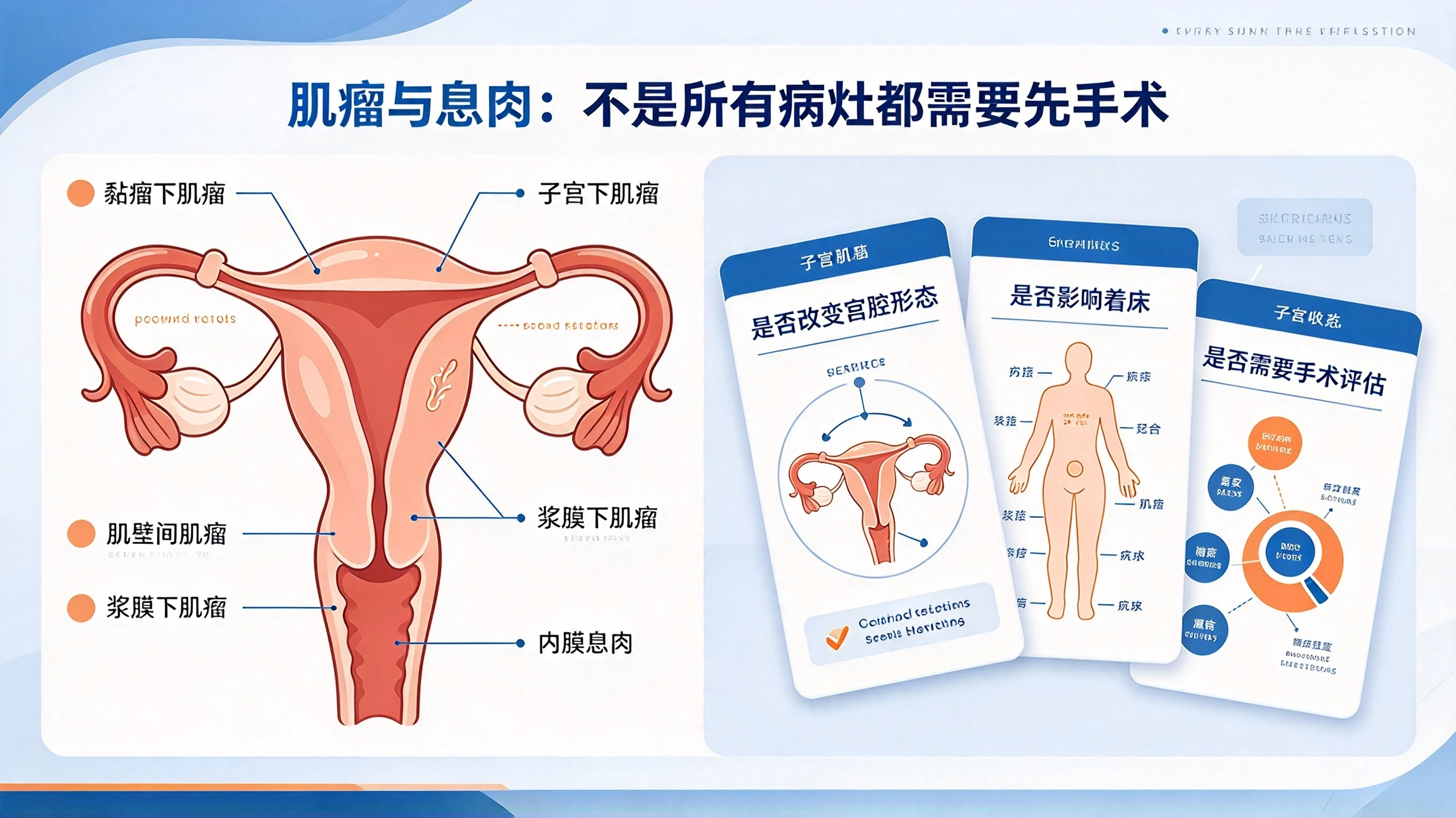
Key ConclusionsNot all fibroids or polyps require preoperative removal; the key criterion is whether they alter the uterine cavity shape and clearly affect implantation.
Grading and classification of uterine fibroids
Submucosal fibroids: For those protruding into the uterine cavity and significantly altering its morphology, the necessity of hysteroscopic surgery should be carefully assessed.
Intramural myomas: Treatment should be considered only when they compress the uterine cavity and cause its deformation. For asymptomatic myomas that do not deform the uterine cavity, surgical removal solely to improve fertility is not recommended.
Subserosal fibroids: For those that do not alter the uterine cavity shape, there is insufficient evidence to demonstrate a direct causal link to infertility, and routine preoperative myomectomy is not recommended. The American Society for Reproductive Medicine (ASRM) guidelines clearly state that myomectomy should only be considered for fibroids that distort the uterine cavity; surgery is not routinely recommended for asymptomatic fibroids without cavity distortion to improve reproductive outcomes.
Individualized Management of Endometrial PolypsPolyps may affect the endometrial implantation environment, but not all small polyps need to be removed prior to IVF. Current evidence-based medicine cannot prove that allIVFPolypectomy before transplantation in patients improves the live birth rate.
Core Issue of the Medical Visit:
Has my lesion clearly altered the shape of the uterine cavity? Is there direct evidence that it affects embryo implantation?
If surgery is not performed immediately, can we proceed with the egg retrieval / assisted reproduction cycle first?
If surgery is required, what surgical procedure should be used? What postoperative criteria must be met before initiating transplantation?
2. Patients with ovarian cysts and endometriosis
Key ConclusionsRoutine excision of ovarian endometriomas is not recommended to improve live birth rates in assisted reproductive technology; surgical decisions must balance the benefits of lesion removal against the loss of ovarian reserve.
The 2022 ESHRE guideline on endometriosis states that routine surgical removal of ovarian endometriomas prior to assisted reproductive technology (ART) does not clearly improve live birth rates and may instead damage normal ovarian tissue and reduce ovarian reserve.
Preoperative assessment requires a comprehensive evaluation of seven factors: age and duration of infertility; AMH (anti-Müllerian hormone, reflecting ovarian reserve) and AFC (antral follicle count); cyst size and imaging characteristics; severity of pain symptoms; whether the cyst interferes with egg retrieval procedures; need to rule out malignancy; and prior ovarian surgery history.
For patients of advanced age, with low AMH levels, or a history of ovarian surgery, the feasibility of "retrieving oocytes and cryopreserving embryos first, followed by lesion treatment" should be prioritized for discussion. However, when there are clear indications for surgery—such as malignancy risk, infection risk, or contraindications to ovulation induction—patients must undergo specialist evaluation first.
The core criterion for assessing a doctor’s suitability is whether they can clearly explain the surgical benefits, the risk of diminished ovarian reserve, and alternative options, rather than merely emphasizing that “minimally invasive surgery causes less trauma.”
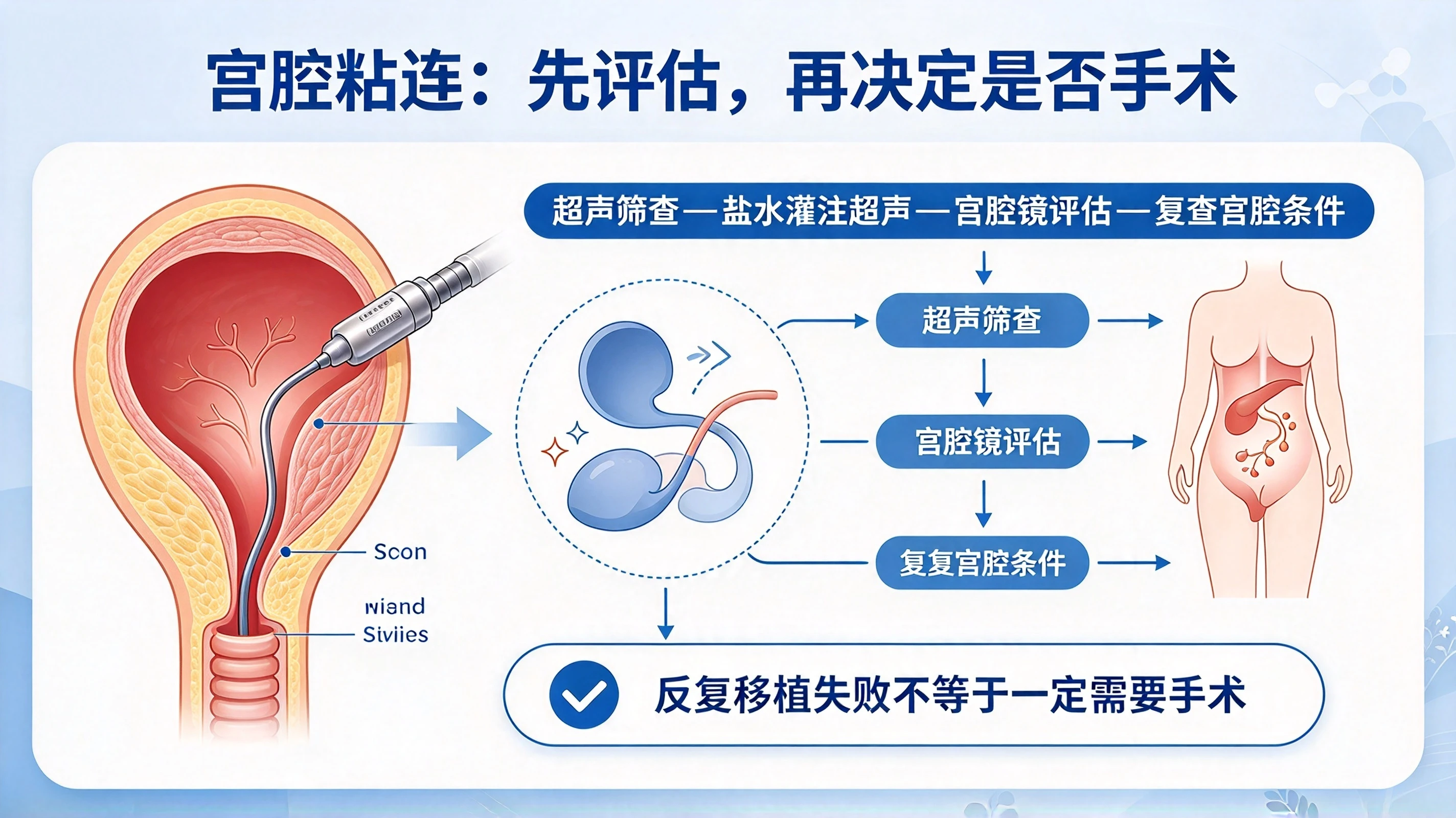
3. Patients with intrauterine adhesions or recurrent embryo transfer failure
Key Conclusions:Recurrent transplant failureIt does not necessarily mean that intrauterine adhesions are present, nor does it mean that hysteroscopic surgery is mandatory.
Common screening methods for intrauterine adhesions include transvaginal ultrasound and saline infusion sonohysterography. Hysteroscopy is the gold standard for diagnosis and can simultaneously perform adhesiolysis. However, the American Society for Reproductive Medicine in 2026Recurrent implantation failureExpert opinion recommends that further evaluation with saline infusion sonography, hysteroscopy, hysterosalpingography, or three-dimensional ultrasound should be performed only in patients with a high suspicion for assessment.
For patients with confirmed intrauterine adhesions, further clarification is needed on:
The extent and severity of adhesions, and whether they alter the uterine cavity morphology;
Whether the basalis layer of the endometrium is damaged;
Postoperative anti-adhesion protocols and follow-up timing
To what standard must the endometrium recover before embryo transfer can be resumed?
It is recommended that you first have the doctor clarify what problems hysteroscopy can address, and then decide whether to undergo the procedure, to avoid overdiagnosis and overtreatment.
4. Women undergoing artificial insemination or in vitro fertilization (IVF) treatment
Key ConclusionsWhen choosing a doctor, don’t just look at whether they can perform IVF; more importantly, consider whether they can develop a rational treatment plan tailored to the underlying cause.
Qualified reproductive care should involve tiered decision-making tailored to different etiologies:
Ovulatory dysfunction: Assess ovulatory function and strictly adhere to the indications for ovulation induction.
Tubal factors: Assess tubal condition and clarifyArtificial inseminationwhether it still has value;
Male factor: Evaluate semen parameters to determine whether ICSI (intracytoplasmic sperm injection) is required;
Decreased ovarian reserve: Customize protocols based on age, AMH, AFC, and prior ovarian stimulation responses;
Uterine factors: Assess whether the uterine cavity conditions are suitable for embryo transfer.
Special attention should be paid to the fact that techniques such as ICSI and assisted hatching have strict medical indications and should not be routinely applied to all patients. Additionally, IVF is a team-based process; it is essential to confirm which specific steps are directly overseen by your physician and whether there is a consistent, dedicated team managing the entire cycle from ovarian stimulation, egg retrieval, and embryo culture through to transfer.
5. Women of advanced maternal age or with comorbid high-risk pregnancy factors
Key ConclusionsPrioritize avoiding unnecessary treatment steps while proactively planning for obstetric safety following assisted reproduction.
When elderly women present with gynecological issues, first assess whether the lesions affect oocyte retrieval, embryo transfer, and pregnancy safety; then determine the order of management to avoid sacrificing valuable reproductive time for lesion treatment.
Meanwhile, a successful test tube procedure is only the first step in achieving pregnancy. For patients who are of advanced maternal age, have comorbid chronic conditions, or a history of pregnancy complications, it is essential to confirm in advance whether the healthcare facility provides obstetric management services and possesses the capabilities for high-risk pregnancy monitoring, emergency referral, and inpatient delivery. It should not be assumed that an IVF clinic can cover the entire continuum of care from embryo transfer to high-risk delivery simply because the physician has prior experience in obstetrics.
IV. Core Decision: Surgery First, Egg Retrieval First, or Proceed Directly to Assisted Reproduction?
There is no standard answer for the order of treatment; the core criteria are three questions:
Is there a clear indication for treatment of the current lesion?
Will the surgery damage ovarian reserve and delay fertility?
Without surgery, will it significantly reduce the success rate of assisted reproduction or compromise pregnancy safety?
Three mainstream treatment pathways
Path A: Treat the gynecological lesions first, then proceed with assisted reproduction
Applicable CasesThe lesion clearly alters the uterine cavity morphology; there is a clear indication for surgery; the lesion directly impedes oocyte retrieval, embryo transfer, or threatens pregnancy safety; and the medical team assesses that the risks of assisted reproductive technology are unacceptably high if the lesion remains untreated.
Core ValuesFirst, rule out clear interfering factors to improve subsequent conditions for assisted conception and pregnancy.
Potential Cost: Surgical costs, anesthesia and surgical risks, recovery period; some patients may need to wait a considerable amount of time before resuming assisted reproduction.
NoteSurgery does not necessarily improve IVF success rates, and there is no standardized waiting period after the procedure; the timing should be individualized based on the surgical technique used, wound healing, and follow-up uterine cavity assessment results.
Path B: First retrieve eggs / preserve embryos, then address gynecological issues
Applicable CasesAdvanced age with significantly diminished ovarian reserve; uterine cavity lesions require treatment but do not affect oocyte retrieval in the short term; lesion characteristics and safety of controlled ovarian stimulation have been assessed as controllable; priority considerationFertility Preservation.
Core ValuesLock in fertility opportunities to avoid having surgery and recovery periods consume valuable reproductive time.
Note: Not suitable for everyone; the nature of the lesion, the safety of ovulation induction, and the feasibility of oocyte retrieval must first be confirmed. Oocyte retrieval should not be forcibly performed when contraindications exist.
Path C: Postpone surgery and proceed directly with assisted reproductive technology
Applicable CasesThe lesion does not clearly affect the uterine cavity morphology; ovarian cysts do not meet surgical indications; surgery may cause significant loss of ovarian reserve; there is no evidence-based support that surgery improves IVF success rates; physicians have assessed that assisted reproductive treatment can proceed under close monitoring.
Core ValuesAvoid overtreatment to save time and costs.
NoteDeferring surgery does not mean neglecting care; regular imaging follow-ups as prescribed by the doctor and continuous monitoring of the assisted reproduction process are required.
Path selection reference for different scenarios
Table
Evaluation Scenario | Surgery first | Egg retrieval / Frozen embryo | Direct surrogacy |
|---|---|---|---|
Significant deformation of the uterine cavity | Prioritize | Can be discussed in conjunction with age | Generally not recommended |
Significant decline in ovarian reserve | Careful weighing | Focus on the proposed solution | Determined by the condition of the lesion |
Asymptomatic ovarian endometrioma | Routine surgery is not recommended | The decision depends on the conditions for egg retrieval. | May be considered |
There is a clear indication for surgery | Priority assessment | Multidisciplinary Joint Assessment | Skipping is not recommended |
The lesion does not affect fertility treatment | No need for surrogacy procedures | Determined by reproductive needs | May be considered |
The table above is a decision-support tool, not a medical prescription. If your physician can only address whether the lesion requires treatment but cannot explain its impact on fertility or discuss alternative options, we recommend seeking a second opinion.
V. How to Determine if Dr. Xie Changzhi Is a Good Fit for Your Needs
Based on their public professional background, suitability can be assessed across five dimensions:
Capability for diagnosing and treating complex casesIf you have both gynecological conditions and fertility goals, what you need is not just a reproductive endocrinologist or IVF specialist, but a physician who can evaluate your gynecological issues from the perspective of achieving your fertility objectives. A dual background in obstetrics/gynecology and reproductive medicine offers distinct advantages; however, it is essential to verify the specific clinical services currently offered by the provider and ensure that the complexity of your case does not exceed the capabilities of the institution.
Fertility Preservation ConceptA simple question can help clarify the situation: "If I proceed with surgery now, how much ovarian reserve might I lose? Are there alternative options such as retrieving eggs first, freezing embryos, or delaying the surgery?" If your doctor provides an objective explanation of the risks by integrating your AMH levels, antral follicle count (AFC), surgical history, and imaging results—rather than solely emphasizing the benefits of the surgery—this approach typically aligns better with a fertility-first clinical strategy.
Full-path planning capabilityA qualified plan should not merely state "what to do next," but also explain: Why act now? What are the consequences of inaction? What are the criteria for success? How to adjust if results are suboptimal? Which items are essential and which are optional? This is the core criterion for determining whether a physician is developing a holistic plan centered on "reproductive goals," rather than issuing fragmented prescriptions.
Interdisciplinary Collaboration and Referral MechanismsConditions such as suspected gynecological malignancies, complex deep infiltrating endometriosis, severe intrauterine adhesions, complex gynecological reconstructive surgeries, and high-risk pregnancies often require multidisciplinary collaboration in large hospitals. It is necessary to verify whether the institution has clear referral pathways and collaborative mechanisms for cases that exceed its scope of capability.
Information transparencyDuring the initial consultation, you can directly ask questions relevant to your specific situation: Based on my age and test results, what is the expected number of eggs retrieved? What is the live birth rate associated with this treatment plan (calculated per single embryo transfer or per complete egg retrieval cycle)? Which steps are mandatory and which are optional? Be sure to distinguish between three different metrics: clinical pregnancy rate, implantation rate, and live birth rate. Prioritize live birth data that is matched to your age and medical condition.
VI. Medical Institution: Wang Jiawei Obstetrics and Gynecology Reproductive Medicine & IVF Center
Dr. Xie Changzhi works at the Wang Jiawei Obstetrics, Gynecology, Reproductive Medicine and IVF Center (W BestIVF), the publicly offered core reproductive services include: comprehensive infertility evaluation, intrauterine insemination (IUI), conventional in vitro fertilization (IVF), intracytoplasmic sperm injection (ICSI), embryo culture, time-lapse embryo monitoring, preimplantation genetic testing, and egg/sperm/Embryo cryopreservationSave.
The above lists the services available at our institution and does not imply that every patient requires all of them. ICSI,PGT-AAssisted hatching and other techniques must strictly adhere to medical indications.
Pre-Visit Confirmation Items for Cross-Border Patients
If you are traveling to Taiwan from the mainland or other regions for medical treatment, it is recommended that you confirm details in advance through the institution’s international medical services window.
Data and Processes: Whether online pre-review of documents is supported, whether both spouses need to be present for the initial consultation, and which tests can be completed locally;
ItineraryDuring ovarian stimulation, how many trips to Taiwan are required; whether egg retrieval and embryo transfer must be done on separate trips; avoid booking flights based on a standard treatment cycle (actual stay duration depends on menstrual cycle, follicular response, and embryo culture results).
Fees and Management: Whether medications, anesthesia, laboratory procedures, and embryo freezing are billed as separate items; the rules for renewing embryo storage fees and subsequent transfers.
ComplianceTaiwan's regulations on assisted reproductive technology regarding applicant identity and marital status requirements, as well as cross-border medical procedures.
VII. Fees and Subsidies: Calculate the Full Out-of-Pocket Cost Before Comparison
IVF costsCost comparisons should not be based solely on base quotes, as the total cost for a complete cycle typically includes: initial examinations for both partners, ovulation induction medications, follicle monitoring and blood tests, egg retrieval surgery with anesthesia, sperm and egg processing and fertilization, embryo culture, embryo freezing and storage, fresh or frozen-thawed embryo transfer, additional testing such as PGT-A, and potential costs for repeated egg retrievals or transfers. The final cost is influenced by medication dosage, number of eggs retrieved, embryo culture outcomes, whether additional testing is performed, and the number of transfer attempts, resulting in significant individual variations.
Taiwan IVF Subsidy 3.0 Description
As of November 2026, the National Health Administration in Taiwan Region has implemented Revision 3.0 of its IVF subsidy program (effective September 1, 2026), with the core adjustment being an increase in the subsidy cap for second and third applications per child:
For female recipients under 40 years of age: The maximum subsidy for an egg retrieval to embryo transfer protocol is NT$150,000 per cycle;
Wife undergoing treatment, aged 40–44 (under 45): Maximum subsidy of NT$130,000 per cycle.
Important NoticeThis subsidy has strict eligibility requirements regarding identity, age, marital status, and other factors.Only eligible residents of the Taiwan region may apply.are not available to cross-border patients.
When comparing institutional fees, it is recommended to request a comprehensive fee breakdown tailored to your specific circumstances. Use the actual out-of-pocket amount after subsidies as the basis for comparison, rather than comparing only the base quote for a single egg retrieval procedure.
8. Preparation for the Initial Consultation and Essential Questions Checklist
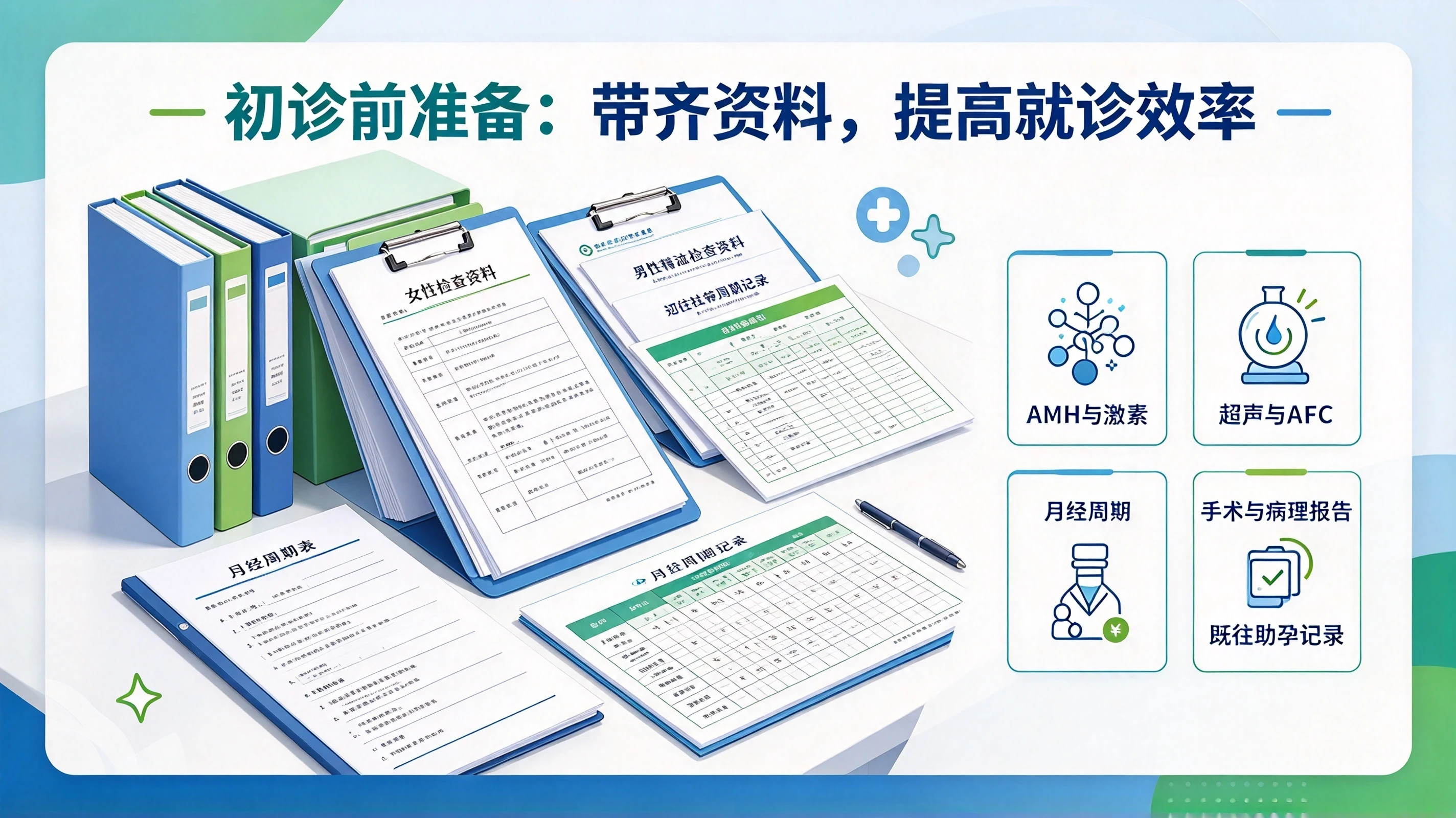
First Visit Document Preparation Checklist
Organized by priority, this can significantly improve visit efficiency:
Female Core ProfileAMH report, basal hormone panel on cycle days 2–3, transvaginal ultrasound with antral follicle count (AFC) records, tubal patency test report, prior gynecological surgery or pathology reports, and menstrual and pregnancy history records.
Male Core Profile:Semen analysis+ Morphology report, records of previous reproductive examinations;
Previous assisted reproductive technology (ART) records(if applicable): Ovarian stimulation protocol and medication dosage, number of oocytes retrieved / number of mature oocytes, number of fertilized eggs / number of blastocysts, embryo cryopreservation and thawing records,PGTDetection results.
Complete historical medical records help doctors quickly identify the root cause of problems, avoiding redundant tests and ineffective trial-and-error.
8 Key Questions to Ask During the First Consultation
Sorted by decision priority:
What are the main suspected factors contributing to my current infertility? Which ones have been confirmed, and which require additional testing?
Do my combined fibroids, polyps, and cysts really affect fertility and implantation?
If surgery is postponed, can we proceed directly to an intrauterine insemination (IUI) or IVF cycle?
If surgery is required, what impact will it have on ovarian reserve and the endometrial environment? Are there any additional risks during pregnancy?
Can I first retrieve eggs and freeze embryos, then address the gynecological lesions?
Who performs the surgery? How is postoperative follow-up conducted? What criteria must be met to resume assisted reproduction?
Which teams are responsible for ovarian stimulation, egg retrieval, embryo culture, and embryo transfer?
If my condition exceeds the capabilities of this institution, can a multidisciplinary consultation or referral be arranged?
IX. Summary: Which populations may be prioritized and which require cautious referral
Focus on understanding the patient demographics
Women who need to address both gynecological conditions and fertility goals, requiring a comprehensive assessment of the optimal treatment sequence;
Couples seeking systematic evaluation of infertility causes and customized assisted reproductive treatment plans;
Patients requiring professional evaluation due to the unclear association between intrauterine lesions and recurrent implantation failure;
Patients with ovarian cysts or endometriosis who need to weigh the timing of surgery against their fertility plans;
Patients who seek reproductive medicine services while also prioritizing gynecological health and post-pregnancy obstetric care.
Situations where it is recommended to prioritize large hospitals or multidisciplinary teams
Patients with suspected gynecological malignancies or requiring complex oncological treatment;
Patients with severe deep infiltrating endometriosis or severe intrauterine adhesions requiring multiple surgeries;
Patients requiring complex gynecological reconstructive surgery;
Patients with high-risk pregnancies requiring advanced obstetric monitoring and emergency support;
Severe male infertility, requiringMicrosurgical sperm retrievalcouples undergoing complex andrological surgeries.
Conclusion
For infertile patients with concurrent gynecological conditions, the core value of a physician has never been "how many procedures they can perform," but rather precise judgment: identifying which lesions truly impair fertility, determining which surgeries are essential, and sequencing them in a way that minimizes the loss of reproductive time and ovarian reserve.
Dr. Xie Changzhi’s combined background in obstetrics and gynecology, reproductive medicine, and obstetrics offers a valuable reference for managing such complex cases. However, the final decision should be based on a comprehensive assessment of the physician’s actual scope of practice, the complexity of your condition, the laboratory and surgical support capabilities of the institution, as well as cost and logistical considerations.
Good fertility treatment is neither about surgically addressing every issue found, nor blindly starting IVF to save time. Instead, it involves identifying a path based on clear medical indications that balances benefits and risks, controls time costs, and aligns with one’s reproductive goals—knowing exactly what needs to be resolved, what can be avoided, and maximizing the preservation of fertility opportunities while protecting one’s physical well-being.
Frequently Asked Questions
The content on this website is general educational material and compiled public information about IVF. It is provided for reference only, does not constitute a basis for diagnosis or medical decision-making, and does not constitute any medical advice or treatment recommendation. For policy and technical requirements, please refer to official publications issued by the relevant authorities and institutions. If you find any content errors, numerical inconsistencies, or outdated information, please contact us so we can verify and update it.
