
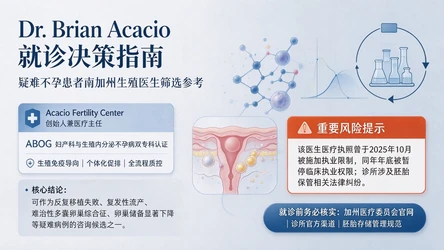
From a treatment decision-making perspective, this article reviews the qualifications, clinical specialties, suitable patient profiles, and visit preparation of Southern California fertility specialist Dr. Brian Acacio, while also noting the latest practice risk warnings. It is intended as a reference for families facing complex infertility issues such as recurrent implantation failure and unexplained recurrent pregnancy loss, and does not constitute medical advice.
Read allInstructions for UseThis document is a patient-facing decision aid designed to help you assess whether your specific health concerns align with this physician’s scope of expertise. It does not constitute medical advice and should not replace official clinic information, second opinions, or evaluations by accredited institutions. All details regarding the physician’s credentials, treatment plans, fees, and practice status should be verified with the clinic and official regulatory channels prior to your visit.
Key Takeaways
Dr. Brian AcacioIt is Southern California in the United StatesAcacio Fertility CenterFounder and Medical Director, board-certified in Obstetrics and Gynecology by the ABOGReproductive endocrine infertilityDual specialty certification, with the core differentiating value beingReproductive ImmunologyorientedRefractory infertilityCause identification, individualized ovarian stimulation protocols, and full-process quality control capabilities within our own clinics, with expertise in managingRecurrent transplant failure/Recurrent miscarriage, complex cases such as treatment-resistant polycystic ovary syndrome and significantly diminished ovarian reserve.
Key Risk Warning: According to publicly available information from California medical regulators, the physician’s medical license was subject to practice restrictions in October 2025 and clinical privileges were suspended at the end of the same year. The clinic is also involved in legal disputes related to embryo storage. Patients are strongly advised to verify the physician’s current licensing status and the clinic’s operational status before scheduling an appointment.
This article serves as a decision-making tool to help you judgeBrian AcacioWhether it is suitable for your condition, what specific problems it can address, and in which cases it should not be prioritized.
1. First, identify: The core target audience of this article
If you fall into any of the following categories, this decision-making reference will be highly valuable to you:
Patients with recurrent implantation failure who have experienced two or more failed transfers of high-quality embryos, or two or more clinical pregnancy losses, without a clear etiology identified at other institutions;
Patients with confirmed refractory polycystic ovary syndrome (PCOS) and significantly diminished ovarian reserve (low AMH), who have consistently poor oocyte yields and embryo quality under conventional ovarian stimulation protocols;
Patients who require a full-chain assisted reproductive technology (ART) service and wish to complete all stages—including examinations, ovarian stimulation, surgical procedures, and laboratory operations—within the same facility, thereby minimizing information gaps caused by multiple referrals.
Patients with complex cases of infertility who have tried conventional treatments without success and seek to identify the underlying causes from the perspective of reproductive immunology.
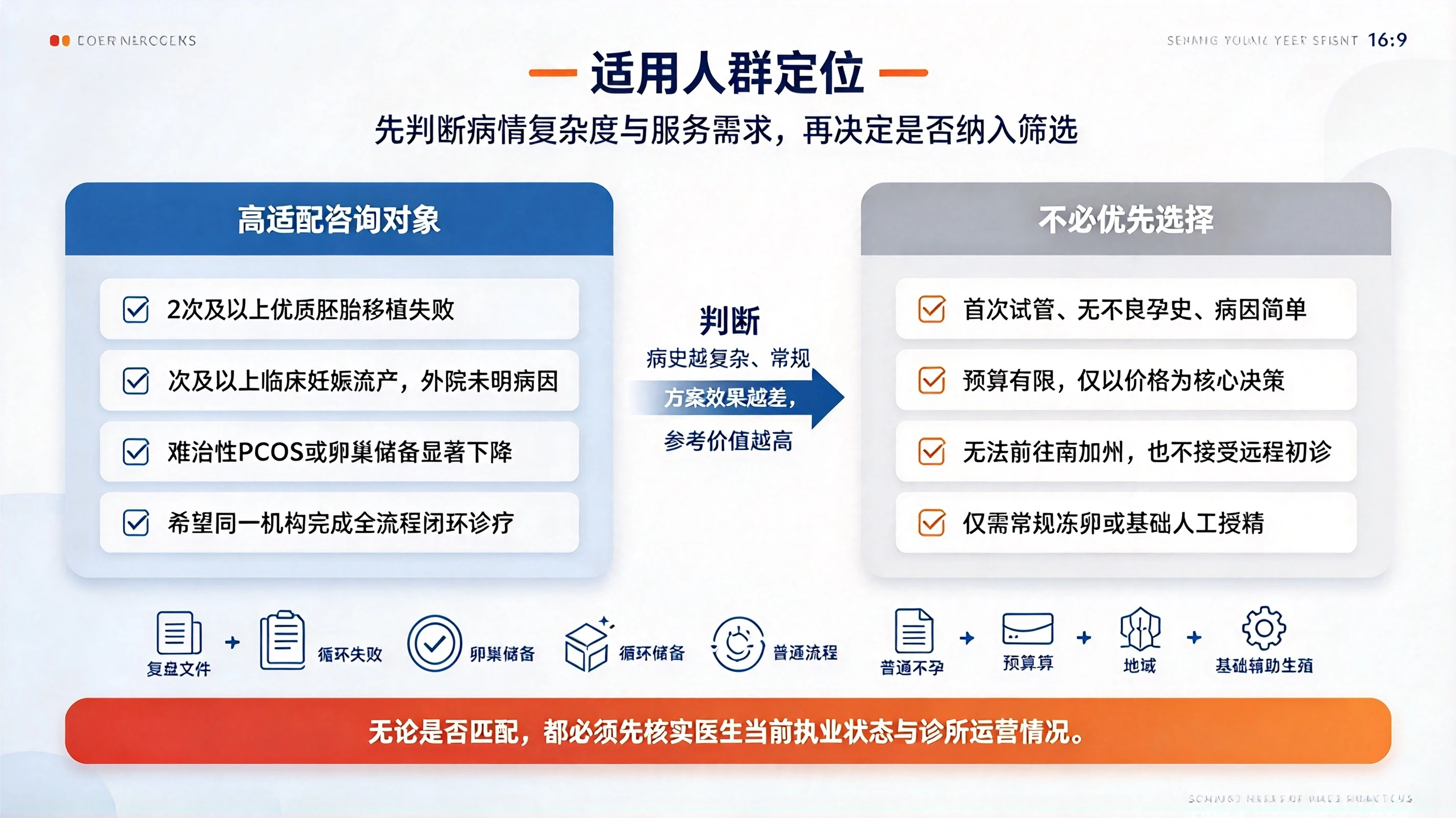
Conversely, this article is of limited value if your situation falls into any of the following categories: first-time IVF attempts, no history of adverse pregnancy outcomes, and general infertility with relatively straightforward causes; families with very tight budgets who prioritize cost as their primary decision-making criterion; or individuals unable to travel to Southern California and unwilling to undergo initial remote evaluations. In such cases, we recommend prioritizing nearby standard reproductive centers rather than seeking out specialists focused on complex or difficult cases.
II. Core Decision Basis: Three Key Differences Between Him and a Typical Reproductive Specialist
The U.S. reproductive medicine field is crowded with physicians. Brian Acacio’s distinct advantage lies not in merely executing standardized ovarian stimulation and embryo transfer protocols, but in his deep expertise in deconstructing the underlying causes of refractory infertility, integrating a reproductive immunology perspective with end-to-end proprietary quality control to enhance diagnostic and treatment efficiency for complex cases. The following three points are key areas patients should prioritize verifying during their initial consultation.
1. Reproductive immunology-oriented etiological investigation: Uncovering the causes of occult failure
When facing patients with repeated failures, general reproductive medicine practitioners often adopt a “switch the protocol and try again” approach; however, his clinical logic involves first systematically investigating the underlying causes of failure across multiple dimensions—including immune factors, endometrial receptivity, coagulation, genetics, and endocrine function—rather than bypassing etiological diagnosis to proceed directly to the next treatment cycle. Specific interventions may include intravenous immunoglobulin (IVIg) infusion, lipid emulsion therapy, low-dose aspirin, heparin, immunomodulators, and other reproductive immunology-related protocols. His team has extensive and systematic experience in diagnosing and treating reproductive immune disorders, having managed numerous cases where immune factors were missed by other institutions.
Reproductive immunology protocols have clear indications and potential risks; they are not suitable for all patients with repeated failures. Their use must be evaluated by a physician based on test results, and patients should not request them independently.
2. Reject assembly-line ovarian stimulation: Emphasize individualized protocols and shared decision-making
For patients with polycystic ovary syndrome (PCOS) or diminished ovarian reserve, he does not apply standardized ovarian stimulation dosages and protocols. Instead, he dynamically adjusts treatment based on the patient’s ovarian response, baseline hormone levels, and prior stimulation history, balancing oocyte yield with embryo quality while minimizing the risk of ovarian hyperstimulation syndrome (OHSS). According to public patient feedback, he clearly explains the risks and benefits of different treatment options, enabling shared decision-making rather than imposing a predetermined treatment path. This approach is particularly supportive for patients experiencing emotional distress due to repeated treatment failures.
Verification tip: During the consultation, directly inquire about the logic for adjusting treatment plans in similar past cases, as well as the average number of retrieved oocytes and the rate of high-quality embryos, to verify their practical experience in individualized care.
3. Full-chain proprietary centers: End-to-end control over diagnosis, laboratory testing, and surgery
As the founder and medical director of Acacio Fertility Center, he has Laguna NikulBakersfieldWith two major campuses, we provide services ranging from basic examinations and ovarian stimulation to egg retrieval, embryo culture, andPGT-AScreening, transplantation, and reproductive minimally invasive surgeries—core procedures can all be completed within our own system. He also serves as an obstetrician and gynecologist at Kern Medical CenterReproductive EndocrinologyDepartment Chair and Assistant Clinical Professor at the University of California, Los Angeles (UCLA), with extensive experience in resident teaching; his clinical approach emphasizes evidence-based practice and logical reasoning. Compared to models involving multi-site practice and outsourced laboratories, an in-house system offers stronger quality control over the entire treatment process, facilitates rapid traceability and adjustment when issues arise, and helps reduce risks associated with disconnects between physicians and laboratories as well as blame-shifting.
Important Risk Disclosure: According to publicly available information from California medical regulators, this physician’s practice privileges were suspended in 2025, and the clinic is involved in legal disputes concerning embryo custody. Patients are strongly advised to verify the clinic’s current embryo storage protocols and operational status through official channels before seeking care.
III. Precise Matching: Highly Suitable Groups and Non-Priority Groups
4 Priority Groups to Consider for Consultation
Patients with repeated assisted reproductive technology (ART) failures: those experiencing two or more failed transfers of high-quality embryos, recurrent pregnancy loss, and complex cases with undiagnosed etiologies from other institutions;
Population with refractory endocrine infertility: Patients with refractory polycystic ovary syndrome (PCOS), significantly diminished ovarian reserve, or long-term poor response to conventional ovulation induction;
Patients seeking end-to-end integrated care: those who wish to complete the entire process—including examinations, surgery, laboratory testing, and transplantation—at a single institution to minimize information gaps caused by referrals.
Target Population for Reproductive Immune Screening: Patients who have not responded to conventional treatments and wish to systematically investigate the causes of infertility from dimensions such as immunity and coagulation.
Groups that do not need to be prioritized
For first-time IVF attempts, patients with no history of adverse pregnancy outcomes and simple causes of infertility can have their needs met by standard reproductive centers.
Families with limited budgets who prioritize price as the core decision-making criterion typically face higher time and financial costs associated with individualized treatment for complex conditions.
Patients who are unable to travel to Southern California and do not accept remote initial consultations;
Individuals who only require routine egg freezing and basic artificial insemination, with no complex comorbidities.
IV. Visit Expectations: How Does His Treatment Process Differ from That of a Standard IVF Specialist?
If you decide to consult Brian Acacio, you should first understand the differences between his treatment pathway and conventional assembly-line IVF procedures, and prepare yourself mentally and time-wise:
For first visits with severe cases, conduct a thorough review of the medical history rather than directly initiating ovulation induction.During the first visit, we do not immediately initiate a treatment cycle. Instead, we conduct a comprehensive review of your medical history, investigate any overlooked causes, and provide a clear plan for testing and assessment. A treatment plan is formulated only after the underlying cause has been identified.
Joint decision-making on plans with high information transparency: It will provide a detailed explanation of the pros and cons of different options, expected success rates, and corresponding risks, allowing patients to make choices based on their own preferences rather than receiving direct treatment instructions.
Dynamic Adjustment of Ovarian Stimulation ProtocolsDuring ovarian stimulation, medication is adjusted in real time based on hormone levels and follicular development. For patients with poor or excessive ovarian response, treatment protocols are promptly optimized rather than maintaining a fixed dosage throughout the process.
End-to-End Closed-Loop Management Within the Hospital: Core procedures such as examinations, surgeries, embryo culture, and PGT testing are all completed within our own integrated system, with seamless access to medical records and test results throughout the process, eliminating the need for external referrals or transfers.
V. Objective Trade-offs: Practical Factors to Consider Before Making a Choice
To help you make more rational decisions, the following practical issues require careful consideration:
The practice status is subject to change risks.: The physician had their medical license suspended by the California Medical Board in 2025. Before seeking care, you must verify through both the official website of the Medical Board of California and the clinic's official channels whether the physician has been reinstated to full practice privileges and if there are any restrictions on their scope of practice.
Medical fees are relatively higher: Individualized treatment for complex cases; reproductive immunology procedures are mostly self-pay, with overall costs typically higher than those of standard IVF cycles, and some specialized services not covered by insurance.
Strong regional limitations: Clinics are located only in Orange County and Kern County in Southern California. Non-local patients must bear travel and time costs. Remote assessments are available for initial consultations only; core treatment still requires an in-person visit to the clinic.
Reproductive immunology protocols are controversial: Some reproductive immune interventions remain subject to evidence-based controversies within the industry; not all patients benefit from them, and decisions should be made based on individual clinical conditions and risk tolerance.
Clinic Involved in Legal Dispute: Its clinic is involved in legal disputes with patients related to embryo custody. Before making a selection, verify the relevant rules on embryo storage management and rights protection to avoid potential risks.
Limited insurance coverageBasic reproductive care is partially covered by commercial insurance, but specialized treatments for reproductive immunity and PGT testing are largely out-of-pocket; it is advisable to confirm reimbursement details in advance.
VI. Quick Decision Checklist (For Direct Self-Review)
The more of the following criteria are met, the higher the overall compatibility score for considering Brian Acacio as a highly suitable consultation candidate; however, it is essential to first verify that the physician holds an active medical license: □ History of two or more failed embryo transfers or recurrent pregnancy loss without a clearly identified cause □ Refractory polycystic ovary syndrome (PCOS) or significantly diminished ovarian reserve with long-term poor response to conventional stimulation protocols □ Desire to investigate causes of failure from a reproductive immunology perspective after conventional approaches have proven ineffective □ Preference for receiving comprehensive care within a single facility to minimize gaps in information during referrals □ Verification through the California Medical Board that the physician currently holds valid practice privileges □ Willingness and ability to bear the costs associated with complex treatments and the time required for visits to Southern California
If criteria 0–1 are met, consider starting with a nearby routine reproductive center; refer or seek a second opinion when complex issues arise.
7. Checklist of Questions to Verify Before a Facial Diagnosis
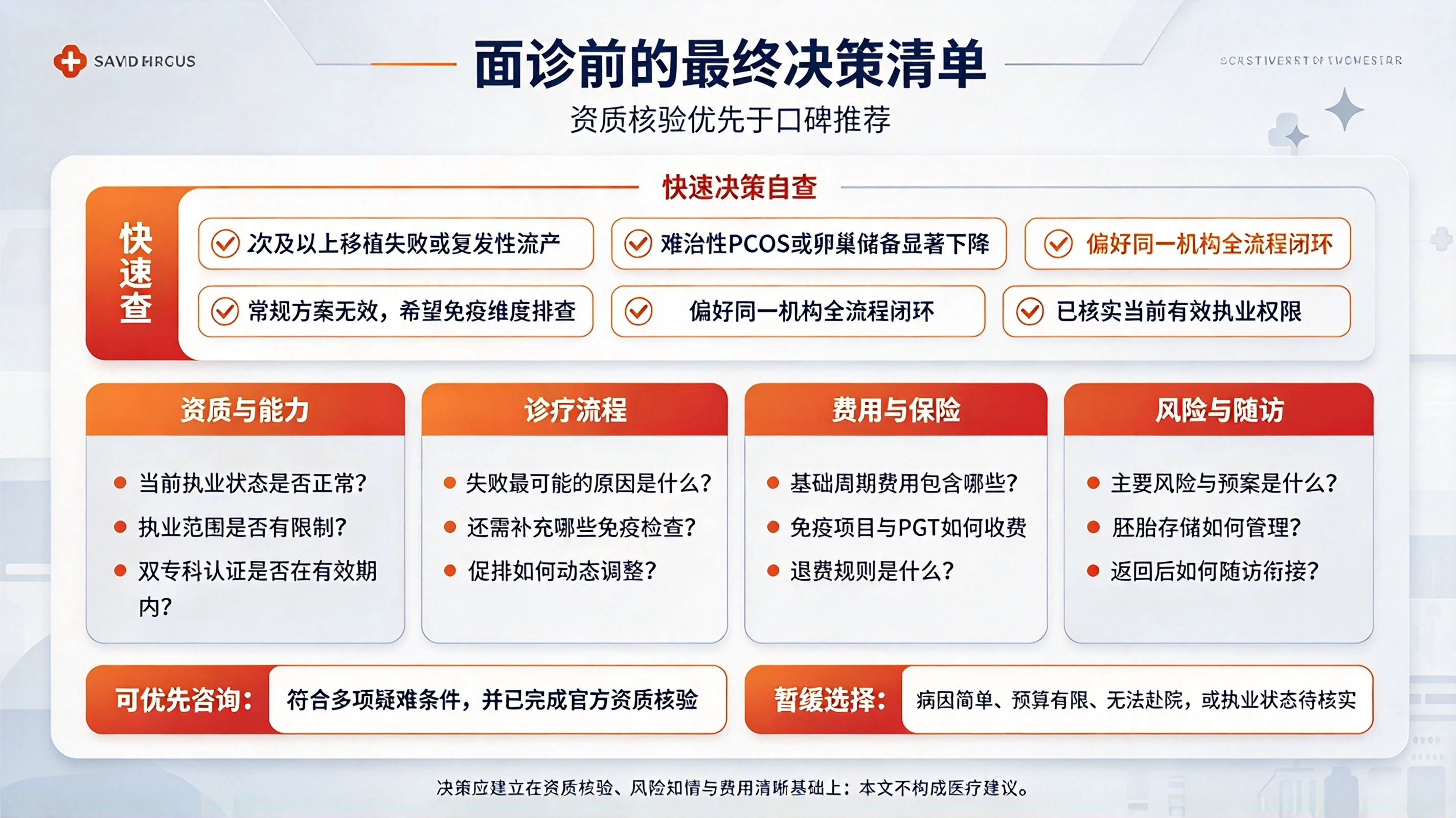
It is recommended to prepare questions in advance according to the following four categories to avoid missing core information:
Qualification and Competency Verification
Is the doctor's current practice status normal? Are there any scope-of-practice restrictions imposed by regulatory authorities?
Is the physician's dual ABOG board certification currently valid? What is the corresponding scope of practice?
How many cases of my specific condition does the medical team handle annually? What are the corresponding clinical pregnancy and live birth rates?
What are the management regulations for embryo storage in clinics? Are there corresponding mechanisms to safeguard patient rights and interests?
Clinical Workflow and Treatment Plans
Based on my previous medical records, what do you consider the most likely core reason for the previous failures?
What additional tests are needed in the next step? Do they include reproductive immune-related testing? What is the recommended frequency of these tests?
What is the logic behind adjusting ovarian stimulation protocols? What are the contingency plans for managing ovarian hyperstimulation or poor response?
What are the indications for reproductive immune interventions? What are the corresponding potential side effects and risks?
Fees and Insurance
What items are included in the base fees for a complete treatment cycle? How are reproductive immunotherapy and PGT testing charged separately?
What items are covered by my commercial insurance? What is the itemized breakdown and pricing of out-of-pocket expenses?
What are the refund rules for fees already paid in the event of cycle cancellation or failed transplantation?
What is the fee for a remote initial consultation? Can it be credited toward subsequent treatment costs?
Risk and Follow-up
What are the main risks during the treatment process corresponding to my condition, and what are the contingency plans for addressing them?
What are the risks associated with embryo culture and cryopreservation? What are the compensation and handling mechanisms in case of unforeseen incidents?
What are the follow-up mechanisms after ovarian stimulation and embryo transfer? How can patients quickly contact the medical team in case of abnormalities?
How should follow-up visits and medication guidance be coordinated after returning to the place of residence?
Choosing a specialist in refractory infertility is essentially about seeking new diagnostic and therapeutic breakthroughs for cases that have repeatedly failed. For patients who do not respond to conventional treatments and whose underlying causes remain unclear, different clinical perspectives may offer new directions. However, given current practice trends, final decisions must be based on verified credentials, fully informed consent regarding risks, and clear cost transparency, rather than on single promotional articles or word-of-mouth recommendations.
Acacio Fertility Center Official Website - Doctor Profiles
Official Press Release from U.S. Representative Mike Levin
Physician Qualifications at Laguna Niguel Surgery Center
Reprosave Physician Background Introduction
American Fertility Association Physician Network Directory
WebMD Physician Practice Information Page
Frequently Asked Questions
The content on this website is general educational material and compiled public information about IVF. It is provided for reference only, does not constitute a basis for diagnosis or medical decision-making, and does not constitute any medical advice or treatment recommendation. For policy and technical requirements, please refer to official publications issued by the relevant authorities and institutions. If you find any content errors, numerical inconsistencies, or outdated information, please contact us so we can verify and update it.
