
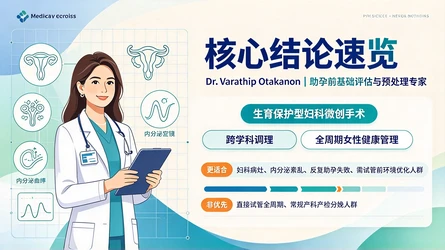
For patients traveling to Thailand for assisted reproduction, this guide provides a detailed explanation of Dr. Walati's core competency boundaries, suitable patient profiles, and clinical treatment characteristics, with a focus on pre-IVF preparation, fertility-preserving minimally invasive surgery, and full-cycle women's health management—helping patients rationally match pre-treatment medical resources and optimize the foundational conditions for fertility treatment.
Read allInstructions for UseThis document is a patient-facing decision aid designed to help you assess whether your specific medical concerns align with this physician’s scope of expertise. It does not constitute medical advice and should not replace consultations with hospitals, second opinions, or evaluations by accredited institutions. All information regarding the physician’s qualifications, surgical indications, costs, and treatment plans must be verified directly with the hospital or the physician prior to your visit.
Key Takeaways
Dr. Varathip Otakanon (commonly translated into Chinese asVarati Otakanon) is a senior Thai expert in obstetrics, gynecology, and reproductive medicine, whose core positioning is notIVFA full-cycle attending physician, but rather a "pre-conception foundational assessment and pre-treatment specialist." Its core differentiated value lies in fertility preservation.Minimally invasive gynecological surgery+ InterdisciplinaryReproductive EndocrinologyCombining treatment with comprehensive women’s health management from reproductive age through menopause, she excels at addressing gynecological pathologies while prioritizing the preservation of ovarian and uterine fertility functions, thereby removing obstacles for subsequent assisted reproduction.
Her clinical practice is best suited for patients with coexisting gynecological organic lesions, endocrine disorders, and recurrent assisted reproduction failures who require optimization of the uterine and pelvic environment prior to IVF. It is not appropriate for patients seeking full-cycle IVF treatment or those with routine obstetric needs only. For families pursuing surrogacy in Thailand, precise matching of clinical roles is more important than blindly selecting “renowned IVF doctors.” This article serves as a decision-making tool to help you determine whether an initial consultation with this physician is necessary, what issues she can address, and under which circumstances prioritizing her services is not required.
1. First, identify: The core target audience of this article
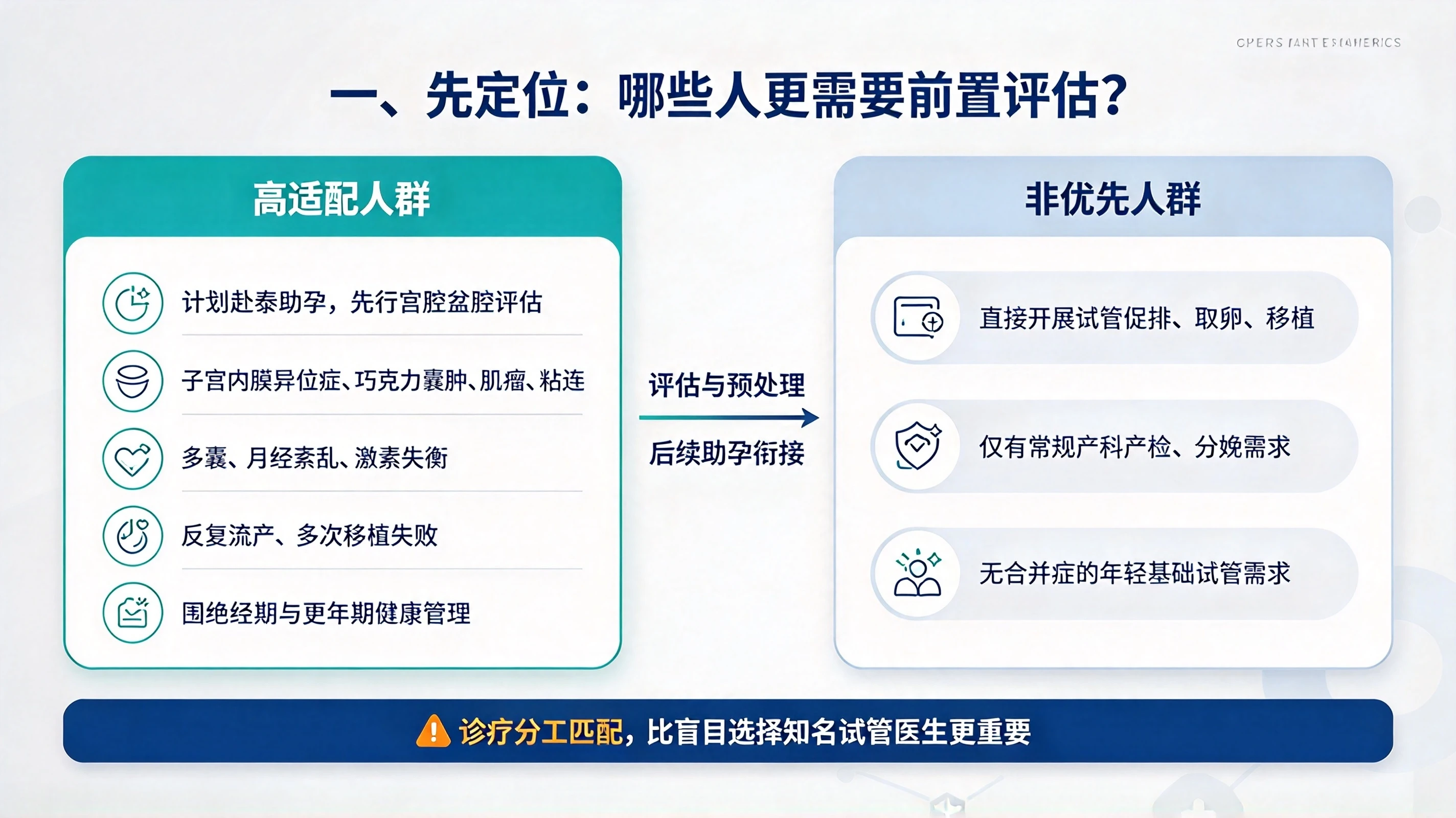
If you fall into any of the following categories, this decision-making reference will be highly valuable to you:
Women planning to travel to Thailand for IUI/IVF fertility treatments who wish to first complete a comprehensive evaluation of the uterine cavity and pelvic region, along with pre-conception physical conditioning, to minimize the risk of underlying gynecological issues disrupting their fertility treatment plans;
Patients diagnosed with organic gynecological conditions such as endometriosis, ovarian endometriomas (chocolate cysts), uterine fibroids, intrauterine adhesions, and hydrosalpinx, who have clear fertility desires and wish to prioritize the preservation of ovarian and uterine reproductive function during surgery;
Women with polycystic ovary syndrome (PCOS), chronic menstrual irregularities, and hormonal imbalances who seek comprehensive management through nutrition, endocrinology, and lifestyle modifications rather than relying solely on medication for short-term symptom suppression;
Individuals with a history of recurrent spontaneous abortion and multiple failed IVF embryo transfers who require systematic evaluation for intrauterine and pelvic pathologies as well as endocrine etiologies;
Perimenopausal or postmenopausal women who require individualized management of menopausal symptoms, assessment of hormone levels, and attention to gynecological anti-aging and overall health management.
Conversely, this article may be of limited relevance if your needs fall into the following categories: you wish to proceed directly with a full cycle of IVF treatment, including ovarian stimulation, egg retrieval, and embryo transfer; or you have only routine prenatal care and delivery requirements. In such cases, we recommend consulting directly with reproductive endocrinology specialists or obstetric institutions, rather than prioritizing an appointment with this physician.
II. Core Decision Criteria: Three Key Differences Between Her and a General Obstetrician/Gynecologist or Reproductive Specialist
Thailand has a large number of doctors specializing in obstetrics, gynecology, and reproductive medicine. Dr. Varati’s distinctive advantage lies in the fact that she is not merely a surgeon or an IVF specialist, but rather integrates minimally invasive surgery with reproductive endocrinology,Functional MedicineWithAnti-agingMultidisciplinary medical experts. The following three points are key areas to verify during patient consultations.
1. Interdisciplinary integrated treatment: Not just addressing the lesion, but optimizing the foundational environment for conception
Dr. Varati specializes in obstetrics and gynecology, reproductive medicine, anti-aging, andRegenerative medicineClinical nutrition with a multidisciplinary background: Holds a sub-specialty qualification in reproductive medicine from the Medical Council of Thailand, a Master of Science degree in Anti-Aging and Regenerative Medicine from Bangkokthonburi University, and a Nutritional Health Certification BDMS Welln... from the American Naturopathic Certification Board (ANCB).
Her approach to care is not merely symptom-focused. For example, in cases of polycystic ovary syndrome (PCOS), she simultaneously assesses hormone levels, insulin resistance, nutritional status, and lifestyle factors to develop a multidimensional management plan. This approach is better suited for individuals preparing for pregnancy who seek medium- to long-term optimization of their overall health, rather than just short-term suppression of symptoms.
Reference prompt:Integrative MedicineWellness regulation is a supplement to pharmacological treatment and cannot replace standardized reproductive medicine care. If you have already entered an IVF cycle, the plan prescribed by your reproductive specialist should take precedence, and any wellness regimen must be carefully coordinated with it.
2. Minimally Invasive Surgical Philosophy Prioritizing Fertility
Dr. Varathi completed her fellowship in gynecologic minimally invasive endoscopic surgery at KK Women’s and Children’s Hospital in Singapore. She has over 29 years of clinical experience in hysteroscopy and laparoscopy, and holds a robotic surgery training certification from Singapore General Hospital.
Compared with general gynecologic surgeons, the core distinction lies in their consistent prioritization of fertility preservation when managing conditions such as ovarian endometriomas (chocolate cysts), uterine fibroids, and intrauterine adhesions. This approach aims to preserve normal ovarian cortex as much as possible, minimize damage to ovarian reserve function, maintain endometrial integrity, reduce the risk of postoperative intrauterine adhesions, and shorten the waiting period for conception through tailored postoperative care protocols. For patients with clear reproductive plans, this clinical philosophy offers well-defined therapeutic value; however, specific surgical strategies must still be determined based on individual patient assessments.
Note: Fertility preservation is a relative concept. The size, location, and severity of the lesion still affect the degree to which ovarian function can be preserved; there is no such thing as a "zero-damage" surgery. During the consultation, patients should explicitly inquire about the expected surgical damage and postoperative changes in ovarian function.
3. Continuous health management covering the reproductive age through menopause
Her scope of practice spans multiple stages of a woman’s life, from fertility treatment for women of childbearing age and surgical management of gynecological conditions to hormonal management during the perimenopausal transition and anti-aging care for middle-aged and older women. Some patients receive long-term follow-up care from the preconception stage through menopause, reducing information gaps caused by frequently changing doctors as needs evolve across different life stages, thereby ensuring greater continuity in diagnostic and treatment plans.
Verification tip: During the consultation, you can confirm the doctor’s long-term follow-up mechanism, how treatment plans are coordinated across different stages, and whether cross-border remote follow-ups are supported.
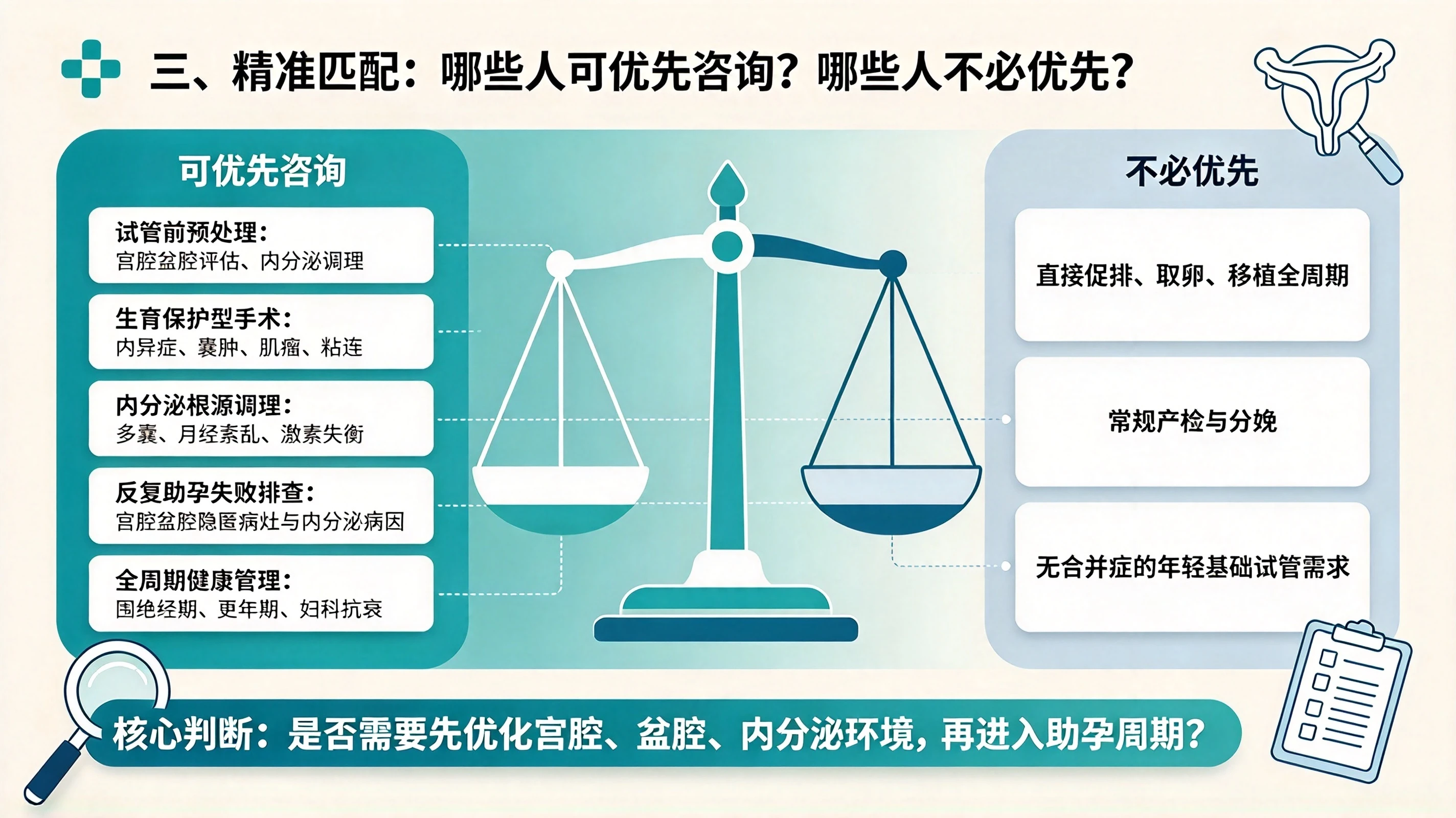
III. Precise Matching: Highly Suitable Groups and Non-Priority Groups
5 priority groups for consultation
Target audience for pre-IVF preparation: Women planning to pursue surrogacy in Thailand who wish to first complete a comprehensive evaluation of the uterine and pelvic cavities, optimize endocrine function, and address any pathological conditions, thereby laying a solid foundation for assisted reproduction.
Patients requiring fertility-preserving surgery: Those with conditions such as endometriosis, chocolate cysts (endometriomas), uterine fibroids, or intrauterine adhesions who are particularly concerned about the impact of surgery on ovarian and uterine fertility.
Women seeking root-cause endocrine regulation: those with polycystic ovary syndrome (PCOS), chronic menstrual irregularities, or hormonal imbalances who desire comprehensive, multi-dimensional care rather than relying solely on medication.
Target population for investigation of repeated assisted reproductive failure: Complex cases involving multiple failed embryo transfers and recurrent spontaneous miscarriages, requiring systematic evaluation for occult uterine and pelvic lesions as well as endocrine etiologies.
Women requiring full-cycle health management: women seeking perimenopausal symptom management, menopausal hormone regulation, gynecological anti-aging, and overall health maintenance.
Groups that do not need to be prioritized
Patients who wish to proceed directly with the full IVF cycle—including ovarian stimulation, egg retrieval, and embryo transfer: Her core work focuses on pre-cycle preparation and conditioning; she does not oversee the entire IVF cycle procedures.
Individuals with only routine obstetric prenatal care and delivery needs: Their core practice focuses on gynecology, reproductive-related diagnosis and treatment, and women's health management, and does not cover obstetric delivery services.
Basic IVF needs for young patients without complications: The female partner has good physical health and no underlying gynecological diseases, requiring only routine procedures.IVF/ICSI (In Vitro Fertilization/Intracytoplasmic Sperm Injection)For patients, no additional preprocessing steps are required.
4. Expectations for the Visit: How Her Treatment Process Differs from That of a Standard IVF Doctor
If you decide to consult Dr. Valati, you should first understand the differences between his treatment pathway and conventional IVF procedures, and prepare yourself mentally and logistically regarding the time involved:
The initial consultation focuses on a comprehensive assessment, without immediately proceeding to the treatment cycle.A comprehensive reproductive health assessment is typically conducted during the first visit before prescribing an ovarian stimulation protocol. This includes a gynecological examination, baseline sex hormone levels, ovarian reserve evaluation, and screening of uterine cavity morphology and pelvic environment. A treatment plan is formulated only after identifying any lesions or endocrine abnormalities.
Address the underlying medical condition before proceeding with assisted reproduction.If organic lesions in the uterine cavity or pelvic region, or significant endocrine abnormalities, are present, we first optimize your physical condition through surgery or targeted treatment regimens. Only after meeting the required criteria do we proceed with an internal referral to connect you with the IVF specialist, rather than directly initiating ovarian stimulation.
The plan involves multi-dimensional integration, not single-drug therapyFor endocrine regulation, a multi-dimensional approach combining medication, nutritional supplementation, and lifestyle guidance is employed. The treatment cycle is typically longer than that of pharmacotherapy alone, but places greater emphasis on achieving long-term hormonal homeostasis.
Post-operative Recovery and Conditioning: Following gynecological minimally invasive surgery, a personalized recovery plan is provided to accelerate ovarian and endometrial repair, minimizing the waiting period between post-surgery recovery and assisted reproduction.
V. Objective Trade-offs: Practical Factors to Consider Before Making a Choice
To help you make more rational decisions, the following practical issues require careful consideration:
Does not directly oversee the full IVF cycle; requires referral coordination: She is not responsible for core IVF procedures such as ovarian stimulation, egg retrieval, or embryo transfer. After pre-treatment is completed, patients must be referred to the attending physician at the reproductive center. It is necessary to confirm in advance the referral process, the scope of mutual recognition of medical records, and the efficiency of coordination.
Multi-institutional consultations; different needs correspond to different campuses: Currently mainlyBangkokThe main hospital and BDMS Wellness Clinic offer different services, fee structures, and surgical conditions. Please confirm the appropriate facility for your specific needs before making an appointment.
The overall cycle of conditioning and surgery is longer: If surgery and post-operative recovery are required, the entire treatment cycle may take 1–3 months, delaying the start of the IVF cycle. Therefore, advance planning for your trip to Thailand and consideration of time costs are necessary.
Costs for integrative medicine programs vary widelyNutritional conditioning and anti-aging treatments are mostly self-pay services with a wide price range, and some fall outside the scope of routine gynecological care; therefore, it is essential to clarify the fee details in advance to avoid discrepancies in expectations.
Cross-Border Follow-up and Subsequent CoordinationPost-operative follow-up, recovery management, and coordination of the IVF protocol after returning to China require advance confirmation of a liaison mechanism to avoid disruptions in medical care due to cross-border transitions.
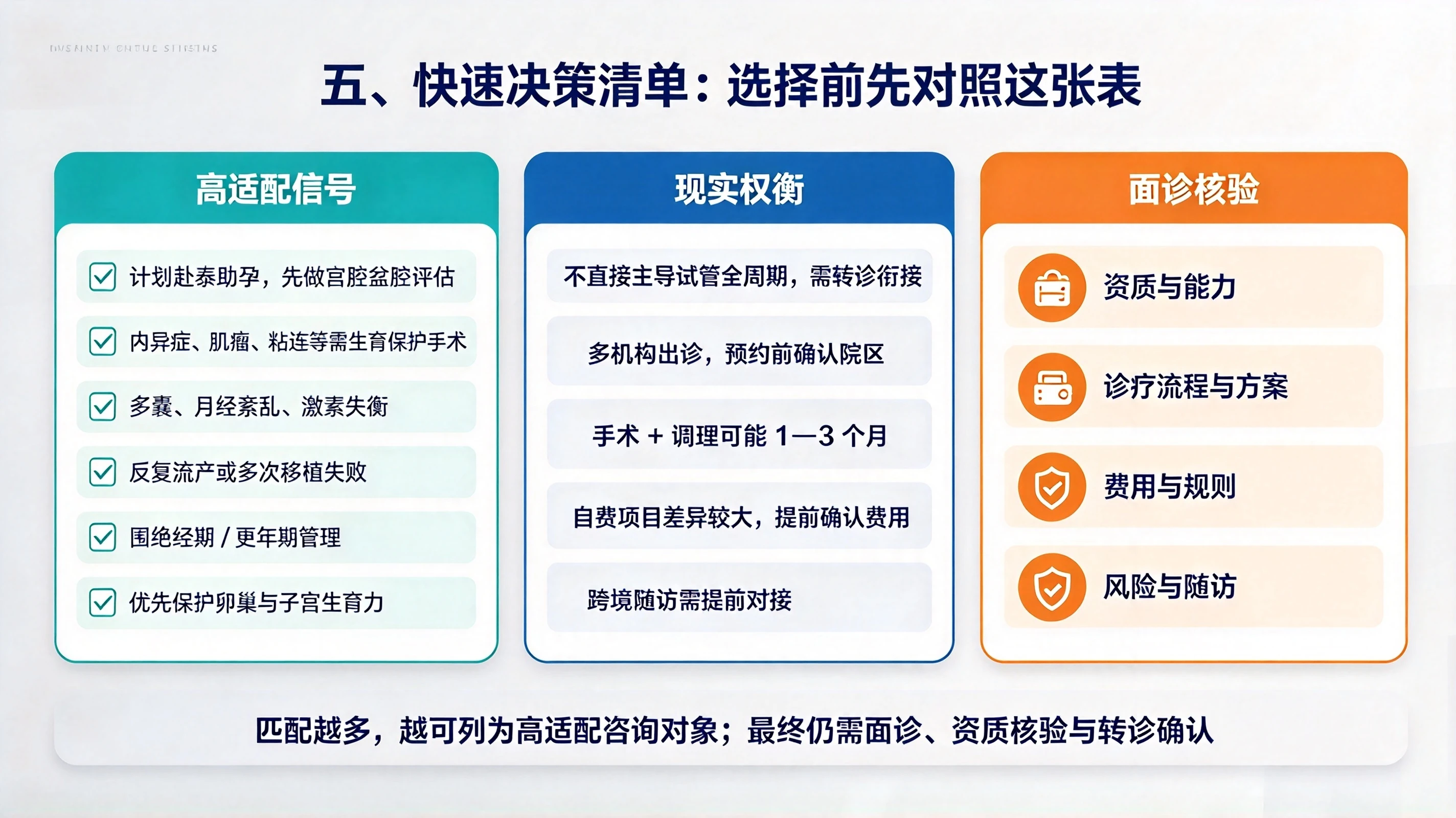
VI. Quick Decision Checklist (For Direct Self-Review)
The more of the following criteria are met, the better the overall match; Dr. Varati may be listed as a highly suitable consultation candidate, but an in-person consultation and verification of credentials are still required: □ Planning to undergo surrogacy in Thailand, hoping to first receive a comprehensive uterine and pelvic assessment andPre-pregnancy Conditioning- Diagnosed with gynecological conditions such as endometriosis, uterine fibroids, or intrauterine adhesions, requiring fertility-preserving surgery. - Suffering from polycystic ovary syndrome (PCOS), menstrual irregularities, or other endocrine disorders, seeking comprehensive multidimensional treatment. - Having a history of recurrent miscarriages or multiple failed IVF embryo transfers, needing investigation into underlying causes. - In the perimenopausal or menopausal stage, requiring individualized health management and anti-aging solutions. - Concerned about surgical damage to ovarian and uterine fertility, prioritizing fertility-preserving procedures.
If criteria 0–1 are met, consider starting with a general reproductive center or gynecological clinic; seek referral or a second opinion when complex issues arise.
7. Checklist of Questions to Verify Before a Facial Diagnosis
It is recommended to prepare questions in advance according to the following four categories to avoid missing core information:
Qualification and Competency Verification
What are the doctor's practice registration information with the Thai Medical Council and his/her certification in Obstetrics, Gynecology, and Reproductive Medicine?
What is the average annual volume of gynecological minimally invasive surgeries? For fertility-sparing surgeries targeting endometriosis or uterine fibroids, what is the average degree of postoperative decline in ovarian function?
What is the rationale for functional medicine and nutritional interventions in reproductive endocrine regulation protocols, and is there evidence-based medical support?
Clinical Workflow and Treatment Plans
Given my condition, should I undergo surgery or conditioning treatment before starting the cycle? What is the approximate duration of the overall pre-treatment period?
After meeting the preprocessing standards, how do you coordinate with the attending physicians within the BDMS system? Are medical records and test results fully mutually recognized?
What is the earliest time after surgery that ovarian stimulation can be initiated? What are the specific post-operative recovery and conditioning protocols?
If you choose endocrine regulation, how often should hormone levels be rechecked? What is the basis for adjusting the treatment plan?
Fees and Rules
What items are included in the fees for initial assessment, minimally invasive surgery, and endocrine regulation packages? Which items incur additional charges?
What are the refund rules for cancelled surgeries and mid-process termination of conditioning treatments?
After referral to the reproductive center, will there be duplicate testing fees?
Risk and Follow-up
What are the main surgical risks associated with my condition? What is the probability of impaired ovarian function?
What are the emergency procedures and cost-bearing rules for postoperative complications such as infection or bleeding?
How should follow-up appointments be arranged after returning home? Are remote consultations and medication guidance supported?
What is the expected efficacy rate of conditioning and surgery? Are there cases where no improvement occurs even after conditioning?
Choosing a pre-treatment specialist is essentially about mitigating risks and improving baseline conditions for subsequent assisted reproductive technology (ART). For complex cases involving gynecological lesions or endocrine disorders, optimizing the body’s environment before starting a treatment cycle is often more effective than blindly repeating ovarian stimulation protocols. However, the final decision should be based on verified credentials, transparent costs, and clear referral mechanisms, rather than single promotional articles or introductions by intermediaries.
Frequently Asked Questions
The content on this website is general educational material and compiled public information about IVF. It is provided for reference only, does not constitute a basis for diagnosis or medical decision-making, and does not constitute any medical advice or treatment recommendation. For policy and technical requirements, please refer to official publications issued by the relevant authorities and institutions. If you find any content errors, numerical inconsistencies, or outdated information, please contact us so we can verify and update it.