
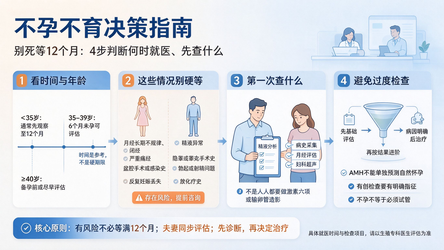
You don’t have to wait 12 months to seek help for conception. This article explains when to see a doctor for infertility, distinguishes between primary and secondary infertility, outlines the sequence of tests for both partners, and clears up common misconceptions about AMH testing and IVF.
Read allAfter three or six months of trying to conceive without success, should couples seek medical evaluation? This dilemma is common among most couples attempting pregnancy: on one hand, general guidelines recommend waiting until 12 months of regular unprotected intercourse before initiating an infertility assessment; on the other hand, there are concerns about advancing age, declining ovarian reserve, and potential issues with the fallopian tubes, ovulation, or sperm quality. These conflicting perspectives lead to two extreme approaches: some treat the 12-month threshold as an absolute rule, delaying evaluation even in the presence of menstrual irregularities or a history of reproductive disorders, while others undergo comprehensive hormonal, immunological, and reproductive testing—or even consider assisted reproductive technologies—after just two to three months of trying.
In fact, 12 months is not a physiological threshold distinguishing normal from abnormal fertility; it is merely a general assessment milestone for the typical healthy population. Whether to seek medical care earlier must be determined by comprehensively evaluating factors such as the woman’s age, menstrual status, medical history, and both partners’ reproductive histories. Truly rational preconception planning involves neither blindly waiting and wasting time nor assuming that earlier testing is always safer, but rather using minimal time and financial costs to precisely identify the key factors genuinely affecting conception. This article outlines four core decision-making steps to help you systematically clarify: When should you seek medical advice during preconception planning? Which situations require immediate attention? What initial examinations are necessary? How can unnecessary or excessive medical interventions be avoided?
I. Clarifying the Concepts: The Definition of Infertility and the Essence of the “12-Month Rule”
1. WHO's medical definition of infertility
The World Health Organization (WHO)InfertilityDefined asDiseases of the reproductive systemrefers to regular sexual intercourse without any contraceptive measures for 12 months or longer, yet failing to achieve a clinical pregnancy. Understanding this definition requires meeting three core prerequisites simultaneously:
Regular sexual activity: Clinically, this typically refers to regular intercourse occurring once or twice a week and covering the ovulation period, rather than occasional sexual activity with extremely low frequency;
No contraception throughout: No contraceptive methods such as condoms, oral contraceptives, or intrauterine devices (IUDs) were used;
Duration of 12 monthsUnder the above two conditions, conception has not occurred despite continuous attempts.
It is necessary to clearly distinguish: 12 months is the definition of infertility.Medical Definition Thresholdwhereas the guideline that “women aged 35 or older who have been trying to conceive for six months without success should begin evaluation” was proposed by authoritative organizations such as the American Society for Reproductive Medicine (ASRM) and the American College of Obstetricians and Gynecologists (ACOG).Clinical Practice Recommendations. The two are not contradictory, and the “12-month definition” must never be equated with “waiting a full year before seeking medical care.”
2. Why should individuals over 35 undergo early assessment?
Female fertility is strongly correlated with age, primarily due to the irreversible decline in ovarian reserve. The number of follicles steadily decreases with age, and the probability of chromosomal abnormalities in oocytes increases significantly, leading to a decline in both natural conception rates and pregnancy success rates. According to ACOG data, for healthy women aged 20 to 30, the natural conception probability per ovulatory cycle is approximately 20% to 25%. By around age 40, the per-cycle conception rate drops to about 10%, and the risk of miscarriage rises substantially.
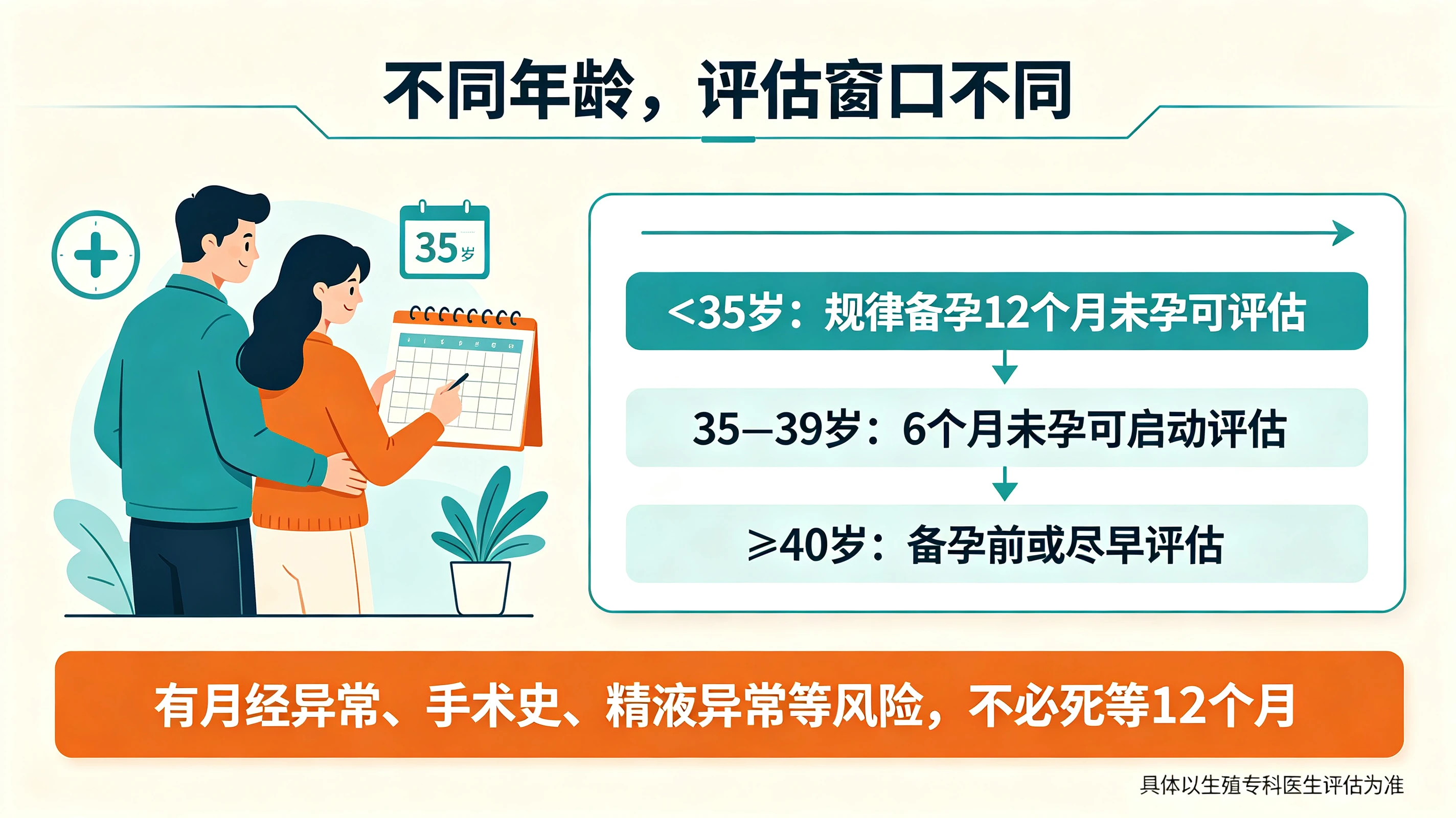
Therefore, the clinical assessment window needs to be adjusted according to age stratification:
Table
Female age | Recommended timing for initiating fertility assessment |
|---|---|
Under 35 | Regular unprotected intercourse for 12 months without conception |
35–39 years old | Regular unprotected intercourse for 6 months without conception |
Age 40 and above | Assessment can be conducted before conception or at the initiation of preconception planning. |
Note: The above is a general clinical reference; guidelines vary slightly by country/region (e.g., the UK’s NICE 2026 guideline recommends discussing specialist fertility assessment at the initial consultation for individuals aged 36 and older).When clear high-risk factors are present, patients may seek medical attention earlier without being subject to the aforementioned time restrictions..
3. The Core Function of the "12-Month Rule"
The essence of this time point is to help clinicians distinguish between "normal fluctuations in conception attempts" and "reproductive abnormalities requiring medical intervention." For young women with regular menstrual cycles and no known reproductive disorders, failure to conceive after several months is most likely a matter of normal probability, and early medical intervention is unnecessary. However, if clear issues such as ovulatory dysfunction, tubal pathology, or severe male factor infertility already exist, continued waiting will not increase the likelihood of natural conception but will only delay the optimal timing for intervention. In a nutshell:When deciding whether to seek medical care, the duration of trying to conceive serves as a baseline reference, while risk factors are the core variables..
Step 1: Determine When to Seek Medical Care — These Groups Should Not Wait the Full 12 Months
You can first complete a preliminary self-screening based on three dimensions: age, medical history, and symptoms.
1. The following high-risk factors are present; it is recommended to initiate fertility assessment early.
High-risk factors in the female
Long-term irregular menstruation, amenorrhea, or oligomenorrhea, with menstrual cycles lasting less than 25 days or more than 35 days;
Confirmed or highly suspected polycystic ovary syndrome (PCOS) and endometriosis;
History of pelvic inflammatory disease, tubal disease, or pelvic/uterine cavity surgery;
A history of two or more episodes of recurrent pregnancy loss, including spontaneous miscarriage and embryonic arrest;
Have received chemotherapy or pelvic radiation therapy, or have known diminished ovarian reserve;
Presence of symptoms suggestive of pelvic pathology, such as severe dysmenorrhea, chronic pelvic pain, and dyspareunia.
High-risk factors in the male
Previously diagnosed with oligospermia, severe oligoasthenospermia, or azoospermia;
History of cryptorchidism, testicular developmental abnormalities, testicular trauma, or testicular surgery;
Post-pubertal mumps complicated by orchitis;
Previously received chemotherapy and radiotherapy;
Presence of erectile dysfunction and ejaculatory disorders (such as retrograde ejaculation and anejaculation);
Known to have reproductive system disorders that affect sperm production or transport.
Note: Recurrent pregnancy loss and infertility are two distinct clinical conditions. Even with a short period of trying to conceive, as long asRecurrent miscarriage, they should be evaluated individually and not subjected to the standard time criteria for infertility.
2. This group of people may continue natural conception attempts without the need to rush into a full set of examinations.
If all of the following conditions are met simultaneously, short-term failure to conceive is likely due to normal probabilistic variation; you may continue natural conception attempts without immediately undergoing extensive invasive tests.
The female partner is under 35 years old;
The menstrual cycle is generally regular (25–35 days);
No known history of gynecological or reproductive system diseases or related surgeries;
The male partner has no significant history of reproductive health abnormalities.
Regular sexual activity without any form of contraception;
The duration of trying to conceive is less than 12 months.
However, "observation" does not mean "no preparation." Both partners can first complete routine pre-conception health checkups to screen for underlying medical conditions, medication-related risks, and lifestyle hazards.
3. A Quick Reference Table for Determining Medical Care Priority
Table
Current situation | Recommended Actions |
|---|---|
32 years old, trying to conceive for 4 months, regular menstrual cycles, no relevant medical history | Continue natural attempts, along with pre-pregnancy basic examinations |
32 years old, trying to conceive for 4 months, with a long history of irregular periods / polycystic ovary syndrome (PCOS) | Seek medical attention early to evaluate ovulation and endocrine status. |
36 years old, trying to conceive for 4 months | You can consult a reproductive specialist in advance to conduct basic tests.Fertility Assessment |
36 years old, trying to conceive for 6 months without success | Formally launch a comprehensive fertility assessment for both spouses |
Age 41, planning to start trying to conceive | Complete a fertility assessment before trying to conceive. |
The male partner was previously diagnosed with severe oligospermia or azoospermia. | No waiting period for pre-pregnancy preparation; seek immediate andrology consultation. |
The female partner has a history of endometriosis or fallopian tube disease. | Assess fertility conditions in advance based on the severity of the medical condition |
Core PrinciplesAge determines the baseline assessment window, while medical history and symptoms determine whether early intervention is required.
III. Step Two: Distinguishing Primary from Secondary Infertility – It Is Not a Matter of Severity, but Rather Different Etiological Directions
Primary infertilityandSecondary infertilityThis is the most fundamental classification in clinical practice, and the core difference between the two liesHas there been any previous history of pregnancy?rather than the severity of the condition.
1. Primary infertility
Refers to women who have never experienced any pregnancy and remain unimpregnated after regular, unprotected attempts to conceive for a specified evaluation period. Common causes span the entire reproductive process:
Ovulatory disorders (e.g., polycystic ovary syndrome, hyperprolactinemia);
Abnormal tubal patency; pelvic adhesions
Uterine structural/developmental abnormalities (e.g., septate uterus, submucosal fibroids);
Abnormal semen parameters in the male partner;
Unexplained infertility or infertility due to factors in both partners.
Common misconception: Primary infertility does not equal congenital reproductive abnormalities. Endocrine disorders, acquired diseases, and male factors can all lead to primary infertility.
2. Secondary infertility
Refers to individuals who have previously experienced pregnancy (including full-term delivery, spontaneous miscarriage, induced abortion, ectopic pregnancy, molar pregnancy, etc.) but fail to conceive again despite regular, unprotected attempts to become pregnant over the defined evaluation period. The common etiologies tend to reflect “acquired changes”:
Age-related decline in ovarian reserve and reduced oocyte quality;
New-onset ovulatory dysfunction, thyroid disorders, and other endocrine issues;
Pelvic inflammatory disease, secondary tubal obstruction following intrauterine procedures, and intrauterine adhesions;
Male semen quality varies with age, lifestyle, and health status;
Systemic factors such as abnormal body weight and metabolic diseases.
3. Differences in Decision-Making Between the Two Types of Infertility
Table
Comparison Dimension | Primary infertility | Secondary infertility |
|---|---|---|
Core Medical History | No history of pregnancy | There is a clear history of pregnancy. |
Evaluation Focus | Conduct a comprehensive assessment of basic conditions including ovulation, fallopian tubes, uterus, and semen. | Comprehensive coverage of basic projects, with a focus on new or changed etiologies |
Most prone to pitfalls | To simply attribute infertility to "bad luck" or "not enough time," delaying medical checkups | Believing that “a previous pregnancy means there are no problems,” ignoring age and newly developed diseases, and omitting the male partner’s examination |
Treatment difficulty | It cannot be determined solely by classification; the specific etiology must be considered. | It cannot be determined solely by classification; the specific etiology must be considered. |
Key ReminderA previous pregnancy only proves that conception was possible at that time; it does not indicate current fertility status. For example, a woman who conceived easily at age 28 may face significantly reduced chances of conception when trying again at age 36 due solely to the effect of aging. One should never lower their guard simply because they have previously given birth or become pregnant.
IV. Step 3: Joint Evaluation for Couples – A Comprehensive Risk Assessment to Ensure Women Do Not Bear the Burden Alone
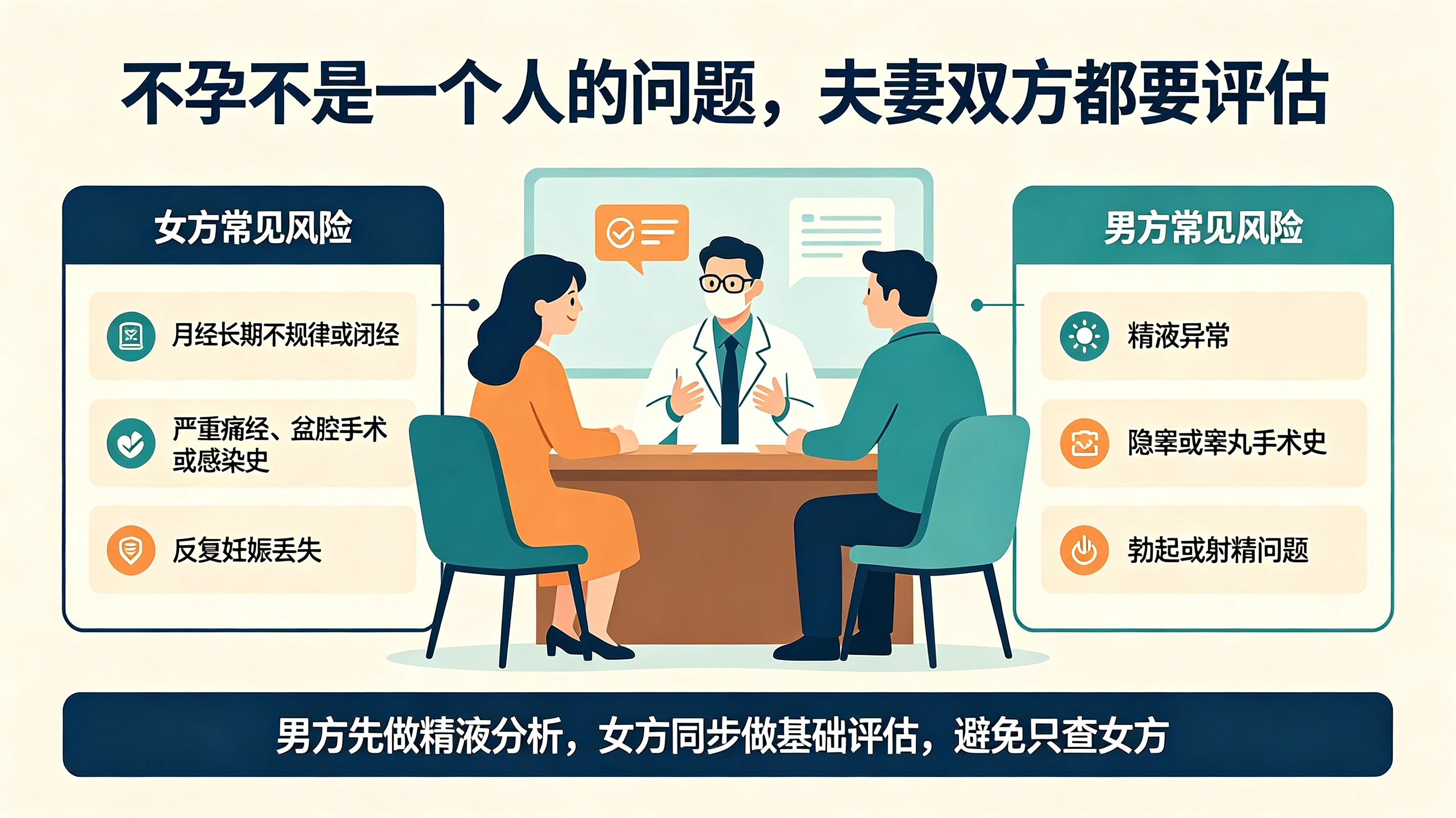
Infertility is by no means solely a female issue. Data from the WHO and ASRM both show that among infertility cases, female factors alone account for approximately 40%, male factors alone account for approximately 40%, combined factors from both partners account for about 10% to 15%, and the remainder are cases of unexplained infertility. Therefore,A standardized fertility assessment must be conducted simultaneously for both partners., rather than having the woman undergo all the tests before checking the man.
1. Core Assessment Dimensions of Female Reproductive Risks
(1) Ovulation function
Ovulatory dysfunction is the most common cause of female infertility. The regularity of menstrual cycles serves as the most intuitive preliminary indicator of ovulatory function, though it is not an absolute criterion.
Signs of ovulation abnormalities: oligomenorrhea/amenorrhea, severely irregular cycles, and abnormal fluctuations in menstrual flow;
Common causes: Polycystic ovary syndrome, thyroid dysfunction, hyperprolactinemia, sudden weight changes, hypothalamic dysfunction, and diminished ovarian reserve.
(2) Ovarian reserve
Ovarian reserve reflects the number of recruitable follicles within the ovary and its responsiveness to ovarian stimulation therapy.It is not equivalent to egg quality and cannot independently predict the probability of natural conception..
Core assessment metrics: AMH (Anti-Müllerian Hormone), AFC (Antral Follicle Count, measured via transvaginal ultrasound), and baseline FSH + Estradiol.
Common Misconceptions Corrected:
Low AMH does not mean natural conception is impossible: Young women with low AMH can still conceive naturally as long as they have normal ovulation.
High AMH ≠ Good Egg Quality: Patients with polycystic ovary syndrome (PCOS) often have elevated AMH levels, but this does not necessarily indicate optimal egg quality.
Authoritative guidelines clearly state that the NICE 2026 guidelines do not recommend using AMH to predict natural conception rates; ASRM emphasizes that ovarian reserve testing is merely an auxiliary indicator and cannot replace age and comprehensive clinical assessment. Therefore, AMH is not a mandatory test for all women trying to conceive, and a single result should never be used alone to diagnose “infertility” or directly recommend IVF.
(3) Fallopian tubes and uterus
The fallopian tubes serve as the passage for sperm-egg fusion and zygote transport, while the uterus is the site of embryo implantation; structural abnormalities in either can directly affect conception.
Common fallopian tube issues, including blockage, hydrosalpinx, and pelvic adhesions, are often secondary to pelvic inflammatory disease, pelvic surgery, or endometriosis.
Common uterine issues: endometrial polyps, submucosal fibroids, intrauterine adhesions, and uterine developmental anomalies. Is a hysterosalpingogram required?HysteroscopyFurther examinations should be based on medical history and preliminary ultrasound results, rather than performed for every patient at the initial visit.
2. Core Assessment Dimensions of Male Reproductive Risks
Male fertilityIt cannot be determined by sexual function, secondary sexual characteristics, or sexual performance.Semen analysis is the only first-line basic test in male fertility assessment..
Core evaluation parameters: semen volume, sperm concentration, total sperm count, progressive motility, and percentage of morphologically normal sperm, based on the standards of the WHO Laboratory Manual for the Examination and Processing of Human Semen, 6th edition;
Important note: A single abnormal semen analysis does not equate to a diagnosis of infertility. Improper abstinence periods, recent fever, sleep deprivation, excessive alcohol consumption, illness, or medication use can all cause temporary fluctuations in parameters. Typically, 1–2 repeat tests are required for confirmation. In cases of severe abnormalities (such as azoospermia or severe oligozoospermia), prompt further evaluation is necessary; do not mechanically wait several months. If semen parameters remain persistently abnormal, additional assessments including andrological physical examination, sex hormone testing, scrotal ultrasound, and genetic testing when indicated should be performed.
3. The Impact of Lifestyle and Psychological Stress
Lifestyle affects reproductive health, but it is by no means the sole cause of infertility and should not be used as an excuse for “treating without testing.”
Identify relevant factors: smoking, excessive alcohol consumption, obesity/underweight, long-term exposure to toxic and harmful substances, and prolonged exposure to high-temperature environments. These factors can respectively affect sperm production in men and ovulation function in women;
Regarding psychological stress: Stress may affect sexual frequency, menstrual cycles, and endocrine function, but "functional infertility" cannot be diagnosed based solely on "anxiety." Attributing infertility purely to a lack of relaxation is not only unscientific but also imposes unnecessary psychological burden.
V. Step Four: Tiered Screening to Avoid Over-Medicalization — What Tests Should Be Conducted During the First Visit
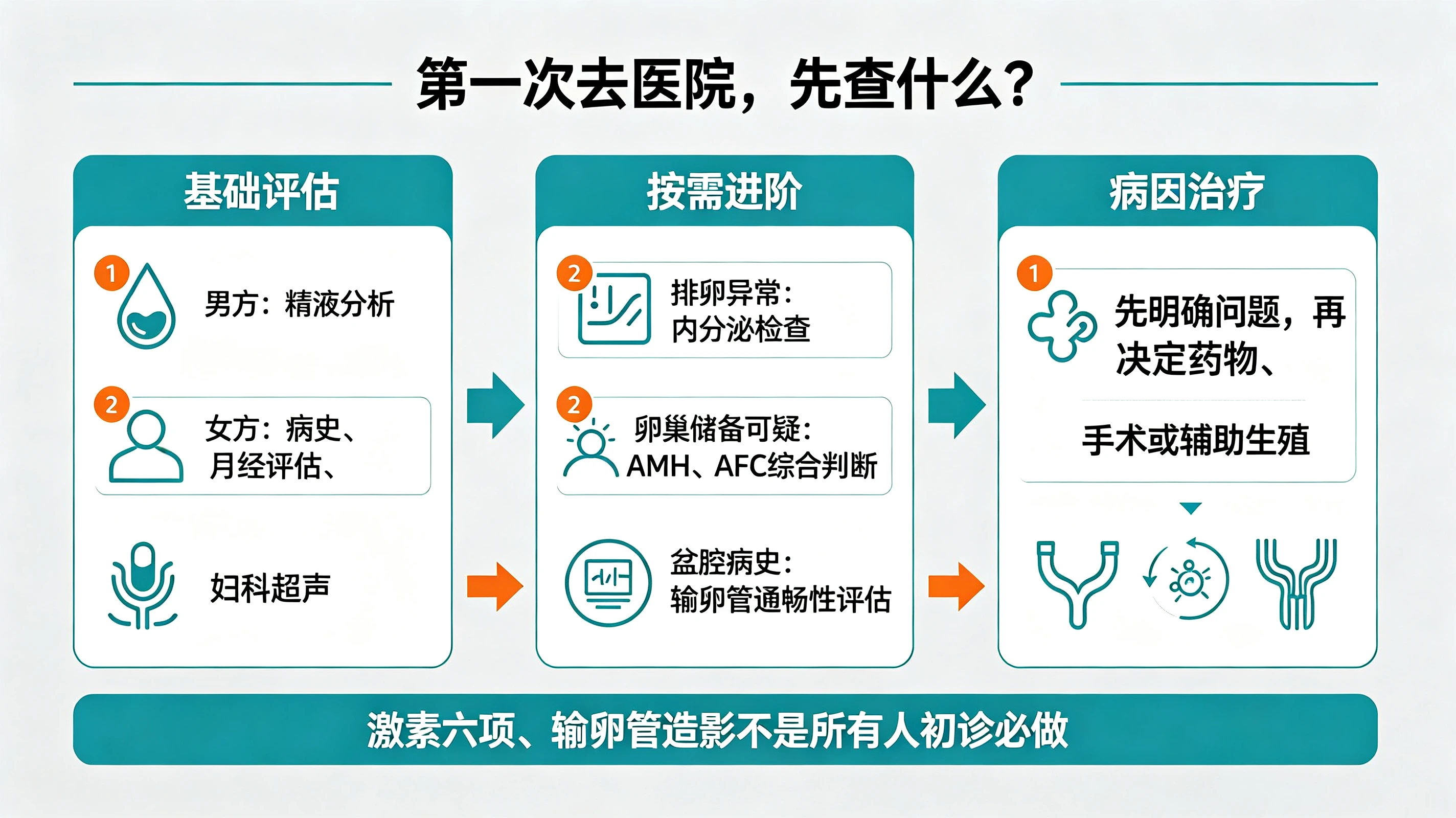
The core principle of fertility testing is:Start with basic and progress to advanced; begin with non-invasive and proceed to invasive; first clarify the clinical question, then select the corresponding examination.Avoid indiscriminately performing a “full suite” of tests, as this not only increases financial burden but may also expose patients to unnecessary risks associated with invasive procedures.
Phase 1: Basic Preliminary Screening for Couples (Mandatory)
This is the first step for all couples initiating fertility assessment; it is low-cost, non-invasive or minimally invasive, and can uncover over 80% of the key clues to core underlying causes.
Male: Semen AnalysisPrior to the examination, preparation must follow standard guidelines: abstain from ejaculation for 2–7 days, collect the semen sample completely, submit it to the laboratory promptly as required, and inform your doctor in advance about any recent fever, illness, or medication use.
Female: Medical history collection + basic gynecological ultrasoundThe doctor will take a detailed history of menstruation, pregnancy, surgery, medical conditions, medication use, and symptoms. Transvaginal ultrasound will be performed to assess uterine morphology, endometrial thickness, ovarian size, and antral follicle count, screening for any obvious structural abnormalities. Endocrine tests, including the six sex hormones panel and thyroid function tests,Not mandatory for the initial visit—— Individuals with regular menstrual cycles and no abnormal symptoms do not require routine examinations; targeted testing should be selected only for those with irregular periods or suspected ovulation/ovarian dysfunction.
Stage 2: Targeted Advanced Checks (Optional)
It is only performed further when abnormalities are detected during the initial basic screening or when there is a clear high-risk medical history, with the aim of precisely identifying the underlying cause.
Table
Initial Screening / Medical History | Corresponding Advanced Check |
|---|---|
Irregular menstruation, suspected ovulation disorder | Sex Hormone Panel (Six Items), Thyroid Function Tests, Prolactin Level, Ovulation Monitoring |
Suspicious diminished ovarian reserve | Comprehensive assessment combining AMH, baseline FSH, and AFC |
History of pelvic inflammatory disease, history of pelvic surgery, suspected tubal issues | Hysterosalpingography (evaluation of tubal patency) |
Ultrasound findings suggest uterine cavity abnormalities (possible polyps, adhesions, or malformations). | Hysterosalpingo-contrast sonography, with hysteroscopy if necessary. |
Persistent abnormal semen parameters | Andrological physical examination, sex hormone testing, and scrotal ultrasound; genetic testing is added in cases of severe abnormalities. |
Items explicitly not recommended as routine initial screening include autoimmune antibodies, coagulation markers related to thrombophilia, sperm DNA fragmentation index, routine chromosomal analysis, and hysteroscopy. These tests have specific indications; performing them without indication constitutes unnecessary medical intervention.
Stage 3: After identifying the underlying cause, select a personalized treatment plan
Infertility does not necessarily mean you must undergo IVFTest tube babyDifferent etiologies correspond to entirely different intervention pathways:
Ovulatory disorders: Prioritize treating underlying conditions (e.g., regulating thyroid function, managing weight); if necessary, combine ovulation induction with follicular monitoring. Most patients can conceive naturally.
Poor timing of intercourse: Use ovulation monitoring to guide intercourse and increase the chances of conception.
Mild tubal issues or mild male factor infertility: intrauterine insemination may be considered.Artificial insemination(IUI);
For uterine polyps, adhesions, or septum: Attempt natural conception after hysteroscopic surgical treatment.
Severe tubal blockage, severe oligoasthenozoospermia, or unexplained infertility that does not respond to intervention: Re-evaluate in vitro fertilization (IVF/ICSI (In Vitro Fertilization/Intracytoplasmic Sperm Injection)) Indication.
Whether to proceed with assisted reproductive technology should be determined by comprehensively considering factors such as age, underlying causes, duration of trying to conceive, and the couple's preferences; it is never an automatic next step following a diagnosis of infertility.
6. The Four Most Common Decision-Making Mistakes in Preconception Planning
Misconception 1: The female partner completes her examination first, and then the male partner gets checked.
This is the most common misconception about seeking medical care in China. Male factors account for nearly half of infertility cases. If a woman undergoes a series of invasive procedures, such as hysterosalpingography and hysteroscopy, only to discover that her partner has severe semen abnormalities, it not only wastes time and money but also exposes her to unnecessary procedural risks.Correct approach: At the first visit, both spouses are evaluated simultaneously; the male partner undergoes semen analysis first, while the female partner concurrently completes a basic assessment.
Misconception 2: Low AMH = No chance of natural conception = IVF is mandatory
AMH reflects only ovarian follicle reserve, not egg quality, and cannot independently predict natural conception outcomes. Women under 30 with low AMH levels still have a high likelihood of conceiving naturally, provided they ovulate normally.Correct approachAMH results should be interpreted in conjunction with age, menstrual cycle, antral follicle count, and medical history, and are not to be used as the sole basis for diagnosis or treatment plans.
Misconception 3: Spend six months on "regimen" or "conditioning" treatments before going to a legitimate hospital for check-ups
For structural or organic issues such as blocked fallopian tubes, intrauterine adhesions, severe oligoasthenozoospermia, and azoospermia, relying solely on traditional Chinese medicine, supplements, or lifestyle adjustments cannot resolve the underlying pathology; blind self-treatment will only delay the optimal window for intervention.Correct approachFirst, complete a standard evaluation to identify the underlying cause. If reversible factors (such as abnormal weight or thyroid issues) are present, provide targeted treatment accordingly. Note that such treatments cannot replace diagnosis.
Misconception 4: A diagnosis of infertility means the next step is IVF.
Infertility is a diagnosis, not an indication for treatment. Many cases involving ovulatory disorders, mild male factor infertility, or small intrauterine polyps can achieve natural conception through medication, minor surgery, or timed intercourse guidance. In vitro fertilization (IVF) has strict clinical indications and should be considered the "last step," not the "first step."Correct approachAt the consultation, proactively ask your doctor: What is the currently identified cause? Are there any reversible factors that can be treated first? What is a reasonable observation period for trying naturally? Under what circumstances should assisted reproductive technology be considered?
7. Action Checklist: 4 Steps for Families Planning Pregnancy to Implement Immediately
Organize basic informationRecord the female partner’s age, the start date of preconception planning, menstrual cycle logs, and her history of previous pregnancies, surgeries, or medical conditions, as well as the male partner’s reproductive health history and prior examination reports, all organized in chronological order.
Self-assessment of Medical Care PriorityRefer to the age stratification and high-risk factors mentioned above to determine whether you should “continue monitoring” or “seek medical attention promptly.” If you have any one of these high-risk factors, do not wait for a full 12 months.
Seek treatment at a reputable institution.Prioritize reputable public hospitals with reproductive medicine departments or qualified specialized reproductive clinics. Bring all previous reports to your appointment to avoid redundant examinations.
Identify key issues at the time of consultationAsk about the purpose and significance of every test and treatment plan:
Why is this test necessary? How will the results affect the subsequent plan?
What are the core issues identified so far? Are there any reversible interventions available?
What is the preferred treatment plan at this stage? What are the expected benefits and risks?
If you continue with natural attempts, how long should you observe? Under what circumstances should the plan be adjusted?
Conclusion
The significance of the 12-month rule is to help the general population trying to conceive avoid premature medicalization; the recommendation for earlier evaluation in individuals aged 35 and older aims to reduce the time costs associated with advancing age. These two approaches are not mutually exclusive standards. Infertility is a common reproductive health issue—according to WHO data from 2023, approximately 17.5% of people of reproductive age worldwide experience infertility at some point in their lives, equivalent to one in six individuals. However, "common" does not mean "unsolvable"; with standardized assessment and precise intervention, most couples can achieve their pregnancy goals.
Remember three core decision-making principles:
Time is not the only criterionIf high-risk factors are present, do not wait for the full 12 months;
Infertility is not solely a woman’s issue.: Conduct simultaneous assessment of both spouses to avoid overlooking male factors;
An examination is not the same as treatment.First, identify the underlying cause, then determine the appropriate intervention, and avoid overmedicalization.
Rather than calculating how many months are left until the one-year mark, it is more important to clearly understand your physical condition and choose the right path for your next step.
Multiple definitions of infertility
Guideline for the Prevention, Diagnosis, and Treatment of Infertility (2025)
1 in 6 people globally affected by infertility (2023)
Fertility Evaluation of Infertile Women: A Committee Opinion (2026)
Having a Baby After Age 35: How Aging Affects Fertility and Pregnancy
Fertility Problems: Assessment and Treatment (NG257, 2026)
WHO Laboratory Manual for the Examination and Processing of Human Semen, Sixth Edition (2021)
Frequently Asked Questions
The content on this website is general educational material and compiled public information about IVF. It is provided for reference only, does not constitute a basis for diagnosis or medical decision-making, and does not constitute any medical advice or treatment recommendation. For policy and technical requirements, please refer to official publications issued by the relevant authorities and institutions. If you find any content errors, numerical inconsistencies, or outdated information, please contact us so we can verify and update it.
