
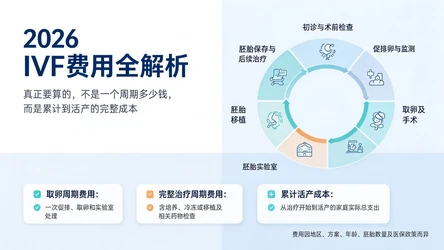
Understand the cost structure of IVF in China at a glance: differences in expenses for ovarian stimulation, egg retrieval, embryo testing, and cryopreservation; an explanation of the pricing logic for PGT (third-generation IVF) and assisted reproductive insurance policies; and guidance on rationally planning your IVF budget based on cumulative live birth costs.
Read allCore Perspective: DoTest tube babyWhat truly needs to be calculated is not the cost per cycle, but the cumulative total cost from the initial consultation to achieving a live birth.
SearchIVF costsWhen it comes to IVF, many people’s first question is: “How much does one cycle of in vitro fertilization cost?” Some see the starting price of over 30,000 yuan and think it’s affordable; others find out after consultation that they may need 70,000 to 80,000 yuan; still others initially budgeted for just one treatment cycle but encountered additional costs along the way for procedures such as ICSI (intracytoplasmic sperm injection) and blastocyst culture.Embryo cryopreservation/PGTDetection andFrozen Embryo Transferadditional fees, causing the final expenses to far exceed expectations.
Why do costs vary so significantly among different families undergoing IVF?
The reason is thatIVFIt is not a one-time medical service with a fixed price, but rather a series of continuous and interrelated diagnostic and treatment procedures. Factors such as the patient’s age, ovarian reserve, semen quality, treatment protocol, number of embryos obtained, whether genetic testing is required, and whether frozen embryos remain after the first transfer all influence the final cost.
More importantly,A single-cycle quote does not equal the total cost of treatment, and completing one egg retrieval does not guarantee a live birth..
Comparing only the starting prices advertised by hospitals can easily lead to overlooking subsequent costs such as transplantation, repeated ovarian stimulation, embryo cryopreservation, additional tests, and medical care at distant locations. A truly reasonable budget should cover the entire journey from initial assessment and ovarian stimulation with egg retrieval to embryo transfer, while also considering the possibility of repeat treatment cycles when necessary.
This article focuses primarily on patients in mainland China, systematically breaking down the cost structure of IVF procedures, identifying areas prone to additional expenses, outlining the 2026 assisted reproductive technology (ART) medical insurance policies, comparing cost differences across various treatment protocols, and providing guidance on creating a comprehensive family fertility budget. It also references public data from institutions such as the U.S. Centers for Disease Control and Prevention (CDC) and the American Society for Reproductive Medicine (ASRM) to help readers distinguish between medically necessary services and add-on procedures with insufficient evidence.
DescriptionMedical service prices, the scope of medical insurance coverage, and out-of-pocket ratios vary across regions in China. This article does not treat any single hospital’s quoted prices or local medical insurance policies as national standards; actual costs should be based on the official price lists of the healthcare provider and the current policies of the patient’s place of insurance enrollment.
I. Overall Overview: What Are the Components of IVF Costs?
A complete IVF treatment process can typically be broken down intoSix Major Cost Categories.
Table
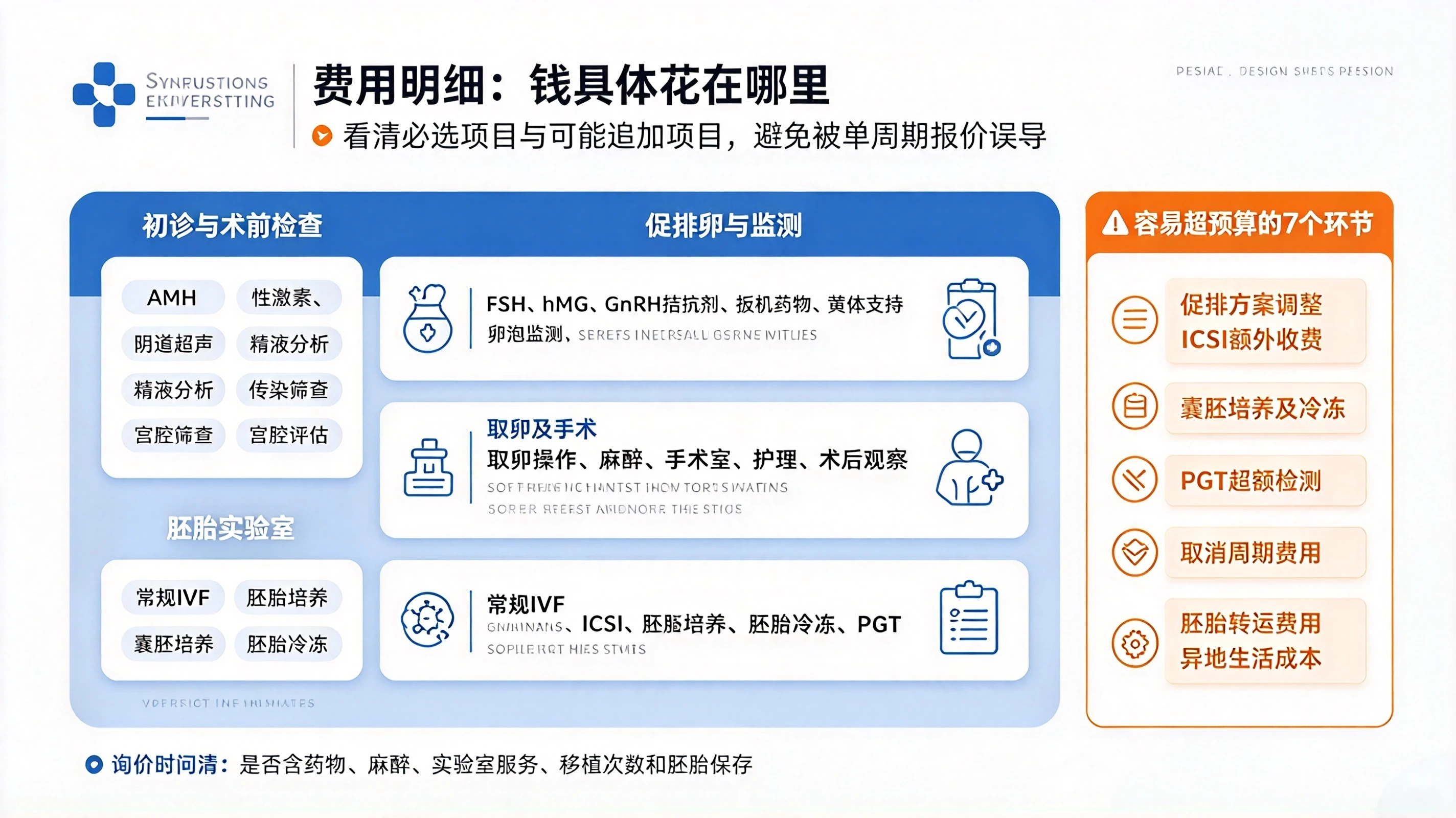
Expense Category | Main Billing Items | Is it possible that additional fees may be incurred? |
|---|---|---|
Initial Examination and Preoperative Evaluation | Fertility assessment, hormone testing, AMH, semen analysis, uterine cavity evaluation, infectious disease screening | Yes, it depends on whether the previous examination is valid and whether a supplementary examination is needed. |
Ovulation Induction and Monitoring | Ovulation induction medications, follicle monitoring, hormone blood tests, trigger shot | Yes, it is affected by drug dosage, cycle length, and the number of monitoring sessions. |
Egg Retrieval and Surgery | Oocyte retrieval, anesthesia, operating room, and related nursing care | Depending on the hospital's fee structure |
Conventional fertilization, ICSI, embryo culture, blastocyst culture, embryo cryopreservation | Yes, it is influenced by the fertilization method and the number of embryos. | |
Embryo transfer | Fresh embryo transfer, frozen embryo thawing, endometrial preparation, and embryo transfer procedure | Yes, it depends on the number of transplantations and the treatment protocol. |
Embryo Cryopreservation and Subsequent Treatment | Embryo storage, renewal fees, transportation, further stimulation cycles, or transplantation | Yes, it may result in long-term expenses. |
Three core concepts require special attention:
Egg Retrieval Cycle Fees: Typically refers to the fees incurred from one cycle of ovarian stimulation, egg retrieval, and embryology laboratory processing. Whether embryo transfer is included depends on the hospital's pricing.
Total cost of the complete treatment cycle: Include all costs for egg retrieval, embryo culture, frozen or fresh transfer, as well as related medications and examinations.
Cumulative Cost per Live BirthThe cumulative medical and related expenses actually borne by families from the initiation of treatment to the eventual achievement of a live birth.
These three figures are not the same. For example, if an institution’s published price covers only ovarian stimulation, egg retrieval, and embryo culture, while patients still need to undergo frozen embryo transfer subsequently, then this quote cannot serve as a complete treatment budget.From a financial planning perspective, the third metric is the most worthwhile to compare..
II. Cost Breakdown: From Initial Consultation to Embryo Transfer, Where Exactly Does the Money Go?
1. Initial consultation and preoperative examination fees
IVF does not begin directly with ovarian stimulation. The doctor must first assess the couple's reproductive status, evaluating ovarian reserve, semen quality, uterine environment, and related disease risks.
Table
Check items | Main inspection items | Cost Characteristics |
|---|---|---|
AMH | Assess ovarian reserve | Usually self-paid or covered according to local medical insurance policies |
Basic sex hormone panel | FSH, LH, E2, etc. | Related to the menstrual cycle and examination requirements |
Transvaginal Ultrasound + AFC | Observe the ovaries, antral follicles, and uterine conditions | May require multiple checks |
Routine Semen Analysis | Assess sperm concentration, motility, and morphology | Basic Male Examination |
Infectious disease screening | HIV, Hepatitis B, Hepatitis C, Syphilis, etc. | As required by the clinical protocols and institutional guidelines |
Endometrial and Uterine Cavity Assessment | Ultrasound or hysteroscopy | Determined based on medical history and imaging results |
Chromosome analysis | Assessment of chromosomal structural abnormalities in both spouses | Not all patients require |
Genetic Carrier Screening | Assess carrier status for specific genetic diseases | Select based on family history and reproductive plans |
Money-Saving DetailsDo not repeat all tests every time you are transferred to another hospital or see a new doctor. At your initial visit, organize your previous test reports (including original results, test dates, imaging studies, and formal reports). Your doctor can then determine which tests are valid for reuse based on their expiration periods and the receiving hospital’s requirements.
However, it should not be assumed that all old reports can be used indefinitely. Hormone levels, infectious disease screenings, and uterine environment assessments have different validity periods, with the final judgment made by the attending physician.
2. Costs for Ovulation Induction Medications and Monitoring
Ovarian stimulation is one of the most variable components of IVF costs. Doctors tailor protocols based on age, AMH levels, antral follicle count, previous response to stimulation, and treatment goals; consequently, medication types, dosages, and administration durations can differ significantly among patients.
Common Drug Types:
FSH Follicle-Stimulating Hormone: Promotes the growth of multiple follicles; costs are most significantly influenced by daily dosage and duration of treatment
hMG and other gonadotropinsProvides FSH and LH activity; specific medications and dosages affect the price.
GnRH antagonistInhibition of premature ovulation; timing and dosage affect costs
GnRH agonist or hCG: Trigger the final maturation of oocytes
Luteal phase support medicationsSupports luteal function after transplantation; drug formulation and administration duration affect costs
Estrogen-based medications: Some frozen embryo transfer cycles are used for endometrial preparation
In addition to medications, the following are also required during the ovulation induction period:Follicular monitoring: Transvaginal ultrasound to monitor follicle number and size, estradiol /ProgesteroneCheck to assist in evaluating ovarian response.
5 Questions to Clarify When Requesting a Quote:
Does the quote include all medications for the entire ovarian stimulation phase?
How are domestic and imported drugs priced, respectively?
Does it include all B-ultrasound and blood test monitoring?
If the ovarian stimulation period is extended, how are the additional costs calculated?
Is a price difference required if the treatment plan is adjusted or medication is changed midway?
Tip: Domestic and imported medications cannot be judged for efficacy based on price alone. Drug selection should be based on indications, drug characteristics, previous responses, and physician judgment, rather than self-substitution solely to save costs.
3. Egg Retrieval Surgery Fees
Oocyte retrieval is performed under ultrasound guidance by transvaginal puncture to aspirate follicular fluid and obtain oocytes. Common components of the fee structure include:
Egg Retrieval Procedure Fee
Operating room and related medical service fees
Anesthesia or sedation fees
Intraoperative Monitoring and Nursing Costs
Necessary postoperative observation fees
Different hospitals may adopt a combined pricing method or list items separately.It is necessary to specifically confirm whether anesthesia is included in the egg retrieval quote., some institutions’ base quotes cover only the egg retrieval procedure, with anesthesia and related services charged separately.
Moreover, the number of oocytes retrieved does not equal the number of mature oocytes, nor does it equal the number of embryos available for transfer. Patients should not estimate subsequent embryology laboratory costs based solely on the number of oocytes retrieved; instead, actual fertilization and culture results should be used as the basis.
4. Embryology Laboratory Fees: The Most Critical Item to Scrutinize in Terms of Pricing Structure
The costs of the embryology laboratory are often one of the more difficult parts of an IVF bill to understand, and mainly include the following items:
(1) Conventional In Vitro Fertilization (IVF)The processed spermatozoa are co-cultured with oocytes to allow natural fertilization. This method is suitable for patients with normal semen quality and no clear fertilization defects on the male side.
(2) Intracytoplasmic Sperm Injection (ICSI)Performed by embryologists via micromanipulation, a single sperm is injected into an oocyte. It is commonly used for severe male factor infertility, previous fertilization failure, or other clearly indicated medical conditions.
Correcting MisconceptionsICSI is not a mandatory "upgrade" for all patients, and it should not be simply assumed that ICSI is always superior to conventional IVF. When there are no clear indications, routine use of ICSI does not universally improve live birth rates.
(3) Embryo cultureAfter fertilization, the embryo continues to develop in the laboratory. Common observation stages include the cleavage stage (day 3) and the blastocyst stage (days 5–6). Some institutions combine the fees for routine culture and blastocyst culture, while others charge for them separately.
Please confirm when requesting a quotation:
Is routine embryo culture included in the base fee?
Is there an additional fee for blastocyst culture?
Which day of embryo culture is included in the package
Are additional charges incurred after an increase in the number of embryos?
(4) Embryo FreezingIf there are surplus embryos that meet cryopreservation criteria, your doctor may recommend freezing them for future use in embryo transfer. Common fees include the cost of the embryo freezing procedure and subsequent storage charges. Some clinics charge based on the number of embryos or frozen vials, while others charge per cycle or according to package rates.
(5) Preimplantation Genetic Testing (PGT)PGT is not a mandatory component of standard IVF and includes three different types:
PGT-ADetection of embryonic chromosomal aneuploidy
PGT-MDetection for clearly defined monogenic genetic disorders
PGT-SRDetection of chromosomal structural rearrangements in one or both spouses
The three types of testing serve different medical purposes, apply to different patient groups, involve distinct laboratory workflows, and have different cost structures; therefore, they cannot be collectively referred to as a single generic "embryo screening."
PGT RFQ Must-Ask Checklist:
Is the biopsy procedure fee included?
Are the testing fees calculated based on cycle, number of embryos, or number of samples?
How many embryos are included in the package?
What are the charges for exceeding the quantity limit?
How are fees charged when test results are abnormal, no result is obtained, or a retest is required?
How are the remaining embryos stored after testing?
Evidence-based promptsThe 2024 ASRM Committee Opinion states that current evidence has not yet demonstrated the benefit ofPGT-ARoutine screening for all IVF patients can generally improve live birth rates. The decision to perform testing should be based on age, embryo status, genetic risk, and treatment goals.
5. Embryo Transfer Fees
Embryo transfer is mainly divided intoFresh embryo transferandFrozen Embryo TransferTwo types.
Table
Comparison Item | Fresh embryo transfer | Frozen Embryo Transfer |
|---|---|---|
Is previous egg retrieval required? | Usually required | No need to retrieve eggs again in this transfer cycle |
Embryonic origin | Embryos formed in the same ovarian stimulation and egg retrieval cycle | Previously cryopreserved embryos |
Endometrial preparation | Scheduled based on physical condition and hormone levels after egg retrieval | natural cycles, ovarian stimulation cycles, or hormone replacement therapy (HRT) cycles |
Additional fees | Depends on the base cycle quote | May involve costs for thawing, endometrial preparation, and embryo transfer |
Is the success rate higher? | Not necessarily | Not necessarily |
The cost of frozen embryo transfer typically includes: thawing and resuscitation fees, medications for endometrial preparation, pre-transfer ultrasound and necessary examinations, the embryo transfer procedure fee, and post-transfer luteal phase support costs.
Correcting MisconceptionsFrozen embryo transfer does not necessarily guarantee a higher success rate than fresh embryo transfer. The decision to proceed with a fresh transfer primarily depends on hormone levels after ovarian stimulation, endometrial conditions, the risk of ovarian hyperstimulation syndrome (OHSS), embryo quality, and other clinical factors.
6. Embryo Storage and Long-term Maintenance Fees
Embryo cryopreservation is typically followed by ongoing storage fees.
6 Key Questions to Understand:
Is the initial freezing operation charged separately?
Is the storage fee charged annually, monthly, or per embryo?
Is the first year of storage included in the package?
What are the renewal cycle and overdue handling rules?
Is embryo transfer permitted?
What medical documents are required for transportation, and how are the related fees charged?
Embryo storage is not a one-time expense. Families requiring long-term preservation should include storage fees for the coming years in their budget. Additionally, embryo storage duration, renewals, and disposal must comply with applicable laws, regulations, and institutional management requirements, rather than relying solely on verbal promises made by sales representatives.
III. The Most Overlooked Additional Costs: Why the Final Bill Exceeds Your Budget
In actual treatment, many costs are not determined upfront but arise only after specific medical conditions occur. This does not necessarily imply unreasonable charges by the hospital; however, patients have the right to be informed of potential fee items and pricing rules before treatment.
1. Adjust the ovarian stimulation protocol
The ovarian response to medication may differ from expectations. If the dosage needs to be increased, the duration of ovulation induction extended, or the type of medication adjusted, actual drug costs may rise accordingly. The initial estimate for medication expenses is only approximate and cannot guarantee the final total expenditure for the entire treatment cycle.
2. Additional fee for ICSI
If the base quote is calculated based on conventional IVF, additional costs may arise if ICSI becomes necessary due to male factor infertility or fertilization issues. You should confirm before signing the contract whether ICSI is included in the quoted price and under what circumstances extra fees would apply.
3. Blastocyst culture and cryopreservation fees
Some packages include only basic embryo culture and do not cover extended culture, blastocyst freezing, or additional fees for procedures beyond the included number. Please note that blastocyst culture is a laboratory culture strategy and does not guarantee that all embryos will develop to the blastocyst stage.
4. PGT Overage Fees
PGT costs may be directly proportional to the number of embryos tested. If a package includes testing for only a certain number of embryos, additional fees may apply if the actual number submitted exceeds this limit.
5. Cancel the recurring fee
If poor ovarian response, risk of ovarian hyperstimulation syndrome, or other medical reasons arise during the ovulation induction process, your doctor may recommend canceling or adjusting the cycle. In such cases, fees for tests, medications, and certain medical services already incurred are generally not fully refundable.
Be vigilant: The so-called "full refund guarantee" requires careful scrutiny. It should clearly define what constitutes a medical cancellation versus a patient-initiated cancellation, and how incurred medication and laboratory fees are settled.
6. Embryo transfer fee
If a patient changes reproductive centers, frozen embryos may need to be transferred to another facility. Associated costs may include embryo release and medical documentation processing at the original center, professional cryogenic transportation services, embryo receipt and verification at the receiving center, and necessary storage and management fees.
7. Cost of living for treatment in another location
What is often overlooked in cross-regional medical treatment is not the medical expenses, but rather the living costs: round-trip transportation, accommodation, local transit, expenses for accompanying patients and daily living, losses from taking leave and missed work, as well as necessary follow-up visits and extended stays.
In particular, frequent follow-up visits are required during ovarian stimulation to monitor follicular growth. Patients from other regions should communicate with the hospital in advance regarding monitoring schedules to avoid increased costs associated with frequent travel.
IV. China's IVF Insurance Reimbursement in 2026: Which Costs Are Covered?
This is a crucial part of the 2026 domestic IVF cost planning.
According to publicly available information from the National Healthcare Security Administration,As of January 1, 2025, all 31 provinces, autonomous regions, and municipalities directly under the central government, as well as the Xinjiang Production and Construction Corps, have included suitable assisted reproductive technology items in their medical insurance coverage.Assisted reproductive technology is now covered by medical insurance nationwide. In the first half of 2026, a cumulative total of 1.7096 million instances of assisted reproductive services were reimbursed through national medical insurance, with healthcare fund expenditures exceeding 1.9 billion yuan.
The "Guidelines for the Establishment of Pricing Items for Assisted Reproductive Medical Services (Trial)," issued by the National Healthcare Security Administration, maps and integrates current pricing items for assisted reproductive services into12 itemsfor provincial medical insurance departments to align and implement national healthcare policies in accordance with local conditions. From a nationwide data perspective,Embryo transfer, sperm preparation and selection, embryo culture, oocyte retrieval, intracytoplasmic sperm injectionare the five most frequently used national healthcare projects...
1. Which expenses may be covered by medical insurance?
Primarily assisted reproductive medical service items that comply with local medical insurance policies, such as:
Oocyte retrieval
Embryo culture
Embryo transfer
Intracytoplasmic Sperm Injection (ICSI)
Medical service items related to assisted reproductive technology
The specific payment items shall be subject to the local medical insurance catalog, healthcare service pricing policies, and the actual settlement rules of designated medical institutions..
2. Why can't it be calculated directly based on the reimbursement rate?
The final reimbursement amount is typically influenced by the following factors:
Insurance TypeBenefits under the Employee Medical Insurance and the Urban-Rural Resident Medical Insurance may differ.
Location of Medical TreatmentThe settlement rules for local medical care and non-local medical care may differ
Designated Eligibility: Whether the medical institution is a designated medical insurance provider in accordance with local regulations
Project DirectoryWhether the billed items are covered by the local medical insurance
Payment StandardThe medical insurance payment standard may differ from the actual billing price.
Personal Benefits: Deductibles, reimbursement ratios, maximum benefit limits, and other restrictions
Therefore, it is not possible to simply use a uniform national ratio of 70%, 80%, or 90% to calculate the out-of-pocket costs for IVF. Overall,Medical insurance primarily covers medical technical service fees; ovulation-induction drugs, PGT testing, and embryo cryopreservation largely remain out-of-pocket expenses..
3. Are preoperative examinations reimbursable?
Some examinations may be settled under the general outpatient medical insurance policy, but whether they are reimbursable depends on the specific items, the purpose of the examination, local regulations at the place of enrollment, and the settlement methods used by the healthcare institution. The fact that an examination occurs prior to in vitro fertilization (IVF) treatment does not automatically mean it falls under assisted reproductive technology insurance coverage.
4. Can IVF treatment at an out-of-town facility be reimbursed?
Special caution is required. If you choose a medical institution in another location, please confirm the following in advance:
Whether the medical institution meets the relevant designated requirements
Is it necessary to file for out-of-area medical treatment?
Does the assisted reproductive technology program support direct settlement across different regions?
Can manual reimbursement be applied for when direct settlement is not available?
Required Documents for Reimbursement and Specific Processing Deadlines
TipIn some regions, if prior registration is not completed for out-of-town medical care, the reimbursement rate may decrease by approximately 20%. Do not assume that services reimbursable in your local area will necessarily be settled at the same reimbursement rate when received in other cities.
5. Five Steps Before Medical Insurance Reimbursement
Check the policy of the place of insurance: Check the coverage of assisted reproductive technology (ART) procedures through the National Healthcare Security Administration platform, local healthcare security administration websites, or the 12393 healthcare security hotline.
Verify the medical institution: Confirm whether the hospital meets the local criteria for assisted reproductive technology (ART) medical insurance reimbursement
Verify billing items: Request the hospital to clarify which items are covered by medical insurance and which require out-of-pocket payment
Confirm the settlement method: Clarify whether direct settlement is permitted, and whether prior registration or other procedures are required
Save Paid ContentRetain medical fee receipts, itemized expense statements, and necessary medical records to facilitate subsequent verification.
V. Why Is Third-Generation IVF More Expensive? How Should PGT Costs Be Calculated?
Preimplantation genetic testing (PGT) in the context of third-generation IVF typically refers to an assisted reproductive technology involving genetic screening of embryos prior to implantation. Compared with conventional IVF, PGT may increaseEmbryo biopsy, genetic testing and related laboratory processing fees.
Key PrinciplesIVF with PGT (preimplantation genetic testing) is not a naturally upgraded, "more advanced version" following IVF-ET or ICSI; rather, it is a technical solution specifically designed for certain genetic issues.
Table
Technology Type | Primary Purpose | Typical Applicable Scenarios |
|---|---|---|
PGT-A | Detection of chromosomal numerical abnormalities in embryos | Individualized consideration based on age, embryonic status, and clinical conditions |
PGT-M | Screening for specific monogenic genetic diseases | Both spouses carry pathogenic variants or have a clear genetic risk. |
PGT-SR | Detection of issues related to chromosomal structural rearrangements | One or both spouses have a structural abnormality such as balanced translocation |
Why are PGT costs prone to exceeding the budget?
Because some testing items are billed per embryo submitted for testing. For example, a certain institution’s PGT pricing follows a “base package + additional testing” model: if a patient has 8 embryos that meet the criteria for submission but the base package only covers 5, the remaining 3 may require an extra fee for testing.
PGT Total Cost Calculation Formula:
Total PGT cost = Embryo biopsy fee + Basic testing fee + Additional testing fee + Necessary retesting fee
Moreover, not every fertilized egg develops into a blastocyst suitable for biopsy, and the final number of samples submitted for testing cannot be accurately determined prior to ovarian stimulation.
Which patients truly need to consider PGT?
When one or both spouses have a clearly defined chromosomal structural abnormality, PGT-SR should be evaluated.
Both partners carry the same pathogenic variant for an autosomal recessive genetic disorder, or there are other well-defined monogenic inheritance risks, necessitating evaluation for preimplantation genetic testing for monogenic disorders (PGT-M).
Patients with a specific medical background who, following genetic counseling, are deemed likely to benefit from PGT-A
PGT-A should not be considered a mandatory procedure for general infertile patients without clear genetic indications.
VI. How to Determine Whether a Fee Is Worth It: Distinguishing Between Essential and Additional Items
Among IVF costs, the most alarming are not the higher-priced items, but rather additional charges that lack clear medical justification yet are packaged as "standard procedures." These fees can be categorized into three types:
Category 1: Basic Diagnostic and Treatment Services (Mandatory)
These items constitute the basic treatment protocol; their necessity and specific implementation are determined by the physician based on the patient's condition:
Preoperative Fertility Assessment
Required ovulation induction medications
Follicular monitoring
Egg retrieval
Fertilization and Embryo Culture
Embryo transfer when conditions are met
These costs should prioritize medical quality and not be based solely on the lowest price as a selection criterion.
Category 2: Additional items with specific indications (optional selection)
For example:
ICSI (when indicated by male factor or fertilization failure)
PGT-M or PGT-SR (when there are clear genetic indications)
Embryo cryopreservation (when surplus viable embryos are available)
Hysteroscopy in Specific Clinical Situations
Essential genetic counseling
These items are not universally required but have clear value in specific clinical situations.
Category 3: Additional items requiring careful evaluation
(1) Assisted hatching
Assisted hatching is a laboratory procedure that helps the embryo break through the zona pellucida. The 2022 ASRM guidelines state that existing evidence shows assisted hatching does not significantly improve live birth rates in fresh assisted reproductive technology cycles, and evidence of benefit for certain specific populations and frozen-thawed cycles remains insufficient. It should not be offered as a routine billable service for all patients.
(2) ERA: Endometrial Receptivity Analysis
ERA is primarily used to analyze specific gene expression to assess information related to endometrial receptivity. However, current evidence is insufficient to support the routine use of ERA for all patients with implantation failure.
(3) Immune-related tests and treatments
Recurrent transplant failureIt does not necessarily indicate the presence of immune abnormalities. For immune assessments, immunotherapy, and related medications, specific clinical indications and evidence-based rationales should be clearly defined to avoid undergoing a comprehensive set of expensive tests based solely on a single transplant failure.
(4) Hysteroscopy
Hysteroscopy allows direct visualization of the uterine cavity and enables treatment of certain intrauterine lesions when necessary. However, not all patients require repeated hysteroscopic examination before every embryo transfer; this decision should be based on ultrasound findings, medical history, and actual clinical presentation.
Rational Approaches to Repeated Implantation Failure: Released by ASRM in 2026Recurrent implantation failureThe committee’s opinion emphasizes that assessment should integrate embryo quality, number of transfer attempts, patient age, and prior treatment records. A single failed transfer should not be directly defined as recurrent implantation failure, nor should the scope of diagnostic testing be indefinitely expanded.
VII. Cumulative Live Birth Cost: A More Valuable Budgeting Approach Than Single-Cycle Quotations
This is the most critical decision-making section of the entire article. The cost per cycle only indicates the direct expense of a single treatment; whileCumulative Cost per Live Birth, to help patients assess the true economic burden of different hospitals, treatment plans, and care pathways.
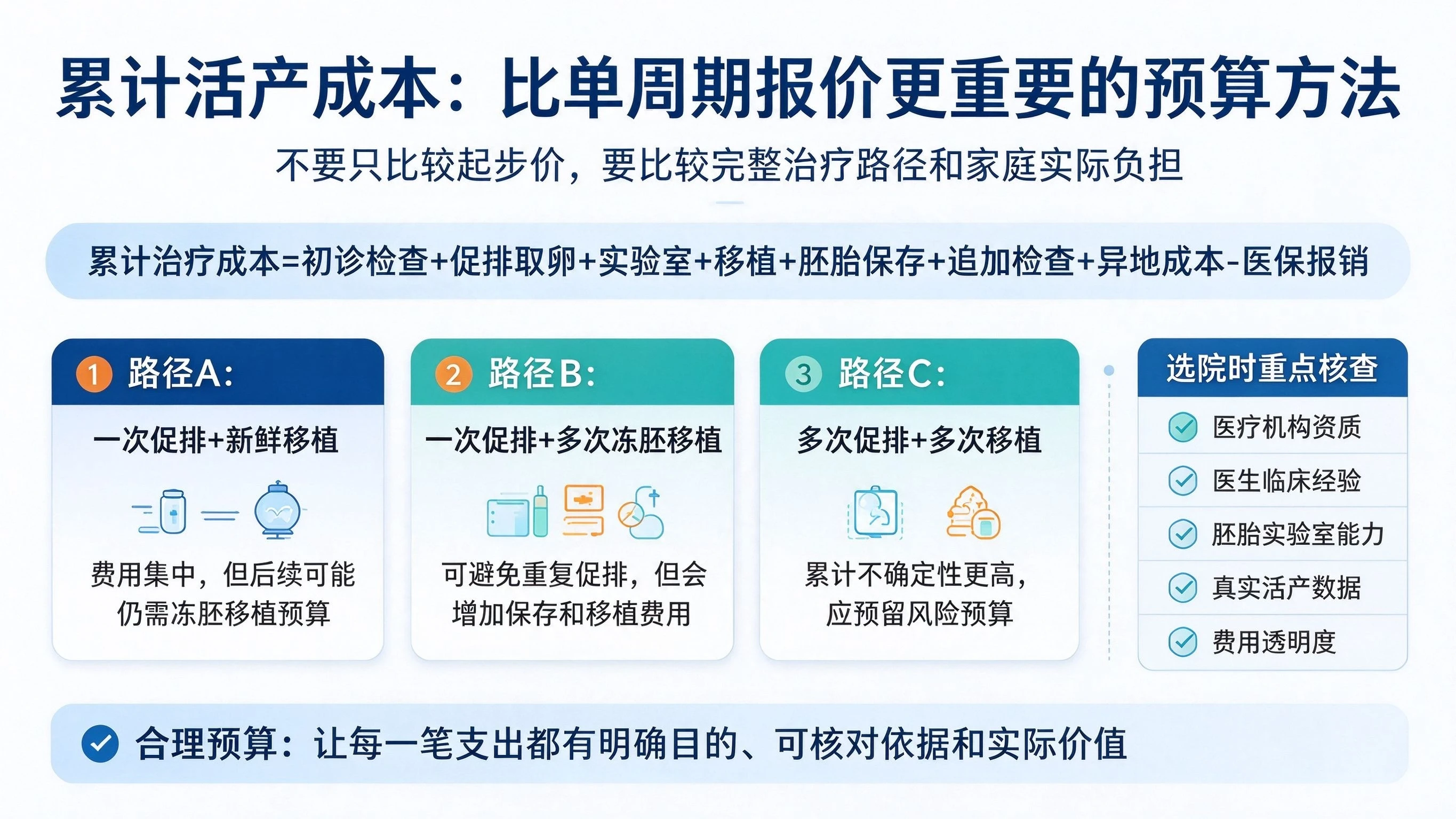
Formula for Calculating Cumulative Treatment Costs:
Cumulative treatment cost = Initial consultation and examination fees + All costs for ovarian stimulation and egg retrieval + Embryo laboratory fees + All transfer fees + Embryo storage fees + Necessary additional examination fees + Costs of seeking medical care in another city and lost wages − Actual amount reimbursed by health insurance
NoteIf only medical expenses are being compared, transportation, accommodation, and lost wages need not be included. However, if the overall economic burden across different cities or hospitals is being compared, these expenditures should be included.
Budget differences among three common treatment pathways
Table
Treatment pathway | Main Cost Components | Budget Characteristics |
|---|---|---|
One round of ovarian stimulation followed by a fresh embryo transfer | Check-up, medication, egg retrieval, culture, and transfer | Attention should be paid to whether all laboratories and transplant programs are included |
One round of ovarian stimulation followed by multiple frozen embryo transfers | Check-ups, medication, egg retrieval, culture, cryopreservation, storage, and subsequent embryo transfer | This may help avoid repeated ovarian stimulation, but will increase the costs of embryo cryopreservation and transfer. |
Multiple ovarian stimulation cycles + multiple embryo transfers | Multiple cycles of monitoring, ovarian stimulation, egg retrieval, embryo culture, cryopreservation, and transfer | The cumulative costs are relatively high, requiring more sufficient funds to be reserved. |
The first approach is not necessarily cheaper than the second, and the second does not guarantee a reduction in total expenditure. What truly affects costs is the final number of viable embryos obtained, the patient’s physical condition, transplant outcomes, and whether additional ovarian stimulation is required.
Budget Estimation Example
The following figures are purely hypothetical examples used to demonstrate the calculation method and do not represent actual quotes or clinical success rates of any hospital.
Table
Expense Items | Hospital A | Hospital B |
|---|---|---|
Initial Visit and Examination | 4,000 yuan | 3,000 yuan |
Ovulation Induction Medications and Monitoring | 18,000 yuan | RMB 22,000 |
Egg Retrieval and Anesthesia | 8,000 yuan | 7,000 yuan |
Embryo Culture and Laboratory | 12,000 yuan | 10,000 yuan |
First transplant | 5,000 yuan | 5,000 yuan |
Embryo freezing and first-year storage | 3,000 yuan | 3,000 yuan |
One frozen embryo transfer | 5,000 yuan | 5,000 yuan |
Estimated Direct Medical Costs | 55,000 yuan | 55,000 yuan |
The two hospitals have identical direct medical costs, but actual decision-making still requires further consideration:
Does Hospital A require off-site accommodation?
Does Hospital B have more tests that need to be sent out?
Do the two hospitals offer the same laboratory services?
Are there any additional charges for anesthesia, medications, and embryo preservation?
Would it be convenient for you to come back for a follow-up visit?
Is there comparable data on the live birth rate for the corresponding patient population?
Only after these conditions are unified can it be determined which institution is more suitable.
Why can't we simply calculate the required number of cycles using the success rate?
A clinical pregnancy rate of 50% reported by a hospital does not imply that all patients will achieve a live birth within two cycles. This is because the clinical pregnancy rate and the live birth rate are distinct metrics, and they may differ in terms of the study population, age stratification, number of embryo transfers, and patients' baseline conditions.
The U.S. CDC’s Assisted Reproductive Technology (ART) surveillance system provides success rate data by age and treatment type; when making comparisons, prioritize groups with characteristics similar to your own situation, and pay attention toCumulative live birth rate per oocyte retrieval cyclesuch metrics, rather than focusing solely on the pregnancy rate of a single transplant.
VIII. How to Choose an IVF Hospital? A Comprehensive Comparison of Price, Medical Capabilities, and Live Birth Outcomes
When choosing a reproductive center, do not focus solely on the cost per cycle or judge medical quality based only on hospital décor, service attitude, or online rankings. It is recommended to prioritize verifying the following five aspects.
1. Medical Institution Qualifications
Verify whether the medical institution is qualified to perform the corresponding assisted reproductive technologies and whether the specific services offered align with its approved scope. This can be checked through information published by the National Health Commission and local health administrative authorities.
NoteHaving qualifications for obstetrics and gynecology does not necessarily mean being qualified to perform all assisted reproductive technologies.
2. Physician's clinical experience
Check whether the doctor has a professional background in reproductive medicine and experience treating conditions similar to yours. For example: poor ovarian response, advanced maternal age fertility issues, severe male factor infertility, recurrent miscarriage, repeated implantation failure, and treatment related to chromosomal abnormalities and genetic disorders.
A doctor's experience should match the patient's specific issues, rather than being judged solely by their professional title.
3. Embryology Laboratory Capabilities
Laboratory quality is a critical component of IVF treatment. Key questions to ask include:
Does the laboratory have a standardized quality control system?
How to Manage the Embryo Culture Environment
Is there a system for verifying embryo identity?
Are the management practices for freezing, thawing, and storage compliant with standards?
Do not assess laboratory quality based solely on the blastocyst formation rates advertised by hospitals. Patient populations, age distributions, embryo culture strategies, and statistical denominators may vary across different institutions.
4. Actual outcome data
Priority:
Age-specific live birth rate
Cumulative live birth rates per oocyte retrieval
Single Embryo Transfer vs. Multiple Embryo Transfer
Statistical criteria for different treatment regimens
Years covered by the data and number of samples
If an institution only advertises a "success rate of up to 80%" without specifying the age range, statistical population, or outcome measures, this figure should not be used as a basis for decision-making.
5. Fee Transparency
Request the hospital to provide an official itemized fee list, clearly specifying the items included in and excluded from the package, potential additional charges, and refund policies. For all fees related to embryo count, particularly request that the institution provide clear unit prices and pricing caps.
IX. Truly Effective Ways to Save Money on IVF
Saving money does not mean blindly lowering the quality of medical care, nor does it mean choosing all the lowest-priced items. A more reasonable approach is to reduce unnecessary tests, duplicate treatments, and ad hoc additional fees.
Method 1: First, organize previous test reports
Before the initial consultation, organize both partners' previous medical records to minimize redundant testing. Key documents to retain include: AMH and hormone tests, semen analysis, karyotype reports, uterine and ovarian ultrasounds, hysteroscopy results, prior ovulation induction and embryo culture records, and previous transfer and pregnancy outcomes.
Method 2: Compare medication plans and avoid blindly choosing imported drugs
You may ask your doctor about the differences between domestic and imported medications, their indications, dosages, and estimated costs. However, do not switch medications on your own solely because they are cheaper, and do not assume that imported drugs are necessarily more suitable for elderly patients or those with diminished ovarian reserve.
Method 3: Break down the package item by item before signing
For the so-called "all-inclusive package," verify each item one by one:
Does it include ovulation induction medications?
Does it contain anesthesia
Does it include ICSI?
Whether blastocyst culture is included
Does it include embryo freezing?
Includes several transplants
Does it include first-year storage?
Whether PGT is included and the number of tests
How is the excess portion priced?
Be especially wary of packages that do not have written fee standards.
Method 4: Do not refuse necessary treatments to save on immediate costs
For example, when a physician clearly identifies the presence of uterine cavity pathology that requires treatment, assessment should not be skipped solely to save on examination or treatment costs. Similarly, one should not blindly accept additional procedures without clear medical indications merely for the sake of so-called "success rates."
Core PrinciplesThe best cost optimization is to reduce unnecessary medical care, not essential medical care.
Method 5: Properly plan embryo freezing and transplantation
If there are eligible surplus embryos after egg retrieval, you can discuss the subsequent transfer schedule with your doctor. However, "accumulating 4–6 embryos" should not be set as a uniform goal for all patients. The appropriate strategy varies depending on ovarian response, age, embryo development, and treatment goals.
Method 6: Verify Medical Insurance and Cross-Region Treatment Rules in Advance
Do not wait until treatment is complete to learn about reimbursement policies. Families seeking medical care across provinces should in advance confirm the requirements for registration, designated healthcare providers, direct settlement, and manual reimbursement.
X. IVF Cost Budget Table: A Checklist Tool Ready for Use Before Treatment
It is recommended to prepare a personal budget according to the following items before officially starting the cycle.
Table
Budget Item | Estimated Amount (CNY) | Has it been confirmed? |
|---|---|---|
Initial Consultation Fee | ______ | □ |
Preoperative examinations for both spouses | ______ | □ |
Ovulation-stimulating drugs | ______ | □ |
Ovulation induction monitoring (ultrasound + blood tests) | ______ | □ |
Oocyte Retrieval and Anesthesia | ______ | □ |
Conventional fertilization or ICSI | ______ | □ |
Embryo culture | ______ | □ |
Blastocyst culture | ______ | □ |
Embryo Cryopreservation Procedure Fee | ______ | □ |
PGT testing (if indicated) | ______ | □ |
First embryo transfer | ______ | □ |
Subsequent Frozen Embryo Transfer (Estimated) | ______ | □ |
Annual embryo storage fee | ______ | □ |
Additional examination and treatment | ______ | □ |
Transportation, Accommodation, and Lost Wages | ______ | □ |
Estimated Total Expenditure | ______ | — |
Estimated Medical Insurance Payment Amount | ______ | □ |
Estimated out-of-pocket cost | ______ | — |
It is recommended to prepare three budgets simultaneously:
Basic BudgetEstimated expenses for one cycle of ovarian stimulation, egg retrieval, and one embryo transfer, based on the doctor’s preliminary plan
Extended BudgetOn top of the base budget, include one frozen embryo transfer and the necessary embryo storage fees.
Risk Budget: Consider cases where no frozen embryos are available, requiring a new ovarian stimulation cycle, or where additional examinations and treatments are needed due to clinical reasons.
It is reasonable to reserve a certain proportion of funds as a buffer, but the amount should be determined based on the uncertainty of the treatment plan, the family's financial capacity, and subsequent treatment plans.
Conclusion: The truly cost-effective approach is to clearly understand the entire treatment pathway before starting.
IVF costs are never a simple, fixed number. From pre-treatment examinations and ovarian stimulation medications to egg retrieval, embryo culture, genetic testing, embryo freezing, and subsequent transfer, each step can impact the final expenditure.
For families preparing to undergo assisted reproductive treatment, the most important thing is not to find the hospital with the lowest quote, but to clarify their treatment needs, the hospital's fee boundaries, and potential future costs.
In practical decision-making, it is recommended to firmly keep three principles in mind:
First, compare the total treatment costs rather than just the starting price per cycle. Second, distinguish between medically necessary services and optional add-ons, and avoid blindly paying for technologies without clear evidence of benefit. Third, proactively include medical insurance benefits, cross-regional healthcare services, embryo preservation, and the possibility of subsequent treatments in the budget.
The cost of a single treatment cycle can be understood through the quotation, but the overall financial burden of the entire fertility treatment process must be calculated based on the patient’s individual circumstances. A truly reasonable IVF budget is not about pursuing the lowest price or continuously adding high-cost items; rather, it is about ensuring that, under medically indicated conditions, every expense has a clear purpose, verifiable billing justification, and commensurate actual value.
Frequently Asked Questions
The content on this website is general educational material and compiled public information about IVF. It is provided for reference only, does not constitute a basis for diagnosis or medical decision-making, and does not constitute any medical advice or treatment recommendation. For policy and technical requirements, please refer to official publications issued by the relevant authorities and institutions. If you find any content errors, numerical inconsistencies, or outdated information, please contact us so we can verify and update it.
