
How to screen for egg donation in Taiwan, China, and overseas surrogacy? This article outlines key risks and verification methods across areas including legal applicability, medical assessment of egg donors, surrogate mothers’ health and autonomy, agency credentials, contracts and fees, and cross-border documentation, helping families identify non-compliant services and reduce contractual and financial risks.
Read allIf you are learning about the Taiwan region of ChinaEgg donationIf you have used a service or accessed cross-border surrogacy programs involving Taiwan through an intermediary, you have likely reviewed extensive profiles of egg donors, surrogate mothers, hospital advertisements, and “success stories.”
ButCross-Border Assisted Reproductive TechnologyThe core risk has never been whether the egg donor is young enough or whether the surrogate mother has prior childbirth experience, but rather a fundamental underlying question: does the entire program you are engaging with have a legal, executable, and traceable path for actual delivery?
Egg donationGestational surrogacy, are two entirely independent medical and legal arrangements, are two entirely independent medical and legal arrangementsare two entirely independent medical and legal arrangements. Taiwan's current system allows eligible individuals to receive legally sanctioned germ cell donations, butSurrogacy services have not yet been made available locally.If an institution bundles "egg donation in Taiwan, overseas surrogacy, surrogate mother resources, and cross-border procedures" into its marketing materials, consumers must separately verify the legality, contracting parties, and liability boundaries of each component; they cannot rely on a single promotional document to assess all associated risks.
This article does not endorse any commercial entities or individuals, nor does it use appearance, educational background, photographs, or “success rates” as screening criteria. Instead, it establishes an actionable risk-assessment framework based on five dimensions: legal boundaries, medical qualifications, institutional compliance, contractual liability, and financial security.
Information verification date: November 5, 2026. Laws, administrative regulations, and cross-border entry policies may be subject to dynamic adjustments; please verify the latest rules again before signing any formal agreement.
1. First, pass through three gates: Do not start by picking people
Before screening egg donors and surrogates, three fundamental verification checks must be completed in strict sequence; reversing this order is not permitted. Selecting candidates first and then supplementing their qualifications afterward is the most common cause of loss of control in cross-border reproductive programs.
Stage 1: Legality Review of the Entire Project Lifecycle
Do not focus solely on the intermediary's place of registration; instead, clearly identify the specific jurisdiction where each stage of medical care actually takes place:
In which countries/regions are egg donation, ovarian stimulation, egg retrieval, embryo culture, and embryo transfer performed?
Are there any instances of cross-border transportation of germ cells or the importation of donated cells from overseas?
If surrogacy is involved, did the pregnancy occur in a region where local laws explicitly permit it?
Does local law permit intended parents from overseas to participate in surrogacy, and are there any restrictions on the identity of the intended parents?
Does the entire process involve the for-profit sale of reproductive cells or illegal intermediary referrals?
Special reminder: The fact that a particular type of medical arrangement is permitted in the project's location does not mean that an intermediary's promotion, charging, or brokerage activities in other jurisdictions are automatically lawful. Every step of cross-border projects is subject to the laws of the respective local jurisdiction.
Stage 2: Qualification Verification of Actual Executing Agencies
Do not limit your due diligence to the business registration of the intermediary agency. Cross-border projects involve at least four categories of independent entities, each of which requires separate verification of its qualifications:
Table
Subject Type | Core Verification Content |
|---|---|
Consulting / Intermediary Company | Company registration information, actual operating entity, contracting party, fee items, and receiving accounts |
Actual medical institutions | Medical Practice License, Assisted Reproductive Technology Special Permit, Licensed Scope of Services, License Validity Period |
Overseas Service Institutions | Local legal registration certificates, assisted reproductive service qualifications, actual performance capability, and past records |
Independent legal service provider | Local practice qualifications, scope of services, and independence from intermediary agencies |
A company’s business license is not equivalent to a medical permit, and cooperation agreements between institutions do not constitute approval by the competent authorities. If an intermediary only provides a brand name, office address, and brochures, but cannot clearly identify the actual institutions responsible for ovarian stimulation, egg retrieval, embryo culture, embryo transfer, and delivery, all payments should be withheld.
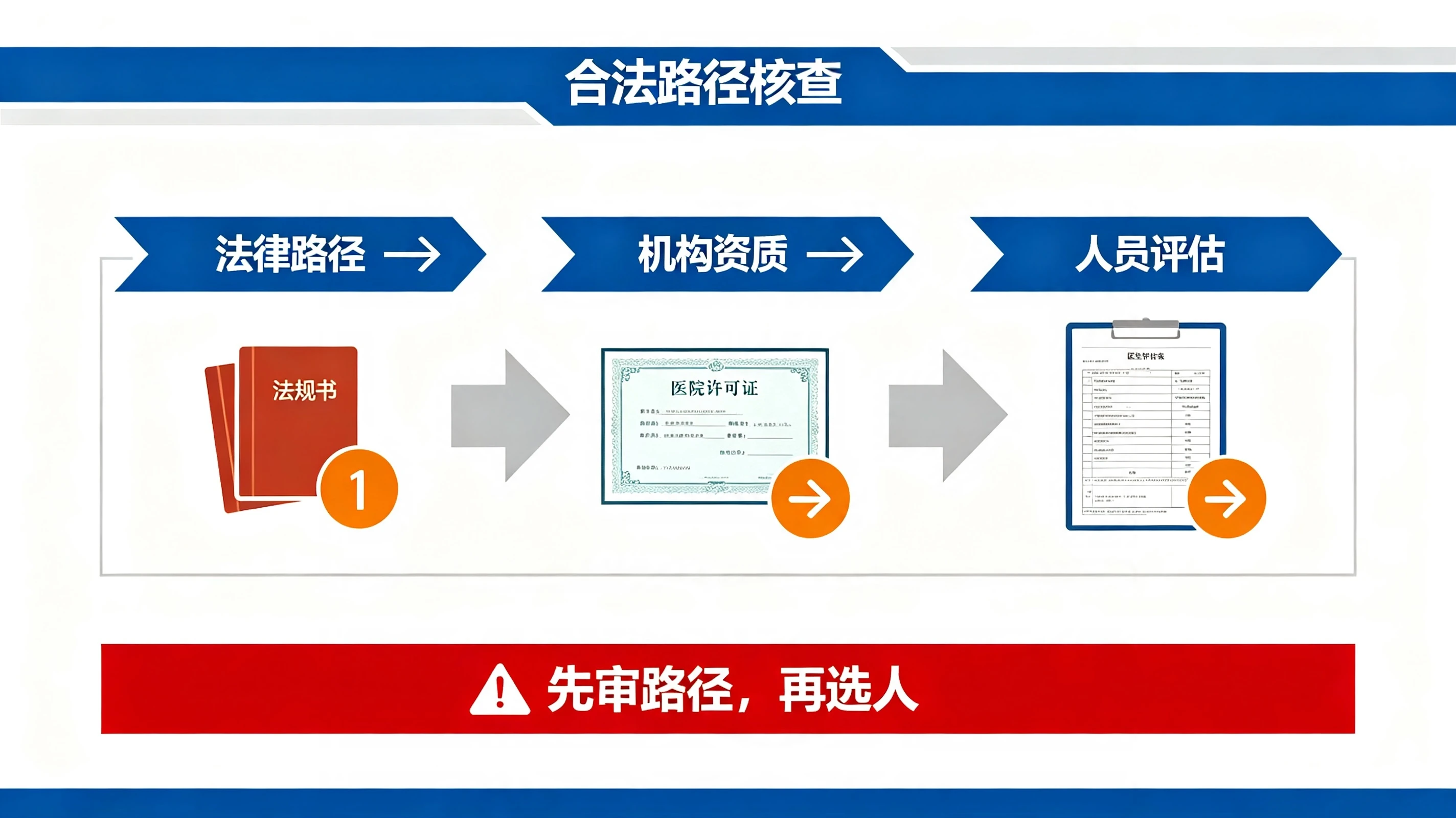
Level 3: Medical Independence Verification for Personnel Assessment
Only if the first two stages are essentially passed is it necessary to evaluate the individual conditions of egg donors or surrogates. Personnel screening cannot rely solely on photos, personal profiles, or health certificates issued by intermediaries; the core criteria for judgment are:
Whether all medical examinations are conducted by accredited medical institutions rather than performed independently by intermediaries;
Check whether the inspection time and reporting cycle conform to clinical logic;
Does it include a complete assessment of personal medical history and family medical history?
Whether medical risks have been fully disclosed to the donors or the surrogate mothers themselves;
Whether the individual’s participation is entirely voluntary, and whether there are any signs of economic or physical coercion;
Whether the relevant medical records can be verified through the official channels of the healthcare institution.
II. The Legal Boundaries of Egg Donation in Taiwan: Lawful Donation Does Not Equal Free Selection
1. Current System: Only licensed institutions are permitted to conduct compliant donations
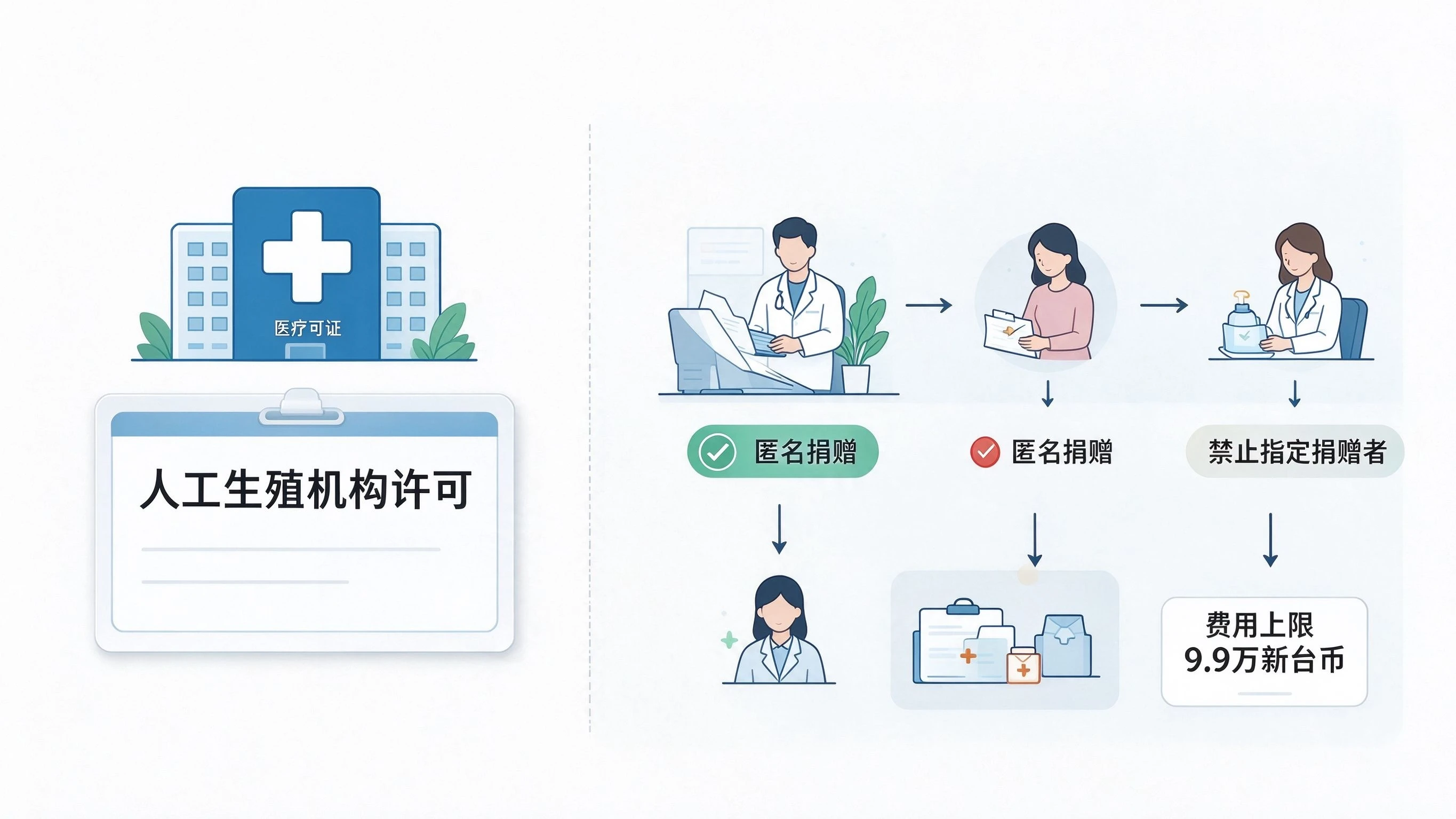
Under Taiwan's current Artificial Reproduction Act, medical institutions must obtain a specific license from the National Health Administration of the Ministry of Health and Welfare to perform artificial reproduction procedures, accept gamete donations, store or provide gamete services. The license is valid for three years and requires renewal upon expiration.
Medical institutions are required by law to conduct a comprehensive assessment of donors' physical and psychological conditions, the medical histories of the donors themselves and their blood relatives within four degrees of kinship, as well as any genetic or infectious diseases that may affect reproductive health. The statutory age range for female donors is 20 to under 40 years old; however, in clinical practice, many institutions set stricter age limits (e.g., 20–33 years). Taipei Medical University...
It must be clarified that legal egg donation in Taiwan is not an open egg trading market, but rather a voluntary donation system managed by licensed medical institutions in accordance with statutory procedures.
2. Core Rule: Donors must not be designated at the client's request.
Article 13 of Taiwan’s Artificial Reproduction Act explicitly stipulates that medical institutions shall not use reproductive cells donated by specific individuals at the request of recipient couples, nor shall they assign specific recipient couples at the request of donors.
The institution can only provide information on race, skin color, blood type, etc.Non-identifying informationAs a pairing reference. The following actions are all non-compliant with Taiwan's current anonymous donation system and warrant high vigilance:
Allow clients to select egg donors through photos and videos;
Implement tiered pricing based on educational background, occupation, physical appearance, and family background;
A commitment may designate a specific donor or “reserve high-quality egg sources”;
Claims to provide personally identifiable information, such as donors' names, ID numbers, and contact details;
Bypass the official matching process at accredited medical institutions by citing "internal resources" or "special quotas."
Legal anonymity does not mean the absence of records: laws require medical institutions to maintain complete donor records, but recipients are not entitled to access donors’ identifying information. A draft amendment under deliberation in 2026 proposes adding non-identifying information such as interests and beliefs, to facilitate children’s future knowledge of their origins, rather than opening up additional selection criteria for recipients.
3. Fee clarification: NT$99,000 is the compensation cap, not the price of eggs
Taiwan’s National Health Administration explicitly stipulates that after an egg donor completes the egg donation procedure, the recipient couple may pay up to a maximum of NT$99,000 for nutritional expenses, lost wages, and transportation costs.
This fee requires precise understanding:
It is not consideration for the purchase of eggs, nor is it compensation subject to free negotiation by donors;
Intended solely to compensate for nutritional expenses, lost wages, and transportation costs incurred during the donation process;
Medical fees for necessary medical examinations, ovarian stimulation, egg retrieval, and other related procedures may be charged separately in accordance with the law.
Therefore, it cannot be simply assumed that "any amount exceeding 99,000 yuan is illegal," nor can institutions be allowed to package all additional charges as "reasonable medical expenses." Consumers have the right to require institutions to itemize costs, including: compensation related to donation, donor screening fees, medical expenses for ovarian stimulation and egg retrieval, anesthesia and post-operative care fees, laboratory and embryo-related expenses, and intermediary and non-medical service fees.
If there are arrangements for private pricing based on education level, physical appearance, egg count, or "egg donor grade," it is recommended to consult a local lawyer in Taiwan or the relevant competent authorities to verify their legality.
4. Number of donations: Lifetime ban on further donations after live birth
Taiwanese law imposes strict restrictions on repeated donations:
If the donor’s germ cells have resulted in a live birth for the recipient couple, the donorPermanently prohibited from donating again;
If the previous donation did not result in a live birth and there are no remaining stored gametes or embryos, further donation may only be permitted after compliance with applicable laws and verification by the competent authority.
The reproductive cells of the same donor shall not be provided to more than two couples undergoing treatment simultaneously. After a successful pregnancy, provision must cease in accordance with regulations, and any remaining stored materials must be handled according to law after live birth.
The eligibility of a donor for repeat donation must be verified by the medical institution that actually performs the procedure, in accordance with regulations set by the competent authority; it cannot rely solely on verbal promises made by intermediaries.
5. Current Status of Surrogacy: Not Permitted Locally; Legislative Amendments Have Been Decoupled and Are Under Separate Review
As of November 2026, Taiwan's current Assisted Reproduction Act has not yet regulated the surrogacy system. The statutory eligibility criteria require that the woman be able to carry and deliver a pregnancy using her own uterus, thereforeSurrogacy services are not permitted to be conducted locally in Taiwan..
Regarding the progress of legislative amendments: In July 2026, a committee of the Legislative Yuan voted to remove provisions related to surrogate mothers from the draft amendment to the Artificial Reproduction Act, opting instead for separate subsequent legislation. The current version of the amendment submitted by the Executive Yuan does not include surrogacy content; its main focus is on expanding the scope of eligible recipients for artificial reproduction (proposed to include single women and same-sex female spouses).
Important reminder: The draft amendment must not be treated as enacted law, and it is absolutely incorrect to claim that “Taiwan is about to legalize surrogacy.” Surrogacy remains illegal in Taiwan, which does not imply that allSurrogacy AbroadAll such acts are inherently lawful; whether intermediary activities violate the law depends on a comprehensive assessment of the service content, profit-making nature, and jurisdiction of the project.
III. Evaluation of Egg Donors in Taiwan: Medical Records Are More Valuable Than Personal Introductions
If the project is confirmed to comply with Taiwan’s current regulations, the medical evaluation of egg donors must be conducted by licensed healthcare institutions. The focus for recipients should not be on “who is more qualified,” but rather on whether the healthcare institution has completed a compliant risk assessment and whether the relevant records are verifiable.
1. Ovarian reserve indicators: Cannot be directly equated with live birth rates
The legal age range for organ donation in Taiwan is 20 to 40 years. The following indicators are commonly used in clinical assessments, but all have clear limitations:
Table
Evaluation Metrics | Main Uses | Unprovable Conclusion |
|---|---|---|
Age | Population Trends in Assessing Reproductive Risks and Egg Quality | Individual prediction of live birth outcomes |
AMH | Aids in assessing ovarian reserve and predicting ovarian stimulation response | Directly determine whether the chromosomes of an egg are normal |
AFC (Antral Follicle Count) | Ultrasound observation of follicle count to assist in evaluating the response to ovarian stimulation | Guarantee the final number of viable embryos |
Sex Hormone Test | Assess baseline endocrine status | A single result represents full fertility |
Pelvic Ultrasound | Observe the structure of the ovaries and reproductive system | Substitute for a Complete Medical History and Comprehensive Medical Assessment |
Special reminder: High AMH levels and a large number of antral follicles do not indicate that the oocytes have normal chromosomes, nor do they guarantee a greater number of transferable embryos. Packaging AMH levels, egg retrieval counts, and “oocyte quality grades” directly as a “live birth guarantee” constitutes misleading commercial promotion.
2. Genetic and Infectious Disease Screening: The core lies in risk assessment, not in providing a "certificate of all-negative results."
Under the Artificial Reproduction Act, medical institutions are required to assess the family disease history of donors and their blood relatives within four degrees of kinship, as well as hereditary and infectious diseases that impair reproductive health.
Recommend focusing on confirming the following:
Whether a comprehensive inquiry has been made into significant hereditary diseases in the individual and their family history;
Whether to conduct risk assessments for high-incidence genetic diseases;
Whether statutory infectious disease screening has been completed in accordance with regulations;
Whether to provide genetic counseling based on the genetic background of the sperm donor;
Is there a clear procedure for rechecking, notifying, and handling follow-up actions for abnormal results?
Even if all screening results are negative, this does not mean that the genetic risk is zero; different testing technologies have varying coverage, and negative results cannot rule out all rare genetic diseases.
3. Safety in Ovulation Induction and Egg Retrieval: The Number of Retrieved Eggs Should Not Be the Sole Objective
Egg donors themselves bear medical risks; ovarian stimulation may cause Ovarian Hyperstimulation Syndrome (OHSS), and the egg retrieval procedure involves risks such as anesthesia, bleeding, and infection.
Clarify the following when consulting:
Which licensed physician is responsible for developing and adjusting the ovarian stimulation protocol?
Monitoring frequency and methods for follicular development and hormonal changes;
Protocol adjustment mechanism when the risk of ovarian hyperstimulation syndrome arises;
The implementing institutions for oocyte retrieval, anesthesia conditions, and emergency response capabilities;
The responsible parties and cost bearers for postoperative follow-up reviews and complication management.
Medical decisions should prioritize donor safety over merely maximizing the number of eggs retrieved.
IV. Screening of Overseas Surrogates: First Confirm Local Legality, Then Discuss Medical Criteria
This section applies only to overseas gestational surrogacy programs that are explicitly permitted by the laws of the project’s jurisdiction and have been confirmed as compliant by independent legal counsel; it does not implyThis section applies only to overseas surrogacy programs that are explicitly permitted under the laws of the project’s location and have been confirmed as compliant by independent legal counsel; it does not indicateThis section applies only to overseas surrogacy programs that are explicitly permitted by the laws of the project’s location and have been confirmed as compliant by independent legal counsel; it does not imply that such services are provided locally in Taiwan.Pregnant Woman Screeningor surrogacy services.
The selection of surrogate mothers is not personnel recruitment; its core lies in a comprehensive assessment of pregnancy risks, informed consent, bodily autonomy, and full-term medical support.
1. Obstetric History: Don't Just Look at "Having Given Birth"
Previous pregnancy and delivery experiences form the basis of risk assessment, but a complete medical history must be verified by the local obstetrician-gynecologist:
Previous number of pregnancies, mode of delivery, and gestational age;
History of preterm birth, miscarriage, stillbirth, or ectopic pregnancy;
Have you ever experienced gestational hypertension, preeclampsia, or gestational diabetes?
History of postpartum hemorrhage, severe infection, or placental abnormalities;
History of cesarean section, uterine scar status, and recovery condition;
Whether previous pregnancy complications were treated and followed up in a standardized manner.
A history of cesarean section or pregnancy complications does not mean absolute disqualification, but risk levels must be assessed by a doctor based on individual circumstances. Eligibility cannot be determined solely by an intermediary’s statement that the person “has given birth.”
2. Health Assessment: The final conclusion shall be issued by the local medical institution
The medical assessment of pregnant women should be tailored to local laws, clinical guidelines, and individual circumstances, with a focus on:
Uterine morphology, history of prior pelvic surgery, and relevant gynecological medical history;
Chronic diseases such as hypertension and diabetes;
Underlying diseases of vital organs such as the heart, kidneys, and liver;
Thrombosis risk and related medical history;
Diseases that affect pregnancy, such as autoimmune diseases and severe anemia;
Baseline indicators associated with pregnancy risks, such as body weight and BMI.
It is not recommended to use uniform criteria such as age, BMI, and number of cesarean sections as absolute admission standards, nor should intermediaries unilaterally declare candidates "medically qualified." The final assessment must be conducted by the medical institution that will actually manage the pregnancy.
3. Psychology and Autonomy: An Indispensable Core Component
Whether the pregnant woman is fully voluntary is a core prerequisite for the project’s ongoing compliance. Key points to confirm include:
Whether there is a full understanding of the medical procedures, all risks, and legal consequences associated with surrogacy;
Whether there is the right to communicate independently with the medical team and make autonomous decisions regarding medical matters;
Whether there is coercion or inducement in terms of family, partner, or financial matters;
Whether to accept professional psychological assessment and ongoing psychological support;
Whether the handling rules for special circumstances such as pregnancy complications and termination of pregnancy are clearly understood;
Are there corresponding psychological counseling and social support arrangements available after childbirth?
If pregnant individuals cannot directly communicate with the medical team, if all decisions must be relayed through intermediaries or family members, or if they are required to sign documents waiving their basic right to make medical decisions, these are high-risk indicators.
5. Verification of Institutions and Intermediaries: Splitting Entities for Independent Checks

Cross-border reproductive projects involve multiple locations and stakeholders, making it easy for consumers to remember only a brand name while confusing the actual responsible parties for medical care, pregnancy management, and legal documentation. We recommend verifying each of the following dimensions one by one:
1. Qualifications of Taiwan's medical institutions: Verifiable through official channels
Artificial reproduction institutions in Taiwan must obtain a license issued by the National Health Administration of the Ministry of Health and Welfare, which is valid for three years. Verification can be conducted through the publicly available "List of Licensed Artificial Reproduction Institutions" and "Report on Artificial Reproduction Outcomes" on the official website of the National Health Administration.
During verification, do not rely solely on photos of certificates; ensure that:
The institution's name is on the official list of licensed entities, and its license is within the validity period.
The scope of the permitted business covers the projects actually carried out;
The contracting entity is identical to the licensing entity.
The actual medical service address is consistent with the licensed address.
If an institution claims to "partner with a certain hospital," the partnership and service offerings should be verified directly through the hospital's official main switchboard or public channels of its reproductive center.
2. Applicants from the mainland: Eligibility for entry to Taiwan and eligibility for treatment are confirmed separately
Mainland residents traveling to Taiwan for assisted reproductive services must meet two sets of conditions simultaneously, which are not interchangeable:
Entry Eligibility: Applications for medical entry must be submitted on behalf of the applicant by a qualified medical institution in Taiwan, accompanied by materials such as medical records, a treatment plan, and cost estimates, subject to project review and approval by the National Immigration Agency.
Treatment EligibilityThe recipient must meet the requirements for assisted reproductive technology under Taiwan's Assisted Reproductive Technology Act. Under current legislation, eligible recipients are married couples with a legally valid marriage, who must have their marriage certificate notarized and verified by the Straits Exchange Foundation (SEF).
Common Pitfalls Reminder:
Do not trust promises that cannot be verified through official channels, such as “all mainland Chinese couples can do it” or “there is an internal channel.”
Mainland residents are unable to enjoy local benefits in TaiwanTest tube babyMaternity subsidies; any claims that “we can help you apply for subsidies” are misleading.
The categories of subjects intended to be expanded by the draft amendment do not have legal effect before the draft comes into force.
3. Medical Records: Must Be Independently Verifiable
Screenshots of reports, ultrasound images, and chat records provided by intermediaries cannot substitute for the hospital's original medical records. Before signing the contract, you must confirm:
The full names of all institutions that issued the medical records;
The report includes the inspection date, report number, and corresponding identification information;
The authenticity of records can be verified through official channels of medical institutions, such as the medical records department or official inquiry systems;
Entities responsible for and retention periods for records of embryo culture, cryopreservation, thawing, and transfer;
Clear procedures for retrieving and reviewing medical records in the event of disputes.
The ability to independently verify medical records is the core criterion for determining whether services have been genuinely delivered.
6. Six Categories of High-Risk Scripts: Payment shall be suspended upon the occurrence of any one
The following situations may not individually constitute a violation of law, but all are high-risk indicators. If any one of them occurs, you should suspend the transaction, request a written explanation, and consult a lawyer if necessary.
"Guaranteed success, guaranteed live birth, guaranteed health, and guaranteed gender."The outcomes of assisted reproductive technologies are influenced by multiple factors, including fertilized egg quality, embryo development, uterine conditions, and the pregnancy process. No institution can guarantee live birth, health, or a specific gender. In principle, Taiwan's laws prohibit non-medically necessary sex selection of embryos, with exceptions permitted only in legally defined circumstances such as genetic diseases.
"View photos and select egg donors based on specific criteria."Taiwan’s legal anonymous donation system does not allow recipients to designate specific donors; services marketed on this premise likely bypass the statutory donation process.
Government-Certified Pregnancy Resource LibraryRequest the other party to provide the name of the competent authority, the certificate number, and the scope of the license. A personnel database built by the enterprise does not constitute government certification, nor does it indicate that pregnant women have undergone a complete medical assessment.
It’s legal overseas, so the entire process is fine.The legality of surrogacy in the project’s jurisdiction does not imply that the agency’s marketing, fee collection, or intermediary activities in other regions are lawful; moreover, parentage determination and the child’s entry and household registration are subject to different legal rules. A business license issued overseas cannot substitute for comprehensive legal review throughout the entire process.
"Pay first, and the hospital and doctors will inform you afterwards."Do not pay substantial fees before the actual medical institutions, physicians, laboratories, and responsible parties are clearly identified. If a party refuses to disclose the medical entity under pretexts such as "internal quotas" or "commercial confidentiality," you should immediately suspend signing the contract.
Sign at a low price, and discuss subsequent fees later.Low-cost packages often do not include medications, anesthesia, or laboratory tests.Embryo cryopreservation, transplantation, prenatal care, delivery, legal documentation, cross-border travel, and other expenses. Be wary of situations where medical fees are conflated with agency fees, there is no written itemized breakdown, additional “necessary” charges are imposed after payment, requests are made to transfer funds to personal accounts, or refund terms are vague.
VII. “Successful Pregnancy” Does Not Mean the End of Risks
The risks of cross-border reproduction extend beyond the stages of ovarian stimulation, egg retrieval, and embryo transfer. Even if pregnancy and delivery proceed smoothly, the following issues may still arise:
Divergent interpretations of the contract terms between the commissioning party and the surrogate
Postpartum parent-child relationship recognition does not align with expectations;
Birth certificate,Travel DocumentDocuments and entry materials are incomplete;
Local institutions and intermediaries shift blame onto each other regarding subsequent responsibilities;
Disputes over the final payment, refunds, or additional charges;
The child is unable to obtain travel documents or return to their place of residence as planned.
Cross-border projects must verify the complete legal pathway for the child after birth in advance; documents should not be handled only after delivery. At minimum, confirmation must be obtained separately from a Taiwan lawyer, a lawyer in the project’s jurisdiction, and the relevant immigration and household registration authorities:
Rules for determining the legal identity of a commissioned party;
Registration procedures and required documents for legal parenthood of a child;
Issuing Authority and Legal Effect of Birth Certificates;
Whether court orders, confirmation of parentage, or other legal documents are required;
Conditions and processing time for children's travel documents
Entry and household registration procedures for returning to one's place of residence;
Remedies when an institution refuses to provide services
It is recommended to obtain written legal advice that clearly specifies the applicable law, factual premises, and date of issuance.
VIII. 15-Item Pre-Signing Checklist

Before signing a contract or paying large fees, it is recommended to verify each item and retain written evidence:
Table
Serial Number | Verification Items | Verification Criteria |
|---|---|---|
1 | Project Legal Path | Clearly define the actual locations and applicable laws for egg donation, surrogacy, and each medical procedure. |
2 | Eligibility | Verify that the client meets the legal entry requirements for the project's jurisdiction and relevant regions. |
3 | Medical institution | Clearly identify the full official names of all institutions that actually provide medical services |
4 | Medical License | Verify the licensing entity, business scope, validity period, and actual address |
5 | Medical Team | Clearly define the qualifications of the responsible physician, laboratory team, and key personnel |
6 | Personnel Evaluation | Confirm that the egg donor / surrogate has completed compliant medical and psychological assessments. |
7 | Informed consent | Confirm that the relevant personnel are fully informed, voluntarily participating, and have independent decision-making authority. |
8 | Medical Records | Ensure that all records can be independently verified through the official channels of the medical institution. |
9 | Fee Details | Distinguish all items, including medical expenses, examination fees, compensation fees, and agency fees |
10 | Payee | Verify the correspondence between the payment receiving account, the contracting party, and the service provider |
11 | Payment Milestone | Payments correspond one-to-one with verifiable service milestones |
12 | Refund Terms | Clarify refund rules for scenarios such as explicit failures, cancellations, and institutional defaults |
13 | Medical accident | Clarify the division of responsibilities and cost coverage for complications, emergency treatment, and hospitalization |
14 | Cross-border Documents | Confirm in advance the procedures for obtaining birth certificates, proof of parent-child relationships, and travel documents |
15 | Dispute Resolution | Specify the applicable law, jurisdiction, and dispute resolution procedures |
9. Procedures for Handling Issues Discovered After Payment or Contract Signing
If you have already paid, do not continue making additional payments out of fear of loss. It is recommended to follow these steps:
Stop adding non-essential paymentsDo not pay rush fees, slot reservation fees, additional deposits, or any other such charges until the medical institution, contracting party, and fee basis have been verified.
Preserve complete evidencePreserve the contract, payment vouchers, receipts, transfer records, chat logs, promotional pages, medical reports, and all commitments made by the other party. Do not delete or alter the original records.
Directly connect with actual medical institutionsVerify through the hospital's official public contact channels: whether your medical/treatment records exist, whether the corresponding payments have been received, whether the agreed-upon services are indeed being provided, whether the intermediary has obtained proper authorization, and whether subsequent treatment can proceed normally.
Seek Independent Legal AdviceDo not rely solely on lawyers recommended by intermediaries. When dealing with issues involving Taiwan law, laws governing surrogacy abroad, and the child’s legal identity or status, consult specialized attorneys in each respective jurisdiction.
Report to the competent authorities as appropriateIf there is suspicion of false advertising, illegal medical practices, fraud, or unlawful intermediation, report the matter to the relevant regulatory authorities, consumer protection agencies, or the police, depending on the nature of the issue.
Note: Staged payments can only mitigate some financial risks and cannot fully eliminate deeper risks such as institutional unresponsiveness, falsification of medical records, and cross-border legal disputes.
X. Core Judgment Principles
Egg donation and surrogate screening may appear to focus on comparing candidate qualifications, but in essence, they assess whether a complex medical program possesses genuine, legal, and sustainable delivery capabilities.
For egg donation programs in Taiwan, the core issue is not whether one can select donors with "better qualifications," but rather whether the medical institution is licensed, whether the donation process complies with the principles of anonymity and voluntary unpaid contribution, whether medical assessments are thorough, and whether fees are transparent and verifiable.
For overseas surrogacy programs, the core issue is not how many surrogate mother profiles an agency can provide, but rather whether the program’s jurisdiction is legal, whether the intended parents meet eligibility requirements, whether the surrogate mother gives truly voluntary consent, whether the medical institution is reliable, and whether the pathways for establishing parent-child relationships and obtaining necessary documentation after the child’s birth are feasible.
The entire filtering logic can be summarized in one sentence:First, review the legal pathway; then, assess the institution’s capacity to fulfill its obligations; finally, evaluate personnel medical qualifications and financial arrangements..
If a project cannot clearly answer “who provides the medical care, where it is implemented, under what legal framework, who bears liability, how failures are handled, and what happens after the child is born,” then you should not rush to sign a contract, no matter how polished the marketing materials or how impressive the staff introductions may be.
A truly reliable reproductive service is never the one that makes the most promises, but the one in which every critical step can be independently verified, risks are fully disclosed, and accountability can be clearly established.
Frequently Asked Questions
The content on this website is general educational material and compiled public information about IVF. It is provided for reference only, does not constitute a basis for diagnosis or medical decision-making, and does not constitute any medical advice or treatment recommendation. For policy and technical requirements, please refer to official publications issued by the relevant authorities and institutions. If you find any content errors, numerical inconsistencies, or outdated information, please contact us so we can verify and update it.