
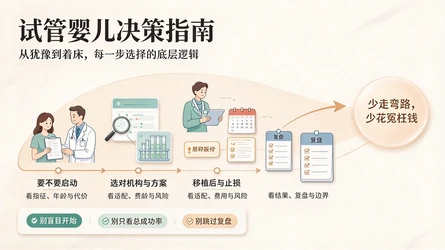
From the decision-making perspective of couples trying to conceive, this guide breaks down the selection logic at key milestones across the entire IVF process, covering core issues such as when to start, technology selection, costs and insurance coverage, and how to cut losses after failure. It comes with authoritative evidence-based references and a pitfall-avoidance checklist, helping you make informed, science-based decisions and avoid unnecessary detours.
Read allMany people towardsTest tube baby...trapped in the standardized workflow of “testing – ovarian stimulation – egg retrieval – embryo transfer.” But what truly determines whether you can spend less money, suffer less, and avoid detours is never about memorizing the steps, but about making the right choice at every crossroads: Should you start now? Which generation of IVF technology should you choose? Should you culture embryos to the blastocyst stage? Fresh embryos or frozen ones? And if it fails, should you switch protocols immediately?
This is not an explainer that merely walks through the procedure, but a decision-making tool written from the perspective of couples trying to conceive. We break down the logic behind every key stage of the IVF journey—the trade-offs, costs, and common misconceptions—so clearly that you don’t need to become a fertility specialist. At the relevant stage, simply consult the criteria and make the choice that suits you—without being swept up by anxiety, misled by information, taking unnecessary detours, or wasting money.
I. The First Decision: Should You Really Pursue IVF? Don't Jump In Blindly, and Don't Just Grit Your Teeth and Procrastinate.
IVF is not a fallback plan for infertility, but a precision treatment targeting specific underlying causes. Choosing the right timing to initiate treatment has a greater impact on the final outcome than agonizing over which hospital to choose.
Three criteria: if you meet these, going straight to IVF is more cost-effective than waiting.
Absolute indication: no hesitation, IVF is the best solution.Bilateral tubal occlusion or salpingectomy, male obstructive azoospermia, severe oligo-astheno-teratozoospermia (OAT), and a confirmed family history of genetic diseases requiring preimplantation genetic testing. The probability of natural conception in these cases is extremely low; treatments, folk remedies,Artificial inseminationEssentially ineffective; the longer the delay, the more pronounced the decline in the woman’s ovarian function, and the lower the success rate will be.
Relative indication: Timely referral to IVF after failure of basic treatment.Failure of three or more intrauterine insemination (IUI) cycles; anovulation with repeated ovulation induction for more than six months without conception; moderate-to-severe endometriosis associated with infertility; and unexplained infertility lasting more than one year. Beyond these time thresholds, the expected benefit of continued trial-and-error approaches is far lower than proceeding directly to in vitro fertilization (IVF).
Time indicators: Age is an irreversible hard metric.Infertility is indicated when women under 35 have been trying to conceive regularly for one year without becoming pregnant, or women over 35 have been trying to conceive regularly for six months, and a clear infertility factor has been identified. In women, ovarian reserve declines at an accelerating rate after age 35 and drops precipitously after age 38; age has a far greater impact on IVF success rates than any protocol or technique.
The 3 Most Common Cognitive Pitfalls to Avoid
Myth 1: IVF is harmful to the body, so it's best to delay it as long as possibleProper controlled ovarian stimulation uses medications to enable the synchronized development of a cohort of follicles that would otherwise undergo atresia in that cycle; it does not “prematurely deplete your egg reserve.” Rather, it is the decline in ovarian function caused by delay that constitutes truly irreversible damage.
Misconception 2: Take Chinese medicine or undergo physiotherapy to condition the body first; if it doesn't work, then try IVF.Blocked fallopian tubes, severe sperm abnormalities, and chromosomal issues are structural or genetic problems that cannot be reversed through conditioning and will only waste the precious 3-6 months of the preconception window.
Myth 3: IVF allows you to choose the baby's gender and guarantees twins.In China, accredited reproductive centers strictly prohibit sex selection for non-medical reasons; the risks of miscarriage, preterm birth, and pregnancy complications in multiple pregnancies are 3 to 5 times higher than in singleton pregnancies, and specialist physicians actively recommend single embryo transfer.
II. Core Decisions Before Launch: Choosing the Right Agency and Plan is Half the Battle
Many people get stuck at the very first step on “which hospital to choose” and “which generation of IVF to choose,” led astray by advertisements and rumors. The core principle of decision-making at this stage is: ignore promotional gimmicks and focus on hard indicators; don’t choose “the most expensive,” but “the one best suited to your condition.”
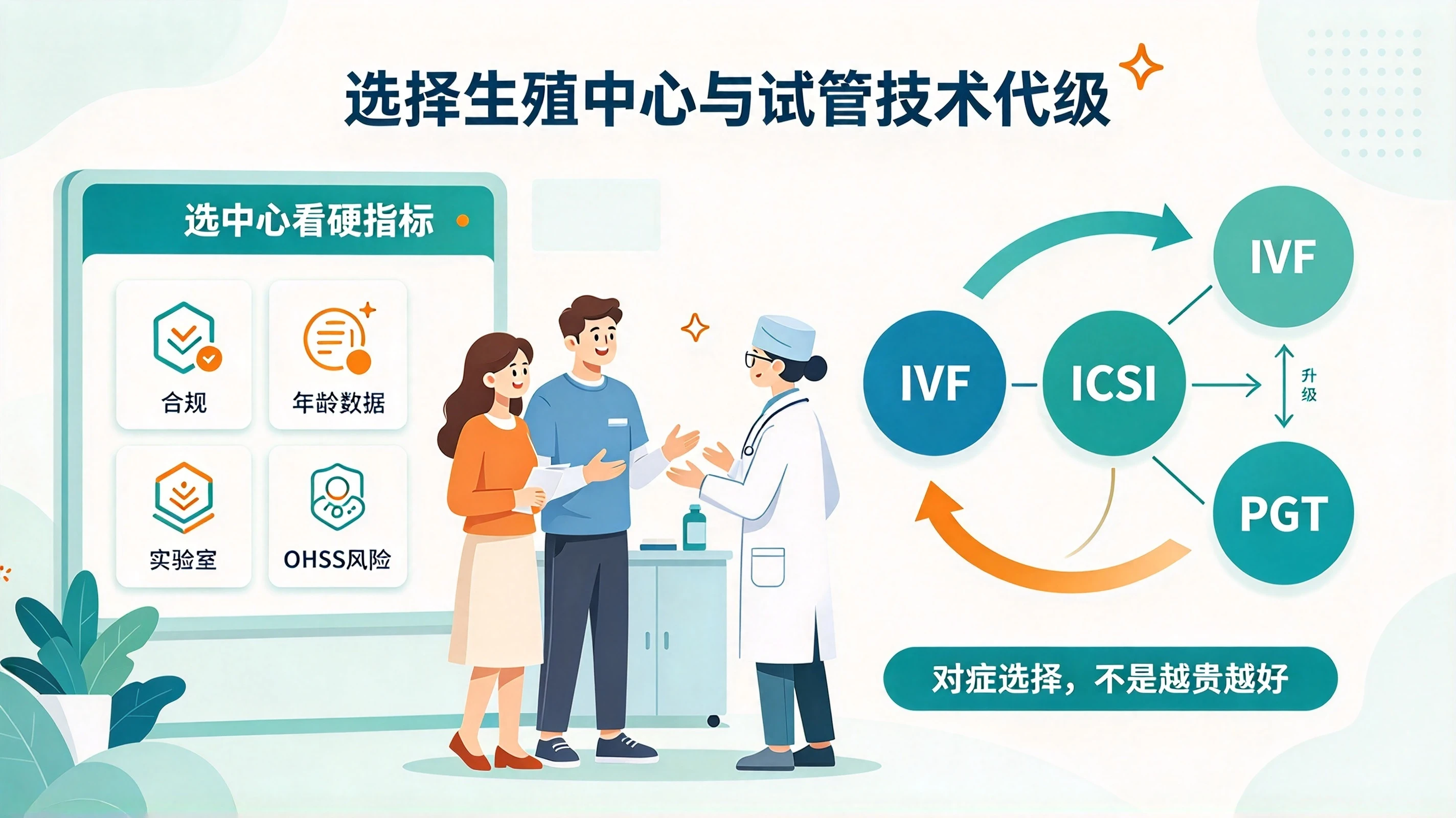
Decision 1: How to Choose a Fertility Center? Don’t Be Fooled by the “Overall Success Rate”
The clinics’ advertised “70%+ success rate” is meaningless—mixing the success rates of 25-year-old and 42-year-old patients makes it completely uninformative. When choosing a clinic, just look at these 4 hard metrics:
Qualification Compliance: It must be a formal reproductive center approved by the National Health Commission (NHC), clearly listed as qualified to perform first-, second-, and third-generation assisted reproductive technologies. The list of compliant institutions can be checked on the official website of the National Health Commission.
Age-specific clinical pregnancy rateOnly look at data from your own age group (e.g., the 30–35 and 35–40 age groups); this is the success rate directly relevant to you.
Laboratory levelLook at the blastocyst culture success rate and the post-thaw survival rate of frozen embryos—these two indicators directly reflect the laboratory's technical capabilities and affect embryo quality more than a doctor's reputation.
Incidence of Ovarian Hyperstimulation Syndrome (OHSS)The lower the incidence rate, the more cautious and individualized the doctor's medication is, and the better your body is protected.
Pitfall Avoidance Reminder:
Agencies promising "guaranteed success" or "guaranteed baby boys" should be directly ruled out; legitimate hospitals never make claims of "guaranteed success";
Prioritize clinics that are convenient for follow-up visits, as the entire cycle requires 10–15 trips to the hospital; being close to home and having an easy appointment process provides a far better experience than going to a so-called “internet-famous clinic”.
Avoid frequently changing hospitals or doctors. After a single cycle fails, first review the causes. Frequently switching plans will only disrupt the rhythm.
Decision 2: First-, second-, and third-generation IVF are not upgrades, but choices tailored to the patient’s condition.
90% of people mistakenly assume that “third generation > second generation > first generation, the more expensive, the better,” essentially treating technical categories as quality tiers. The three differ only in fertilization methods and add-on testing, address completely different causes of infertility, and a more advanced technique does not mean a higher live birth rate.
Table
Technology Type | Core Role | Target audience | Not suitable for certain groups |
|---|---|---|---|
1st Generation (RegularIVF) | Fertilization occurs naturally outside the body, solving the issue of sperm and egg failing to meet. | Fallopian tube blockage, ovulation disorders, mild oligoasthenozoospermia, unexplained infertility | Severe oligoasthenozoospermia with a history of failed fertilization |
Second generation (ICSI Intracytoplasmic Sperm Injection) | A single sperm is artificially injected into an egg to solve the problem of “sperm being unable to fertilize on its own.” | Severe oligoasthenoteratozoospermia,Obstructive azoospermiaFertilization failure in first-generation IVF | Mild sperm abnormality, infertility due to isolated tubal factor (does not improve success rate) |
Three generations (PGTEmbryo testing) | Perform chromosomal/genetic testing before embryo transfer to screen for normal embryos. | Chromosomal abnormalities, recurrent spontaneous abortion, familial monogenic genetic disease, advanced maternal ageRecurrent implantation failure | General infertile population (does not improve live birth rates and causes embryo loss) |
Decision FormulaFirst identify the cause, then select the appropriate technology. Couples with unexplained infertility should not be misled by claims that “third-generation IVF has higher success rates.” A 2025 multicenter randomized controlled study published in The BMJ by Academician Huang Hefeng’s team demonstrated that among individuals with severe male factor infertility and normal karyotypes, adding preimplantation genetic testing for aneuploidy (PGT-A) to intracytoplasmic sperm injection (ICSI, or second-generation IVF) resulted in no statistically significant differences in either first-transfer live birth rates or one-year cumulative live birth rates; the additional costs did not translate into improved chances of a successful pregnancy. For patients without genetic risks, unnecessarily undergoing third-generation IVF not only increases financial burden but may also lead toEmbryo biopsyThe procedure caused the loss of a healthy embryo that could have naturally implanted.
Decision 3: How to Choose an Ovarian Stimulation Protocol? It’s Not Just Up to the Doctor—You Can Take the Initiative to Communicate
No plan is inherently good or bad; what matters is whether it's a good fit for you. Your doctor will offer professional advice, but you need to understand the reasoning behind it to judge whether it suits your physical condition.
Antagonist protocol (the most mainstream)Ovarian stimulation begins directly on cycle day 2–3, with a GnRH antagonist added later to prevent premature ovulation. The cycle is short (10–12 days), with a low risk of OHSS and flexible medication dosing. It is suitable for most patients, especially those with normal ovarian function and polycystic ovary syndrome (PCOS).
Long protocolDownregulation for 2–4 weeks is followed by ovarian stimulation, which yields good follicular synchrony. This approach is suitable for patients with relatively good ovarian reserve, endometriosis, or recurrent implantation failure, but its disadvantages include a longer cycle and slightly more pronounced initial discomfort.
Mild Stimulation / Natural Cycle ProtocolThe dosage of medication is extremely low, with 1–3 oocytes retrieved per month. It is suitable for patients with severely diminished ovarian reserve, advanced maternal age, or poor response to previous high-dose ovarian stimulation. The advantage is minimal physical burden; the disadvantage is the low number of eggs retrieved, which may require multiple retrievals to accumulate embryos.
Core PrinciplesThe better the ovarian function, the more suitable a mild protocol is; if ovarian function is poor, do not blindly insist on increasing medication to retrieve more eggs, because high doses not only fail to increase the number of high-quality eggs but also add further burden to the body.
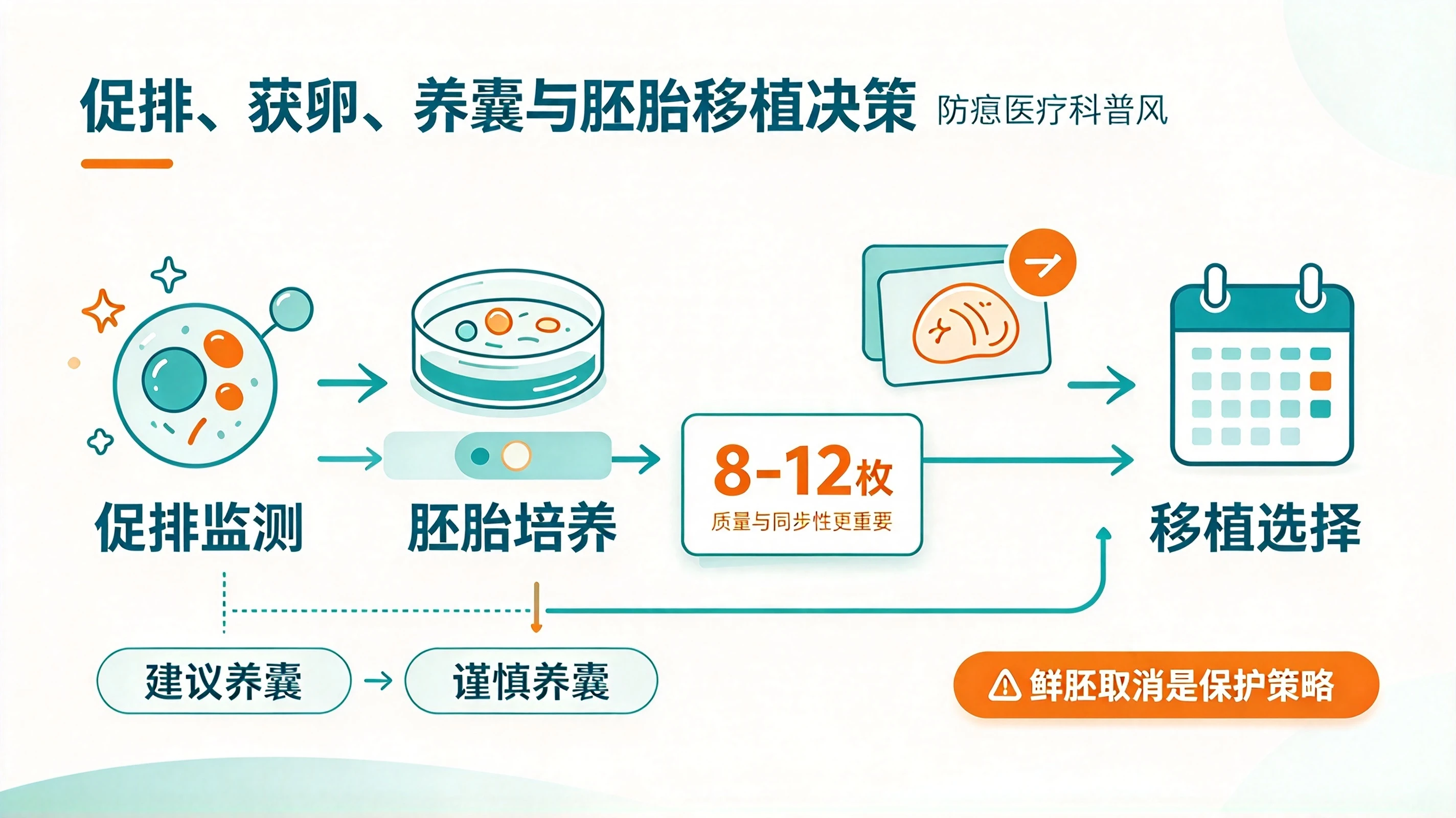
3. Decisions after entering the cycle: choices at each node directly impact the final outcome.
Once the ovarian stimulation phase begins, many people fall into the anxiety of comparing follicle counts with others or agonizing over whether to culture embryos to the blastocyst stage. The core principle for decision-making at this stage is: don't compete on quantity—focus solely on quality; don't chase perfection—simply weigh the risks and benefits.
Decision 1: What Counts as “Good Progress” During Ovarian Stimulation?
Many patients compare their follicle counts with fellow patients every day, believing that “the more eggs retrieved, the higher the chance of success”—this is the biggest misconception.
The optimal oocyte yield is 8-12.: This range has the highest proportion of high-quality eggs, the lowest OHSS risk, and the optimal live birth rate. Once the egg count exceeds 15, the risk of ovarian hyperstimulation syndrome increases sharply, and same-cycle transfer may no longer be feasible.
More important than quantity are follicle size uniformity and hormonal synchrony.A good ovarian stimulation result is one in which a cohort of follicles is similar in size, with estrogen levels appropriately matching the number of follicles. Follicles of varying sizes, even if numerous, yield few mature, high-quality eggs.
Pitfall Avoidance ReminderDo not adjust your medication dosage on your own, and do not feel anxious because others have more follicles than you do. Since baseline antral follicle counts and ovarian responses vary from person to person, there is no basis for comparison.
Decision 2: Should you culture to blastocyst? This is the choice most likely to bring regret.
Blastocyst culture is the process of continuing to culture day-3 cleavage-stage embryos until they reach the blastocyst stage on days 5 to 6. Many people think that blastocyst-cultured embryos are of better quality and have higher success rates, but they only see the benefits and fail to recognize the risks.
The benefits of blastocyst cultureNatural selection helps identify embryos with greater developmental potential; the implantation rate of single blastocyst transfer is higher than that of cleavage-stage embryos, thereby reducing the number of transfers and lowering the risk of multiple pregnancies.
Risks of blastocyst cultureNot all embryos can develop into blastocysts; those of average quality are eliminated during culture. If the number of embryos is already low, it is very likely that all embryo culture attempts will fail, leaving not even a chance for transfer.
Decision Reference Table:✅Blastocyst culture is recommended in the following cases: ≥5 high-quality embryos on day 3, repeated cleavage-stage embryo transfer failures, or when preimplantation genetic testing (PGT) is required.❌Cautious blastocyst culture: ≤2 top-quality Day 3 embryos; advanced maternal age or poor ovarian reserve with inherently few embryos; first transfer without special circumstances
Truth: Blastocyst culture is not an “embryo upgrade”—it is simply “survival of the fittest.” Embryos that are eliminated would very likely fail to implant anyway, but the cost is that you may lose the opportunity for this transfer. This is a trade-off to think through carefully in advance.
Decision 3: Fresh or Frozen Embryo Transfer? Don't Force a Choice Just to Save Time
Embryos transferred directly after egg retrieval are called fresh embryos, while those frozen and transferred one to two cycles later are called frozen embryos. Many people think fresh embryos “save time,” but beyond time costs, physical condition and success rate matter even more.
Fresh embryo transferThe advantage is that it saves time, as embryo transfer can be performed 3-5 days after egg retrieval; the disadvantage is that hormone levels remain high after ovarian stimulation, the endometrium may not be in sync with the embryo, and the risk of OHSS is high.
Frozen Embryo TransferAdvantages: Preparing the endometrium after the body has fully recovered improves endometrial receptivity and lowers maternal risk. Current clinical data show that the live birth rate is not lower than that of fresh embryo transfer, making it the preferred option in most reproductive centers. Disadvantage: It requires waiting an additional 1–2 months.
Decision criteria:
Choosing a fresh embryo: few oocytes retrieved (<8), no risk of OHSS, ideal endometrial thickness and morphology, and no other physical discomfort.
Choosing frozen embryos: High number of eggs retrieved, prone to OHSS (such as bloating), suboptimal endometrium, or the need for blastocyst culture or PGT (preimplantation genetic testing).
CancelFresh embryo transferThis is not "treatment failure," but rather a standard clinical protective strategy. The endometrial condition was poor,ProgesteroneIn cases such as early elevation or high OHSS risk, full embryo freezing can effectively reduce maternal risks and improve subsequent transplantation success rates; it is not an indicator of a problem.
IV. Post-Transplant Decision-Making: Don’t Let Rumors Hijack Your Choices—Doing These Few Things Right Is Enough
The 14 days after the transfer are a peak period of anxiety and also the stage with the most rumors. Many people rest cautiously in bed and take all kinds of supplements, only to end up doing useless work or even making things worse.
1. Luteal phase support: Taking an adequate dose on schedule and not discontinuing the medication without consulting your doctor matters more than anything else.
Ovarian stimulation can lead to luteal phase deficiency, a key factor affecting implantation, so routine luteal phase support after embryo transfer is essential. Common formulations have no inherent superiority over one another; the best choice depends on the clinical scenario. Progesterone injections are inexpensive and provide stable blood progesterone levels, but injections are painful and may easily cause indurations. Vaginal progesterone gel offers high local concentrations and convenience, though at a higher cost. Oral dydrogesterone is convenient and is often used as an adjunctive supplement.
Red Line Reminder:Even if an early pregnancy test shows two lines, you must not discontinue the medication on your own. It usually needs to be continued until after the placenta forms at 10–12 weeks of gestation, then gradually tapered off. Luteal insufficiency caused by stopping medication without medical guidance is one of the common triggers for early fetal demise.
2. Implantation Period Care: 90% of People Do It Backward
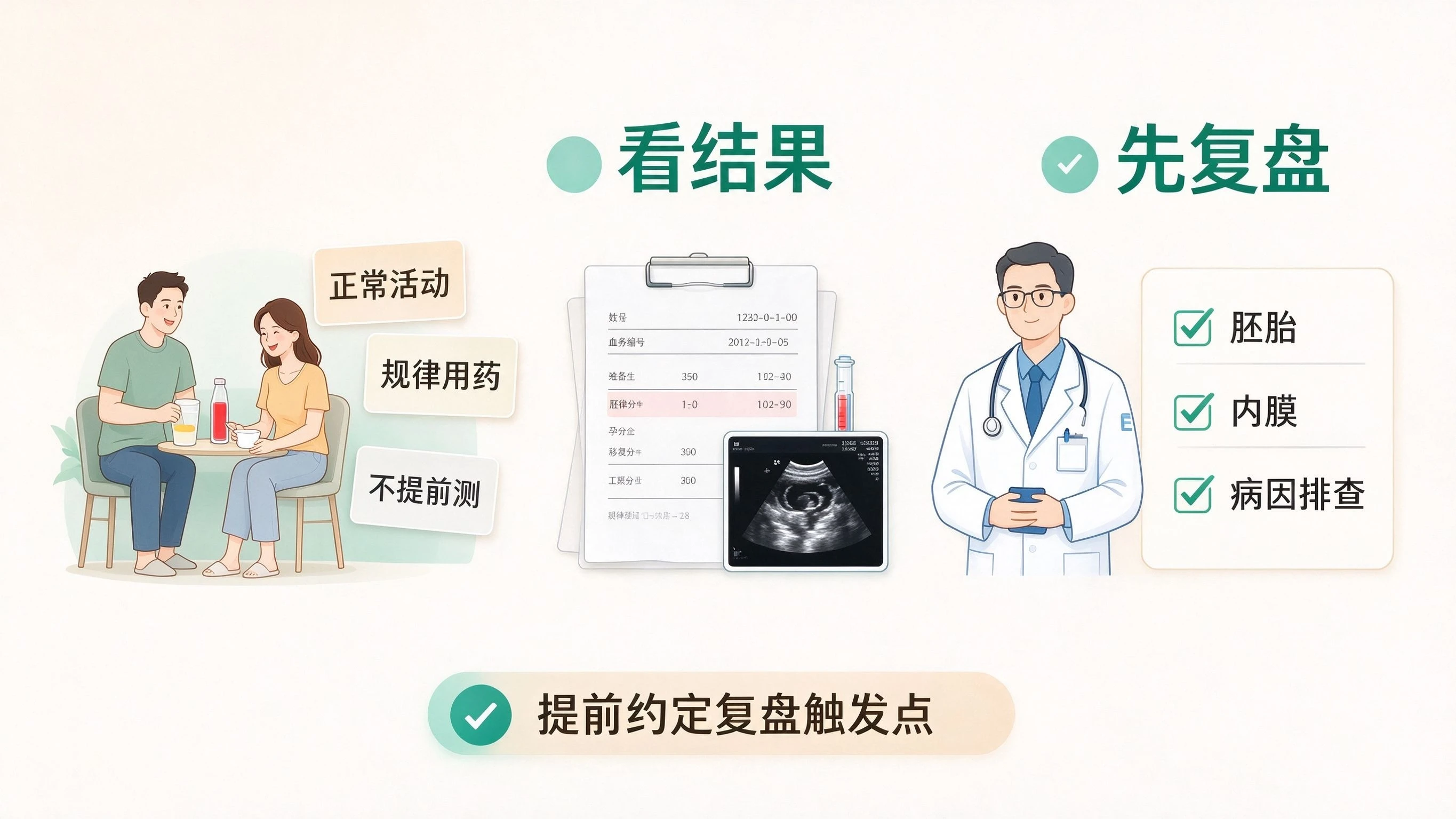
The biggest misconception: complete bed rest is required after embryo transfer. The American Society for Reproductive Medicine (ASRM) embryo transfer guideline, based on Level A evidence, clearly states that bed rest is not recommended after embryo transfer. Normal daily activities do not dislodge the embryo, while prolonged bed rest may increase the risk of lower-extremity thrombosis, constipation, and anxiety, thereby indirectly affecting endocrine function and implantation. Multiple top-tier hospitals in China have also confirmed that patients who remain normally active after embryo transfer have clinical pregnancy rates that are no different from—and in some cases even better than—those who remain on bed rest.
Only 3 things truly require your attention.:
Avoid strenuous exercise, heavy physical labor, tub bathing, and sexual intercourse;
Keep your diet light and balanced; there is no need for heavy tonics—the key is to avoid diarrhea and constipation.
Do not take a pregnancy test too early. A two-line result within 10 days after embryo transfer is most likely due to residual medication from the trigger shot and will only increase anxiety unnecessarily; emotional fluctuations can have a much greater impact on implantation than routine daily activities such as walking or going to work.
Pitfall Avoidance ReminderDo not buy any “conception- and implantation-support pills” or “endometrium-thickening supplements”; there is no evidence-based proof that they are effective, and they may instead contain unknown ingredients that affect hormone levels.
V. Making Results Actionable: How to Follow Up After Success and What to Do After Failure
1. Pregnancy confirmed: passing the first 12 weeks smoothly, with no difference from a natural pregnancy.
A blood HCG test 14 days after embryo transfer is the gold standard for confirming pregnancy. A single measurement is not important; the doubling trend over 48 to 72 hours is more meaningful. A transvaginal ultrasound performed 28 to 30 days after transfer should show an intrauterine gestational sac, a fetal pole, and cardiac activity before clinical pregnancy success is confirmed. After 12 weeks of gestation, the patient is formally transferred to routine obstetric prenatal care. IVF babies are no different from babies conceived naturally; there is no need for “special treatment” throughout, and normal prenatal care is sufficient.
2. If it fails: Don't blame yourself, it's not your fault.
Many people fall into self-doubt after a single failed transfer, but the objective fact is that even high-quality blastocysts have only a 50%–60% implantation rate per transfer, so one failure is very normal.
Step one is to conduct a review.Analyze the causes together with your attending physician: Is it an issue with embryo quality? Endometrial receptivity? Or hidden factors such as immune or coagulation problems? Do not immediately switch hospitals or treatment plans after a single failure.
Step 2: Make a choiceIf any frozen embryos remain, a repeat transfer can be performed after one to two menstrual cycles of preparation; if there are no frozen embryos, ovarian function should be assessed before deciding whether to initiate another stimulation cycle.
A Stop-Loss Reminder Regarding Repeated Implantation Failure (RIF)
According to the Chinese Expert Consensus on the Clinical Diagnosis and Treatment of Recurrent Implantation Failure, RIF is defined as failure to achieve a clinical pregnancy after transferring at least three high-quality embryos in three fresh or frozen cycles in women under 40 years of age. Once this criterion is met, a systematic etiological workup should be initiated, including immunological and thrombotic factors, endometrial receptivity, and the uterine cavity environment, rather than blindly continuing transfers.
It is recommended to confirm the “review trigger points” with your doctor before starting the cycle.For example, if a first high-quality blastocyst transfer fails to implant, what additional tests or protocol adjustments are made before the second transfer? After how many consecutive implantation failures is a systematic workup triggered? Setting the rules upfront is more effective than questioning them only after failures occur.
The most important thing: allow yourself to experience emotional ups and downs, but don’t blame yourself for all the failures. IVF is a matter of probability, not a verdict on your “fertility.”
6. The Four Accounts You Must Settle Before the Week Begins
At its core, IVF is about taking a path with a clear stop-loss line while keeping the costs under control. Beyond medical decisions, clearly calculating these four costs in advance can help you avoid many reactive and unfavorable situations.
1. Financial math: not whether 30,000 is enough, but clearly seeing the out-of-pocket variables
Actual out-of-pocket costs are determined by three core variables:
Technology generation: The total cost of one cycle of first-generation IVF is about RMB 30,000–50,000; second-generation IVF costs about RMB 50,000–80,000. For third-generation IVF, embryo testing fees are added on top of standard costs, with testing for a single embryo costing RMB 3,000–5,000, and total costs typically ranging from RMB 80,000 to 150,000. In most regions, PGT testing is entirely out of pocket.
Ovulation-stimulating drugsDomestic ovulation induction medications cost RMB 5,000–8,000 per cycle, while imported ones range from RMB 15,000 to 25,000. The older the patient and the poorer the ovarian response, the higher the cost tends to be.
Health insurance policy: As of January 2025, all 31 provinces in China and the Xinjiang Production and Construction Corps have included core assisted reproductive procedures in basic medical insurance coverage, reducing average out-of-pocket costs per treatment cycle by RMB 8,000–11,000. The reimbursement rate for Category A items under urban employee basic medical insurance can reach up to 70%. However, coverage scope, reimbursement caps, and annual limits on reimbursable cycles vary by region, and PGT (preimplantation genetic testing) screening and certain imported drugs are typically not covered.
Practical adviceAt the initial consultation, ask the hospital's medical insurance office directly: "Given my treatment plan and insurance type, roughly what is the out-of-pocket range from the start of the cycle to embryo transfer and pregnancy testing? If the fresh embryo transfer is canceled and switched to a frozen embryo transfer, what additional out-of-pocket costs are there?" This answer is more accurate than any average price found online.
2. Technical account: "Algebra" is a label for the root cause, not an anxiety scale.
Third-generation IVF (PGT) is not an “upgraded version” but a “targeted version,” intended only for patients with clear indications such as known genetic risks, recurrent pregnancy loss, or recurrent implantation failure. For typical infertile couples, a higher generation of technology does not mean a higher live birth rate; instead, it may increase costs and the risk of embryo wastage. When making a decision, ask your doctor one question: “Which specific test result is the basis for recommending this generation of treatment to me? If I do not go ahead with it, how would the expected outcome differ?” Base your choice on medical indications, not on the anxiety of trying to “play it safe.”
3. The Body and Time Ledger: Unpredictability Is the True Drain
For a complete fresh embryo transfer cycle, the woman visits the clinic about 10–15 times, most of which involve 2–3 hours of monitoring in the morning; the only day that truly requires taking a full day off is the egg retrieval day (and possibly the next day), while the transfer day requires half a day to a full day. The total leave needed is about 2–3 full days plus several late arrivals or half days. What really affects work is not the number of visits, butUnpredictabilityThe dates for ovulation-induction monitoring depend on follicle growth, and patients are usually notified only the day before whether they need to return to the hospital the next day, so schedules cannot be arranged in advance. It is recommended to speak with your direct supervisor two weeks before starting ovulation induction: “During these two weeks, I need to go to the hospital on a few mornings; I won’t know which day until the day before, and I may be late by 1–2 hours.” This makes it easier to obtain flexibility than filing a vague leave request.
On the physical side, the number of retrieved eggs and the cost of postoperative recovery are directly linked: when the number of retrieved eggs exceeds 15, the risk of ovarian hyperstimulation syndrome (OHSS) increases significantly, potentially causing abdominal bloating or ascites and requiring additional time for recovery. Before starting the treatment cycle, you can confirm with your doctor what your ovarian response type is and prepare a risk management plan in advance.
4. Relationship ledger: The decision is not about “agreeing to do it together,” but about “how to bear failure together.”
The stress of treatment often amplifies conflicts in relationships. Many families reach a consensus only on “undergoing IVF” before starting, but have never discussed how to respond if it fails.Before the cycle begins, it is recommended that both spouses separately write down their answers to two questions, then share and discuss them.:
What is the upper limit on the number of cycles/transfers I am willing to try?
If, after this number of attempts, we still haven’t succeeded, how do I want us to decide the next step? We don’t need complete agreement, but the differences themselves need to be seen, not papered over with “just keep going for now.” This isn’t pessimism; it’s responsibility toward each other and the relationship.
Final Words
The IVF journey is essentially about using medical means to help us resist time and probability. You do not need to become a fertility expert; you only need to be clear about your goals at every decision point, understand the costs of your options, not be led astray by anxiety and rumors, and make the best choices within your ability—that is the greatest way to take responsibility for yourself.
A List of Questions You Can Use Directly in the Consultation Room
Given my treatment plan and insurance type, what is the out-of-pocket cost range from cycle start to the pregnancy test? If I cancel a fresh embryo transfer and switch to a frozen embryo transfer, what additional out-of-pocket costs would apply?
What specific test result forms the basis for recommending this generation of technology for me? If another generation were used, how would the expected outcome differ?
Do my endometrial lining, progesterone level, and OHSS risk indicators support a fresh embryo transfer? If not, what is the approximate waiting period before transferring a frozen embryo?
During the ovarian stimulation monitoring phase, how far in advance are return-to-clinic dates usually notified? Approximately how many days in advance can the egg retrieval date be confirmed?
If the first transfer of a high-quality embryo fails to implant, what will the next evaluation focus on? Under what circumstances would you recommend that we reconsider our approach rather than proceeding directly to the next attempt?
Frequently Asked Questions
The content on this website is general educational material and compiled public information about IVF. It is provided for reference only, does not constitute a basis for diagnosis or medical decision-making, and does not constitute any medical advice or treatment recommendation. For policy and technical requirements, please refer to official publications issued by the relevant authorities and institutions. If you find any content errors, numerical inconsistencies, or outdated information, please contact us so we can verify and update it.
