
A comprehensive breakdown of the diagnostic criteria, subtype differentiation, and testing pathways for azoospermia and necrospermia, along with reference costs and success rates for various fertility treatment options—helping patients who have received abnormal semen analysis reports avoid the pitfalls of misdiagnosis and clearly determine their next steps in seeking medical care.
Read all— From diagnosis to a fertility plan, follow the guide and avoid pitfalls.
If you have just received your semen analysis report and seen conclusions such as "no sperm found after centrifugation" and "an extremely high proportion of immotile sperm," you are likely in a state of panic and anxiety. You may even mistake azoospermia and necrozoospermia as simply different severity levels of the same problem—either giving up entirely or frantically trying just about any treatment out of desperation.
But in reality, these are two issues with completely different pathogenic logic, diagnostic pathways, treatment plans, and time and economic costs. The core difference between them has never been how poor the sperm quality is, but ratherDo you still have any usable live sperm on hand, and where are they?.
This guide will help you turn panic into actionable steps: first identify which type applies to you, then clarify where your money and time should be directed, and avoid the most common traps of misdiagnosis and overtreatment.
Quick Navigation: - Only 3 minutes? → Jump directly to the “Step-by-Step Action Checklist” at the end - Just received your report and unsure of the type? → Read Part 1 first - Already diagnosed and want to know how to choose a treatment plan? → Go directly to Parts 3, 4, and 5
1. First, spend five minutes looking at the report to figure out which type you are.
The vast majority of people cannot distinguish between the two based on semen appearance or physical sensations—for over 90% of patients, semen volume, color, and viscosity are no different from those of healthy individuals, making it completely impossible to determine with the naked eye. The only basis for judgment lies in two core indicators on the report.
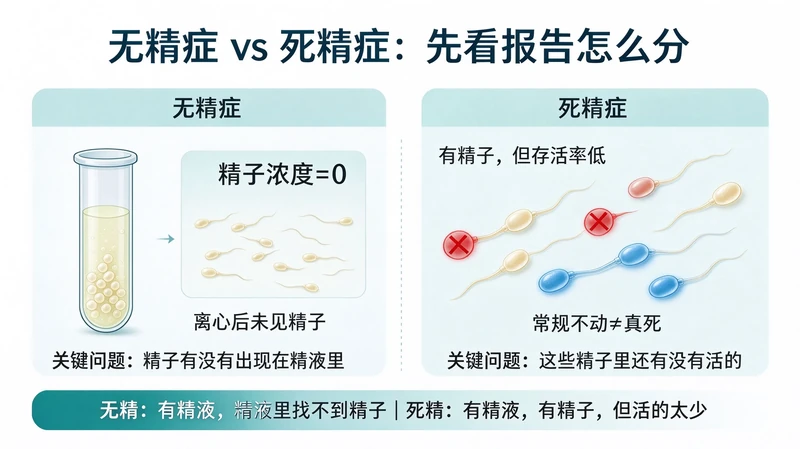
1. Azoospermia: presence of semen, absence of sperm
Core FeaturesThe report indicates sperm concentration = 0, and no sperm were detected even after semen centrifugation and high-power microscopic examination of the sediment.
Simply put, it's not that the sperm died, it's thatSperm was not present in the semen at all..
⚠️ A commonly misdiagnosed pitfall: A report stating “no motile sperm observed” does not equal azoospermia. Non-motile sperm may be dead sperm, or they may be viable sperm that have lost motility. Centrifuged sediment examination must confirm whether sperm are present before making a diagnosis of azoospermia.
Definitive diagnostic criteriaAccording to domestic guidelines for andrology and reproductive medicine, the diagnosis can only be established when at least two independent semen collections, taken more than two weeks apart, both show no spermatozoa in the centrifuged sediment. A single report may be subject to specimen error and cannot serve as a final conclusion; at the same time, conditions such as retrograde ejaculation and specimen loss must be ruled out.
2. Necrozoospermia: Semen and sperm are present, but too few are alive.
Note: “Dead sperm syndrome” is a clinical colloquial term; the standard medical term isDecreased sperm viability.
Core FeaturesThe report shows a defined sperm concentration value (sperm are present in the semen), but sperm vitality is significantly below normal standards. According to the WHO Laboratory Manual for the Examination and Processing of Human Semen (5th edition), the proportion of viable sperm in normal semen should be ≥58%; necrozoospermia, as commonly referred to in clinical practice, generally indicates a condition in which the proportion of viable sperm is markedly reduced and the proportion of dead sperm is excessively high.
Simply put, sperm are present, but most have died and lost the ability to fertilize.
⚠️ The Most Common Misdiagnosis: “Immotile Sperm” in Routine Reports ≠ “Dead Sperm”
Immotile sperm observed under the microscope represent a mixture of two entirely different scenarios:
One category is truly dead spermatozoa with ruptured cell membranes;
The other category is still alive, merely remaining temporarily immobile due to structural defects in the tail, an insufficient energy supply, or a dormant state—effectively "playing dead."
Gold standard for definitive diagnosis: Eosin-Nigrosin vital staining test
Dead sperm have compromised cell membranes, allowing dye to enter and stain the head red; live sperm have intact membranes and remain unstained. Without viability staining, diagnosing “dead sperm” based solely on motility in a routine report is logically untenable and easily leads to overdiagnosis.
Quickly distinguish in one sentence.
Azoospermia = semen is present, but no sperm can be found in it.
Necrozoospermia = semen and sperm are present, but the proportion of viable sperm is below the normal threshold.
2. Debunking the Biggest Misconception: Azoospermia Does Not Necessarily Mean a More Severe Condition
Most online popular science content assumes that “with necrozoospermia there are at least some sperm, so it must be easier to treat than azoospermia,” but this conclusion is wrong in many clinical scenarios.
To assess the difficulty of conceiving, the core has never been the sperm count, but rather two questions:
Can you find it?At least one usable viable sperm?
How high are the time, financial, and physical costs of finding this sperm?
From this perspective, the severity of the two depends entirely on their subtype and cannot be generalized.
1. Obstructive azoospermia: greater certainty of fertility
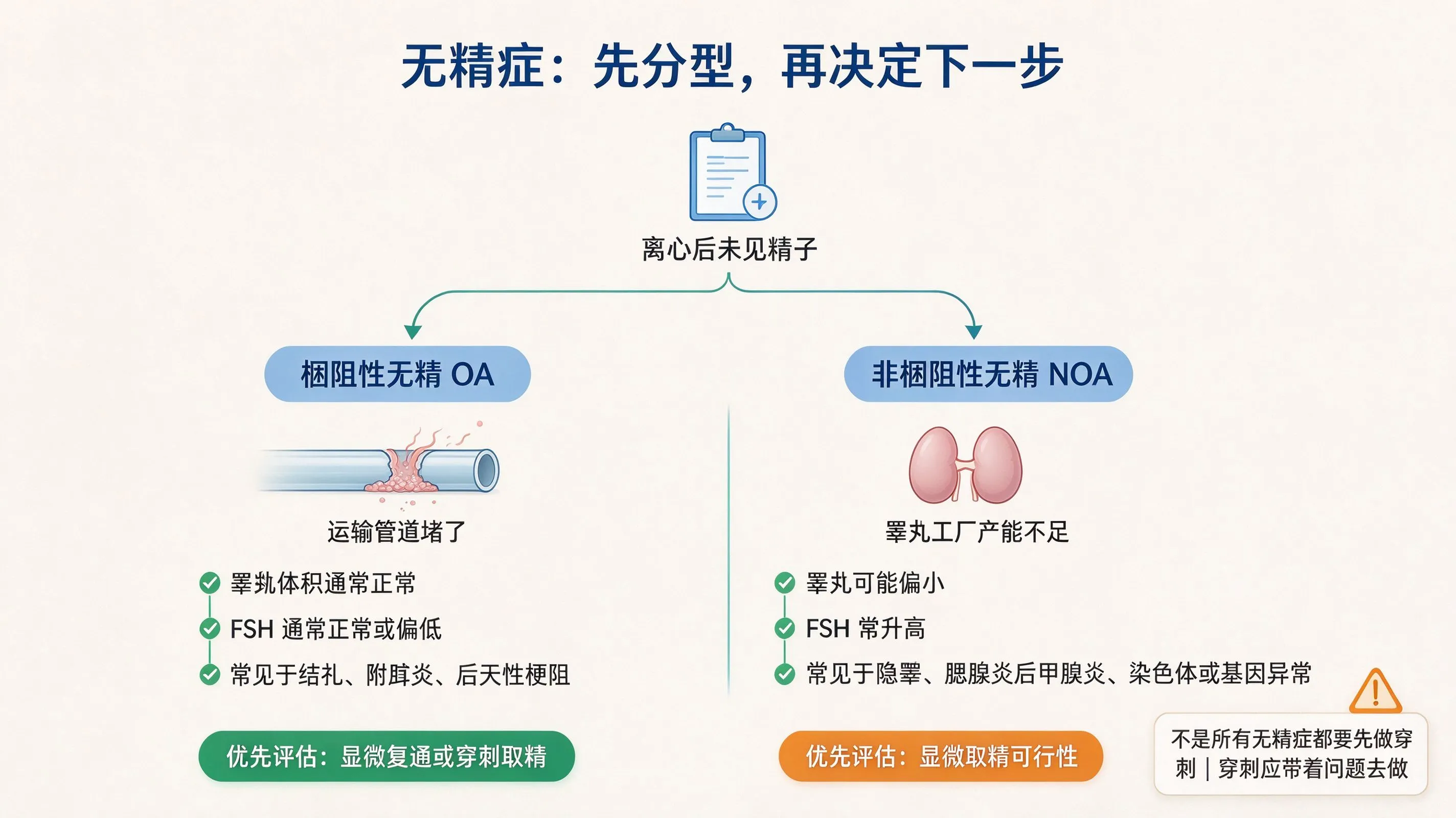
These patients have normal sperm production in the testes themselves; the problem lies in the “transport channels”—obstruction of the epididymis, vas deferens, or ejaculatory duct, or congenital absence of the vas deferens—preventing sperm from being expelled from the body. It is like “the factory has stock, but the gate is locked.”
The fertility pathway is very clear: sperm is retrieved directly from the testis/epididymis via needle aspiration, combined with second-generation IVF (ICSI).Test tube babyConception can be achieved via ICSI (intracytoplasmic sperm injection). For patients with a clearly localized obstruction and no congenital absence, surgical recanalization may also be attempted to pursue natural conception. As long as sperm can be retrieved, the conception success rate is essentially no different from that of patients with typical asthenozoospermia undergoing IVF, with a very high degree of certainty.
2. Non-obstructive azoospermia: Conception is highly difficult, but not impossible.
This category refers to spermatogenic failure inherent to the testes, mostly caused by chromosomal abnormalities, a history of cryptorchidism, mumps orchitis, and damage from radiotherapy and chemotherapy. The majority of the testicular tissue is unable to produce sperm, representing a "severe shortage in factory production capacity."
But it is not entirely without hope: approximately 30%–60% of patients have focal spermatogenesis within their testes, meaning there are scattered sperm-producing areas. ThroughMicrosurgical sperm retrievalSurgical sperm retrieval may yield a small amount of sperm for use in IVF; only patients for whom no sperm can be found should consider assisted conception using donor sperm.
3. Mild-to-moderate necrozoospermia: highly reversible; prioritize treatment of the underlying cause.
For patients with mild to moderate asthenozoospermia, characterized by a live sperm percentage between 20% and 58%, the condition is largely caused by reversible factors such as reproductive tract infections, varicocele, micronutrient deficiencies, and exposure to high temperatures or toxic substances. With targeted treatment, most individuals experience a significant improvement in sperm survival rates, potentially enabling natural conception, which is indeed more...Non-obstructive azoospermiaEasier to handle.
4. Severe necrozoospermia: may be more challenging than obstructive azoospermia.
If the proportion of viable sperm is extremely low or even close to zero, the underlying issue is often more complex, potentially resulting from congenital defects in sperm flagellar structure, genetic abnormalities, or severe oxidative stress damage.
In such cases, even if there are millions of sperm in the semen, it is difficult to retrieve enough viable sperm for IVF; repeated processing may fail to yield a single usable healthy sperm. Consequently, the difficulty of achieving fertility is actually much higher than in cases where viable sperm can be reliably obtained through testicular aspiration.Obstructive azoospermia.
III. Azoospermia: Classify and Characterize Before Treatment — Avoid Blind Puncture
Before treating azoospermia, it is essential to first distinguish between obstructive and non-obstructive causes. Until the specific type is clearly determined, no medication can be appropriately targeted, and blindly taking “sperm-production drugs” or “male sexual enhancement supplements” is simply a waste of money and time.
Step 1: Recheck to confirm the diagnosis
First, visit the reproductive medicine center or andrology department at a reputable tertiary hospital for a follow-up examination to avoid false negatives caused by a single test.
Note: Abstain from ejaculation for 3–7 days before semen collection. Ensure the entire specimen is collected, without loss or spillage. Also exclude potential sources of error, such as retrograde ejaculation or improper collection methods.
Standard: Formal classification assessment should proceed only if no sperm are observed on at least two centrifuged sediment microscopic examinations.
Step 2: Subtype differentiation and preliminary determination of obstructive versus non-obstructive
Based on several basic indicators, you can first make a rough self-assessment, and then a doctor will confirm the final diagnosis through examination:
Judgment clues | More suggestive of obstructive azoospermia (OA) | More likely non-obstructive azoospermia (NOA) |
|---|---|---|
--- | --- | --- |
Testicular volume | Usually normal | Mostly small or soft in texture |
FSH (Follicle-Stimulating Hormone) | Usually normal or slightly low | Usually elevated (clinically, >7.6 IU/L is commonly used as a reference threshold for impaired spermatogenesis, although reference ranges may vary slightly among different laboratory kits). |
Past Medical History | Vasectomy, epididymitis, acquired obstruction of the vas deferens | Cryptorchidism, post-mumps orchitis, Klinefelter syndrome, Y chromosome microdeletion |
Routine subtyping workup: scrotal color Doppler ultrasound (to assess the morphology of the testes, epididymis, and vas deferens) + a six-sex-hormone panel + karyotyping + Y-chromosome microdeletion testing — in most cases, these are sufficient to establish a definitive classification.
⚠️ Important pitfall to avoid: Not all cases of azoospermia require testicular sperm aspiration/biopsy first.
If testicular volume has already decreased markedly, or if genetic testing has confirmed etiologies with extremely low prospects for sperm retrieval—such as Klinefelter syndrome or AZFa/AZFb deletions—a diagnostic biopsy offers limited incremental information and instead increases invasiveness and cost.
Diagnostic aspiration/biopsy has a clear discriminatory value only when testicular volume is normal, FSH levels are in the borderline range, and it is clinically difficult to distinguish obstructive from non-obstructive conditions.
A puncture/biopsy should be a targeted action taken to answer a specific question, not the default next step after confirming azoospermia.
Step 3: How to Choose the Corresponding Solution
Obstructive azoospermia: Two options available, decide based on the female partner's age
Option A: Microsurgical vasovasostomyIt is suitable for couples with acquired obstruction, a clearly localized obstruction, a short duration of obstruction, a young female partner without infertility factors, and a desire to attempt natural conception.Patients with congenital absence of the vas deferens are not candidates for this surgery.In the hands of experienced surgeons, the recanalization rate is higher, the postoperative natural conception rate is approximately 30–50%, and the overall cost is about RMB 10,000–30,000, significantly lower than proceeding directly to IVF. Note: If the obstruction has persisted for more than 10 years, the recanalization success rate declines significantly.
Option B: Surgical Sperm Retrieval + ICSI (Intracytoplasmic Sperm Injection)It is suitable for families with congenital absence of the vas deferens, advanced age of the female partner, or other coexisting infertility factors. Its advantages include high certainty, successful sperm retrieval in the vast majority of cases, one retrieval being sufficient for use, no need to wait for postoperative recovery, and no loss of the reproductive window.
Nonobstructive azoospermia: Assess the value of micro-TESE and set a time threshold
The core principle is "finding sperm from focal areas of spermatogenesis within the testis." The microdissection testicular sperm extraction (micro-TESE) procedure itself costs around 10,000 yuan, and the total cost when combined with IVF is commonly 50,000–80,000 yuan. The overall sperm retrieval rate ranges from 30% to 60%, and the pregnancy rate after successful sperm retrieval is approximately 40% to 60%.
Decision recommendation: Set a clear conditioning period for yourself (for example, 3–6 months). If no progress is made, promptly switch to micro-TESE or donor sperm. Do not keep trying medications indefinitely and wasting time; this decision should especially be made after a comprehensive assessment of the female partner's reproductive age.
IV. Necrozoospermia: First confirm whether the sperm are truly dead, then consider treatment.
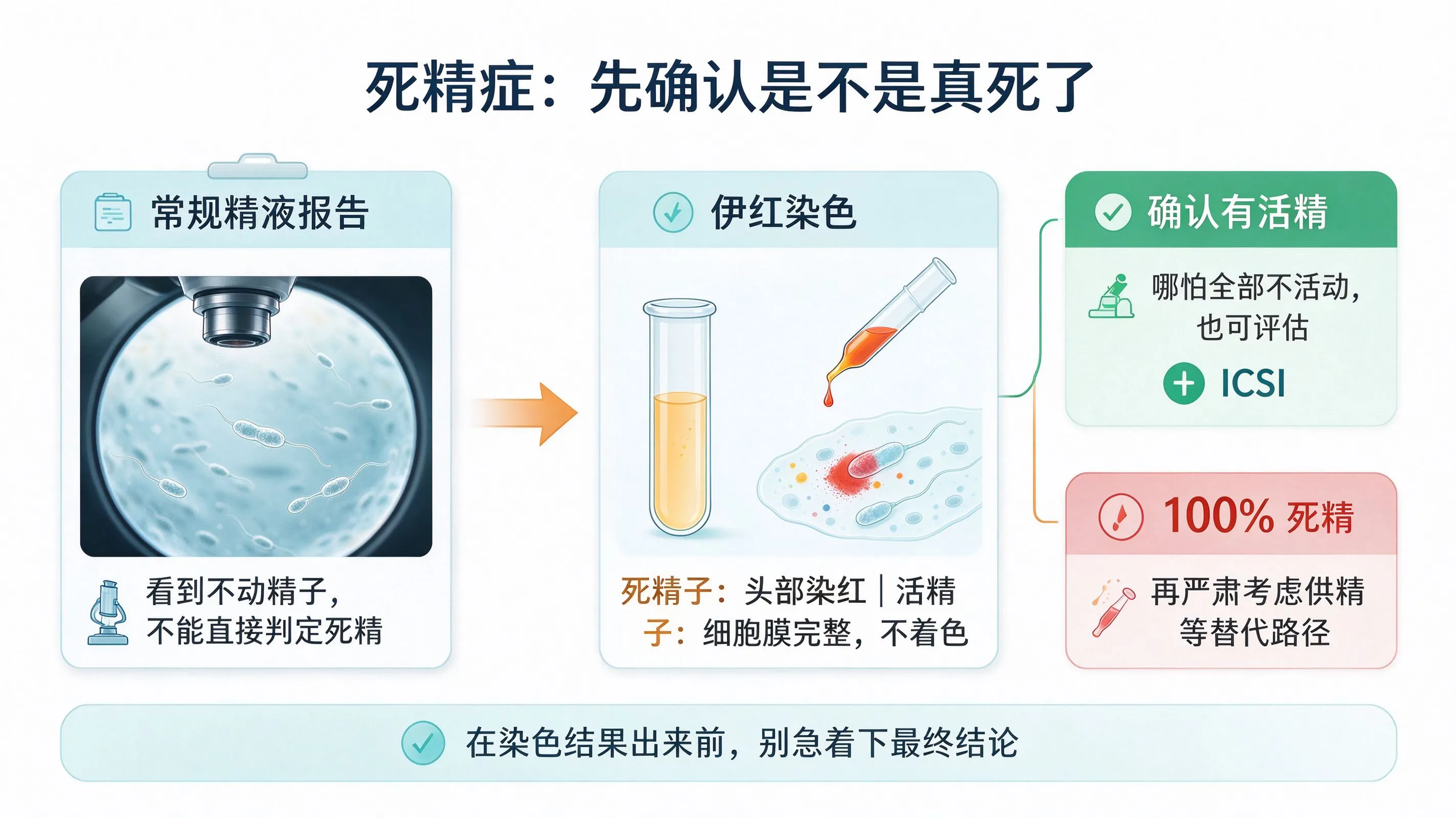
The most critical decision in necrozoospermia is not to start treatment immediately, but to first confirm whether the sperm are truly dead. This step directly determines whether you should proceed with donor sperm, and it is the most important point to pay attention to in the entire guide.
Step 1: Apply Eosin staining to rule out false-positive dead sperm.
Eosin staining is not a routine test in all hospital laboratories, and many primary care institutions do not routinely stock the reagents. If you have only received a routine report showing “an extremely high percentage of immotile sperm,”Please proactively ask your doctor to order an eosin staining test for sperm viability, or be referred to a center with reproductive andrology services to have the test completed..
The two outcomes correspond to completely different paths:
If staining confirms the presence of viable sperm—even if they are all immotile—ICSI can theoretically be performed, allowing a viable sperm to be directly injected into an egg under micromanipulation, thereby bypassing the steps of sperm motility and penetration of the egg.Embryology LaboratoryAdditional methods such as chemical induction and laser tail stimulation are used to further screen for viable sperm, with an overall pregnancy success rate of approximately 30%–40%.
If staining confirms that 100% of the sperm are dead, both natural conception and conventional ICSI lose the material basis, and only then does it become necessary to seriously consider alternative paths such as donor sperm or adoption.
In short, until the eosin staining results are available, discussing whether necrozoospermia patients can have children has no bearing on decision-making.
Step 2: Investigate the cause of death, prioritizing reversible factors.
After true necrozoospermia is confirmed, the core is to determine why the sperm are dying; the vast majority of triggers are related to the microenvironment in which sperm survive, so don’t immediately start taking expensive sperm-boosting supplement regimens.
Investigate these common reversible causes in order of priority:
Genital tract infections: Seminal leukocyte test, Mycoplasma/Chlamydia/Gonococcus screening
Varicocele: Scrotal Color Doppler Ultrasound
Biochemical abnormalities in seminal plasma: Testing for zinc, fructose, alpha-glucosidase, etc., to assess accessory sex gland function.
Endocrine and immune factors: six sex hormones, antisperm antibodies
External triggers: chronic high-temperature exposure, smoking and alcohol use, phthalate chemical exposure, chronic sleep deprivation, and prolonged sedentary behavior.
For severe necrozoospermia with no improvement after repeated treatment, consider sperm ultrastructure examination and genetic testing to rule out congenital abnormalities.
Step 3: How to Choose the Corresponding Solution
Mild to moderate necrozoospermiaPrioritize treatment of the underlying cause combined with antioxidant therapy (including anti-infection treatment, varicocele ligation, and supplementation with zinc, selenium, and vitamin E) for a duration of 3–6 months. After follow-up examinations show improvement, natural conception can be attempted orArtificial insemination, the majority can achieve effective improvement.
Severe necrozoospermia (no improvement despite repeated treatment)Do not spend too long on medication-based conditioning alone; proceed directly to IVF evaluation. If no usable motile sperm can be found in the semen, consider testicular sperm extraction (TESE)—sperm inside the testis have not yet been expelled, and their survival rate is often higher than that of sperm in the semen.
V. One Table at a Glance: Costs, Success Rates, and Target Groups for Different Paths
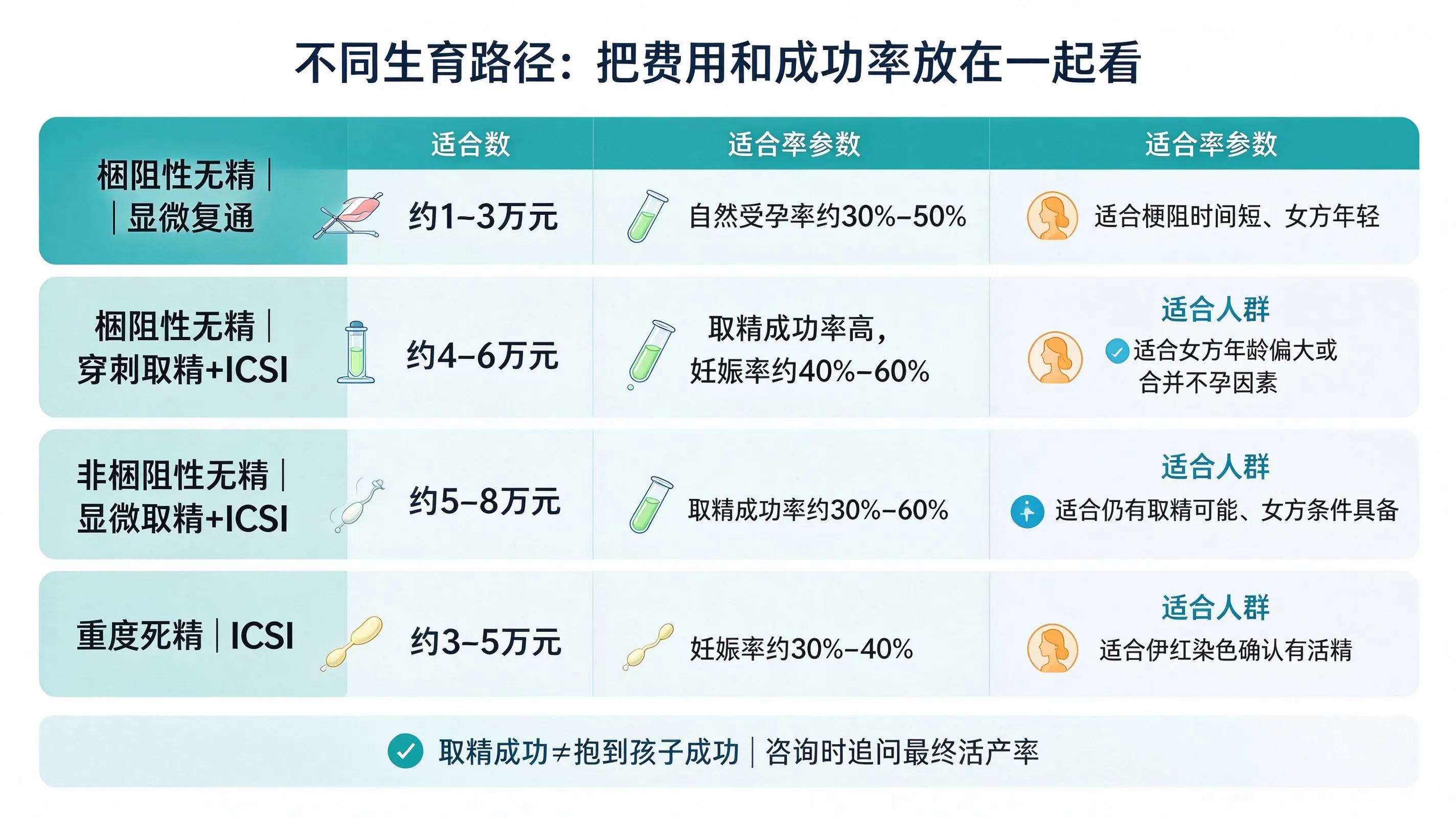
Decision-making should not focus solely on success rates or costs; it should consider both the amount paid and the likelihood gained within the same perspective. The following are common ranges in clinical practice in China, and specifics may vary by region, institution, and individual circumstances:
Corresponding situation | Treatment pathway | Approximate Costs | Key Success Rate Reference | Target audience | Core Precautions |
|---|---|---|---|---|---|
--- | --- | --- | --- | --- | --- |
Acquired obstructive azoospermia | Microsurgical vasovasostomy/vasoepididymostomy | Approximately 10,000 to 30,000 RMB | The recanalization rate is relatively high, with a natural conception rate of 30%–50%. | Short duration of obstruction, young female partner, no other infertility factors, and a desire to attempt natural conception. | Congenital absence of the vas deferens is not applicable; the success rate decreases when obstruction exceeds 10 years, and re-obstruction is possible postoperatively. |
Obstructive azoospermia | Percutaneous sperm retrieval + ICSI IVF | Total cost is approximately 40,000–60,000 yuan. | The vast majority can achieve successful sperm retrieval, with pregnancy rates of 40%–60%. | Congenital absence of the vas deferens, advanced maternal age, and coexisting infertility factors, in pursuit of high certainty. | High certainty, with no need to wait for the postoperative recovery period. |
Non-obstructive azoospermia | Micro-TESE + ICSI IVF | The total cost is approximately RMB 50,000 to 80,000. | Sperm retrieval success rate: 30%–60%; post-retrieval pregnancy rate: 40%–60%. | Sperm retrieval remains possible after evaluation, and the female partner meets the requirements for IVF. | Successful sperm retrieval ≠ reproductive success; the ultimate live birth rate should be the focus. |
Mild to moderate necrozoospermia | Etiological treatment + conditioning | Within a few thousand to 10,000 yuan | For most, survival rates can rebound significantly, and some can conceive naturally. | A clear reversible cause is present, the disease course is short, and the female partner’s conditions allow waiting. | Identify the underlying cause first before treatment, and avoid indiscriminate supplementation. |
Severe necrozoospermia (with viable spermatozoa) | ICSI IVF | Similar to conventional ICSI, approximately RMB 30,000–50,000. | The pregnancy success rate is approximately 30%–40%. | Eosin staining confirmed viable sperm, with no improvement after treatment. | If obtaining sperm from a semen sample proves difficult, testicular sperm extraction (TESE) may be considered. |
Special note: The “success rate” of micro-TESE refers to the probability of retrieving sperm, not the probability of taking home a baby. After sperm are retrieved, the process still involves fertilization, embryo culture, embryo transfer, and maintaining the pregnancy. When consulting a doctor, it is recommended to ask: “Given my underlying cause and hormone levels, what is the approximate final live birth rate after sperm retrieval?” rather than only asking about the sperm retrieval success rate.
6. A step-by-step action checklist to bring to your doctor
Condense all the information into a single actionable path you can follow step by step:
First, confirm the diagnosis type.:Check the core indicators in the report—if sperm concentration is 0, follow the azoospermia workflow; if sperm concentration is nonzero but sperm viability is low, follow the necrozoospermia workflow. First, go to the reproductive center/andrology department at a legitimate tertiary Grade A hospital for repeat testing and confirmation.
If it is azoospermiaFirst perform serum sex hormone testing, scrotal color Doppler ultrasound, karyotyping, and Y-chromosome microdeletion analysis to complete classification; do not assume that “azoospermia → sperm retrieval → IVF” is the only pathway. For obstructive azoospermia, prioritize evaluating the time window for reconstructive anastomotic surgery; for non-obstructive azoospermia, assess the value of micro-TESE.
If it is necrozoospermia: First, perform eosin staining to confirm whether viable sperm are present, then screen for reversible causes; do not use immotility as a substitute for death in decision-making, and avoid blindly pursuing long-term conditioning.
Simultaneously assess the female party’s conditions: The female partner's age, ovarian reserve, and tubal status directly alter the time calculus between “waiting for natural conception” and “proceeding quickly with IVF”; the male partner's pathway choice is never made in isolation.
Set a deadlineSet treatment cycles based on the female partner’s reproductive age, avoiding indefinite delays that could cause the fertility window to be missed.
VII. Quick Answers to Frequently Asked Questions
Is taking online “sperm-boosting medicines/sperm supplementation packages” effective?
For obstructive azoospermia, if the reproductive tract is blocked, no amount of medication can allow sperm to be ejaculated—it is completely ineffective. For non-obstructive azoospermia and mild-to-moderate necrozoospermia, certain nutritional supplements may offer supportive improvement, but they cannot replace treatment of the underlying cause, and their effects vary from person to person. Blindly purchasing expensive supplements before the condition is clearly classified is not recommended.
Does longer abstinence improve sperm quality?
No. Abstaining for too long can cause sperm to age and increase the sperm death rate, which may actually worsen the results. The recommended abstinence period for semen analysis is 3–7 days.
Can natural conception occur with necrozoospermia (dead sperm syndrome)?
In mild to moderate necrozoospermia, sperm survival improves after treatment and natural conception is possible; in severe necrozoospermia, the likelihood of natural conception is extremely low, and early evaluation of assisted reproductive technology is recommended.
Can azoospermia be passed on to the next generation?
Some types do, such as non-obstructive azoospermia caused by Klinefelter syndrome or Y-chromosome microdeletions, which carry a genetic risk. Therefore, chromosome and genetic testing is routinely recommended for patients with azoospermia, and genetic counseling can also be incorporated when planning reproduction to assess the risk.
A last piece of honest advice: outside the clinic, there are countless “folk remedies to boost sperm production” and suggestions to “try conditioning for three months and see what happens,” but for patients already diagnosed with azoospermia or strongly suspected of necrozoospermia,The most costly thing is often not the surgery or IVF, but the time wasted going in the wrong direction.Conducting thorough foundational checks, first identifying the classification and core issues, and then deciding where to invest resources is the most efficient approach.
Frequently Asked Questions
The content on this website is general educational material and compiled public information about IVF. It is provided for reference only, does not constitute a basis for diagnosis or medical decision-making, and does not constitute any medical advice or treatment recommendation. For policy and technical requirements, please refer to official publications issued by the relevant authorities and institutions. If you find any content errors, numerical inconsistencies, or outdated information, please contact us so we can verify and update it.