
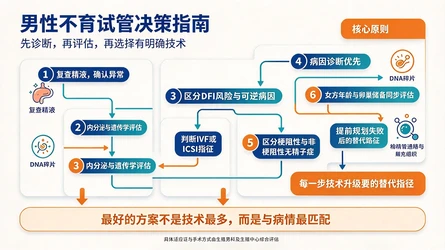
For male infertility, in vitro fertilization (IVF) is not as simple as just choosing intracytoplasmic sperm injection (ICSI) or micro-TESE. This article outlines key decision-making criteria, treatment risks, and preparation for medical visits by covering semen analysis, sperm DNA fragmentation index (DFI), indications for conventional IVF versus ICSI, and sperm retrieval strategies for obstructive and non-obstructive azoospermia, helping couples avoid unnecessary tests and treatments.
Read allTerminology: Conventional In Vitro Fertilization (IVF, commonly known as "first-generation IVF"), intracytoplasmic sperm injection (ICSI, commonly known as "second-generation IVF"), and microscopic testicular sperm extraction (micro-TESE, abbreviated asMicrosurgical sperm retrieval), sperm DNA fragmentation index (DFI).
Introduction: Technical upgrades do not guarantee better outcomes; the core of decision-making lies in tiered matching
After receiving the semen analysis report, many couples fall into one of two cognitive pitfalls: either they see low sperm count and motility, elevated DNA fragmentation index (DFI), or azoospermia and immediately demand the most advanced IVF techniques; or they blindly insist on long-term conditioning, missing the woman’s optimal window for fertility.
In fact, assisted reproductive decisions for male infertility have never been about "the newer the technology and the higher the intensity, the better," but ratherStratified by etiology, with matched protocols of appropriate intensity. All choices revolve around three core questions:
Etiological diagnosis: Is it abnormal sperm parameters, DNA damage, spermatogenic dysfunction, or obstruction of the seminal ducts?
Fertilization strategyIs conventional IVF sufficient, or is ICSI necessary?
Sperm retrievalWhen no sperm are present in the ejaculated semen, is surgical sperm retrieval necessary, and which procedure should be selected?
A 2024 multicenter randomized controlled trial in China, published in The Lancet, demonstrated that routine use of intracytoplasmic sperm injection (ICSI) did not improve live birth rates among couples with non-severe male factor infertility and no history of prior IVF fertilization failure (33.8% in the ICSI group vs. 36.6% in the IVF group, with no statistically significant difference). This finding underscores that indiscriminate escalation of technology yields no benefit, and that precise patient stratification is central to clinical decision-making.
This article integrates domestic and international guidelines with the latest evidence-based findings, organizing the complete decision-making pathway from initial assessment to treatment implementation according to the logical sequence of clinical visits, while clearly defining the indications, evidence boundaries, and key pitfalls at each step.
Step 1: Precise Etiological Classification — Establish a Clear Diagnosis Before Discussing Fertility Treatment Plans
Male infertility is not a single disease; abnormalities in semen parameters, sperm DNA damage, and azoospermia correspond to entirely different diagnostic and treatment approaches. A definitive IVF plan should never be determined based solely on a single semen analysis report.
1.1 Semen Analysis: Standardized re-testing to confirm the validity of abnormalities
Semen analysis is the foundation of male fertility assessment. Core observational parameters include: semen volume and liquefaction status, sperm concentration and total count, total motility and progressive motility, and percentage of morphologically normal sperm. Sperm viability testing should be performed as needed.
According to the WHO Laboratory Manual for the Examination and Processing of Human Semen (6th Edition), the 5th percentile reference lower limits for normal fertile men are as follows:
Table
Check Metrics | 5th Percentile Reference Lower Limit |
|---|---|
Semen volume | 1.4 mL |
Sperm concentration | 16 million /mL |
Total sperm count per ejaculation | 39 million |
Total Activity Rate | 42% |
Progressive Motility Rate | 30% |
Percentage of normal sperm morphology | 4% |
Important reminder: The above values arePopulation reference lower limit, rather than an absolute cutoff for infertility. A value below the reference range does not mean that natural conception is impossible, and a value above the reference range does not guarantee successful conception.
Key Decision Points:
Initial examination shows mild abnormalities: A recheck is required for confirmation, excluding temporary factors such as abstinence duration, fever, late-night habits, and medication. There is no need to rush into upgrading technical interventions.
Severe oligoasthenoteratozoospermia: Further refine endocrine and genetic assessments to determine the need for ICSI.
No sperm found: Must proceed throughAt least 2 microscopic examinations of semen centrifugation sedimentConfirmed. After excluding occult azoospermia, proceed to the specialized diagnostic protocol for azoospermia.
1.2 Endocrine and Physical Assessment: Localizing the Level of Impaired Spermatogenesis
For patients with oligozoospermia, severe oligozoospermia, or azoospermia, hormonal evaluation is required to determine the level of spermatogenic impairment. Routine testing includes follicle-stimulating hormone (FSH), luteinizing hormone (LH), and total testosterone; prolactin, estradiol, and inhibin B are measured as needed.
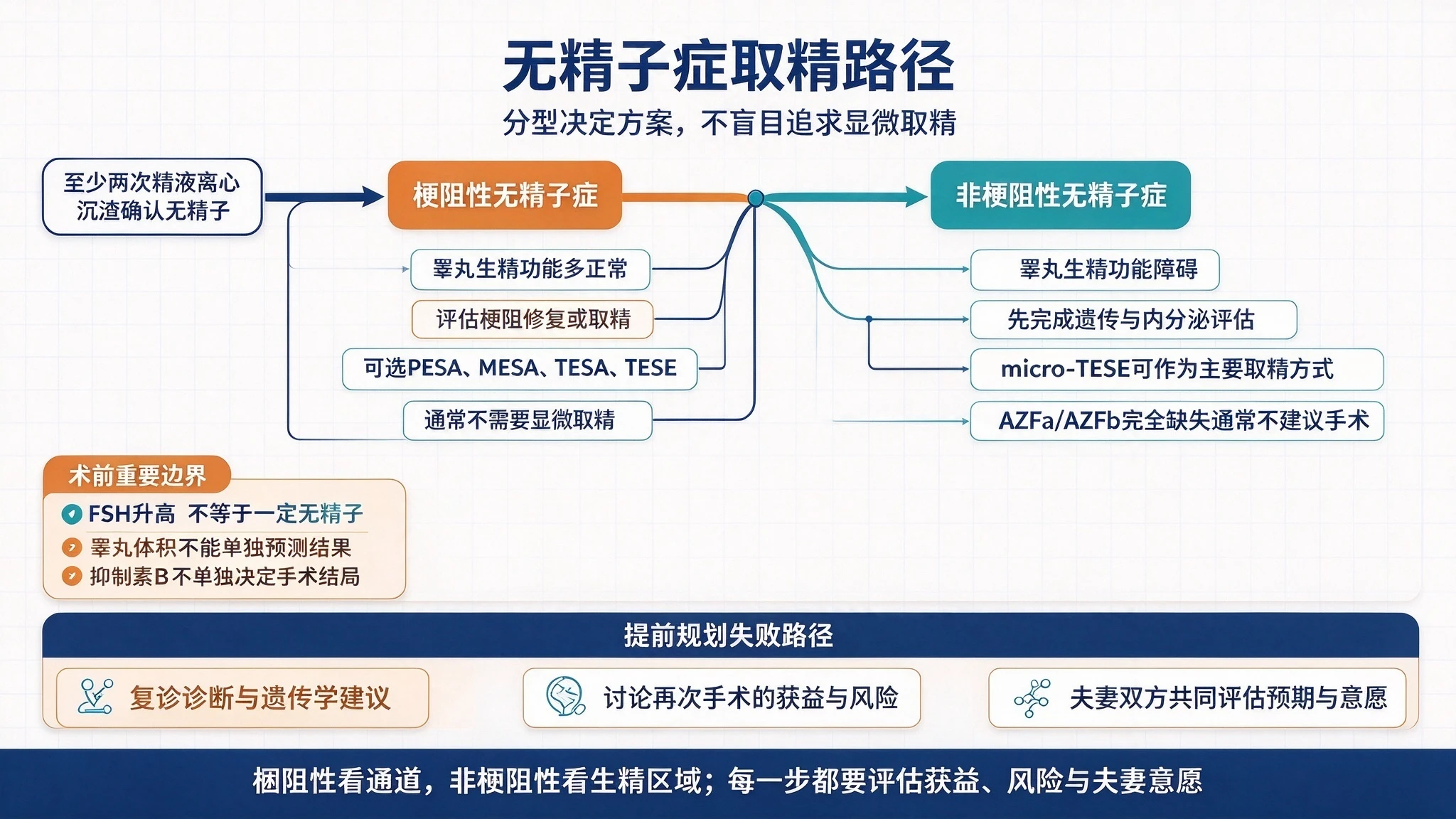
Elevated FSH levels suggest impaired testicular spermatogenesis, butOne cannot determine the complete absence of sperm in the testis based solely on FSH levels.— In some patients with non-obstructive azoospermia, focal areas of spermatogenesis may still be present within the testes even when FSH levels are markedly elevated.
Inhibin B can serve as an auxiliary assessment marker, but it is neither a routine mandatory test nor sufficient on its own to determine whether micro-TESE should be performed.
In addition to hormones,Andrological Physical ExaminationThis is key to classification: by assessing testicular volume, vas deferens palpation, and epididymal signs, one can preliminarily distinguish between obstructive and non-obstructive azoospermia, thereby avoiding missed diagnoses of typical conditions such as congenital absence of the vas deferens.
1.3 Genetic Testing: Essential Examinations for Severe Oligospermia or Azoospermia
Azoospermia and severe oligozoospermia require comprehensive genetic evaluation, as the results directly influence sperm retrieval decisions and hereditary risks for offspring. According to the EAU (European Association of Urology) guidelines:
Sperm concentration < 5 million/mL: Karyotype analysis is recommended.
Sperm concentration ≤1 million/mL: Y-chromosome microdeletion testing is mandatory; this may be extended to individuals with a sperm concentration <5 million/mL.
Suspected congenital bilateral absence of the vas deferens: CFTR gene variant testing is required.
Clinical Significance of Key Genetic Abnormalities:
Complete deletion of the AZFa/AZFb regions: The success rate of sperm retrieval from the testis is nearly 0.Sperm retrieval surgery is not recommended;
AZFc region deletion: Some patients may obtain sperm through sperm retrieval, but male offspring will inherit this deletion; genetic counseling is required.
Klinefelter syndrome (47,XXY): Some patients have focal spermatogenesis and may attempt microdissection testicular sperm extraction after specialist evaluation.
1.4 Differential Diagnosis of Azoospermia: Obstructive vs. Non-Obstructive, with Completely Different Treatment Pathways
The core classification of azoospermia is a critical branching point that determines subsequent treatment, as the two types differ significantly in etiology, spermatogenic function, and therapeutic approaches:
Table
Typing | Core etiology | Spermatogenic function of the testis | Core Treatment Direction |
|---|---|---|---|
Obstructive azoospermia (OA) | Epididymal / Vas Deferens / Ejaculatory Duct Obstruction | Basically normal | Obstruction Repair Surgery / Epididymis / Testicular Sperm Extraction |
Non-obstructive azoospermia (NOA) | Testicular spermatogenic dysfunction | Damaged to varying degrees | Etiological Assessment / Microsurgical Testicular Sperm Extraction |
Core reminder: Men with obstructive azoospermia typically have normal spermatogenic capacity in the testes, with only obstruction of the sperm transport pathways; non-obstructive azoospermia involves reduced germ cells, impaired maturation, or focal spermatogenesis only. These two conditions must never be managed with the same sperm retrieval protocol.
✅ Core Decision Principles for This StepFirst, confirm the authenticity of the abnormality; then determine the etiological classification through endocrine evaluation, genetic testing, and physical examination. For azoospermia, it is essential to first distinguish between obstructive and non-obstructive causes before discussing subsequent treatment options.
Step 2: DFI Increase — First Identify Reversible Factors; Do Not Immediately Escalate Technology
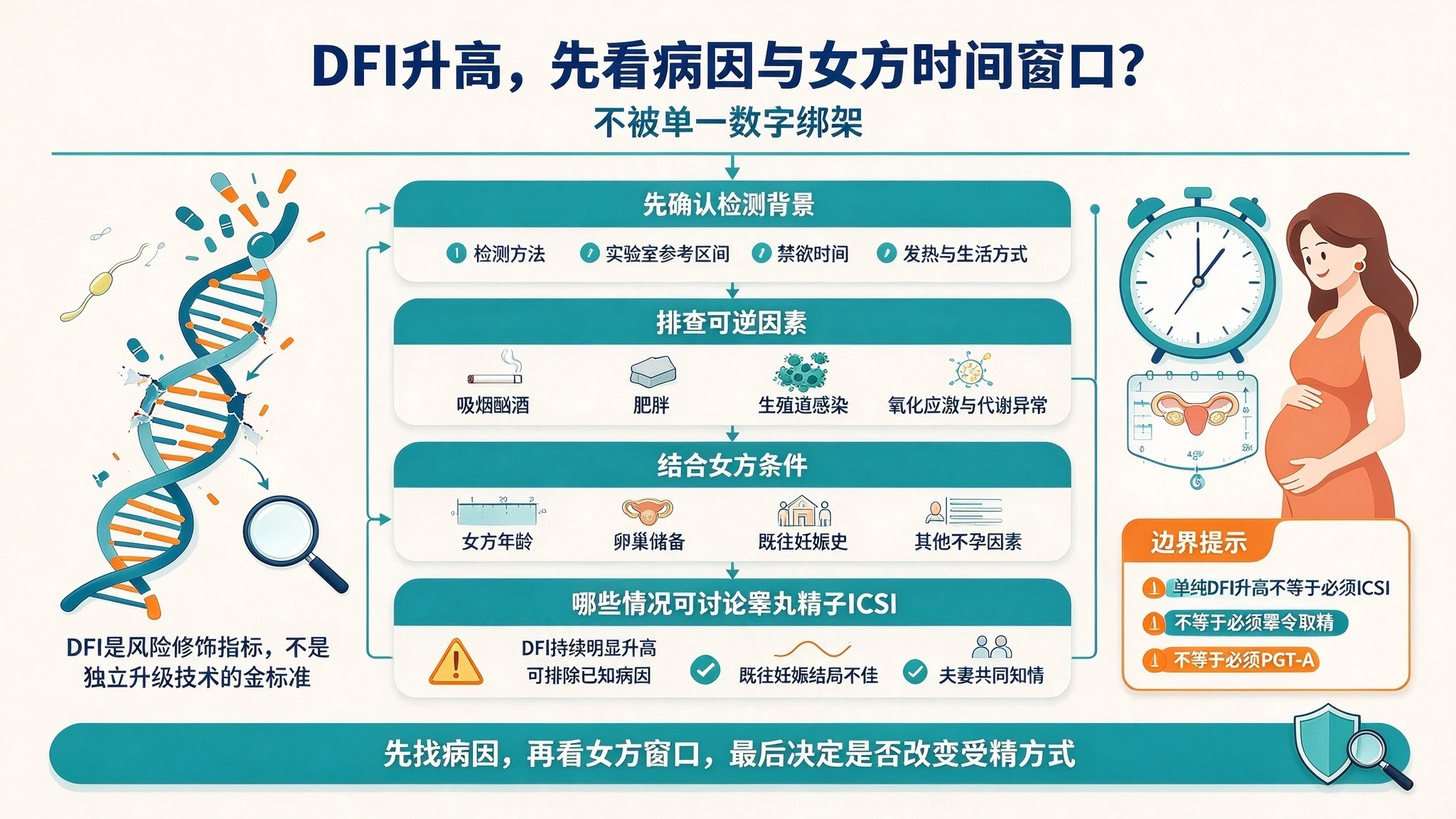
Sperm DNA fragmentation index (DFI) is one of the most anxiety-inducing indicators in clinical practice. Unlike routine semen analysis, which focuses on sperm count, motility, and morphology, DFI reflects the integrity of sperm DNA. Elevated DFI may be associated with abnormal embryonic development and an increased risk of miscarriage, but it is by no means the "gold standard" that independently determines IVF treatment protocols.
2.1 The Nature of DFI: A Risk-Modifying Metric, Not a Decision Gold Standard
An elevated DFI merely indicates an increased risk of impaired sperm DNA integrity,The following conclusions cannot be directly derived:
It will definitely be impossible to conceive naturally;
it will certainly fail to produce high-quality embryos;
ICSI is mandatory;
Testicular sperm extraction must be performed;
Must doPGT-A(Preimplantation Genetic Testing for Aneuploidy)
It is also important to note that testing methods such as SCSA, TUNEL, SCD, and COMET are based on different principles, so reference thresholds are not interchangeable. Upon receiving a report, first verify the testing method used, the laboratory’s reference intervals, and whether sample collection conditions were compliant. Do not treat 30% or 40% as universal clinical cutoffs without considering the specific methodology.
2.2 Applicable Scenarios for DFI Checks
DFI is not a routine test for all individuals undergoing IVF. The EAU guidelines recommend considering testing only in the following scenarios:
Idiopathic male infertility
Recurrent pregnancy loss
Repeated failure of assisted reproductive treatments.
For patients with a clear diagnosis of severe oligospermia or azoospermia, priority should be given to etiologic classification rather than focusing exclusively on DNA fragmentation index (DFI).
2.3 Hierarchical Decision-Making with High DFI: Balancing the Woman's Reproductive Window
The core logic for managing high DFI is not to "wait until it drops to a certain value before proceeding with IVF," but ratherFirst, rule out treatable causes; then, assess whether to wait based on the female partner’s reproductive time window..
Common reversible contributing factors include smoking, excessive alcohol consumption, irregular sleep patterns, reproductive tract infections, clinical varicocele, obesity-related metabolic abnormalities, and recent fever. Note: Not all cases of varicocele or infection require treatment; strict adherence to clinical indications is essential.
The decision strategies for different scenarios are as follows:
Table
Clinical scenario | Priority Strategy | Operation not recommended |
|---|---|---|
Mildly elevated DFI; the female partner is young with good ovarian reserve | Adjust lifestyle and intervene on reversible factors, then reassess after follow-up. | Direct upgrade from DFI to ICSI |
DFI is significantly elevated, with a clear reversible etiology. | Targeted treatment, with concurrent assessment of the female partner's window | Blindly purchasing expensive antioxidant supplements |
Elevated DFI, diminished ovarian reserve in the female partner / advanced maternal age | The male partner’s interventions are carried out concurrently with the female partner’s IVF preparation | Wait long-term for health conditioning regardless of the woman's age |
Elevated DFI + Recurrent Miscarriage / ART Failure | Comprehensively review both male and female factors as well as embryonic factors, and holistically adjust the treatment plan. | Attribute all failures to DFI |
Persistently elevated DFI + poor prior ICSI outcomes | Multidisciplinary discussion on advanced strategies such as sperm sourcing | Microsurgical sperm retrieval was directly arranged at the initial consultation. |
Regarding antioxidant supplements: The AUA/ASRM (American Urological Association / American Society for Reproductive Medicine) guidelines clearly state that there is currently limited evidence that vitamin and antioxidant supplements improve clinical outcomes in male infertility.Insufficient to recommend a specific supplement as standard treatment, without the need for high-cost, long-term blind consumption.
2.4 Precautions for Re-examination and Intervention
The spermatogenesis cycle lasts approximately 72 days, so the effects of interventions typically take 2–3 months to manifest; frequent short-term rechecks are unnecessary. When undergoing follow-up tests, please try to maintain consistent testing methods, abstinence periods, and sampling conditions to ensure comparability of results.
✅ Core Decision Principles for This StepBefore making decisions based on elevated DFI, investigate the underlying causes rather than relying solely on numerical values; whether to intervene or wait must be determined in conjunction with the female partner’s reproductive window.
Step 3: Choosing the Fertilization Method — IVF and ICSI Are Neither Superior Nor Inferior; Selection Is Based Solely on Indications
Conventional IVF and ICSI are not “low-level” versus “high-level” options, but rather two fertilization methods suited to different scenarios. The key consideration in choosing between them is whether sperm can independently complete the natural fertilization process or if there are clear fertilization impairments.
3.1 Fundamental Differences Between the Two Modes of Fertilization
Conventional IVF: Optically processed sperm are co-cultured with oocytes, allowing the sperm to autonomously complete the entire processOptimized spermatozoa are co-cultured with oocytes, allowing the sperm to autonomously complete the entire process of penetrating the cumulusOptimized spermatozoa are co-cultured with oocytes, allowing the sperm to autonomously complete the entire process of penetrating the cumulus and zona pellucida and binding to the oocyte, thereby more closely mimicking the logic of natural fertilization.
ICSI: The embryologist selects a single sperm under the microscope and directly injects it into the cytoplasm of the oocyte, bypassing the physical barriers to natural fertilization.
The core difference between the two lies solely in the fertilization process,ICSI cannot repair sperm DNA damage and does not guarantee that the injected sperm carries normal genetic material., and therefore does not directly equate to “better embryo quality or higher success rates.”
3.2 Clear clinical indications for ICSI
ICSI is clearly indicated in the following four situations:
Severe male factor infertilitySevere oligoasthenoteratozoospermia: After laboratory optimization, the sperm count and/or function are insufficient for conventional IVF. The decision should be based on the actual post-processing sperm status rather than a single parameter alone.
Prior conventional IVF fertilization failureIf complete fertilization failure or a significantly lower-than-expected fertilization rate occurs in the previous cycle, and factors such as oocyte maturity and laboratory procedures have been ruled out, intracytoplasmic sperm injection (ICSI) may be adopted in the next cycle.
Sperm retrieved surgicallySperm retrieved via epididymal or testicular surgery from patients with obstructive or non-obstructive azoospermia typically requires intracytoplasmic sperm injection (ICSI) for fertilization.
Overt sperm dysfunction: If a special condition such as acrosomal dysfunction that affects natural fertilization is confirmed, consultation with andrology andEmbryology LaboratoryJoint assessment.
3.3 Scenarios Where Routine ICSI Upgrades Are Not Required
The following conditions, when present in isolation, do not constitute sufficient justification for the routine use of ICSI:
Mild oligospermia, mild asthenospermia
The proportion of isolated abnormal sperm is low;
Isolated elevation of DFI;
No clear male factor; solely to pursue a higher success rate.
The 2024 Lancet China multicenter study mentioned earlier specifically targeted populations with non-severe male factor infertility and no history of IVF fertilization failure, confirming that routine ICSI offers no advantage in live birth rates. It is important to note that this conclusionNot applicable to patients with severe male factor infertility, surgical sperm retrieval, or a history of fertilization failure.This should not be used to negate the value of ICSI in its indicated patient population.
3.4 Description of Special Scenarios
(1) Split fertilization (half IVF / half ICSI)
Some centers employ a split IVF/ICSI strategy in the same cycle for patients with an adequate number of retrieved oocytes and borderline sperm quality, aiming to leverage the advantages of natural fertilization while mitigating the risk of complete fertilization failure.
Limitations: Not applicable when the number of retrieved oocytes is low, and it cannot guarantee obtaining more high-quality embryos.
Decision: Requires comprehensive assessment by the physician and embryology laboratory, considering the number of oocytes retrieved, sperm quality, and medical history.
(2) Is ICSI mandatory for PGT cycles?
PGT(Preimplantation Genetic Testing) is not mandatorily linked to ICSI. Some centers choose ICSI fertilization to avoid sperm contamination and ensure the quality of sample testing, but this is a requirement of laboratory procedures,Not all PGT cycles have a medical indication for mandatory ICSI.It requires a comprehensive assessment combining the type of test and male factors.
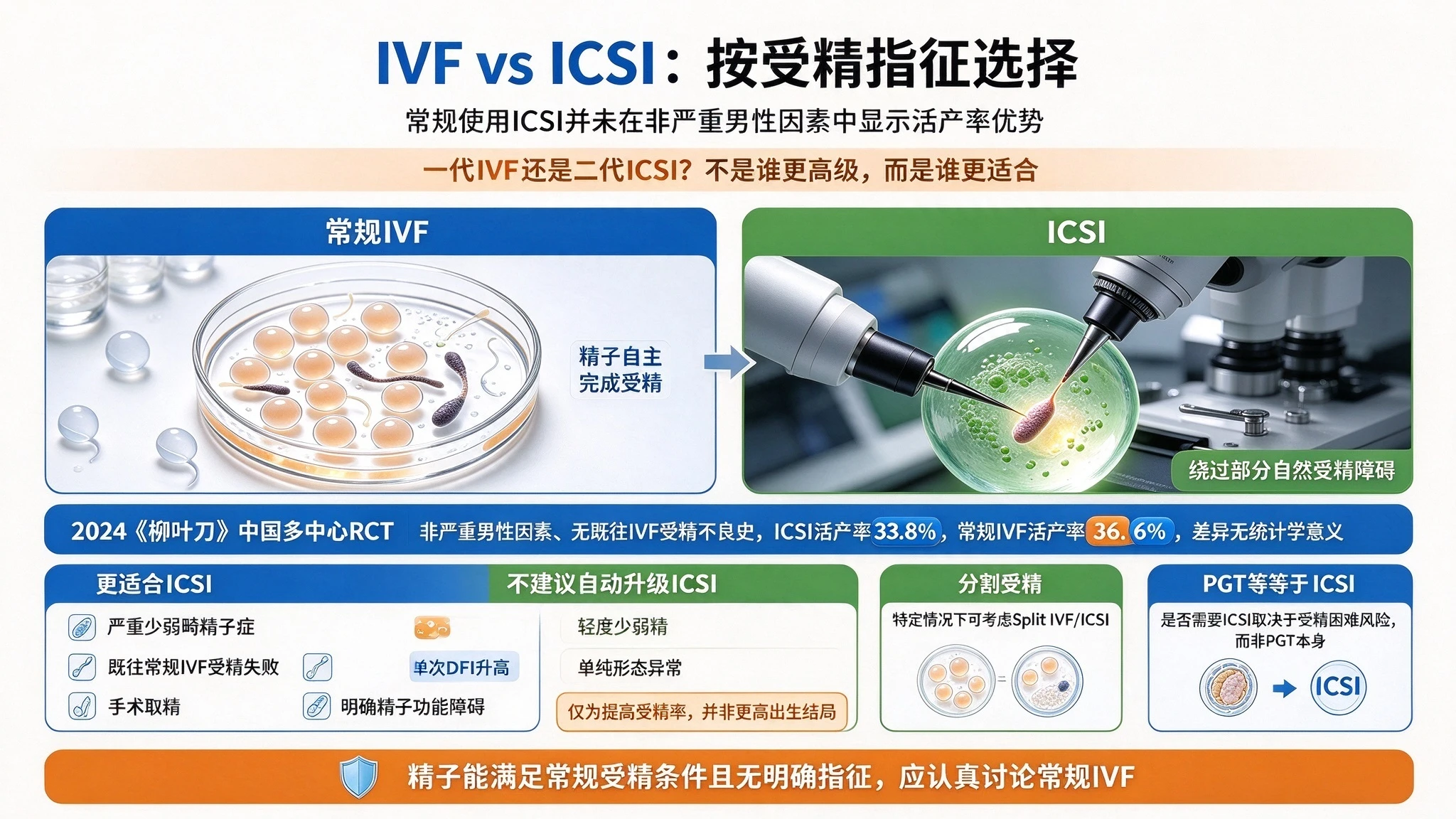
✅ Core Decision Principles for This StepIf sperm meets the criteria for natural fertilization and there is no history of definite fertilization failure, conventional IVF should be prioritized; technological upgrades do not necessarily lead to improved live birth rates.
Step 4: Sperm Retrieval Strategies for Azoospermia — Select the Procedure Based on Subtype, Rather Than Blindly Pursuing Microsurgical Techniques
The key to sperm retrieval decision-making in azoospermia is not choosing the most advanced surgical technique, but first identifying the underlying cause of azoospermia and then matching it with the appropriate sperm retrieval method.
4.1 Obstructive Azoospermia: Reconstructive Surgery vs. Sperm Retrieval for Assisted Reproduction—Choose Based on Individual Needs
Patients with obstructive azoospermia generally have normal testicular spermatogenic function, and two treatment options are available:
Microsurgical reconstructionFor eligible patients, vasovasostomy or vasoepididymostomy may be performed to attempt restoration of natural ejaculation. The choice of procedure should take into account the site and cause of obstruction, the female partner’s age and ovarian reserve, the desired number of children, surgical success rates, and willingness to wait for natural conception.
Surgical sperm retrieval combined with ICSIFor patients with irreparable obstruction, those unsuitable for reconstruction, or those who directly choose assisted reproductive technology, sperm retrieval methods such as percutaneous epididymal sperm aspiration (PESA), microsurgical epididymal sperm aspiration (MESA), testicular sperm aspiration (TESA), and testicular sperm extraction (TESE) may be considered.
Key Reminder:Obstructive azoospermia typically does not require micro-TESE., epididymal or conventional testicular sperm extraction is sufficient to meet the need, and there is no necessity to blindly escalate to more complex surgical procedures.
4.2 Non-obstructive azoospermia: Micro-TESE is preferred but not a panacea
The core of non-obstructive azoospermia is impaired spermatogenic function in the testes, with focal areas of spermatogenesis present in only some patients.
Advantages of Microsurgical Sperm RetrievalUnder surgical microscopy, the morphology of seminiferous tubules is observed to target regions with potential spermatogenic activity. Compared with blind sperm retrieval, this approach yields higher sperm retrieval rates and causes less tissue damage, and is recommended as the preferred sperm retrieval method for non-obstructive azoospermia (NOA) by both EAU and AUA/ASRM guidelines.
The Truth About Win Rates: Sperm retrieval rates vary widely (reported in the literature as approximately 30%–60%) depending on the underlying etiology and the technical expertise of the center,There is no fixed success rate applicable to all patients.Currently, no single preoperative metric (such as testicular volume, FSH, or inhibin B) can accurately predict individual sperm retrieval outcomes. The generic figures commonly cited online represent population statistics and should not be equated with personal probabilities.
Absolute contraindicationPatients with complete deletions in the AZFa/AZFb regions have a sperm retrieval probability of nearly 0, and surgery is not recommended.
4.3 Preoperative Hormonal Pretreatment: Not Mandatory, Not Routinely Recommended
Some institutions use hormonal pretreatment with HCG, HMG, and aromatase inhibitors prior to micro-TESE, but this is not a standard protocol:
In patients with hypogonadotropic hypogonadism, endocrine therapy has clear therapeutic value; some patients may recover sperm in their ejaculate after treatment.
For patients with primary testicular spermatogenic failure who have significantly elevated FSH levels,Currently, there is no high-quality evidence confirming that preoperative hormonal stimulation improves the success rate of micro-TESE.EAU guidelines do not recommend routine use.
Key pitfall to avoid: Men with fertility goals must never self-administer exogenous testosterone, as it suppresses gonadotropin secretion and further impairs spermatogenesis.
✅ Core Decision Principles for This StepFor obstructive azoospermia, conventional sperm retrieval or reconstruction is prioritized; for non-obstructive azoospermia, micro-TESE is the preferred approach. Patients must be fully informed of the uncertainty in sperm retrieval rates prior to surgery and should reject excessive marketing that presents "pre-treatment" as mandatory.
Step 5: Special Scenarios – Is Testicular Sperm Extraction Required for High DFI?
Apart from azoospermia, persistently elevated sperm DNA fragmentation index (DFI) in ejaculated sperm combined with repeated assisted reproductive failure represents another exploratory indication for testicular sperm extraction; however, the level of evidence is limited, and strict adherence to appropriate indications is required.
5.1 Theoretical Foundations and Current State of Evidence
Sperm are produced in the testes and must undergo maturation, transport, and eventual ejaculation via the epididymis. In some men, the DNA fragmentation index (DFI) of ejaculated sperm is significantly higher than that of testicular sperm. Therefore, theoretically, using testicular sperm may reduce DNA damage incurred during epididymal transit and ejaculation.
However, existing studies have notable limitations: most are observational, with significant population heterogeneity, inconsistent DFI detection methods and thresholds, and insufficient certainty of evidence. The EAU guidelines list “ICSI using testicular sperm in patients with high DFI” asExperimental Selection, with weak recommendation strength and not part of routine treatment protocols.
5.2 Strict Indications to Consider Trying
Testicular sperm extraction with ICSI may be attempted only when all of the following conditions are met, subject to joint evaluation by andrology and reproductive medicine specialists:
Sperm DNA fragmentation index (DFI) remains significantly elevated, confirmed by repeat testing.
All reversible etiologies have been comprehensively evaluated and addressed.
A history of failed assisted reproductive treatment in accordance with established protocols;
Recurrent embryonic developmental abnormalities, implantation failures, or miscarriages, after excluding other definite factors such as those related to the female partner;
The couple is fully aware of the surgical risks, costs, and limitations of evidence, and voluntarily chooses to proceed.
Key reminder: For patients with isolated elevated DNA fragmentation index (DFI), no history of treatment failure, and acceptable semen parameters, proceeding directly to micro-TESE constitutes overtreatment, as it adds unnecessary surgical risks and financial costs without clear incremental benefit.
✅ Core Decision Principles for This Step: Testicular sperm treatment for high DFI is an experimental protocol, applicable only to strictly selected patients with refractory conditions, and is not recommended as a first-line routine therapy.
Step 6: Global Decision-Making – Incorporate the Female Partner's Factors to Avoid Unilateral Waiting
Treatment of Male InfertilityThe ultimate goal is a healthy live birth for the couple; therefore, one must never focus solely on the male partner’s report, but instead incorporate the female partner’s age, ovarian reserve, and reproductive history into overall decision-making.
6.1 Priority of the Fertility Window: The Irreversibility of the Female Age
The spermatogenesis cycle lasts approximately 2 to 3 months, and it takes time to observe the therapeutic effect after addressing the underlying cause in the male partner. However, ovarian reserve and fertility in women decline irreversibly with age. Particularly when the female partner is of advanced maternal age or has diminished ovarian reserve, waiting solely for the male partner’s treatment may result in missing the optimal window for overall therapy.
6.2 Treatment Pacing in Different Scenarios
Table
Specific circumstances of the couple | Recommended Treatment Approach |
|---|---|
The female partner is young with good ovarian reserve, and the male partner has a reversible cause of infertility. | Targeted intervention for the male partner's underlying causes first, with simultaneous monitoring of the female partner's reproductive status |
Advanced maternal age / declining ovarian reserve, elevated male DFI | Lifestyle interventions for the male partner should be initiated concurrently with IVF preparation for the female partner to avoid unnecessary prolonged waiting. |
The male partner has severe oligospermia, and the female partner has diminished ovarian reserve. | Clarify ICSI indications as soon as possible to reduce inefficient repeated natural attempts |
The male partner has non-obstructive azoospermia, and the female partner is of advanced maternal age. | Complete genetic assessment and sperm retrieval planning as early as possible, and synchronize the timing of sperm retrieval with ovarian stimulation in advance. |
Multiple prior assisted reproductive failures | Conduct a synchronized review of multidimensional factors involving the male partner, female partner, and embryology laboratory, avoiding unilateral attribution of blame to the male partner |
✅ Core Decision Principles for This Step: Childbearing is a joint responsibility of both spouses, and the treatment approach must prioritize maximizing overall live birth outcomes rather than unilaterally accommodating the male partner's conditioning.
Step 7: Pre-planning — Define alternative paths in advance for handling failures
One of the most overlooked aspects of male infertility treatment is focusing solely on success expectations without planning for potential failure. This is particularly true for patients with non-obstructive azoospermia, where micro-TESE carries a clear probability of failure. Without preoperative contingency plans, couples may simultaneously face emotional, financial, and decision-making pressures.
7.1 Options for Handling Sperm Retrieval Failure
After failed micro-TESE, it is essential to first review the core issues: Was the micro-TESE performed according to standard protocols? Are there any uncorrected endocrine factors? Do the original diagnosis and genetic test results need re-evaluation? Is referral to a center with greater expertise warranted?
A single failure does not absolutely preclude repeat surgery, but any reoperation must involve a reassessment of the benefits and risks.It is not recommended to use "repeated surgeries to improve success rates" as a routine recommendation..
7.2 Core Issues Requiring Consensus Before Surgery
It is recommended that couples communicate thoroughly and clarify the following issues before sperm retrieval surgery to avoid making impromptu decisions afterward:
If no sperm are found, would you accept donor insemination?
If you do not accept donor sperm, would you consider undergoing another surgery?
Would you be willing to consider other ways of building a family, such as adoption?
After a failed surgery, should treatment be paused and psychological support sought?
Is the woman willing to bear the time and physical costs of undergoing another round of ovarian stimulation and egg retrieval?
The decision to use donor sperm for assisted reproduction requires the informed consent of both spouses, who should be well-versed in the local laws and regulations, the screening procedures for sperm donors, genetic risks, and rules regarding parentage recognition. For cross-border treatments, it is essential to verify the relevant policies of the destination country in advance.
✅ Core Decision Principles for This StepConsider the worst-case scenario first before initiating invasive treatment; clear alternative pathways can significantly reduce emotional distress during treatment.
Step 8: Fund Allocation – Invest According to Evidence Levels, Avoiding Ineffective Expenditures
The cost of treating male infertility should not be judged by the assumption that "more expensive technology is better," but rather by a tiered investment approach aligned with clinical indications and expected benefits, ensuring that funds are allocated to interventions that truly change clinical decisions and improve outcomes.
Table
Funding Priority | Project | Decision-Making Principles |
|---|---|---|
Priority investment | Semen re-analysis, male reproductive system physical examination, and necessary hormonal/genetic tests | Identifying the underlying cause is the foundation of all treatment and can reduce misdiagnosis and inappropriate therapy. |
Reinitiate if indicated | Varicocele repair, endocrine therapy, and anti-infective therapy | Establish a diagnosis before initiating treatment, and strictly adhere to the indications for surgery and medication. |
On-demand deployment | ICSI, epididymal/testicular sperm extraction, and micro-TESE | Strictly match indications and select based on sperm retrieval difficulty and fertilization requirements |
Invest with caution | Antioxidant health supplements and high-priced sperm production products | Limited evidence of clinical outcome benefits; long-term use at high cost is not recommended |
Invest with caution | Hormone pretreatment without clear indications and frequent DFI re-examinations | First, confirm whether it will change treatment decisions, to avoid “conditioning for the sake of conditioning.” |
Thorough discussion | Testicular Sperm Extraction (TESE) with Intracytoplasmic Sperm Injection (ICSI) in Men with High DNA Fragmentation Index (DFI) | Evidence is limited; it may be tried only in refractory scenarios and should not be used as a routine escalation strategy. |
Core logic: The criterion for determining whether an expense is worthwhile is not "how advanced the technology is," but rather "whether it can change the final treatment decision, and whether its benefits outweigh the risks and costs."
Summary: A Comprehensive Decision Pathway for Assisted Reproductive Technologies in Male Infertility
Combining the above content, a standardized decision-making process from initial diagnosis to plan implementation can be outlined:
Step 1: Verify the authenticity of the anomalyStandardize semen analysis; repeat testing is mandatory if initial results are abnormal. Azoospermia must be confirmed by centrifuged sediment examination.
Step 2: Complete the etiological classificationNon-severe oligoasthenozoospermia: Evaluate the feasibility of conventional IVF; Severe oligo-astheno-teratozoospermia: Complete endocrine and genetic testing to assess indications for ICSI; Azoospermia: Differentiate between obstructive and non-obstructive types, then proceed with the corresponding sperm retrieval protocol.
Step 3: Stratified Management of Elevated DFIConfirm the detection method, investigate reversible factors, determine the intervention pace based on the female partner's age and ovarian reserve, and do not escalate to advanced techniques solely on this basis.
Step 4: Determine the fertilization methodIf sperm parameters meet the criteria for conventional fertilization, IVF is preferred; in cases of clear fertilization failure or surgically retrieved sperm, ICSI is selected; for special circumstances, assess the necessity of split fertilization.
Step 5: Selection of Surgical Sperm Retrieval Techniques for AzoospermiaObstructive: Evaluate reconstruction surgery or epididymal/conventional sperm retrieval; Non-obstructive: Discuss micro-TESE after completing genetic evaluation.
Step 6: Preemptive Failure ContingencyEspecially for patients undergoing micro-TESE, the alternative pathways in case of sperm retrieval failure should be clearly defined preoperatively.
Conclusion: The right technology is the best treatment.
From DFI to ICSI, from epididymal sperm retrieval to microsurgical sperm extraction, modern assisted reproductive technologies offer a wide range of solutions for male infertility. However, just because these techniques are available does not mean that every patient needs to use them.
Mild oligoasthenozoospermia does not necessarily require ICSI; elevated sperm DNA fragmentation index (DFI) alone does not necessarily necessitate testicular sperm extraction; and obstructive azoospermia does not always mandate microsurgical testicular sperm extraction. Truly rational treatment always adheres to three core principles:
Diagnose first, then treatDifferent etiologies require different pathways; refuse to use a one-size-fits-all approach for all problems.
Benefit first, upgrade laterAll technological upgrades must have clear indications, rejecting the cognitive misconception that "the more advanced, the safer";
Joint decision-making by spousesThe male factor, the female reproductive window, and treatment costs and risks collectively determine the final plan.
What men with infertility should most avoid in assisted reproduction is not “failing to use the most advanced technology,” but rather prematurely incurring higher costs, surgical risks, and time expenditures without clear medical indications. The best treatment plan is always one that is most appropriate for the patient’s condition, has manageable risks, and offers a clear pathway for follow-up care.
Frequently Asked Questions
The content on this website is general educational material and compiled public information about IVF. It is provided for reference only, does not constitute a basis for diagnosis or medical decision-making, and does not constitute any medical advice or treatment recommendation. For policy and technical requirements, please refer to official publications issued by the relevant authorities and institutions. If you find any content errors, numerical inconsistencies, or outdated information, please contact us so we can verify and update it.
