
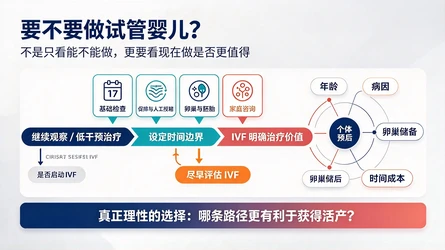
Under what circumstances is in vitro fertilization (IVF) required? This article examines infertility causes, female age, ovarian reserve, tubal factors, male factors, and genetic risks to outline IVF indications, treatment priorities, and the selection of first-, second-, and third-generation technologies, helping couples planning for pregnancy determine whether to proceed with IVF and when to adjust their treatment plans.
Read allCore Judgment Principles:
Rather than asking, “Can IVF be done from a medical standpoint?” the more pertinent question is: Given your current age, underlying cause of infertility, ovarian reserve, and reproductive prognosis, would initiating IVF now yield a live birth more efficiently than attempting natural conception, ovulation induction, or intrauterine insemination?
Many couples, upon receiving their infertility test reports and hearing doctors suggest “considerTest tube babyWhen it comes to IVF, the most confusing part is never "what is a test tube," but rather a series of practical questions: Is it truly necessary for my situation? Is there still a chance for natural conception? Should I try several months of ovulation induction orArtificial inseminationIf I don’t do it now, will I miss the optimal window for having children?
These questions cannot be answered by a simple list of indications. For the same tubal issue, treatment strategies for a 28-year-old and a 39-year-old differ vastly; similarly, low AMH alone, in the absence of other infertility factors, does not necessarily mean that IVF is mandatory.
This article does not simply list indications by "first-, second-, or third-generation IVF." Instead, it adopts the patient's actual decision-making perspective, organizing the decision logic across different scenarios by treatment priority. It helps you clearly determine when to continue trying for natural conception, when to switch to assisted reproductive technologies, and what essential preparations must be completed before starting an IVF cycle.
I. Step 1: First, determine whether to initiate an infertility evaluation
Avoid premature or excessive treatment, and do not miss the optimal window for diagnostic evaluation. Initiating an assessment does not necessarily mean you must immediately proceed with IVF; the core principle is to first identify the cause of infertility and then match it with the appropriate treatment plan.
1. How long should you try to conceive before getting checked?
According to the 2026 Committee Opinion on Female Infertility Evaluation by the American Society for Reproductive Medicine (ASRM), the general time criteria are as follows:
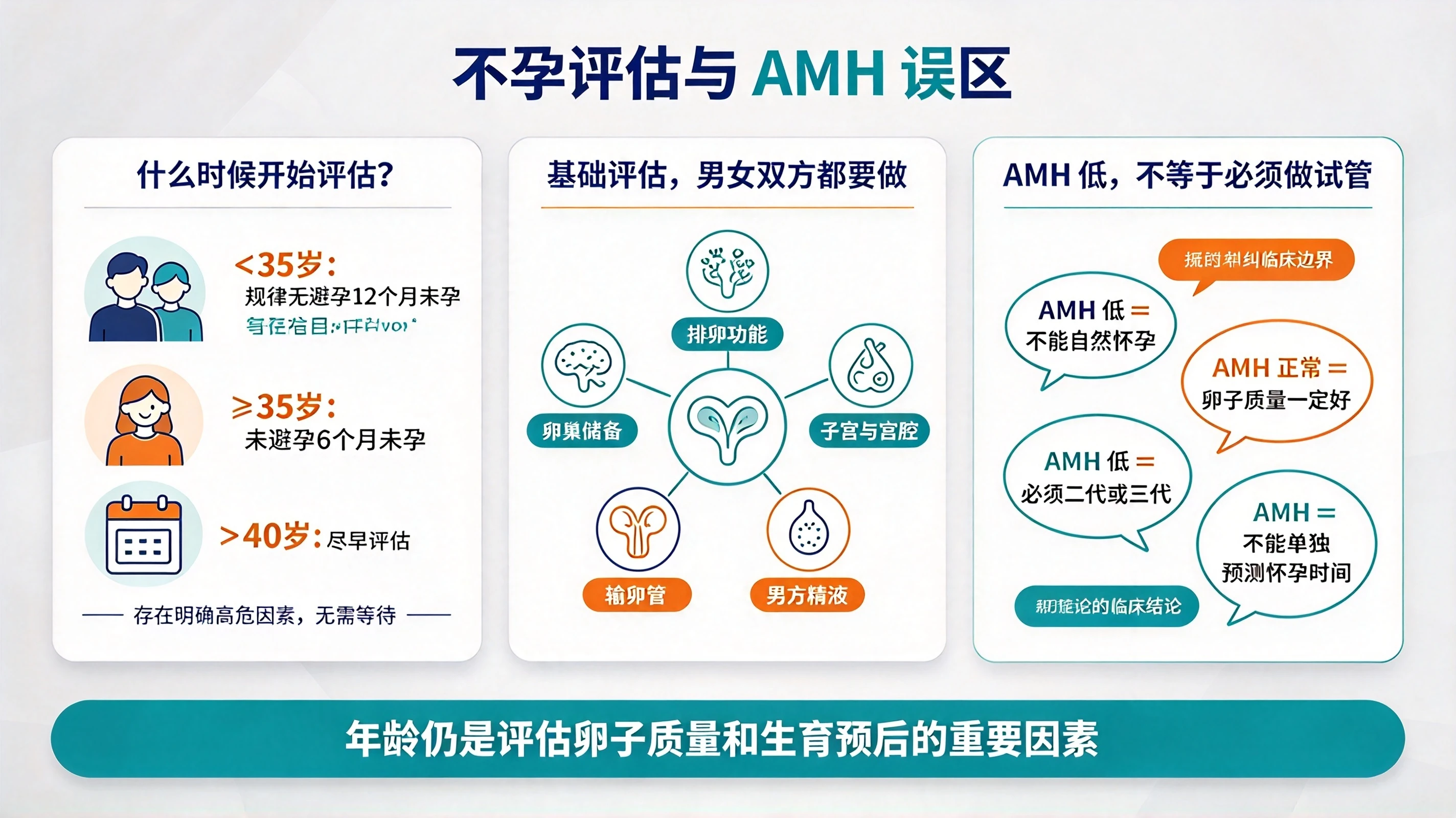
For women under 35 years of age: If pregnancy has not occurred after 12 months of regular, unprotected sexual intercourse, an infertility evaluation is recommended.
For women aged 35 or older: If pregnancy has not occurred after 6 months of unprotected intercourse, it is recommended to initiate an evaluation.
Women over 40 years of age: It is recommended to undergo fertility assessment as early as possible
If clear high-risk factors for infertility are present, there is no need to wait for the aforementioned time period; assessment can be conducted directly.:
Long-term irregular menstruation, amenorrhea, or confirmed ovulatory dysfunction
History of ectopic pregnancy, pelvic inflammatory disease, and tubal surgery
Diagnosed with endometriosis
Known severe male infertility factors
Previous treatment that may have impaired reproductive function (e.g., radiotherapy or chemotherapy)
Known to carry a genetic disorder, planning for preimplantation genetic testing
2. A complete infertility assessment requires both partners
Infertility is never solely a female issue; both partners should undergo basic evaluations simultaneously:
Table
Evaluation Target | Core Inspection Items | Evaluation Purpose |
|---|---|---|
Ovulation function | Menstrual history assessment, sex hormone testing, and ultrasound monitoring | Determine whether there is an ovulation disorder |
Female Ovarian Reserve | AMH, antral follicle count (AFC), and basal FSH + estradiol | Evaluate ovarian reserve function and predict response to ovarian stimulation |
Uterus and uterine cavity | Transvaginal ultrasound, with hysteroscopy if necessary | Investigate uterine cavity lesions affecting embryo implantation |
Tubal Patency | Hysterosalpingography / Contrast-enhanced ultrasound | Assessment of Tubal Patency and Functional Basis |
Male fertility | Semen analysis, and sperm function/genetic testing as necessary | Evaluate sperm concentration, motility, morphology, and fertilization potential |
Note: Not all patients need to complete every specialized test; items should be selected on an individualized basis in conjunction with the medical history and baseline results.
3. Clarifying the Misconception: Low AMH Does Not Mean IVF Is Necessary
AMH (Anti-Müllerian Hormone) is a core indicator for assessing ovarian reserve and predicting the number of oocytes retrieved during ovarian stimulation, butCannot serve as a standalone basis for mandating IVF:
Low AMH ≠ Inability to conceive naturally
Normal AMH ≠ Guaranteed good egg quality
Low AMH ≠ Must undergo IVF (second-generation) or ICSI/PGT (third-generation)
AMH cannot accurately predict the probability of natural conception or estimate the remaining reproductive years.
A woman's age remains the core factor in assessing egg quality and reproductive prognosis. AMH and AFC indicate how the ovaries will respond to ovarian stimulation, not whether natural conception is possible. A single value should never be used to rule out natural conception or immediately dictate an IVF plan.
II. Core Decision Tiers: Four Scenarios to Determine Your Optimal Path
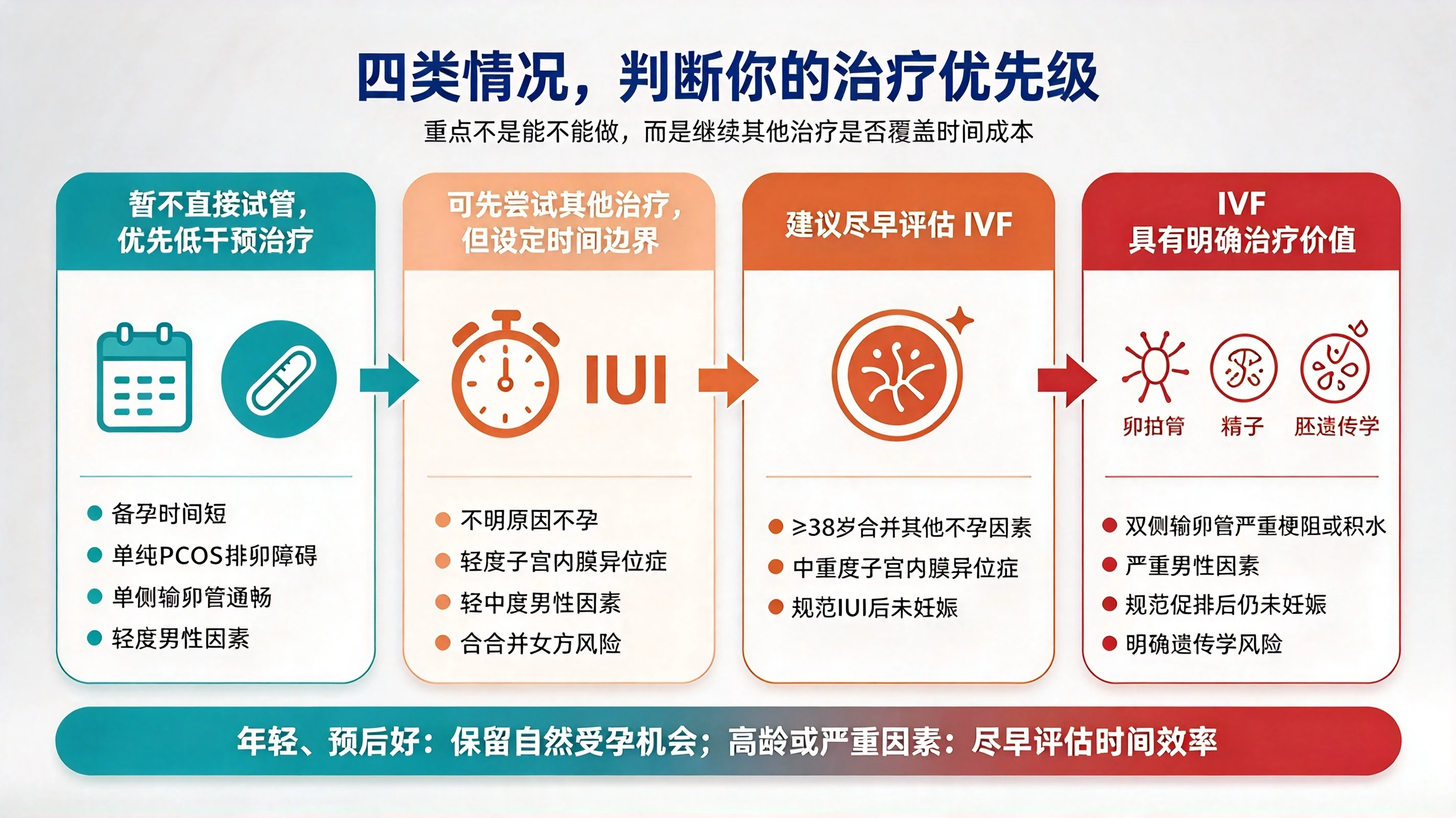
Based on etiology, age, ovarian reserve, and treatment benefits, patients can be classified into four categories, each corresponding to a different treatment priority.
Category 1: Direct IVF is not currently recommended; prioritize low-intervention treatments
These patients still have a reasonable chance of natural conception, or there is a clear first-line treatment option, so they do not need to proceed directly toIVFCycle.
Short duration of trying to conceive, with no identifiable causes of infertilityThe female partner is younger, with regular menstrual cycles, normal ovulation, and no significant abnormalities in fallopian tube assessment; the male partner’s semen analysis is essentially normal. In vitro fertilization (IVF) is not immediately indicated due to several months of unsuccessful conception attempts. Initial management should include guidance on timed intercourse, ovulation monitoring, and basic health screening. However, if known high-risk factors are present, early evaluation is warranted rather than mechanically waiting for one year.
Ovulatory dysfunction caused by polycystic ovary syndrome (PCOS)PCOS does not necessarily require IVF. For anovulatoryPCOSPatient,Standardized ovulation induction is the first-line treatment.The 2023 International Evidence-Based Guideline for PCOS recommends letrozole as the first-line ovulation induction agent. If first-line treatment is ineffective, the regimen may be adjusted or alternative therapies considered; IVF should only be evaluated when infertility persists despite standard ovulation induction and in the presence of other infertility factors. Attention must also be given to insulin resistance, weight management, and the risk of ovarian hyperstimulation syndrome (OHSS). A rigid protocol of “3–6 cycles of ovulation induction followed by 3–4 cycles of intrauterine insemination” is not recommended; instead, treatment plans should be dynamically adjusted based on patient age and therapeutic response.
Patency of one fallopian tube with mild pathology on the other sideIf one fallopian tube is patent and the other has only mild abnormalities, and if the female partner is younger with no male-factor infertility or other issues contributing to infertility, natural conception attempts or low-intervention treatments may be tried first. Note: Tubal patency does not equate to fully normal tubal function; the ability to pick up oocytes and transport fertilized eggs cannot be assessed solely by hysterosalpingography. If there are concurrent findings such as pelvic adhesions, hydrosalpinx, or a history of ectopic pregnancy, further evaluation is necessary.
Isolated mild male factorA single semen analysis showing mild asthenozoospermia or teratozoospermia is not sufficient to directly determine the need for intracytoplasmic sperm injection (ICSI). It is recommended to first repeat the semen analysis to confirm whether the abnormalities are persistent, investigate treatable causes such as varicocele, infections, and endocrine disorders, and, in conjunction with the female partner’s age and tubal status, prioritize evaluating the feasibility of natural conception or intrauterine insemination (IUI).
Category 2: Other treatments may be attempted first, but strict time boundaries must be set.
These patients are not without the chance of conception, but they are not suitable for long-term, repetitive, low-efficiency treatments. It is essential to define a clear time point at which treatment should be switched to IVF if no success has been achieved.
Unexplained infertilityThis refers to a condition where, after standard evaluation, ovulation is normal, at least one fallopian tube is patent, and the male partner's semen analysis shows no significant abnormalities, yet no clear cause of infertility has been identified.
For patients who are younger and have a better prognosis, an initial trial of 3–4 cycles may be considered.Ovulation Stimulation with Intrauterine Insemination (OS-IUI)If pregnancy has still not been achieved, it is recommended to proceed with IVF; indefinitely increasing the number of IUI cycles is not advised.
For individuals aged 38 or older, proceeding directly to IVF may be more time-efficient, and treatment plans should be discussed early. The key criterion is not "completing a mandatory number of IUI cycles," but rather "whether continuing with IUI still offers a reasonable expected benefit."
Mild endometriosisMild endometriosis does not require immediate in vitro fertilization (IVF). If the patient is young, has good ovarian reserve, and no other coexisting factors contributing to infertility, natural conception or low-intervention assisted reproductive techniques may be tried first. Early evaluation for IVF is recommended if any of the following conditions are present: advanced age, prolonged duration of infertility, concurrent tubal pathology, presence of ovarian endometriomas, failure to conceive after pelvic surgery, or diminished ovarian reserve. Special note: Surgical removal of ovarian endometriomas may impair ovarian reserve; repeated surgeries should not be adopted as a default approach, and comprehensive assessment integrating fertility planning is essential before surgery.
Mild-to-moderate male factor infertility combined with female reproductive risksWhether to continue with artificial insemination should be determined by comprehensively evaluating the total number of progressively motile sperm after semen processing, the female partner’s age, and tubal status. If the female partner is older and has tubal issues or diminished ovarian reserve, the benefits of repeated intrauterine insemination (IUI) are limited; in such cases, one should directly compare the expected cumulative live birth rates and time costs of IUI versus IVF, rather than mechanically completing a fixed number of IUI cycles.
Category 3: Recommend early evaluation for IVF to avoid inefficient waiting
These patients do not necessarily need to start IVF immediately, but they typically require a comprehensive evaluation by a reproductive specialist as soon as possible to weigh the time costs against the treatment benefits.
Female aged 38 or older, with other infertility factorsFor example, age over 38 with concurrent tubal pathology, infertility duration of several years in those over 40, declining ovarian reserve associated with advancing age, or the presence of male factor infertility or endometriosis. The core consideration is comparing the time efficiency of proceeding directly to IVF versus trying other treatments first. ASRM guidelines state that for women aged 38 and older with unexplained infertility, immediate IVF may shorten the time to conception compared to attempting multiple cycles of ovulation induction with intrauterine insemination (IUI) first; however, not all women over 38 must skip IUI, as the key factor is whether the potential benefits of continuing other treatments outweigh the associated time costs.
Moderate to severe endometriosisFor patients with stage III-IV endometriosis, ovarian endometriomas, severe pelvic adhesions, or impaired tubal function, early evaluation of fertility management plans is necessary. In particular, when combined with diminished ovarian reserve, the potential damage to ovarian tissue from surgery must be carefully assessed, and some patients may be prioritized forFertility Preservationor assisted reproductive evaluation before deciding whether to proceed with surgery.
Failure to conceive after standard artificial insemination treatmentAfter completing a reasonable number of intrauterine insemination (IUI) cycles without achieving pregnancy, the treatment plan should be reassessed: Is continued IUI still worthwhile? Are there undiagnosed fertilization disorders? Has the female partner’s advanced age increased the cost of waiting? Should treatment transition to in vitro fertilization (IVF)? Repeated IUI cycles are not recommended without proper evaluation.
Category IV: IVF has clear therapeutic value and is typically prioritized for evaluation.
The feasibility of natural conception or low-intervention treatment is significantly limited for these patients, making IVF medically necessary; therefore, it is recommended to prioritize evaluation at a reproductive medicine specialty clinic.
Complete bilateral tubal obstruction / resectionBilateral tubal obstruction confirmed as complete, prior salpingectomy, or irreparable severe damage fundamentally limits natural conception; in such cases, IVF is the core treatment pathway for achieving pregnancy using one’s own eggs and a partner’s sperm. Note: Hysterosalpingography suggesting proximal tubal blockage may result from tubal spasm or false-positive findings, requiring further confirmation; complete loss of tubal function should not be diagnosed based on a single test alone.
HydrosalpinxHydrosalpinx not only impedes natural conception but also reduces embryo implantation and pregnancy rates in IVF. ASRM guidelines indicate that hydrosalpinx significantly lowers IVF pregnancy, implantation, and live birth rates. For suitable surgical candidates, salpingectomy or proximal tubal occlusion prior to embryo transfer can improve treatment outcomes; however, not all cases of hydrosalpinx require removal. An individualized plan should be developed based on the severity of the hydrosalpinx, tubal anatomy, ovarian reserve, surgical history, and extent of adhesions.
Severe male factorSevere oligospermia, severe asthenospermia, and obstructive or non-obstructive azoospermia require early joint evaluation by andrology and reproductive medicine specialists. Some patients can achieve fertilization through sperm retrieval from the epididymis or testis combined with intracytoplasmic sperm injection (ICSI). Azoospermia does not necessarily mean absolute infertility; it is essential to identify the underlying cause, determine whether sperm can be retrieved, and assess genetic risks. Severe teratospermia also requires further evaluation of sperm function, and ICSI should not be decided solely based on morphological parameters.
Failure to conceive after standardized ovulation induction treatmentFor patients with PCOS or other ovulatory disorders who remain non-pregnant after standard first- and second-line ovulation induction treatments, or who have additional infertility factors, further evaluation for IVF is required. The key consideration is assessing the marginal benefit of continuing ovulation induction, rather than mechanically reaching a fixed number of treatment cycles.
Clear genetic reproductive risksWhen one or both spouses have chromosomal structural abnormalities or carry pathogenic monogenic variants, genetic counseling and preimplantation genetic testing are required.PGT) Evaluate reproductive options. Not all genetic diseases can be addressed through PGT, and not all carriers must undergo IVF with preimplantation genetic testing; this requires a joint assessment by teams specializing in genetic counseling, clinical genetics, and reproductive medicine.
3. How to Choose IVF Technology? First-, Second-, and Third-Generation IVF Are Not "Upgrades"
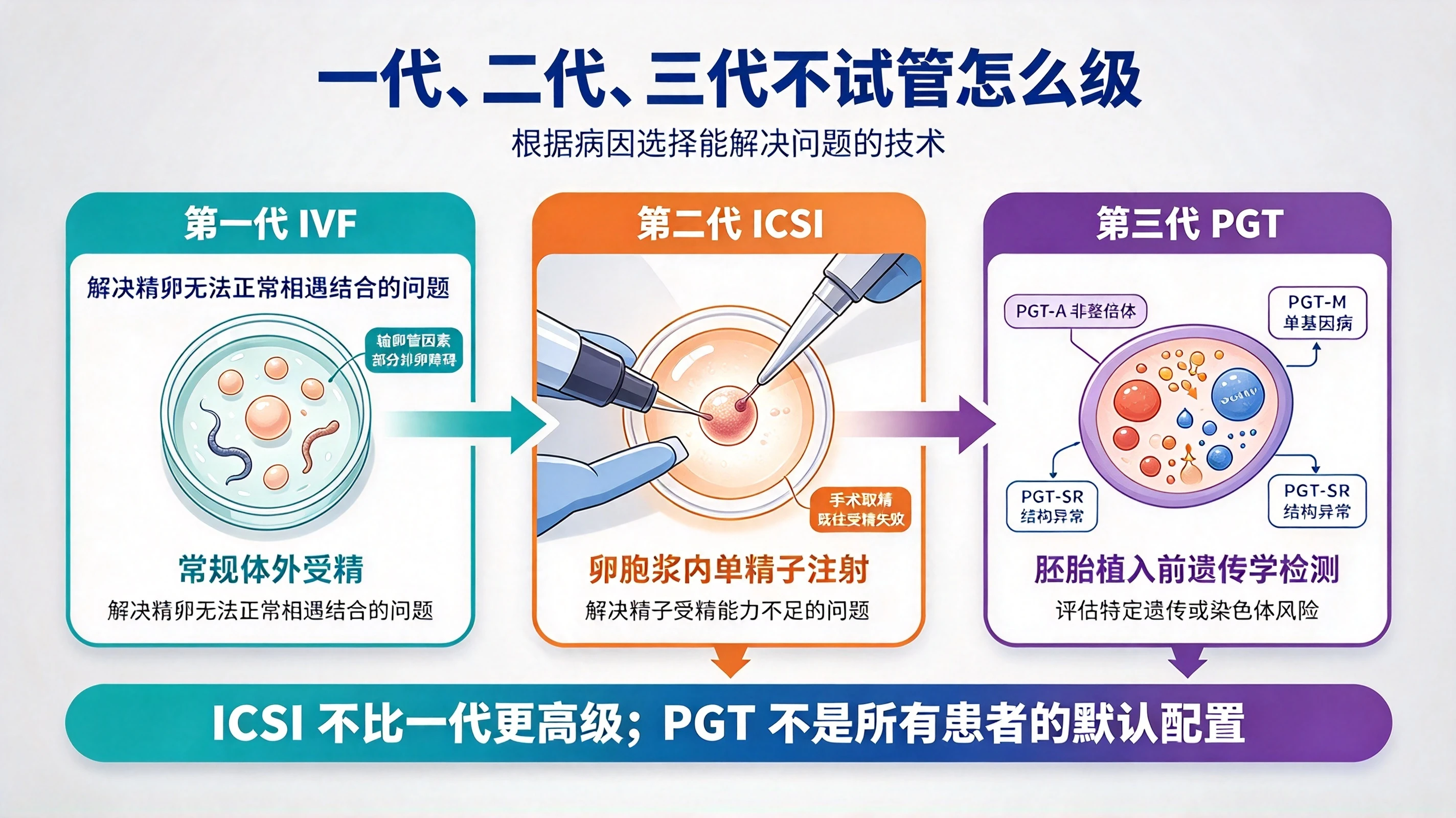
First-, second-, and third-generation IVF are not successive technological upgrades but rather different solutions tailored to specific problems; there is no basis for the claim that "higher generation means better."
1. First-generation IVF: Conventional In Vitro Fertilization (IVF)
Core solution: addressing the issue of sperm and egg failing to meet and fertilize naturally within the bodyIndications: Infertility due to tubal factors, certain ovulation disorders, endometriosis-related infertility, and unexplained infertility, provided that the male partner’s semen parameters meet the requirements for conventional fertilization. Procedure: In the laboratory, processed sperm are co-cultured with oocytes, allowing fertilization to occur naturally by the sperm. This method does not guarantee that every oocyte will be fertilized, nor does it ensure the development of high-quality embryos.
2. Second-generation IVF: Intracytoplasmic Sperm Injection (ICSI)
Core Solution: Addressing the issue of insufficient sperm fertilization capabilityIndications: Severe male factor infertility, sperm retrieval via surgical procedures, complete or significant fertilization failure in prior conventional IVF cycles, and other special circumstances deemed necessary by the physician. Procedure: Under microscopic guidance, a single sperm is directly injected into the oocyte cytoplasm.Correcting Key MisconceptionsICSI is not inherently superior to conventional IVF and does not necessarily result in higher success rates. The 2026 ASRM guidelines clearly state that routine use of ICSI does not improve live birth rates in patients without male factor infertility or a history of fertilization failure. ICSI should not be automatically recommended solely due to advanced maternal age, low AMH levels, or plans for PGT.
3. Third-generation IVF: Preimplantation Genetic Testing (PGT)
Core Solution: Screening for Specific Genetic or Chromosomal RisksPGT is divided into three categories, each corresponding to different scenarios:
Table
Technology Classification | Detection Target | Typical Use Cases |
|---|---|---|
Chromosomal number abnormalities | Preimplantation Genetic Screening for Aneuploidy in Specific High-Risk Populations | |
PGT-M | Monogenic genetic diseases | If both partners carry pathogenic variants, their offspring are at risk of developing the disease. |
PGT-SR | Chromosomal structural abnormalities | Screening for reproductive risks associated with structural rearrangements such as chromosomal balanced translocations |
It should be noted that PGT cannot guarantee the healthy birth of an embryo and cannot rule out all genetic diseases, congenital abnormalities, or pregnancy-related risks; in China, the implementation of related technologies must comply with requirements for medical institution qualifications, ethical review, and medical indications.
The correct decision-making logic is always:Select the technology based on the underlying cause; what solves the problem is appropriate, rather than blindly pursuing the highest generation..
IV. Should PGT-A be performed? It is not a universal tool for improving success rates
PGT-A (preimplantation genetic testing for aneuploidy) is a point of dilemma for many couples. Its value lies in assisting with embryo selection, butdoes not necessarily improve the cumulative live birth rate per patient, and is by no means the default configuration for a test-tube cycle.
When deciding whether to undergo PGT-A, focus on three key dimensions:
Is there a higher risk of embryonic chromosomal abnormalities?Advanced maternal age increases the risk of embryonic aneuploidy, but age is not the sole criterion; a comprehensive assessment should also consider factors such as prior pregnancy history, embryo culture results, and ovarian response. There is no universal rule mandating PGT-A for all women aged 38 and older.
Are there enough detectable embryos?PGT-A typically requires trophectoderm biopsy after embryos have developed to the blastocyst stage. If only a small number of blastocysts can be formed, the benefits of testing must be carefully weighed against opportunity costs—potential scenarios include no embryos reaching the biopsy stage, no transferable embryos remaining after testing, or results showing mosaicism or being inconclusive. Having few embryos does not absolutely contraindicate PGT-A; rather, an individualized assessment is required.
What problem do you want to solve with PGT-A?If the goal is to reduce the transfer of aneuploid embryos and lower the risk of miscarriage associated with partial chromosomal abnormalities, PGT-A has certain value. However, if the core issues are uterine cavity structural abnormalities, poor endometrial receptivity, insufficient developmental potential of sperm and oocytes, or endocrine disorders, PGT-A cannot directly address these problems.
The ASRM 2024 PGT-A Committee Opinion clearly states that there is currently insufficient evidence to support the routine use of PGT-A for all IVF patients to improve cumulative live birth rates.Recurrent miscarriagePatients must also first undergo a comprehensive evaluation of the underlying causes and should not view PGT-A as a universal solution for all miscarriage issues.
V. Age, AMH, and Time Costs: Don’t Let Ineffective Waiting Undermine Your Chances of Conception
Age and ovarian reserve both influence treatment decisions, but they are entirely different concepts with distinct decision-making logic.
1. Age: The core determinant of egg quality and time cost
Female fertility gradually declines with age, accelerating after 35 and becoming even more pronounced after 40. The opportunity cost of waiting three months is vastly different for a 30-year-old woman compared to a 41-year-old one. As women age, they should promptly compare the time efficiency of natural conception, IUI, and IVF to minimize inefficient waiting periods.
2. AMH: Influences the ovarian stimulation protocol but does not indicate remaining reproductive lifespan
A low AMH level typically indicates a lower number of retrieved eggs during ovarian stimulation, but it cannot precisely predict the time to natural conception or estimate the age at menopause. For patients with low AMH, key points to evaluate include: expected egg yield, previous responses to ovarian stimulation, whether protocol adjustments are needed, the probability of obtaining usable embryos from a single egg retrieval cycle, whether to reduce ineffective waiting periods, and whether other fertility pathways should be considered.
3. Myth correction: Normal ovarian stimulation does not deplete eggs prematurely
In each natural menstrual cycle, a cohort of follicles begins to grow in women. The vast majority of these follicles undergo atresia naturally, and ultimately only one dominant follicle ovulates. The principle behind controlled ovarian stimulation isAllow follicles that would otherwise undergo atresia to continue developingThis allows multiple eggs to be retrieved in a single cycle, rather than “drawing down future egg reserves.” A standard course of ovarian stimulation does not cause permanent ovarian damage, and fluctuations in AMH levels between cycles cannot be directly equated with ovarian injury from stimulation. Note: Ovarian surgery, advancing age, and certain diseases or treatments may indeed affect ovarian reserve, requiring separate evaluation.
4. Tubal surgery vs. direct IVF: How to choose?
Young age, good ovarian reserve, mild tubal pathology, and no other factors contributing to infertility: partial tubal reconstructive surgery may have some value.
Severe tubal damage, significant hydrosalpinx, severe pelvic adhesions, or concomitant male factor infertility: Direct IVF offers higher treatment efficiency. In particular, for hydrosalpinx, it is necessary to evaluate whether salpingectomy or proximal tubal occlusion is required prior to embryo transfer. The core criterion for decision-making is not "whether the fallopian tubes can be recanalized," but rather "whether effective reproductive function can be restored after surgery," and whether the surgical risks and waiting time are justified.
6. Before starting the test tube, first draw three boundary lines
IVF is not as simple as "one egg retrieval + one embryo transfer"; a complete cycle includes preliminary examinations, ovarian stimulation monitoring, anesthesia for egg retrieval, and fertilization and culture.Embryo cryopreservationPGT testing, embryo transfer, and pregnancy monitoring. Before initiation, it is recommended to first clarify three boundaries.
1. Financial Boundaries: Calculate the total budget, not just look at the quote for a single egg retrieval
Do not compare only the base price of a single egg retrieval; be sure to verify clearly with the hospital:
Does the quotation include the cost of ovulation induction medications?
Does it include the ICSI procedure fee?
Fee Schedule for Embryo Culture, Cryopreservation, and Thawing
Billing methods for PGT testing (per embryo / per cycle)
Frozen Embryo TransferIs it charged separately?
Fee Standards and Cycles for Embryo Preservation
Which fees are refundable after a cycle cancellation?
If a second egg retrieval is required, what is the estimated total cost?
Costs vary significantly across different regions, hospitals, and treatment plans within China; therefore, a quote from a single hospital should not be regarded as a universal standard.
2. Physical Boundaries: Pre-screening for Health Risks
Before undergoing IVF, it is essential to assess not only the safety of egg retrieval but also the safety of subsequent pregnancy and delivery. Key areas of focus include:
Risk of Ovarian Hyperstimulation in Patients with PCOS
Ovarian endometriotic cysts and a history of previous pelvic surgery
Uterine fibroids, adenomyosis, and intrauterine lesions
Medical comorbidities such as hypertension, diabetes, and thyroid diseases
History of adverse reactions to previous oocyte retrieval and anesthesia
3. Exit rules: Clearly define when to reassess
It is recommended to agree on adjustment checkpoints with your doctor before treatment begins, to avoid persisting blindly.
The number of oocytes retrieved in consecutive cycles is significantly lower than expected. Should the treatment protocol be adjusted?
After multiple cycles with no viable embryos, should further investigation into the underlying causes be conducted?
Recurrent transplant failure, is it necessary to evaluate the uterine cavity and other implantation factors?
When the prognosis for using one's own eggs is unfavorable, when should alternative paths to parenthood be discussed?
Can it be paused when the physical, psychological, or financial burden exceeds expectations?
A stop-loss is not about giving up, but about avoiding the mechanical execution of the original plan after the conditions for treatment have changed.
7. In the following situations, IVF should be temporarily postponed
IVF has clear safety prerequisites; in the following cases, the underlying condition must be addressed or further evaluation performed before determining whether IVF can be initiated:
Active genital tract infection, or other systemic infections requiring treatment
Uncontrolled severe medical conditions
There are significant pregnancy risks that have not yet been clearly identified.
Malignant tumors and related treatments require further evaluation
Genetic counseling not completed for high-risk genetic conditions
Other conditions that may affect the safety of egg retrieval, anesthesia, pregnancy, or delivery
Some patients may be reassessed after treatment of the underlying disease and improvement in their general health, while pregnancy may be contraindicated in certain cases. Chronic diseases, psychological issues, and a history of prior infections do not constitute permanent contraindications and require individualized assessment.
Compliance Notice on Assisted Reproductive Technology in Mainland China
In China, assisted reproductive technology must be implemented in approved legitimate medical institutions, strictly adhering to medical standards, ethical requirements, and the principle of informed consent. According to the "Administrative Measures for Human Assisted Reproductive Technology":
Unapproved institutions shall not conduct assisted reproductive technology.
Surrogacy technology is prohibited.
Gender selection of fetuses for non-medical purposes is prohibited.
All treatments must comply with informed consent and ethical requirements.
It is recommended to verify the relevant technical qualifications of medical institutions through the official list published by the National Health Commission before treatment.
8. Appendix: Self-Check Form for Visits + Core Question Checklist
This self-assessment checklist does not provide a simple score (since different medical factors cannot be directly added together); its core purpose is to help you organize your medical history and test results for efficient communication with your doctor.
IVF Necessity Self-Assessment Checklist
Table
Project Evaluation | Information to be prepared |
|---|---|
Basic information about the female party | Current age and time when trying to conceive began |
Duration of infertility | Duration of regular unprotected sexual intercourse |
Menstruation and Ovulation | Menstrual cycle length, regularity, and diagnosis of ovulation disorders |
Ovarian reserve | AMH, AFC, baseline FSH results, and prior ovarian stimulation response |
Fallopian tube condition | Patency of both sides; presence of hydrosalpinx, adhesions, or surgical history |
Uterine status | Uterine cavity morphology, presence of fibroids, adenomyosis, or endometrial lesions |
The man's situation | Sperm concentration, total count, motility, morphology, and recheck results |
Obstetric history | Experiences of natural conception, miscarriage, ectopic pregnancy, and fetal demise |
Previous Treatment History | Number of ovarian stimulation cycles, IUI attempts, and IVF/embryo transfer procedures versus outcomes |
Genetic risk | Chromosomal karyotypes of the couple, known genetic diseases, and family history |
Personal Tolerance | Financial budget, available time, and physical and psychological tolerance |
During your appointment, it is recommended that you focus on asking the doctor three key questions.
What is my actual live birth prognosis?Based on my age, diagnosis, AMH, AFC, and the male partner’s semen parameters, what is the approximate cumulative live birth rate if we continue with natural conception or intrauterine insemination (IUI) for 3–6 months? Conversely, if we initiate IVF now, what would be the cumulative live birth rate from one egg retrieval followed by all subsequent frozen embryo transfers? Please clearly distinguish between: cycle-start live birth rate, per-retrieval live birth rate, per-transfer live birth rate, and cumulative live birth rate from multiple transfers following a single egg retrieval.
How much will I have to pay if I keep waiting?"If I undergo a few cycles of ovarian stimulation and intrauterine insemination (IUI) before switching to IVF, how much additional time would it likely take? Given my age and ovarian reserve, would this delay significantly worsen my fertility prognosis?"
If IVF is not successful, what should be the next step?After starting IVF, what outcomes require a reassessment of the treatment plan? After approximately how many egg retrievals or embryo transfers should the plan be re-evaluated? If your own eggs have a poor prognosis, when should you consider other fertility options?
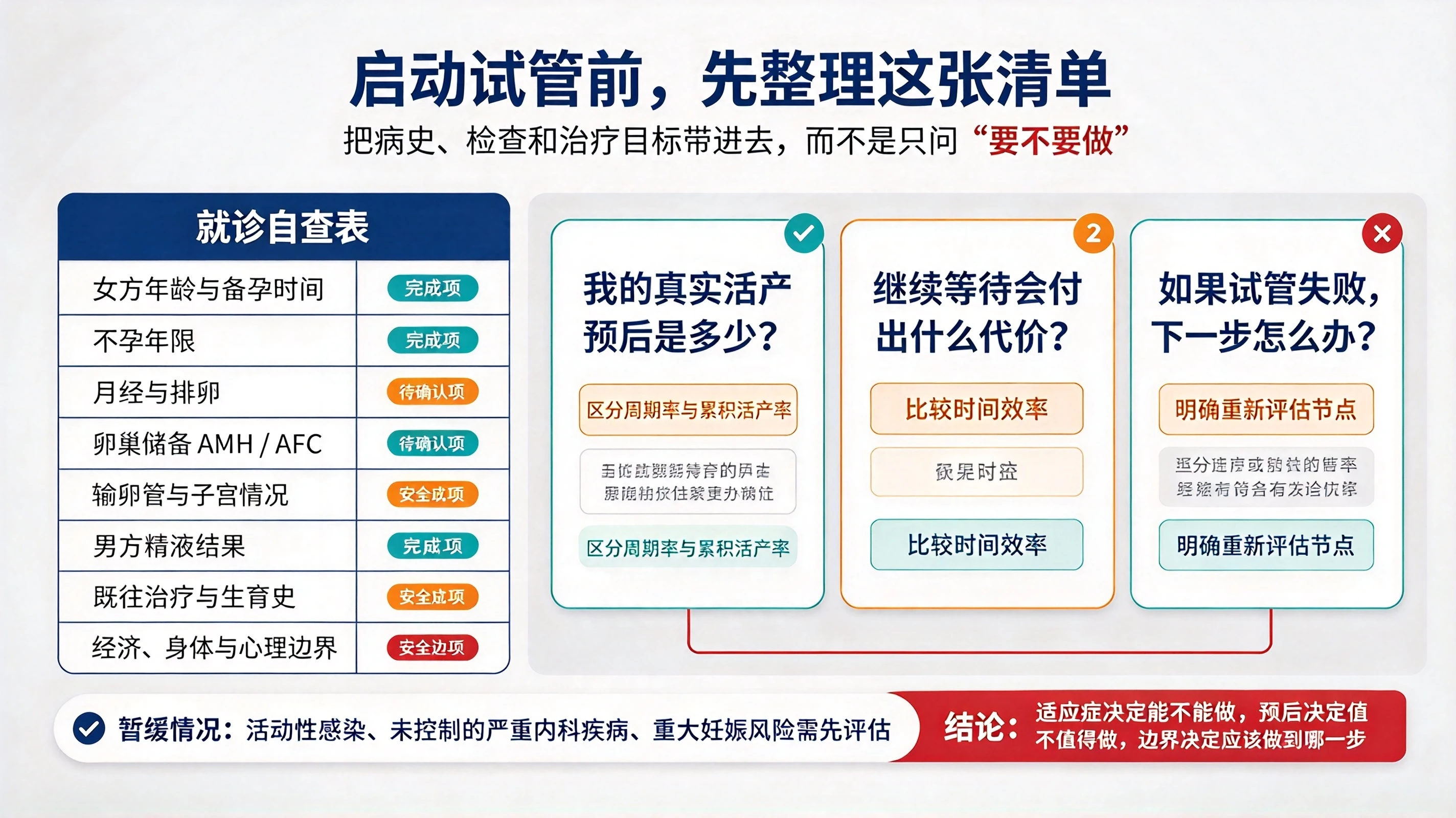
At the core of these three questions is transforming treatment from passively following doctors' advice into shared decision-making grounded in prognostic evidence, time-bound planning, and clear exit criteria.
IX. Final Summary: Priority Treatment Directions at a Glance
Table
Current main situation | Preferred Treatment Directions for Prioritization |
|---|---|
Short duration of trying to conceive, with no identifiable causes of infertility | Regular Fertility Attempts + Basic Fertility Assessment |
Ovulatory dysfunction in PCOS | Standardize ovulation induction therapy and adjust lifestyle habits |
Unilateral tubal patency, younger age | Assess natural conception or low-intervention treatments |
Unexplained infertility with younger age | Limited-course ovulation induction + IUI, followed by IVF evaluation upon failure |
Mild male factor | Investigate the cause of infertility and evaluate natural conception or IUI |
Complete bilateral tubal obstruction / resection | Prioritize IVF assessment |
Severe male factor | Andrology joint evaluation, with IVF-ICSI if necessary |
Hydrosalpinx | Evaluate the sequence of hydrosalpinx management and IVF |
Advanced age combined with diminished ovarian reserve | Assess IVF early to reduce inefficient waiting times. |
Clarify Genetic Reproductive Risks | Genetic Counseling + Evaluation of PGT-Related Protocols |
Failure to achieve pregnancy after standard treatment | Re-evaluate the pathway and compare cumulative live birth outcomes |
Finally, I want to emphasize: IVF is not a competition that must be seen through to the end, but rather a medical decision that requires dynamic adjustment based on treatment outcomes.
For patients who are young, have good ovarian reserve, a clear etiology, and effective low-intervention treatment options, preserving the opportunity for natural conception may be more valuable. For those who are of advanced age, have severe tubal pathology, or significant male factor infertility, early evaluation for IVF may offer greater time efficiency. Patients already undergoing an IVF cycle should not view "continuing treatment" as their only option; the outcomes of each egg retrieval, fertilization, embryo culture, and transfer should serve as new evidence for subsequent decision-making.
A truly rational choice is neither blindly pursuing the highest success rate nor outright rejecting medical intervention, but rather clearly addressing these five questions:
What is the core fertility barrier I face?
Which treatment is most likely to resolve it?
What is the cost of continuing to wait?
What options do I have after treatment failure?
How much am I willing to sacrifice for the sake of fertility goals?
IVF indications determine whether it is medically feasible, individual prognosis determines whether it is worthwhile to proceed now, and your physical condition, financial situation, and personal boundaries determine how far you should go—this is the most critical aspect to consider in advance when making decisions about IVF.
Frequently Asked Questions
The content on this website is general educational material and compiled public information about IVF. It is provided for reference only, does not constitute a basis for diagnosis or medical decision-making, and does not constitute any medical advice or treatment recommendation. For policy and technical requirements, please refer to official publications issued by the relevant authorities and institutions. If you find any content errors, numerical inconsistencies, or outdated information, please contact us so we can verify and update it.
