
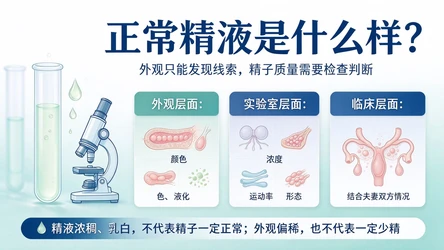
Interpreting normal semen appearance, distinguishing between physiological and pathological yellow semen, hematospermia, watery semen, and delayed liquefaction; popularizing WHO 6th edition semen reference values; teaching you how to scientifically interpret sperm analysis reports and avoid common misconceptions in assessing fertility.
Read allKey conclusion: Normal semen appearance ≠ normal sperm quality
Many men will do so bySemen colorJudging fertility based on semen viscosity and ejaculate volume is the most common misconception. Semen is a mixture of sperm and secretions from accessory glands such as the seminal vesicles and prostate. The naked eye can only perceive the overall appearance of semen, but cannot discern core parameters such as sperm concentration, motility, or morphology.
Semen that appears milky and thick may indicate severe oligospermia or even azoospermia.
Semen that appears watery may still have completely normal sperm parameters.
JudgmentMale fertilityIt needs to be divided into three layers:
Appearance: Color, texture, and liquefaction status are used solely to identify abnormal clues and cannot be used for definitive diagnosis;
Laboratory Level:Semen analysisAnalyze and evaluate core parameters such as sperm concentration, motility, and morphology;
Clinical level: The reproductive outcome is comprehensively assessed by integrating the medical histories of both partners, the duration of trying to conceive, and the female partner's fertility.
This document was compiled with reference to the World Health Organization (WHO) Laboratory Manual for the Examination and Processing of Human Semen (6th Edition), the European Association of Urology (EAU), the American Urological Association/American Society for Reproductive Medicine (AUA/ASRM), and the UK NICE 2026 Fertility Assessment Guidelines. All standards are based on evidence-based medicine.
I. Appearance Characteristics of Normal Semen: Reference Standards Across Five Dimensions
Normal semenThere is no single absolute “standard appearance” due to individual physiological variations. The following are normal performance references based on large-sample statistics of men who have fathered children, intended solely for preliminary home observation and not as a basis for home diagnosis.
Table
Observation Dimension | Common normal manifestations | Core Precautions |
|---|---|---|
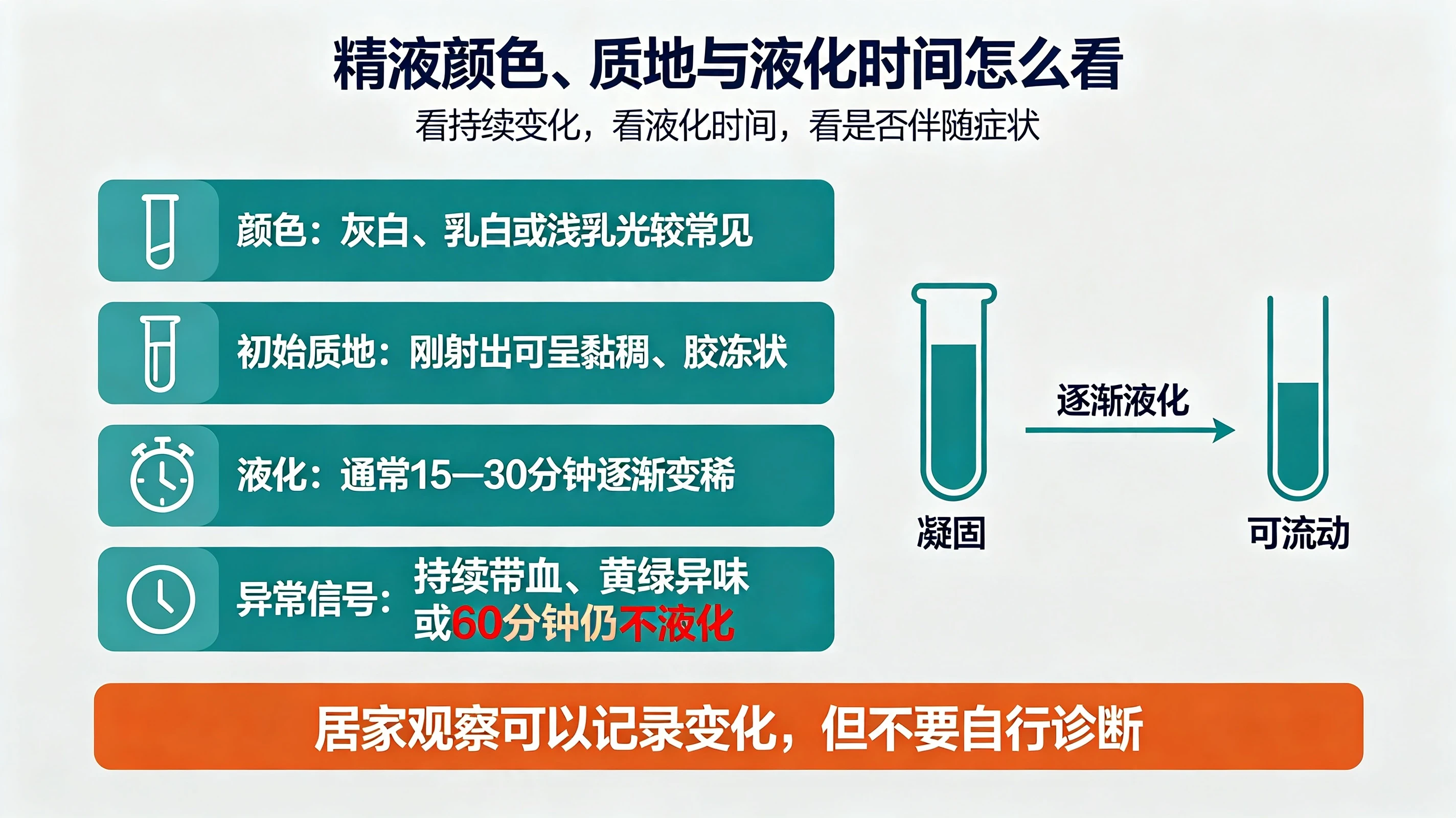
Color | Grayish-white, milky white, with slight translucent milkiness; pale yellow occasionally observed | A single occurrence of pale yellow urine is often a physiological phenomenon; however, persistent dark yellow or yellow-green urine warrants caution. |
Initial texture | Upon ejaculation, it appears as a viscous, jelly-like substance and may contain small, translucent clots. | The jelly-like granules immediately after ejaculation are a normal coagulation response, not an abnormality. |
Liquefaction process | Gradually liquefies within 15–30 minutes, ultimately becoming a thin, flowable liquid | Defined as failure to achieve complete liquefaction within 60 minutesLiquefaction delay |
Texture after liquefaction | Uniformly flowing liquid with no obvious long stringiness | Persistent severe stringiness after liquefaction indicates high semen viscosity |
Semen volume | Lower reference limit for single ejaculate volume: 1.4 mL | The quantity is not directly proportional to the total sperm count. |
Scent | With a distinctive fishy, gamey odor (characteristic of prostatic fluid) | Obvious foul odor and purulent smell require investigation for infection. |
1. Color: Light yellow is often physiological, while yellow-green warrants caution.
Normal semen is primarily grayish-white or milky white. Occasional light yellow coloration is most commonly caused by prolonged abstinence leading to semen concentration; additionally, small amounts of residual urine in the urethra, certain medications, and age-related changes in glandular secretions may also result in a darker semen color.
Yellow semen should not be simply equated with prostatitis, nor can infection be ruled out solely because the color is normal. If yellowish-green or purulent semen persists, accompanied by an unusual odor or pain, medical evaluation for genital tract inflammation is required.
2. Solidification and Liquefaction: Jelly-like Consistency is a Normal Physiological Design
Upon ejaculation, semen first coagulates and then liquefies—a physiological mechanism that evolved in humans.
Solidification stageThe coagulation proteins secreted by the seminal vesicles cause semen to form a gel-like consistency, with the purpose of temporarily adhering to the vaginal wall to prevent rapid leakage.
Liquefaction stageProteolytic enzymes secreted by the prostate gradually break down the clot, enabling sperm to acquire motility and advance deeper into the reproductive tract.
Therefore, the presence of jelly-like granules immediately after ejaculation is entirely normal; what truly warrants attention is whether significant clumps persist and whether complete liquefaction has occurred 60 minutes later.
II. Interpretation of Common Appearance Abnormalities: Which Situations Warrant Caution?
1. Yellow semen: Does not indicate prostatitis; do not self-medicate with antibiotics
Physiological jaundice (no treatment required)Occasional light yellow color with no discomfort is often caused by prolonged abstinence, residual urine, diet, or medication effects, and typically resolves on its own after adjustments.
Pathological yellowing (requires medical attention)Persistent deep yellow or yellow-green color, accompanied by a noticeable odor, painful ejaculation, dysuria, perineal heaviness, and fever, requires screening for reproductive tract infections such as prostatitis, seminal vesiculitis, and urethritis.
Medical Note: Semen color cannot be used to determine the presence of leukocytosis or bacterial infection. Confirming an infection requires semen white blood cell counts and pathogen testing. Blind use of antibiotics can disrupt the reproductive tract microbiome and exacerbate prostatic dysfunction.
2. Hematospermia: Most cases are benign, but a standardized evaluation is required
The presence of blood in semen is calledHematospermia, the color can reflect the time of bleeding:
Bright red / Pink: Fresh bleeding, often indicative of recent mucosal injury or acute inflammation;
Dark red / brownish: Old hemorrhage, where blood has remained in the reproductive tract and undergone oxidation.
Common Causes
Benign causes (accounting for over 90% of cases, particularly in individuals under 40 years old): seminal vesiculitis, prostatitis, rupture of small blood vessels in the reproductive tract (after frequent or vigorous ejaculation), and recent urogenital examination procedures.
Reasons for caution: Seminal vesicle stones, prostate lesions, and reproductive tract tumors, which are more common in individuals over 40 years of age with recurrent episodes.
When to Seek Medical Attention
Recurrent hematospermia lasting more than 1 month;
Accompanied by hematuria and difficulty urinating;
Accompanied by painful ejaculation, perineal pain, and fever;
Hematospermia first appearing in men over 40 years of age, or a family history of urinary tract tumors.
3. Viscous or thin: Neither can directly correspond to sperm count
Jelly-like clots ≠ non-liquefaction
The gel-like granules immediately after ejaculation are a normal coagulation response. As long as the clot disappears and complete liquefaction occurs within 60 minutes, it will not affect sperm motility, and no treatment is necessary.
Remains viscous and stringy after liquefaction: Indicates abnormal viscosity
Only if the semen exhibits pronounced stringing (greater than 2 cm) after liquefaction may it be considered to have high viscosity, which could potentially restrict sperm motility. This condition may be associated with abnormal prostatic secretion function or chronic inflammation, and must be confirmed through standard laboratory testing methods rather than assessed visually by manual stretching.
Thin, watery semen does not necessarily indicate oligospermia or azoospermia
The thin consistency of semen is primarily due to the seminal plasma components and does not directly correlate with sperm concentration.
Physiological dilution: Frequent ejaculation within a short period, leaving insufficient time for seminal plasma components to be replenished.
Pathological thinning: If persistently accompanied by a significant reduction in ejaculate volume and abnormal sensations during ejaculation, it is necessary to rule out conditions such as retrograde ejaculation, ejaculatory duct obstruction, and hypofunction of the accessory sex glands.
Key conclusion: Thick does not mean high sperm count, and thin does not mean low sperm count. Sperm concentration can only be confirmed through microscopic counting in a laboratory; visual assessment is completely unreliable.
3. Why Can't Sperm Quality Be Detected by the Naked Eye? Semen ≠ Sperm
Many people confuse the concepts of "semen" and "sperm," which is the root cause of all these misconceptions:
sperm: The male reproductive cell, measuring only about 50–60 micrometers in length and completely invisible to the naked eye, is produced by the testes, matures in the epididymis, and is central to determining fertility;
Semen: A mixture of sperm and seminal plasma, in which seminal plasma accounts for more than 95%, primarily derived from the seminal vesicles (approximately 60%) and the prostate gland (approximately 30%), with minor contributions from epididymal and bulbourethral gland secretions.
The color, viscosity, and volume of seminal plasma only reflect the secretory status of the accessory glands and have no necessary correlation with sperm count or motility. Even in patients with azoospermia, the appearance of semen may be completely indistinguishable from that of healthy individuals.
All of the following core indicators cannot be assessed with the naked eye and must be evaluated through standardized semen analysis testing:
Sperm concentration, total sperm count per ejaculate
Sperm progressive motility rate and total motility rate
Normal sperm morphology rate
Sperm survival rate
Sperm DNA Integrity
IV. How to Interpret Semen Analysis: WHO Sixth Edition Reference Standards
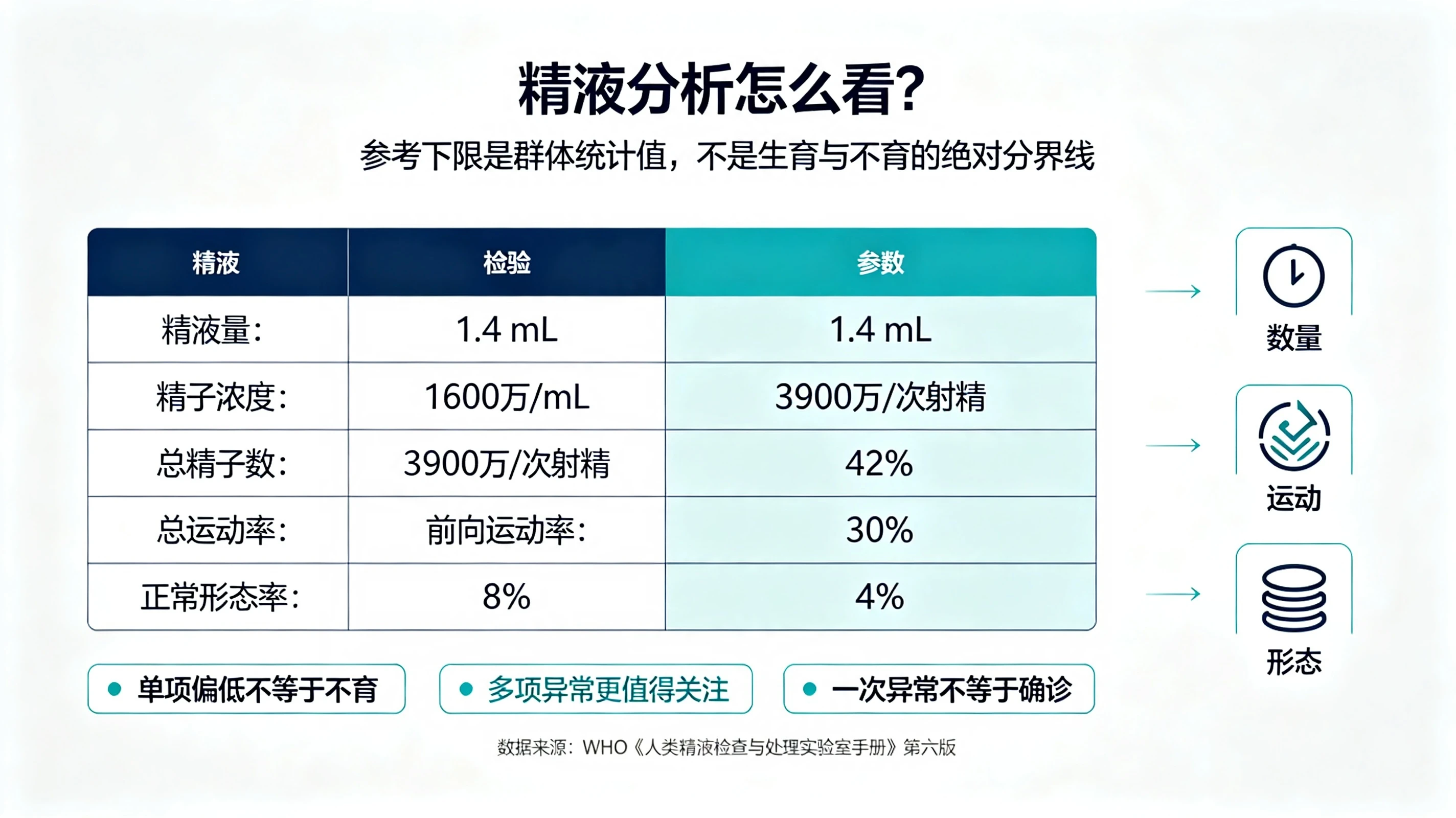
Routine semen analysis is the first-line basic test for evaluating male fertility. All reference values are derived from WHO statistics on fertile men (5th percentile), and are onlyReference Lower Limit, not an absolute dividing line between "fertile" and "infertile"—natural conception is still possible slightly below the lower limit, and meeting all criteria does not guarantee a 100% chance of conception.
Table
Inspection Items | WHO Reference Lower Limits, 6th Edition | Clinical Significance |
|---|---|---|
Semen volume | 1.4 mL | Reflects the secretory function of accessory glands, with no proportional relationship to total sperm count |
Sperm concentration | 16 million /mL | Sperm count per milliliter of semen |
Total sperm count | 39 million / per session | The total sperm count per ejaculation is of greater clinical reference value than concentration. |
Total Motion Rate | 42% | Total motile sperm count (including progressive and non-progressive) |
Progressive Motility Rate | 30% | The proportion of sperm capable of swimming forward in straight or curved lines directly determines fertilization capacity. |
Sperm survival rate | 54% | Proportion of viable sperm |
Normal morphology rate | 4% | The proportion of sperm meeting strict morphological criteria, judged by stringent standards |
In-depth Analysis of Key Metrics
Low semen volume ≠ Poor fertilitySemen volume only reflects the amount of seminal plasma. For example, 1 mL of semen with a concentration of 50 million/mL yields a total sperm count of 50 million, which is higher than that of 2 mL with a concentration of 20 million/mL. Only when semen volume persistently falls below 1 mL should conditions such as ejaculatory duct obstruction, retrograde ejaculation, or seminal vesicle developmental abnormalities be investigated.
Total sperm count is more important than concentration.The probability of conception correlates more strongly with the total sperm count per ejaculation than with concentration alone. A slightly lower concentration, combined with sufficient semen volume, may still result in a total sperm count within the normal range.
The forward motility rate is a core vitality indicator.Only sperm capable of progressive motility can traverse the female reproductive tract to reach the fallopian tubes and achieve fertilization. Non-progressive motile sperm, which merely spin in place, generally lack the capacity for natural fertilization.
A normal morphology rate of 4% does not mean that "96% are abnormal."WHO uses strict morphological criteria with extremely high requirements for the details of the sperm head, midpiece, and tail; 4% represents the 5th percentile among fertile men. Mild morphological abnormalities do not necessarily mean complete inability to conceive, and assessment must be made in conjunction with motility and concentration.
Supplement: Sperm DNA Fragmentation Index (SDF)
Conventional semen analysis cannot detect the extent of DNA damage within sperm. Current domestic and international guidelines allRoutine screening is not recommended for all men who are trying to conceive.Therefore, testing is recommended only for specific populations—such as those with recurrent pregnancy loss of unknown cause, severe oligoasthenozoospermia, or a history of prolonged adverse exposures—and should be performed selectively following medical evaluation.
5. What to Do If Your First Semen Analysis Is Abnormal? A Five-Step Scientific Approach
Semen parameters exhibit significant physiological fluctuations, and factors such as abstinence duration, completeness of specimen collection, recent fever, and fatigue can all affect the results.A single abnormality does not confirm infertility..
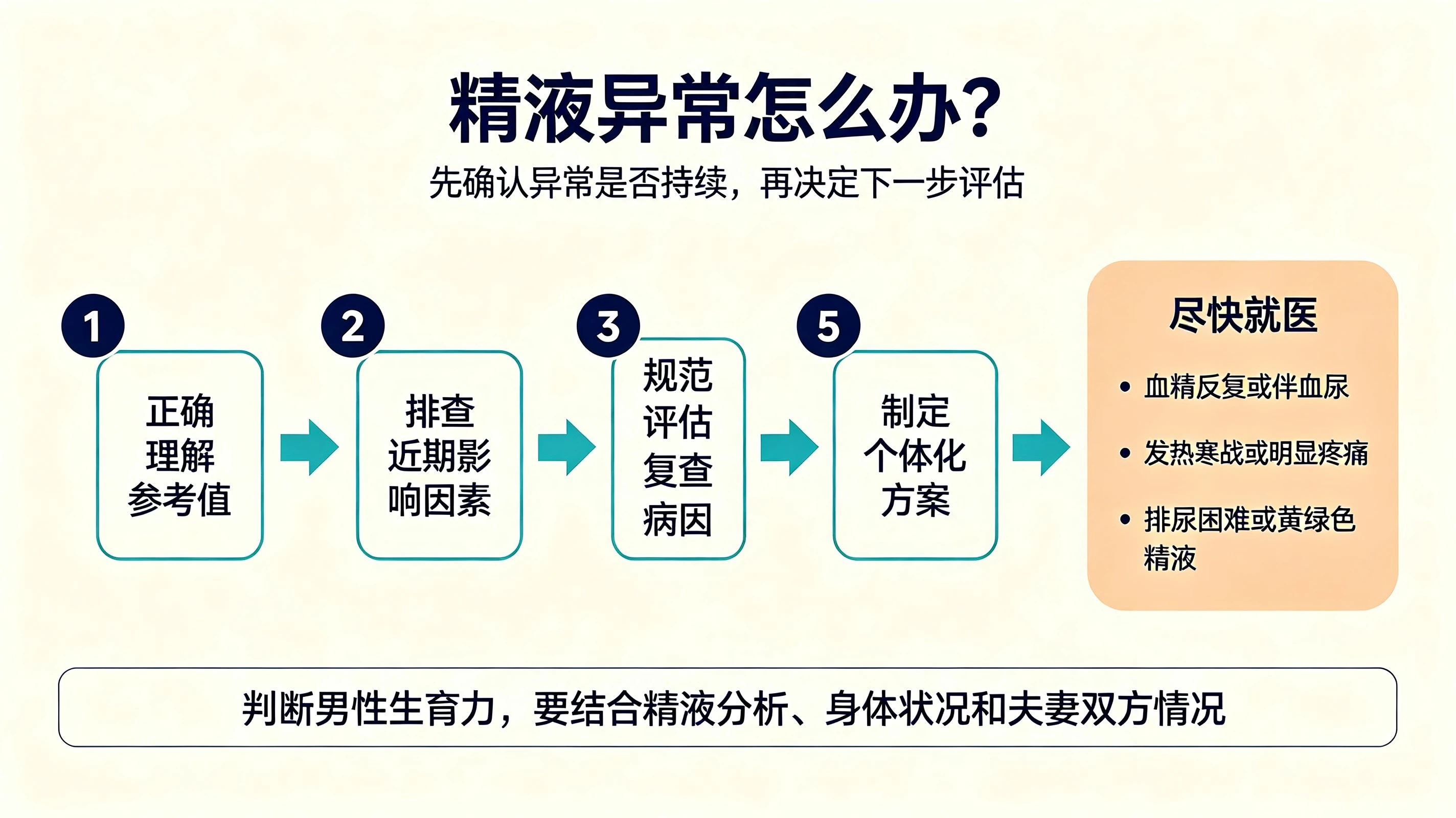
Step 1: Interpret reference values correctly; do not treat the lower limit as a "passing grade"
WHO reference values represent the lower limit of population statistics, not an absolute threshold for fertility:
A single mild parameter below the lower limit still allows for natural conception;
Only when multiple indicators are simultaneously abnormal, accompanied by severe oligoasthenozoospermia or azoospermia, should high priority be given.
Step 2: Conduct a standardized review to confirm whether the abnormalities persist
An abnormality in the initial semen analysis must be confirmed by retesting to avoid misdiagnosis due to single-instance fluctuations.
Re-examination IntervalFor routine mild abnormalities, it is recommended to wait 1–3 months (covering a complete spermatogenesis cycle of approximately 72–90 days) before retesting; if azoospermia or severe oligospermia is indicated, prompt retesting within 1–2 weeks is required.
Review Principles: Keep the abstinence period fixed at 2–7 days (3–5 days recommended), use the same laboratory whenever possible, ensure complete collection of all semen, and avoid missing any specimen.
Step 3: Conduct a targeted investigation into the underlying causes
Upon re-examination, if abnormalities are confirmed, the doctor will arrange further tests based on the type of abnormality:
Oligo-/Azoospermia: Reproductive hormone panel (six items), testicular and epididymal ultrasound, karyotype analysis + Y chromosome microdeletion testing;
Delayed liquefaction / Abnormal viscosity: Evaluation of prostatic and seminal vesicle function, inflammatory marker testing;
Low semen volume: Seminal vesicle ultrasound, evaluation for retrograde ejaculation (post-ejaculation urinalysis);
History of recurrent miscarriage: Screen for sperm DNA fragmentation rate as appropriate.
Step 4: First correct reversible factors; do not blindly supplement
Many abnormal semen parameters can improve on their own by eliminating adverse factors, such as:
Recent high fever or infection: Recheck after physical recovery; spermatogenic function often recovers spontaneously.
Staying up late, smoking, and excessive alcohol consumption: Adjust your lifestyle for 2–3 months before re-examination.
Taking medications that affect spermatogenesis: Adjust medication under the guidance of a doctor.
Step 5: Individualized Selection of Treatment Plans
Abnormal semen does not necessarily mean that you must undergoTest tube baby, the treatment pathway should be determined based on the severity of the abnormalities and the woman’s condition:
Mild abnormalities: Correct adverse factors and attempt natural conception, or use medication to improve the condition.
Moderate abnormality: Pharmacological treatment + IntrauterineArtificial insemination(IUI);
Severe oligoasthenospermia: In vitro fertilization (IVF) is selected after evaluation.IVF) or Intracytoplasmic Sperm Injection (ICSI);
Obstructive azoospermiaIt can be resolved through surgical recanalization or by sperm retrieval via testicular/epididymal aspiration combined with assisted reproductive technology.
6. Home Observation of Semen: It Can Be Examined, but Avoid Self-Diagnosis
Home observation can help identify abnormal clues, but it absolutely cannot replace laboratory testing. The following are the correct observation methods and common misconceptions.
Four aspects to observe
Color change: Record whether yellowing, reddening, or browning persists;
Liquefaction process: Observe at room temperature (20–37°C) for 60 minutes to determine whether it transitions from a gel-like state to a flowable liquid;
Ejaculate volume: Compared to its own long-term levels, whether there is a sustained and significant decrease;
Associated symptoms: Whether there are any discomforts such as painful ejaculation, dysuria, perineal heaviness, or fever.
3 Taboos for Home Observation
Do not conduct liquefaction tests in environments with extreme temperatures, such as refrigerators or windowsills; abnormal temperatures can directly affect the test results and lead to misjudgments.
Do not use toothpicks or cotton swabs to assess semen viscosity by picking at it, as home procedures differ entirely from standardized laboratory tests and have no diagnostic value.
Do not purchase “sperm-enhancing supplements” or self-administer antibiotics based solely on a single change in appearance.
Proper Preparation for a Semen Analysis
Abstinence period: 2–7 days of abstinence from ejaculation (including masturbation and nocturnal emissions); 3–5 days is recommended for the most stable results.
Specimen CollectionCollect the entire semen sample; if any portion is missed, proactively inform the laboratory.
Collection containerUse the non-toxic, dedicated containers provided by the laboratory; do not use ordinary condoms (which contain spermicidal agents).
Time of Submission for TestingSubmit for testing within 1 hour of collection. Maintain at 20–37°C, avoiding direct sunlight and refrigeration.
Proactive notificationRecent fever, infections, medication use, or late-night habits and excessive alcohol consumption should be reported to the doctor in advance.
VII. Lifestyle Factors Affecting Semen Quality: Which Ones Really Matter?
Lifestyle affectsSperm qualitybut changes in semen appearance do not necessarily occur in sync. The following is categorized by strength of evidence to avoid excessive anxiety:
Clearly harmful; must be avoided during preconception preparation
Smoking: clearly reduces sperm motility and increases the rates of abnormal morphology and DNA fragmentation; passive smoking also has negative effects.
Long-term heavy alcohol consumptionIt disrupts the secretion of reproductive hormones, inhibits spermatogenesis, and reduces sperm quality;
Persistent high feverA single episode of fever above 38.5°C may affect spermatogenesis for the subsequent 2–3 months;
Toxic and hazardous exposure: Prolonged exposure to heavy metals, ionizing radiation, chemical industrial materials, pesticides, etc.
There is a certain impact; moderate adjustment is recommended.
Obesity and Metabolic AbnormalitiesExcessively high BMI may reduce sperm concentration and motility.
Long-term staying up late and overwork: Affecting endocrine homeostasis and indirectly influencing spermatogenic function;
Frequent exposure to high temperaturesLong-term sauna use, soaking in hot springs, and prolonged sitting can cause a sustained increase in scrotal temperature, which may temporarily affect spermatogenesis. However, wearing tight pants daily, regular bathing, and routine exercise do not cause any definite harm.
Insufficient evidence; no need to be overly anxious
Moderate consumption of regular coffee and tea does not affect semen quality.
Keeping a mobile phone in your pants pocket: Currently, there is no clear evidence-based proof that daily use significantly impairs spermatogenic function.
Regular exercise: Moderate physical activity is actually beneficial for reproductive health; simply avoid overexertion.
Important Note: Supplements such as zinc, selenium, and antioxidants are only effective for individuals with confirmed nutritional deficiencies. For men who maintain a healthy, balanced diet, additional high-dose supplementation does not significantly enhance fertility and may instead impose metabolic burdens. Before taking any supplements, undergo standardized medical examinations and use them strictly under the guidance of a healthcare professional.
VIII. If these situations occur, it is recommended to seek timely consultation with a male health specialist or urologist.
Seek medical attention as soon as possible (within one week recommended)
Recurrent blood in the semen, or accompanied by hematuria;
The semen is yellow-green and purulent, accompanied by a distinct foul odor;
Severe pain during ejaculation, swelling and pain in the testicles, and a sensation of heaviness or distension in the perineum;
Accompanied by fever, chills, dysuria, and urinary urgency
Sudden, severe testicular pain and scrotal swelling (be alert for testicular torsion; seek emergency care immediately).
Elective specialist evaluation is recommended
Regular unprotected sexual intercourse for 1 year without conception (or for 6 months if the female partner is over 35 years old);
Multiple semen analyses have consistently shown abnormal parameters.
Small testicular volume, soft testicular texture, or abnormal development of secondary sexual characteristics;
Persistent and significant reduction in ejaculate volume, or cloudy urine after ejaculation (suspected retrograde ejaculation);
Recurrent delayed liquefaction accompanied by discomfort during urination or ejaculation.
Preconception planning is a joint responsibility for both partners. Normal semen parameters in men do not guarantee conception; the female partner’s ovulation, fallopian tube patency, and uterine condition must also be evaluated concurrently.
Conclusion: Look for clues in the appearance and draw conclusions based on inspections.
The color, texture, and liquefaction status of semen are "signals" from the body, but they do not constitute a "verdict" on fertility. Occasional yellowing, jelly-like granules, or short-term changes in characteristics are mostly normal physiological fluctuations and require no excessive anxiety. However, if abnormalities persist, are accompanied by discomfort, or if you encounter difficulties while trying to conceive, the most reliable approach is to undergo a standardized semen analysis at a reputable hospital for a comprehensive evaluation by a professional physician.
Assessing fertility has never been about how "good-looking" the semen is, but rather about the actual quality of sperm and the overall reproductive conditions of both partners. Scientific understanding, standardized examinations, and rational interventions are the correct path for preconception preparation.
Frequently Asked Questions
The content on this website is general educational material and compiled public information about IVF. It is provided for reference only, does not constitute a basis for diagnosis or medical decision-making, and does not constitute any medical advice or treatment recommendation. For policy and technical requirements, please refer to official publications issued by the relevant authorities and institutions. If you find any content errors, numerical inconsistencies, or outdated information, please contact us so we can verify and update it.
