
Can single women undergo IVF? This article outlines the main pathways and risks for single women to achieve parenthood, covering mainland China’s policies, access to assisted reproductive technologies overseas, sperm donor screening, medical evaluations, IVF success rates, cost budgets, and procedures for bringing children back to China. It aims to help readers make informed decisions balancing legal, medical, and financial considerations.
Read all1. Is It Legal for Single Women to Undergo IVF? First, Distinguish Between Domestic and Overseas Practices
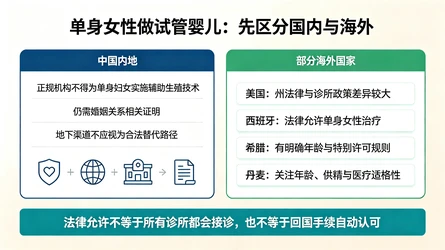
1. Mainland China: Licensed assisted reproductive technology institutions are subject to explicit access restrictions
Mainland China implements a strict system for the licensing of medical institutions and the management of assisted reproductive technology services.
According to the Technical Standards for Human Assisted Reproductive Technologies issued by the former Ministry of Health in 2003, medical institutions implementing assisted reproductive technologies shall not provide such services to couples who do not comply with national population and family planning regulations or to single women.
When the National Health and Family Planning Commission simplified the verification procedures for assisted reproductive treatment certificates in 2016, it explicitly stated that patient couples were still required to provide both parties' identification cards and marriage certificates, without abolishing the requirements related to marital status.
Therefore, at the current stage, legitimate medical institutions in mainland China cannot provide routine assisted reproductive technology (ART) services to single women. So-called "internal channels," arrangements through personal connections, or underground IVF services that require no documentation should not be regarded as legal alternatives.
Special distinction is required:
Single women in China cannot directly request that accredited reproductive centers perform donor sperm IVF solely on the basis of their desire to have children.
Undergoing assisted reproductive treatment legally abroad does not mean that such medical procedures are automatically recognized by mainland Chinese medical institutions.
Egg freezing/Embryo cryopreservationFor future thawing and use, it is also necessary to verify the laws and institutional policies of the implementation location separately; one cannot assume that egg freezing completed in one country guarantees its use in any other country in the future.
2. Overseas: Some countries allow single women to access assisted reproductive technologies
Regulations in different countries mainly concern patient identity, age, sperm donation methods, disclosure of donor identity, embryo handling, andDetermination of Parental Rights.
Here are some representative destinations:
Country or Region | Access Status for Single Women | Key items requiring verification |
|---|---|---|
United States | IVF for single women is generally accepted, but there are no uniform national clinic admission rules. | State laws, clinic policies, sperm donor contracts, and paternity documents |
Spain | The law explicitly allows adult women to access assisted reproductive technologies regardless of their marital status. | Anonymous sperm donation system and clinic age policies |
Greece | Allow single women to access assisted reproductive technology | Notarized Consent Documents, Age Restrictions, and Special Permits |
Denmark | The law allows single women to access assisted reproductive technology. | Age requirements, medical eligibility assessments, and donor identity systems |
Here are three easily overlooked details.
First, legal permissibility does not mean that all clinics will provide services.
Clinics may impose additional requirements based on age, health status, treatment methods, and internal medical policies. Written confirmation should be obtained before making an appointment.
Second, age restrictions need to distinguish between the legal upper limit and the upper limit set by medical institutions.
For example, Greek law sets the upper age limit for women to undergo assisted reproduction at 54 years; however, those aged between 50 years and one day and 54 years require special authorization from the National Authority for Assisted Reproduction. This does not mean that all 54-year-old women can smoothly obtain treatment, nor does it imply that using their own eggs still offers a good chance of live birth.
Spanish law allows women aged 18 or older with full legal capacity to receive treatment regardless of their marital status, although some clinics still impose their own age restrictions in clinical practice.
Third, the sperm donation system may affect children's future right to access information.
Sperm banks in the United States offer anonymous, open-identity, or identity-disclosure donor programs; Spain enforces a legally mandated system of sperm donor anonymity; and other countries have their own requirements for managing donor information.
Therefore, one cannot simply look at whether a country allows single women to undergo IVF; it is also necessary to confirm whether future children can obtain the donor’s identity and medical information.
II. Three Reproductive Pathways for Single Women: Sperm Donor IVF, Egg Freezing, and Egg Donation
Not all single women need to undergo IVF immediately. The right path should be chosen based on age, ovarian reserve, readiness for pregnancy, and future family planning goals.
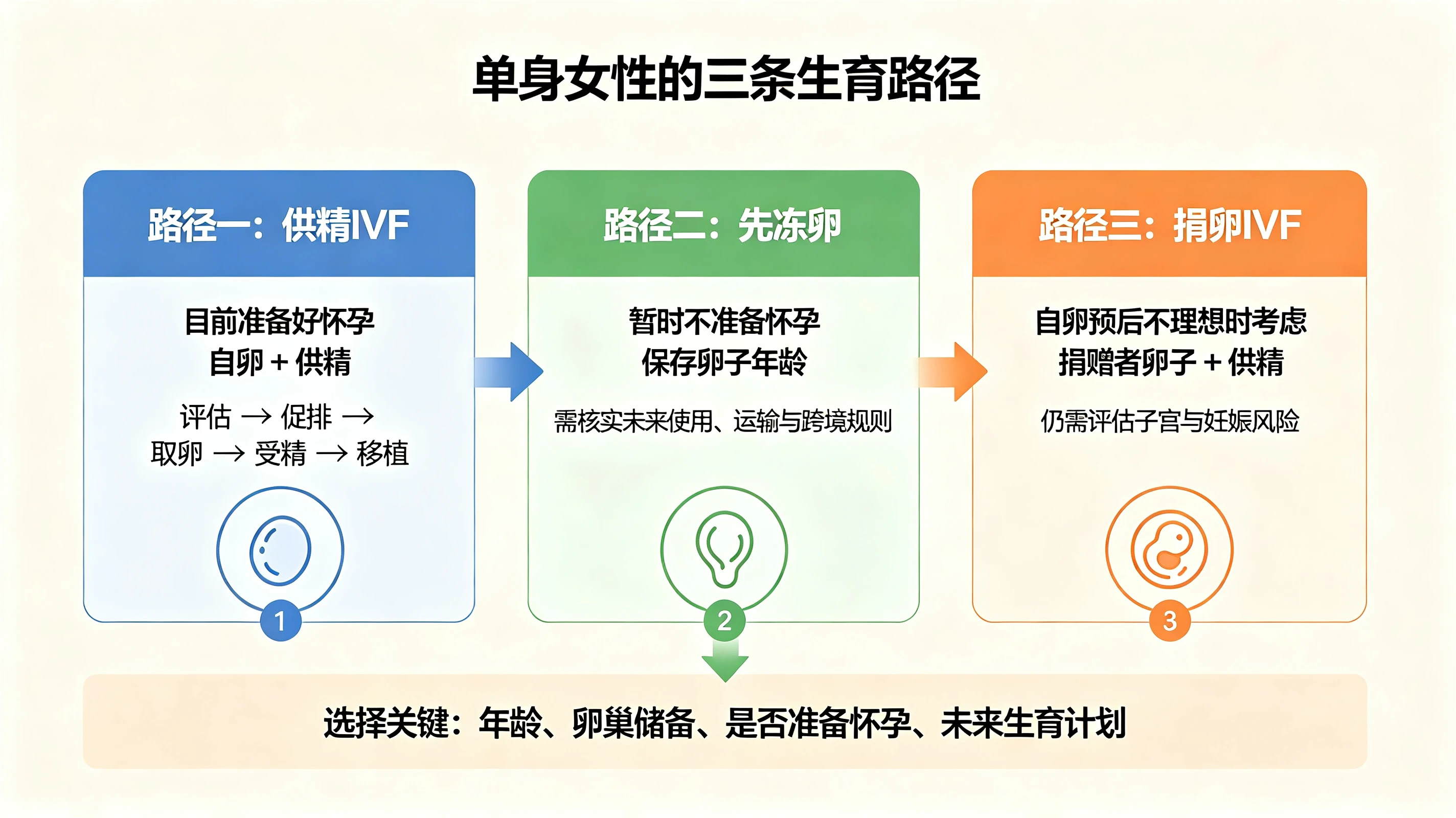
Pathway 1: Donor Sperm IVF – For Women Currently Prepared to Conceive
This is the primary pathway for achieving pregnancy using one's own eggs and donated sperm.
The basic process is as follows:
Complete fertility and uterine environment assessment.
Select a sperm bank or compliant donor that adheres to local regulations.
Design the ovulation induction protocol based on ovarian reserve.
Egg retrieval and in vitro fertilization are completed.
Cultivate embryos and decide whether to perform genetic testing based on clinical circumstances.
Perform embryo transfer and pregnancy follow-up.
This path is suitable for women who are ready to have children and wish to enter the conception stage as soon as possible.
However, it should be clarified that the use of donor sperm does not necessarily require ICSI (intracytoplasmic sperm injection). IfSperm qualityMeets the requirements for conventional in vitro fertilization; the physician may choose either conventional IVF or ICSI based on specific clinical circumstances. For fertilization of thawed oocytes, ICSI is the more commonly used method.
Path 2: Egg freezing first—for women who are not currently planning to get pregnant
If there is currently no suitable timing for childbirth, you may consider proceeding withEgg freezing.
The core value of egg freezing is to preserve the age of the eggs at the time of retrieval, not to guarantee future fertility.
For example:
A 32-year-old woman is currently freezing her eggs, planning to undergo IVF with donor sperm at age 37. The eggs that will be thawed in the future are those retrieved when she was 32; their biological age does not advance to 37 simply due to five years of storage.
However, there are several issues that must be considered in advance regarding egg freezing:
Not all of the retrieved eggs are mature.
Not all frozen eggs survive after thawing.
Not all surviving eggs are capable of normal fertilization.
Not all fertilized eggs develop into transplantable blastocysts.
Ultimately, not all embryos result in live births.
More importantly,The legal eligibility for egg freezing and the legal eligibility for future use are two different things.
If you freeze eggs in one country and plan to use them in another, you must verify this in advance:
Does the target country allow single women to use frozen eggs and donor sperm?
Whether the original cryopreservation institution permits cross-border transportation.
Whether the receiving institution accepts the laboratory's cryopreservation records and quality documents.
Whether the sperm source and related informed consent documents comply with the requirements of the receiving location.
Whether additional fees will be incurred for transportation, storage, and thawing.
Egg freezing is not simply about postponing reproductive decisions, but rather about deferring some medical and legal decisions to the future.
Path 3: Egg Donation IVF—Consider when prognosis with own eggs is unfavorable
For women who are older, have significantly diminished ovarian reserve, or have not produced viable embryos after multiple cycles of treatment using their own eggs, donor egg IVF can be discussed with a doctor.
Donor egg treatment typically involves fertilizing a donor's eggs with sperm from a sperm donor to form embryos, which are then transferred into the recipient's uterus.
It is necessary to clarify:
Egg donation cannot resolve the issue of a uterine environment that is unsuitable for pregnancy.
Egg donation treatment still requires an assessment of the recipient's pregnancy risks.
The age of egg donors and the quality of their eggs affect embryo prognosis.
Legal permission, donor screening, and costs for egg donation vary by country.
For women over 40, one should not abandon the use of their own eggs solely based on age, nor be told that egg donation is mandatory simply due to low AMH levels. A comprehensive assessment should consider past treatment records, follicle count, oocyte retrieval outcomes, and embryo development.
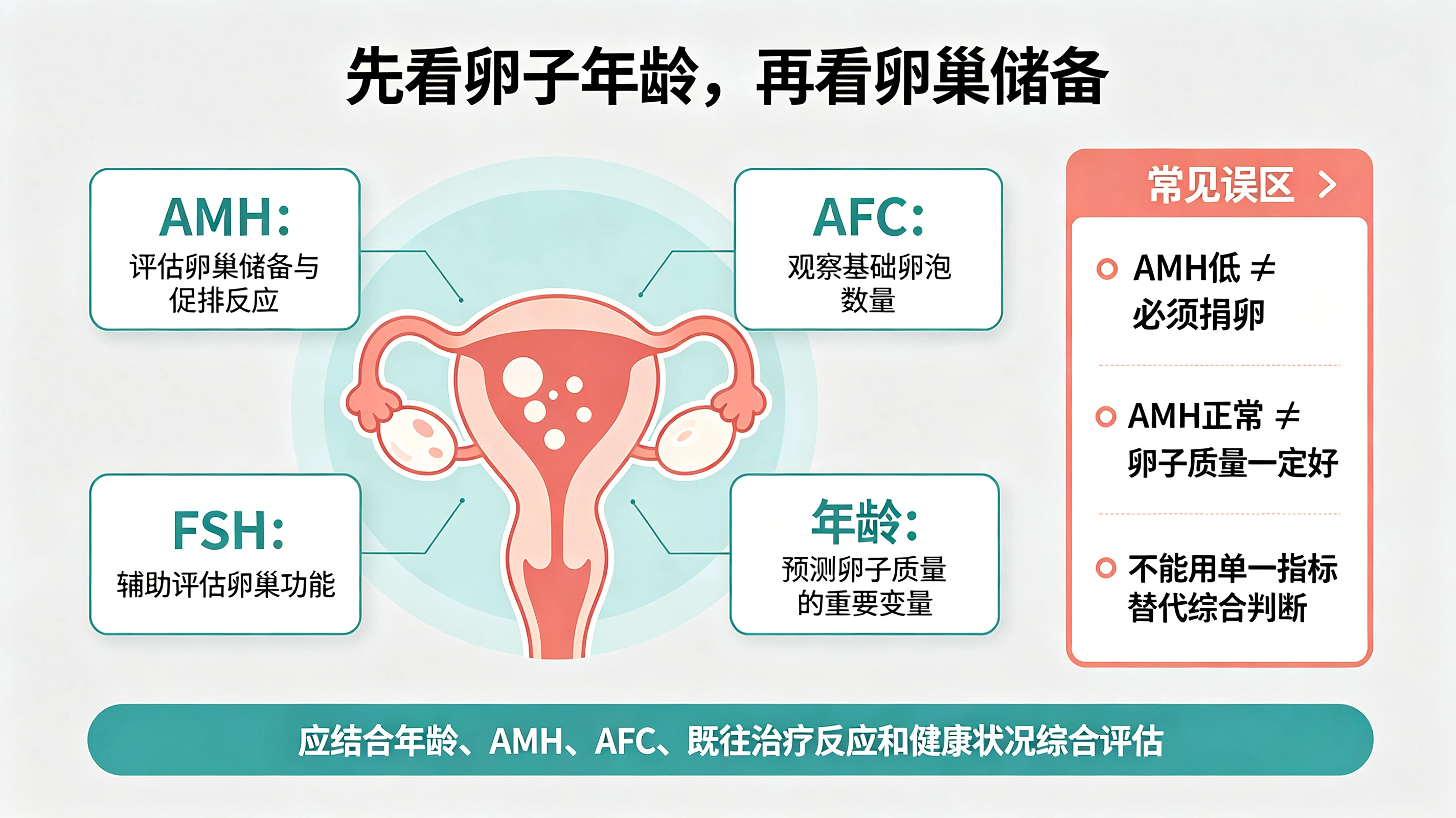
III. Physical Assessment: First, Evaluate Egg Age; Then, Assess Ovarian Reserve
Single women are advised to complete basic examinations at a reputable hospital's reproductive medicine center before deciding on overseas treatment.
The significance of this step is not to determine fertility based on a few numbers, but to help physicians estimate the ovarian response to stimulation, formulate treatment plans, and identify pregnancy-related risks.
1. Basic inspection items
Check items | Main functions | Notes |
|---|---|---|
AMH | Assessing ovarian reserve and predicting response to controlled ovarian stimulation | Not equal to egg quality or the probability of natural conception |
Antral Follicle Count | Observe the number of basal follicles | Usually assessed via transvaginal ultrasound |
FSH | Assist in evaluating ovarian function | Typically tested on days 2–4 of the menstrual cycle |
Estradiol (E2) | Auxiliary explanation of basic FSH | Usually tested simultaneously with FSH |
Thyroid Function | Identify endocrine issues that may affect fertility and pregnancy | Arrange based on medical history and symptoms |
Uterine ultrasound | Evaluate uterine morphology, endometrium, and adnexa | Further examination of the uterine cavity if necessary |
Infectious disease screening | Meets the requirements for assisted reproductive technology and preconception screening | Arranged as required by the treatment facility |
Blood pressure, blood glucose, BMI, cardiopulmonary function, and other health issues affecting pregnancy safety may also need to be assessed when necessary.
Chromosome karyotype analysis,HysteroscopyThese tests are not routine procedures required for all patients and should be determined based on medical history, examination findings, and clinical indications.
2. Low AMH does not mean IVF is impossible.
This is a very important point for correction.
AMH and AFC are primarily used to assess ovarian reserve and predict the number of oocytes that may be retrieved during ovarian stimulation.
They cannot independently assess the chromosomal quality of eggs, nor can they directly provide the final probability of a live birth.
For example:
Two 38-year-old women: one has an AMH level of 2.5 ng/ml, while the other has 0.8 ng/ml. The former may yield more eggs, but this does not necessarily indicate better egg quality, nor does it mean that the latter cannot obtain viable embryos for transfer.
In assisted reproductive therapy, age remains an important predictor of egg quality and reproductive outcomes.
Therefore, the following simple rule cannot be used to directly determine treatment:
An AMH level greater than 2 ng/ml guarantees success.
If AMH is less than 1 ng/ml, you should give up on using your own eggs.
If the AFC is below 5, egg donation must be chosen.
If AMH is normal, age factors do not need to be considered.
The correct approach is to evaluate age, AMH, AFC, prior treatment response, and individual health status together.
3. Do not view ovarian care as a method to extend reproductive age.
There is currently no sufficient evidence to prove that health supplements, traditional Chinese medicine conditioning, ovarian massage, or so-called "ovarian care" can reverse the natural aging of the ovaries.
Supplements such as Coenzyme Q10 and vitamin D should not be advertised as definitive methods for improving live birth rates.
More practically valuable preparations include:
Quit smoking and avoid exposure to harmful substances.
Maintain a healthy weight and exercise regularly.
Take folic acid supplements as recommended by your doctor.
Correct clearly identified nutritional deficiencies.
Control chronic diseases.
Complete the fertility assessment in a timely manner based on the planned conception time.
For women who already have a plan for childbearing, treatment should not be unnecessarily delayed in order to try unproven conditioning methods.
IV. How to Interpret Success Rates? Do Not Mistake a Single Transfer Rate for Your Final Probability of Having a Baby
This is one of the most critical data issues for single women to understand when choosing IVF.
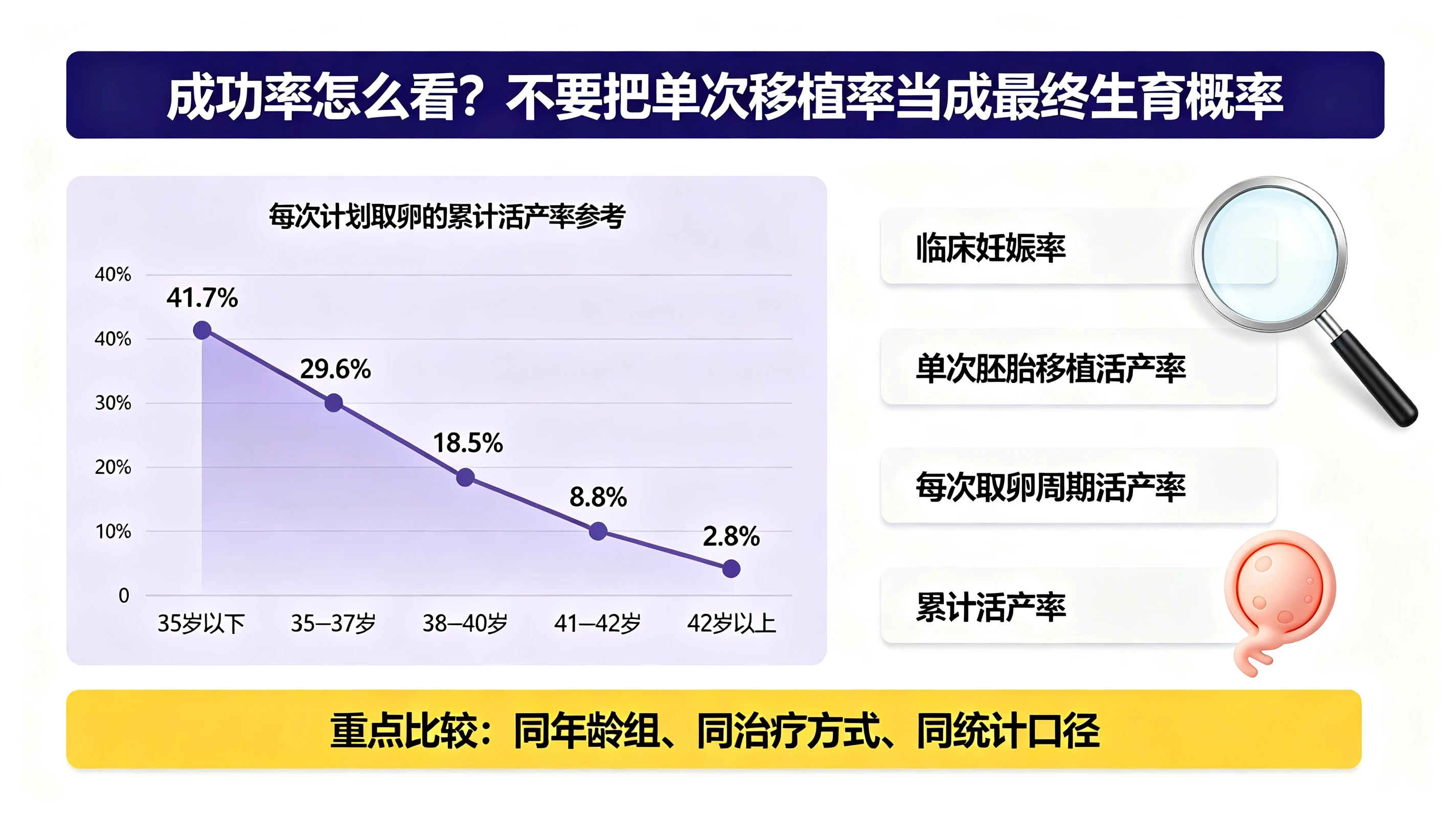
The success rates advertised by different clinics may correspond to entirely different statistical metrics:
Clinical pregnancy rate: The proportion of patients achieving clinical pregnancy criteria after embryo transfer.
Live birth rate per single embryo transfer: The proportion of embryo transfers that result in a live birth.
Live birth rate per oocyte retrieval cycle: The proportion of live births resulting from subsequent related embryo transfers, calculated starting from a single oocyte retrieval.
Cumulative live birth rate: The proportion of cases in which at least one live birth is ultimately achieved after transferring the embryos formed from a single egg retrieval within the specified observation period.
For women planning to undergo treatment overseas, it is recommended to focus on the cumulative live birth rate per egg retrieval.
1. Reference to U.S. SART 2024 Data
In the preliminary national report published by SART for 2024, the outcomes of IVF treatments using patients’ own eggs were as follows:
Female age at egg retrieval | Cumulative live birth rate per planned egg retrieval |
|---|---|
Under 35 years old | 41.7% |
35–37 years old | 29.6% |
38-40 years old | 18.5% |
41–42 years old | 8.8% |
42 years old and above | 2.8% |
This set of data indicates that increasing age significantly affects fertility outcomes using one's own eggs.
However, it is important to note that this dataset should not be directly interpreted as an individual patient's probability of success. Differences in ovarian response, number of embryos, prior treatment history, and uterine conditions among patients may lead to variations in outcomes.
2. Why is it not recommended to focus solely on the success rate of a single embryo transfer?
Assume that a woman obtains three transferable embryos from a single egg retrieval.
The first transfer was unsuccessful, the second resulted in a pregnancy, and the third embryo remains available for use.
If you only look at the results of the first transplant, you will underestimate the overall value of this egg retrieval.
Conversely, if a clinic only presents data from patients with successful transplants while omitting those who had canceled cycles, no embryos formed, or no opportunity for transplantation, its promotional figures may also create misleading expectations.
Therefore, when consulting a clinic, it is recommended to ask directly:
What is the cumulative live birth rate per planned oocyte retrieval cycle for patients of my age?
Does the statistics include patients who did not form transferable embryos?
Does the statistics include follow-ups?Frozen Embryo Transfer?
Should self-eggs or donor eggs be used? Are the two categories reported separately?
Group by age and diagnosis?
Is the data final or preliminary?
What truly merits comparison is not whose success rate figures are the highest, but who can provide data that closely matches your situation and has clearly defined statistical criteria.
5. Sperm Donor Selection: Safety Screening Is More Important Than Education, Appearance, and Height
Sperm donation is a crucial component of IVF for single women.
When choosing a sperm bank, prioritize safety screening, genetic risk matching, information disclosure, and follow-up tracking capabilities over preferences for physical appearance or educational background.
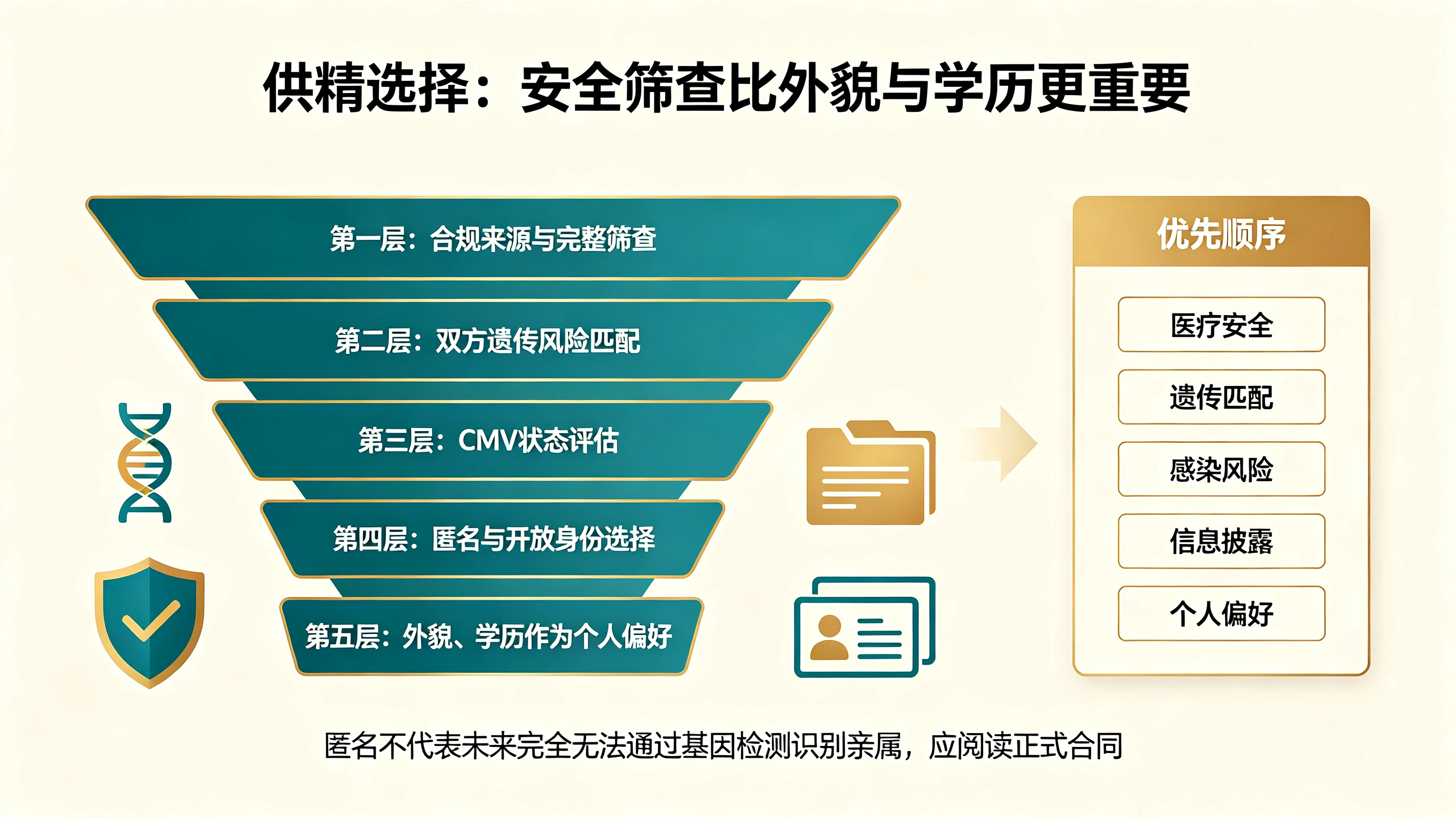
1. First Tier: Verification of Sperm Banks and Donor Sources
First, confirm:
Whether the sperm bank complies with local regulatory requirements.
Has the sperm donor undergone the required screening for infectious diseases?
Are there records of the sperm donor's medical and family history?
Is there a carrier screening report for genetic diseases?
Are there records of sperm cryopreservation, thawing, and quality testing?
Whether it is possible to provide the sperm donation batch number and related traceability information.
Whether the number of offspring from the same sperm donor is explicitly limited.
Please note that being licensed or operating in compliance does not mean that sperm donors are free from any genetic risks. Screening can only reduce known risks and cannot guarantee that offspring will be completely free of genetic diseases.
2. Second Layer: Complete the matching of genetic risks for both parties
Healthy individuals may also carry pathogenic variants for certain recessive genetic disorders.
If the female and the sperm donor happen to carry pathogenic variants for the same autosomal recessive genetic disorder, their offspring may be at risk of developing the disease.
Taking the example where both partners are carriers of the same autosomal recessive genetic disorder, each pregnancy theoretically has:
25% chance of being sick.
There is a 50% probability of becoming a carrier.
There is a 25% probability of being neither affected by the disease nor a carrier of the variant.
Therefore,Extended carrier screeningIt is of great value.
A more reasonable order of operations is:
First assess your genetic risk, then select a sperm donor based on the results.
If a woman is known to carry a pathogenic variant, she should consult a genetic counselor to determine whether the sperm donor needs to be screened for matching carrier status for the same disease.
No single fixed panel of genetic screening should be presented as an absolute safety standard. Different laboratories may vary in their testing scope, technological platforms, and interpretation of reports.
3. Third layer: CMV status matching
CMV, or cytomegalovirus, isSperm Donor Screeningone of the infection factors that require attention.
It is recommended to first determine your own CMV antibody status, and then have a physician assess the situation in conjunction with the donor’s test results.
It should not be simply assumed that all women must choose CMV-negative sperm donors, nor that women who are CMV-positive need not pay any attention to the infection status of the donor.
Distinguish between past infection, current infection, and the clinical implications of test indicators. When necessary, a reproductive medicine specialist should interpret IgG, IgM, and related test results.
4. Fourth Layer: Anonymous Sperm Donation and Open-Identity Sperm Donation
Different countries and sperm banks have varying policies regarding the management of donor identity information.
Type | Key Features | Issues to consider |
|---|---|---|
Anonymous sperm donation | Do not disclose the sperm donor's identity to the recipient or the child | Future access to identity information may be restricted |
Open-identity sperm donation | Provide an identity contact channel after the child reaches the prescribed age, as agreed. | does not imply that the sperm donor must establish a parent-child relationship |
Identifiable Donor | Retention of identity data in accordance with laws or regulations | The right to access information and make contact is subject to local rules. |
Please note: Anonymity does not guarantee that biological relatives cannot be identified in the future through means such as commercial genetic testing.
Therefore, when selecting a sperm donor, one should not rely solely on the sperm bank’s marketing labels but also read the formal contract to understand the retention period for identity information, the child’s future right to access such information, mechanisms for updating medical information, and restrictions on cross-border use.
5. Where should appearance and educational background be placed?
Height, appearance, educational background, occupation, and hobbies may serve as personal preferences but should not substitute for medical screening.
A more reasonable priority order is:
Compliance sources and comprehensive screening.
Genetic risk matching
Infection risk assessment.
The system for disclosing the identity and information of sperm donors.
Physical appearance, educational background, and other personal preferences.
This is not only a medical safety issue, but also part of future parent-child communication and family identity.
6. Cost Planning: Shifting from Single-Cycle Quotations to a Comprehensive Fertility Budget
Single women traveling abroad for IVF typically need to cover costs including clinic treatment fees, medications, donor sperm, embryo freezing, transportation, accommodation, and round-trip travel.
If you only refer to the basic packages advertised by the clinic, you are likely to underestimate the actual expenses.
1. Reference Costs for Sperm Donation IVF in the United States
The following are broad reference ranges used for initial budget screening and do not represent uniform market prices for 2026. Actual costs must be based on written quotes from clinics and sperm banks.
Expense Items | Reference Fees (USD) |
|---|---|
Basic Treatments at IVF Clinics | 15,000—25,000 |
Ovulation induction medications | 3,000–6,000 |
Purchase of Donor Sperm | 500–1,500/tube |
Sperm Storage and Transport | Pricing based on the sperm bank and shipping distance |
Embryo Freezing and Preservation | Charged by clinic project and retention period |
Embryo transfer | Depending on whether it is included in the package |
Prices are typically quoted based on the testing items and the number of embryos. | |
Additional checks and anesthesia | Charged based on actual project |
Not all of these items will occur, and the maximum price of each item cannot be simply summed up to determine the standard treatment cost.
If treatment in the United States is required, this should also be considered separately:
Round-trip international airfare
Accommodation and local transportation.
Dwell time during ovarian stimulation.
Rest period after egg retrieval.
Does frozen embryo transfer require another trip to the United States?
Additional medical and insurance expenses.
2. Do not treat ICSI and PGT-A as mandatory upgrades
This is a crucial pitfall to avoid in expense planning.
ICSI is not a mandatory procedure for all donor sperm IVF cycles.
The 2026 ASRM Committee Opinion on indications for intracytoplasmic sperm injection (ICSI) in the absence of male factor infertility states that routine use of ICSI for all oocytes, in cases without male factor or prior fertilization failure, has not been shown to improve live birth rates.
The decision to use ICSI should be made by the physician based on semen parameters, prior fertilization history, oocyte status, and specific testing requirements.
PGT-A is not a mandatory test for all embryos.
PGT-A is used to screen for chromosomal numerical abnormalities in embryos, but it does not guarantee successful implantation or eliminate the risk of all genetic disorders.
The decision to perform PGT-A should be discussed in the context of the woman’s age, number of embryos, prior reproductive history, embryo status, and the patient’s treatment goals.
Do not assume that an increase in fees will necessarily improve the final live birth probability simply because a clinic advertises its technology as advanced.
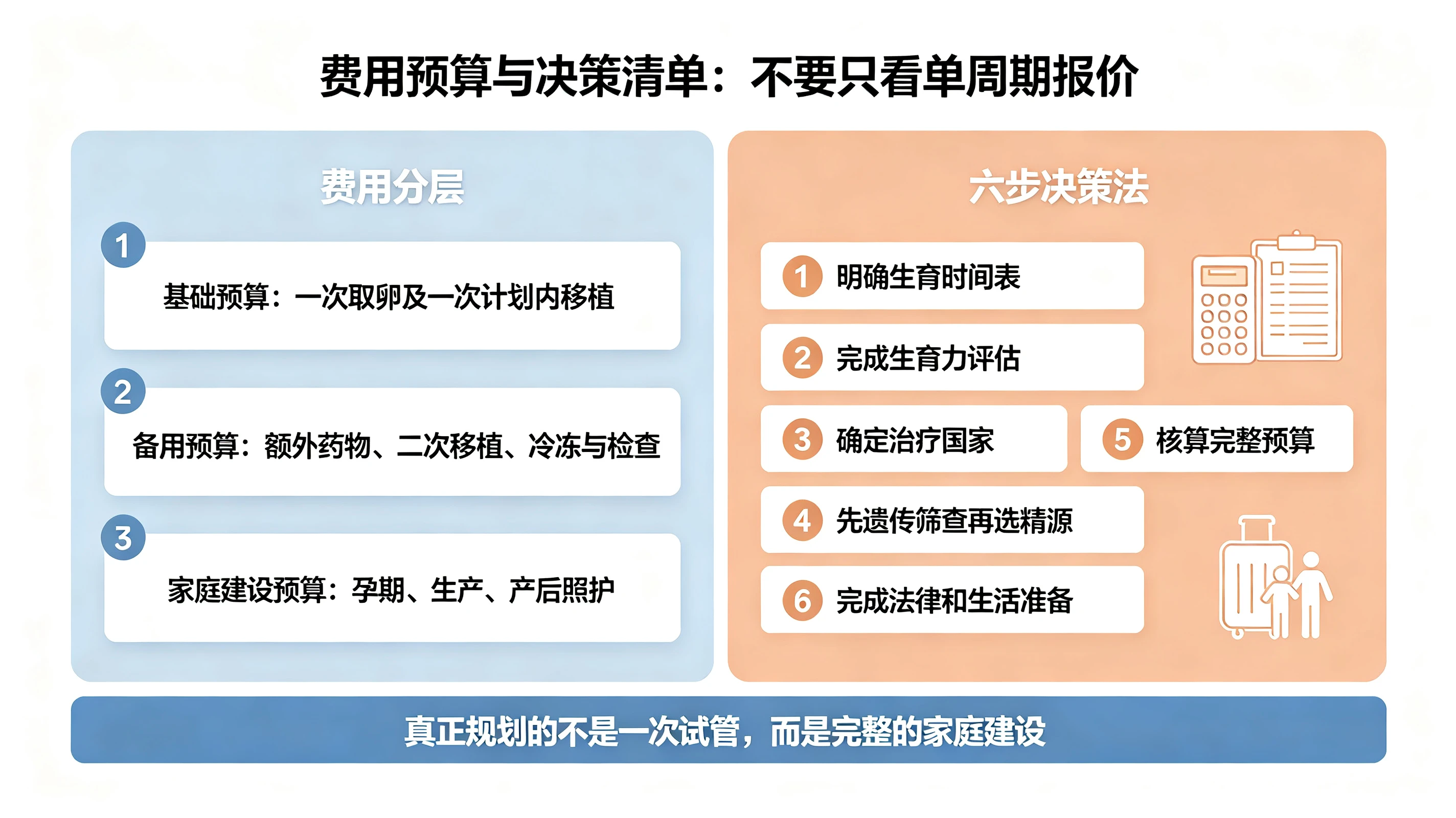
3. The cost budget should be set at three levels
It is recommended to divide the budget into:
Base Budget:Medical expenses required for one egg retrieval and one planned embryo transfer.
Contingency Budget:Possible additional costs for medications, second transplant, embryo freezing, examinations, and cycle adjustments.
Family Building Budget:Expenses for pregnancy, delivery, postpartum care, and daily living after the baby's birth.
These three budgets should be accounted for separately.
If your financial resources only allow for one egg retrieval and one embryo transfer, you need to consider the options in case of treatment failure beforehand, rather than facing funding shortages after treatment has begun.
VII. Choosing a Country and Clinic: Law, Data, Laboratory, and Communication Skills Are All Essential
When choosing a treatment destination, it is not recommended to simply sort by price from lowest to highest.
1. United States: Greater data transparency and a wider range of treatment options
Ideal for those who prioritize a wide selection of donors, transparency in clinic data, and autonomy over treatment plans.
Advantages:
It is relatively common for single women to undergo assisted reproductive technologies.
The CDC and SART provide assisted reproductive technology data at both the clinic and national levels.
The sperm bank offers a wide selection.
Some institutions offer open-identity sperm donation.
Different treatment options can be discussed based on individual circumstances.
Please note:
Laws and parental rights rules may vary from state to state.
Clinics vary in their policies regarding patient age and treatment.
Costs are usually high.
Cross-border patients need to take additional considerations into account regarding their length of stay and subsequent frozen embryo transfer.
2. Spain: Legal access is clearly defined, and the sperm donation system requires advance familiarization.
Article 6 of Spain’s Law 14/2006 on Assisted Human Reproductive Technologies explicitly stipulates that women aged 18 or older with full legal capacity may access relevant technologies without restriction based on marital status or sexual orientation.
Key Features:
The law explicitly recognizes the treatment eligibility of single women.
The identity information of sperm donors is protected by law.
Clinics and sperm banks are subject to relevant regulations.
Clinical age restrictions require separate consultation.
Spain’s sperm donation system should not be simply equated with the United States’ open-identity model. Women who wish their future children to know the identity of the sperm donor should fully understand the local regulations before undergoing treatment.
3. Greece: The age regulations have a clear legal basis
Greece allows single women to undergo assisted reproductive treatments and sets regulations on the age limit for women receiving such treatment.
Women aged between 50 years and 1 day and 54 years must apply for a special permit from the National Authority for Assisted Reproduction.
Please note:
Meeting the age requirement does not necessarily mean being medically fit for pregnancy.
54 is the legally mandated upper limit, not a recommended treatment age.
Notarized documents, sperm sources, and clinic qualifications should be verified.
Specific requirements for oocyte retrieval, egg donation, and embryo transfer should be confirmed in advance.
4. Denmark: Focus on age, sperm donation, and medical eligibility
Denmark allows single women to access assisted reproductive treatments, which are subject to specific legislation and medical regulation.
Key items to verify:
Specific age and medical eligibility requirements.
The method of disclosing the identity of sperm bank donors.
Usage restrictions for the same sperm donor.
Cross-border Transportation and Subsequent Embryo Management Policies
Don't ignore actual treatment eligibility and waiting times simply because Denmark has well-established sperm bank resources.
5. How to Screen Clinics?
It is recommended to compare across the following six dimensions:
Evaluation dimensions | Content that must be verified |
|---|---|
Medical Qualifications | Does the locality hold a legitimate license for assisted reproductive technology practice? |
Laboratory | Does it possess laboratory qualifications and a quality management system compliant with local regulations? |
Success rate | Whether age groups, live birth outcomes, and statistical definitions are provided |
Doctor's competence | Do you have treatment experience that matches your diagnosis and age? |
Communication Services | Is it possible to communicate directly with the medical team, rather than relying entirely on intermediaries? |
Fee transparency | Details of medication, egg retrieval, culture, cryopreservation, embryo transfer, and additional items |
U.S. clinics can primarily query CDC and SART data.
CAP, CLIA, and other certifications can also serve as verification criteria for quality management in U.S. laboratories; however, it is essential to confirm the specific institution, laboratory, and scope of certification, and single-item certifications should not be directly equated with clinical success rates.
8. Legal and Administrative Arrangements After Returning to China: Do Not Conflate Birth Registration, Parental Rights, and Household Registration
For single women in mainland China, overseas treatment is only part of their overall reproductive plan.
After the child is born, matters may also involve the medical certificate of birth, birth registration, and determination of nationality.Travel Documentdocuments, parent-child relationship materials, and household registration services.
1. Children born out of wedlock enjoy equal civil rights
Article 1071 of the Civil Code of the People's Republic of China stipulates that children born out of wedlock enjoy the same rights as children born in wedlock, and no organization or individual shall harm or discriminate against them.
This means that children will not lose their legally entitled civil rights due to their parents being unmarried.
However, equality of civil rights does not mean that all administrative procedures are identical, nor can it be directly inferred that all foreign-issued birth documents can be used for household registration without review.
2. Domestic births and overseas births need to be handled separately
If a child is born in mainland China, the birth medical certificate and birth registration are typically processed in accordance with local regulations.
For the birth registration of children born out of wedlock under their mother’s name, some regions require the submission of:
Medical Birth Certificate
Mother's Resident Identity Card
Mother's household registration booklet
Statement or Declaration Regarding Non-Marital Birth
Other materials required by local regulations.
When a child born out of wedlock applies to be registered under the father’s name, a paternity test certificate is typically also required.
However, the required documents vary by location, so the procedural guide of any single city should not be treated as a nationwide standard process.
3. Four key questions to verify in advance for overseas births
If you plan to complete your pregnancy and childbirth overseas, it is recommended that you consult in advance with the Chinese embassy or consulate in your host country and the public security authorities at your place of household registration:
First, what documents does a child obtain after birth?
It is necessary to distinguish between birth certificates, local passports, travel documents, and other identity documents.
Second, does the child have Chinese nationality?
Articles 4 and 5 of the Nationality Law of the People's Republic of China stipulate the principles for determining the nationality of children born abroad to Chinese citizens. The specific determination requires considering factors such as the parents' nationalities, whether they are settled abroad, and the circumstances at the time of the child's birth.
For example, the Chinese nationality of a child born in the United States to Chinese citizens cannot be determined solely by the place of birth; it must also be assessed in conjunction withNationality Law of ChinaVerification of regulations and relevant U.S. laws.
Third, is the parental information on the birth certificate complete?
In some countries, birth certificates, hospital birth records, and paternity documents may not be identical. It is advisable to confirm in advance whether these documents require notarization, authentication, or translation.
Fourth, how do I register the birth after returning to my home country?
Household registration for children born abroad requires preparing documents based on nationality determination, birth certificates, and the requirements of the local public security authorities.
It is recommended that, before traveling abroad for medical treatment, you inquire with the public security authority in your place of household registration about the specific requirements for processing matters related to children born overseas, rather than waiting until after the child is born to begin seeking information.
4. Do not treat paternity testing as a mandatory procedure for all single mothers seeking household registration.
This is a common misconception.
The fact that children born out of wedlock are registered under their mother's name does not mean that paternity testing is mandatory in all regions across the country.
Whether an appraisal is required should be determined based on the birth medical certificate, overseas birth documents, proof of parent-child relationship, and local household registration policies.
In particular, for children born through assisted reproductive technology overseas, the relevant documents may differ from those typically required for domestic birth registration. It is advisable to consult the local public security authorities in writing in advance.
9. Receiving treatment alone requires the establishment of an additional medical safety support system
The medical process for a single woman undergoing IVF is essentially the same as for other patients, but traveling abroad alone for treatment increases practical difficulties in implementation.
For example, repeated monitoring is required during the ovarian stimulation phase. After egg retrieval, discomfort such as abdominal pain, bloating, and nausea may occur; in severe cases, complications like ovarian hyperstimulation syndrome, bleeding, or infection can arise.
Therefore, it is recommended to complete the following arrangements before departure:
Confirm whether the clinic provides a 24-hour emergency contact.
Understand the post-egg retrieval observation and discharge requirements.
Arrange for a trustworthy companion.
Familiarize yourself with local emergency hospitals and transportation options in advance.
Confirm whether medical insurance covers complications from assisted reproduction and overseas emergency care.
Avoid traveling long distances alone when your physical condition is unstable.
It is important to note that standard travel insurance typically does not cover actively pursued assisted reproductive treatments, related complications, or pre-existing conditions; therefore, you must carefully read the policy terms.
Establish a long-term support system
Single ParenthoodNot only medical support, but also ongoing life support is needed.
It is recommended to clarify in advance:
Who will accompany the patient during egg retrieval and embryo transfer.
Who can assist when physical discomfort occurs during pregnancy?
Who can accompany you to the hospital for delivery?
Who will take on the daily caregiving responsibilities after childbirth?
If you fall ill or need to be hospitalized, who can temporarily take care of your children?
Don't just consider care during the postpartum confinement period; also think about living arrangements for at least several years after the child is born.
If family members cannot provide long-term support, it is necessary to calculate in advance the costs of professional childcare services and temporary care.
X. Children's Identity and Psychological Preparation: Donor Conception Is Not a Secret to Be Hidden
Donor conception involves a child's future understanding of their genetic origins, family structure, and biological fatherhood.
This is not an issue to be considered only after a successful transplant, but rather a long-term decision that should be made when selecting a sperm donor.
1. Think ahead about how to explain your child's birth story.
You can explain it step by step according to the child's age:
Early childhood: Use simple, positive language to tell your child that he came into the family through his mother’s careful choice and anticipation.
School-age stage: Gradually explain family composition and the basic concepts of sperm donation.
Adolescence: Further introduce the origins of reproduction, genetic information, and related family stories, tailored to the child’s level of understanding.
It is not advisable to fabricate a false biological father identity or handle donor sperm issues through long-term concealment.
2. Preservation of sperm samples and medical records
Please store properly:
Sperm bank name and donor ID.
Genetic Screening Report for Sperm Donor
Infectious Disease Screening Record.
Sperm Donation Contract and Informed Consent Documents
Embryo Culture and Transfer Records
Channel for updating medical information of sperm donors
These materials not only have medical value but may also prove useful when the child needs to understand their genetic background in the future.
3. Build a support network that does not rely on a single relative
Single mothers don't have to bear all parenting responsibilities alone.
You can establish a support network in advance, comprising family members, friends, professional healthcare providers, and childcare service personnel.
You can also seek out communities with similar family structures to help children develop a healthy and positive sense of family identity as they grow up.
11. Eight Common Misconceptions About IVF for Single Women
Common Misconceptions | A more accurate understanding |
|---|---|
Overseas, allowing single women to undergo IVF does not necessarily mean that clinics are obligated to accept them. | Legal access, clinic policies, and individual medical conditions need to be verified separately. |
A normal AMH level does not necessarily indicate good egg quality. | AMH primarily reflects ovarian reserve and cannot directly assess chromosomal quality of oocytes |
Low AMH means you must donate eggs | Assessment should be based on age, AFC, and prior treatment response. |
Frozen eggs can be used at any time. | Need to verify eligibility for future treatment countries, transportation, and thawing use |
ICSI is mandatory for donor sperm IVF. | It should be determined based on the sperm, oocytes, and previous fertilization history |
PGT-A guarantees embryo health. | PGT-A cannot rule out all genetic disorders and does not guarantee a live birth. |
The success rate advertised by the clinic is an individual success rate. | Data should be compared within the same age group, treatment modality, and statistical criteria. |
A paternity test is mandatory for household registration after a child is born. | The documentation requirements for registering under the mother's name differ from those for registering under the father's name, and policies vary across different regions. |
XII. Single Women's IVF Decision Checklist: Six Steps from Preparation to Treatment
If you already have a clear intention to have children, there is no need to select a country or contact an agency at the outset. It is recommended to proceed in the following order.
Step 1: Clarify your reproductive timeline
First, answer three questions:
Are you ready to get pregnant and raise a child?
If you are not planning to get pregnant for the time being, is it necessary to freeze your eggs first?
Are you open to using donor sperm, and have you considered using donor eggs in the future?
Do not rush into purchasing treatment packages before your family planning is clearly defined.
Step 2: Complete the fertility assessment
Complete AMH, AFC, basal hormone, and uterine assessments at a reputable hospital’s reproductive medicine center.
Genetic counseling and preconception health assessments should be conducted when necessary.
After receiving the report, ask the doctor to explain:
Expected response to ovarian stimulation.
Possible number of oocytes retrieved.
Prognosis of oocyte treatment.
Whether further checks are needed.
Are there any health issues that may affect pregnancy?
Step 3: Determine the country for treatment
Screen destinations based on age, treatment eligibility, sperm donation regulations, language support, and budget.
Do not make decisions based solely on agent recommendations or online rankings.
At a minimum, select two clinics that comply with local legal requirements for written consultations and comparison of treatment plans.
Step 4: Conduct genetic screening first, then select the sperm source.
Understand your genetic carrier status, CMV status, and the clinic's donor screening requirements.
When selecting a sperm donor, prioritize verifying safety and traceability capabilities before considering preferences such as appearance or educational background.
Step 5: Calculate the Complete Budget
List the costs for treatment, medication, sperm donation, cryopreservation, transportation, travel expenses, accommodation, additional embryo transfers, and potential second-cycle treatments separately.
Also reserve funds for maternity and postpartum childcare expenses.
Step 6: Complete legal and life preparations
Confirm the following before initiating treatment:
Eligibility for single women to access treatment in the country.
The identity disclosure system for sperm donors.
Medical documents and informed consent content.
Rules for the Transport of Embryos and Sperm
Nationality and documentation issues following birth abroad.
Birth registration and household registration documents upon return to China.
Prenatal, labor, and postpartum care support.
Only when clear plans are established for all these aspects can it be considered a truly meaningful reproductive plan.
Conclusion: What truly needs planning is not a single IVF cycle, but the complete construction of a family.
For single women, building a family through assisted reproductive technology is a comprehensive decision involving medical, legal, financial, and long-term lifestyle considerations.
Whether to choose donor sperm IVF or egg freezing first, use your own eggs or consider donor eggs, and seek treatment in the United States or Europe—there is no one-size-fits-all answer.
But there are three principles worth upholding:
First, do not use AMH as a substitute for age in clinical decision-making, and do not base treatment choices on success rates alone.It needs to be combined with individual physical conditions and actual cumulative live birth data.
Second, do not look only at single-cycle prices.From egg retrieval to embryo transfer, and then through pregnancy, childbirth, and parenting, a comprehensive budget should be prepared in advance.
Third, do not wait until the child is born to address legal and personal matters.Donor information, birth documents, nationality determination, household registration processing, and long-term care should all be incorporated into the plan before treatment.
Choosing to have a child as a single parent does not mean you must bear all the risks alone. Making well-informed medical decisions, understanding legal boundaries, and building a reliable support system are essential to turning your reproductive plans into reality in a secure and stable manner.
Frequently Asked Questions
The content on this website is general educational material and compiled public information about IVF. It is provided for reference only, does not constitute a basis for diagnosis or medical decision-making, and does not constitute any medical advice or treatment recommendation. For policy and technical requirements, please refer to official publications issued by the relevant authorities and institutions. If you find any content errors, numerical inconsistencies, or outdated information, please contact us so we can verify and update it.
