
From the perspective of prospective parents making family planning decisions, this analysis neutrally examines the core value, suitability criteria, cost boundaries, and evidentiary controversies of medical institutions. It is not intended as one-sided commercial promotion, but solely as informational reference for decision-making regarding assisted reproductive technology in Japan. All medical plans should be based on the conclusions of an in-person consultation with a licensed physician.
Read all30-Second Quick Compatibility Self-Test
If the hospital meets two or more of the following criteria, it can be included in the core shortlist:
Age over 35, low AMH levels, and diminished ovarian reserve
History of two or more failed embryo transfers, with no improvement in implantation outcomes under conventional protocols
Intolerant of high-dose ovulation-stimulating medications, hoping to reduce the physical burden of treatment
The male partner has infertility issues such as oligoasthenospermia or azoospermia, and the couple wishes to receive simultaneous diagnosis and treatment at the same hospital.
Planning to travel to Japan for assisted reproductive treatment, prioritizing clinical efficiency and aiming to minimize the duration of stay abroad.
I. Qualifications and Scale: First Verify Compliance and Clinical Capabilities
When selecting an overseas reproductive clinic, the primary considerations should be regulatory compliance and clinical stability, rather than relying solely on promotional claims.
Official Qualifications and Industry Standing
Hanabusa Women's Clinic(commonly known in Chinese asYing HospitalReproductive Center) is a representative reproductive specialty hospital in Japan's Kansai region, with core industry qualifications including:
A designated collaborative facility for specialist physician training accredited by the Japan Society of Obstetrics and Gynecology
An accredited training facility of the Japan Society for Reproductive Medicine, responsible for the standardized training of reproductive medicine specialists in Japan, with clinical workflows and laboratory quality control adhering to unified industry standards in Japan.
Clinical Scale and Operational Data
Clinical scale is a critical support for technological stability. According to the hospital's publicly available operational data:
A cumulative total of 42,388 clinical pregnancies was completed from 2010 to 2023.
3,546 frozen embryo transfer cycles were performed annually, placing the clinic among the top reproductive institutions in Japan.
Annual outpatient visits exceed 100,000, with approximately 8,000 assisted reproductive cycles per year.
Campus Facilities and Service Amenities
The clinic operates five locations across Hyogo Prefecture, with its core facility being the Kobe Sannomiya Main Branch, which offers a full range of services from egg retrieval to embryo transfer. The Shuuzui branch provides evening outpatient hours to accommodate working professionals, while a separate men’s specialty clinic is also available. For international patients, a bilingual medical coordination team (English and Chinese) is on hand, supporting remote preliminary consultations. In-house ancillary fertility services include genetic counseling, psychological counseling, acupuncture, and Kampo (traditional Japanese herbal medicine) treatments.
II. Core Technologies and Target Audience: Can Your Pain Points Be Addressed in a Targeted Manner?
At the heart of decision-making lies judgment: whether an institution’s technological strengths align precisely with the challenges in your treatment.
1. Mild stimulation / Natural cycle ovarian stimulation: Suitable for advanced maternal age and diminished ovarian reserve
The hospital employs the mini-stimulation protocol (MiniIVF), with natural cycle oocyte retrieval as a core feature, by reducing the dosage of gonadotropins, not blindly pursuing the number of retrieved oocytes, and prioritizing both egg quality and patient tolerance.
Key Advantages: Reduced risk of ovarian hyperstimulation syndrome (OHSS), milder drug side effects, and more flexible visit schedules
Target population: Advanced maternal age, diminished ovarian reserve, and intolerance to previous high-dose ovarian stimulation
Objective note: Mild stimulation does not necessarily indicate better egg quality compared to conventional ovarian stimulation, nor does it offset the risk of embryonic chromosomal aneuploidy associated with advanced maternal age; protocol selection must be tailored to individual ovarian response and reproductive goals.
2. SEET Endometrial Stimulation Transfer: A Controversial Implantation Intervention Option
The SEET (Stimulation of Endometrium Embryo Transfer) method was co-developed by the hospital's team, with its core developer being the founder.Masahide ShiogayaA medical doctor who has obtained relevant medical patents in Japan, and one of the widely used clinical implantation optimization protocols in Japan's reproductive medicine field.
Technical Principles and Clinical Positioning
Two to three days before embryo transfer, embryo culture supernatant is infused into the uterine cavity, aiming to pre-induce endometrial receptivity through signaling factors released by the embryos and thereby promote embryo-endometrium interaction. This hospital primarily applies this approach to patients with recurrent implantation failure, typically in conjunction with single-embryo transfer strategies to strictly control the risk of multiple pregnancies.
Evidence discrepancies that must be fully understood
The clinical benefits of SEET are not a global academic consensus; both supportive and opposing research findings should be understood before making decisions.
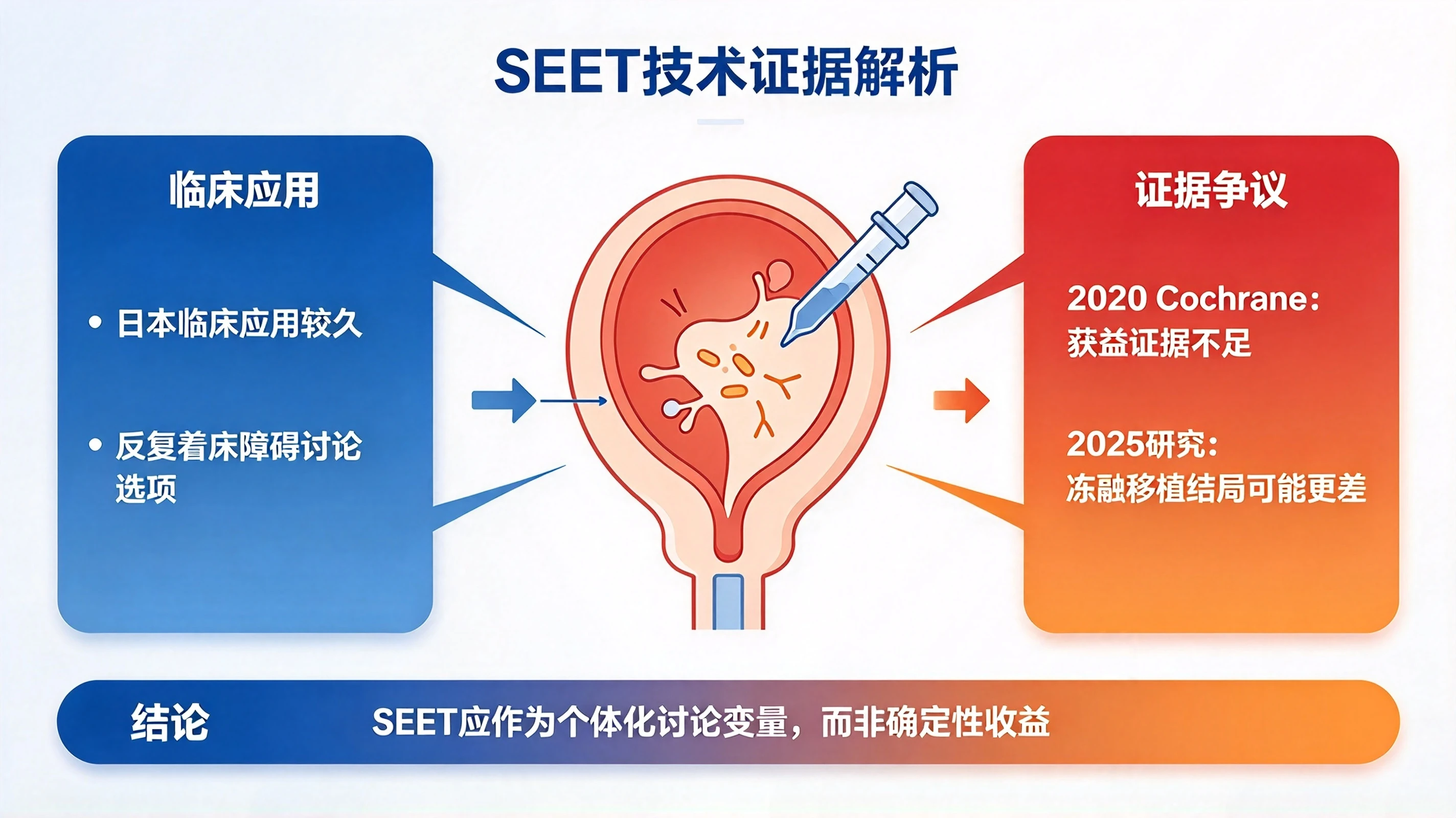
Supportive clinical evidence: Early small-sample studies have shown that targetingRecurrent implantation failureIn the target population, SEET can improve clinical pregnancy rates; this method has been used in clinical practice in Japan for over 15 years, with extensive real-world clinical experience.
Negative Conclusion of High-Level Evidence:
The 2020 Cochrane systematic review (including 5 randomized controlled trials) concluded that the quality of existing evidence is very low.It is not possible to confirm that SEET provides clear benefits for outcomes such as live birth, clinical pregnancy, and miscarriage., and it is not recommended as a routine approach for all populations.
A single-center retrospective cohort study published in Scientific Reports in 2025, including 996 frozen-thawed embryo transfer (FET) cycles, showed that the SEET group had significantly lower implantation rates (40.2% vs. 51.1%) and live birth rates (18.2% vs. 26.2%), and a significantly higher miscarriage rate (48.9% vs. 31.5%) compared to the control group; particularly in women aged ≥37 years, the adjusted odds ratio (aOR) for miscarriage associated with SEET reached 4.63. The study authors suggest that using SEET in FET cycles may adversely affect assisted reproductive outcomes.
Statement of Research LimitationsThe aforementioned negative conclusions are derived from retrospective studies subject to selection bias, and therefore do not constitute a definitive conclusion that SEET is absolutely harmful; however, they are sufficient to indicate that its benefits are not definitively established.
Decision PromptIt is not recommended to use “SEET’s ability to improve implantation rates” as the sole reason for choosing this hospital. Especially for individuals aged 37 or older, one must carefully weigh the potential benefits against the increased risk of miscarriage and avoid blindly adding this procedure.
3. Male Infertility Specialty: Joint diagnosis and treatment for couples to enhance clinical efficiency
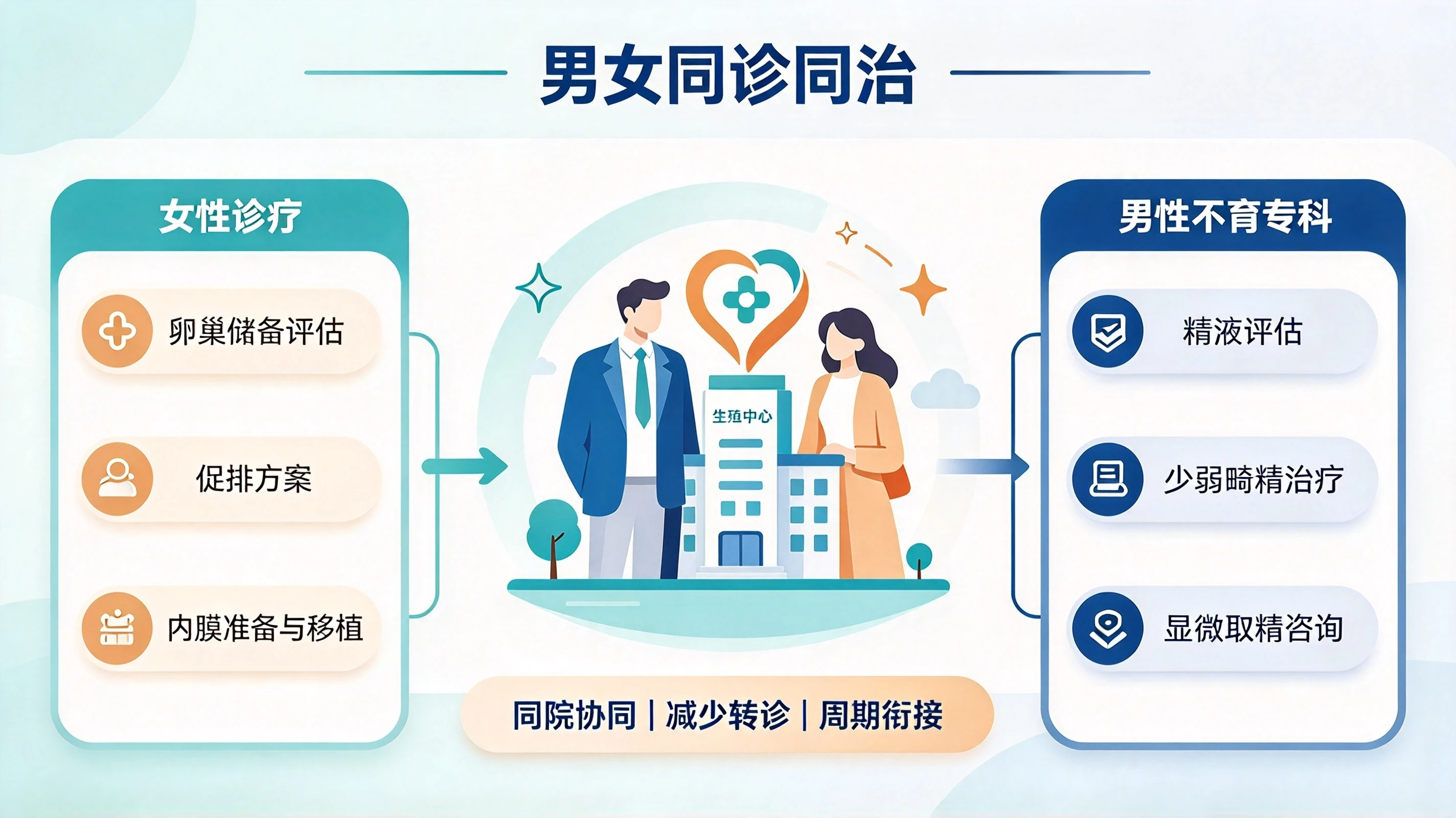
The clinic has a dedicated male infertility department led by Tokuhisa Eba, a specialist physician certified by the Japanese Society for Reproductive Medicine. This allows couples to receive treatment at the same facility without requiring referrals to other institutions.
Scope of Practice: Semen Analysis, Comprehensive Treatment for Oligoasthenoteratozoospermia (OAT), Varicocele SurgeryMicrosurgical sperm retrievaland comprehensive andrology services, including MicroTESE
Cross-border adaptation advantage: Specialists possess English communication skills, enabling direct engagement with international patients and reducing communication losses in cross-border medical consultations; male infertility treatments can be coordinated with the female partner’s IVF cycle.
4. International Patient Service System: Reducing Time Costs for Cross-Border Medical Treatment
Remote pre-assessment is supported, basic examinations can be completed centrally, and the daily stay time for a single egg retrieval cycle can be reasonably compressed to accommodate cross-border patients with limited vacation time.
III. The Correct Way to Interpret Success Rate Data
All population statistics are provided for industry reference only and do not represent individual clinical outcomes. Before interpreting the data, it is essential to first clarify the patient demographic profile of this hospital: among its patients, 58% are aged over 35 and 35.3% are aged over 40, with a higher proportion of elderly and complex-case patients than the industry average.
Core Reference Data (Publicly Available from the Institution)
Overall performance: The average clinical pregnancy rate per single embryo transfer is approximately 66.2%, and the cumulative clinical pregnancy rate after three transfers is approximately 89.8%.
Data for specific populations: The SEET transfer method was used in patients with recurrent implantation failure.HCGThe positive rate can reach 92%.
Important Notice:
The above refers to the clinical pregnancy rate / HCG positive rate,Not equal to the live birth rate; individual success rates are influenced by age, ovarian reserve,Sperm qualitymultiple factors such as endometrial condition, requiring an in-person consultation for a personalized assessment.
Japan-wide benchmark reference: According to the 2023 Assisted Reproductive Technology Statistical Report by the Japan Society of Obstetrics and Gynecology, the overall pregnancy rate for frozen-thawed embryo transfer nationwide was approximately 40.5%, with single embryo transfer accounting for about 84.7% of cases, serving as a baseline for comparative analysis.
IV. Cost Boundaries and Pitfall Avoidance: From Itemized Pricing to Full-Cycle Total Accounting
Medical Insurance Applicable Rules
Japanese Residents: Basic infertility treatment (basic ovulation induction,Artificial inseminationPartial conventional in vitro fertilization) is covered by national health insurance, with a 30% out-of-pocket cost for individuals; SEETPGTAdvanced medical technologies such as delayed cultivation require full self-payment.
International Patients: Japanese health insurance is not applicable; settlement will be made at the full self-pay rate.
Reference for Core Self-Pay Services (Tax-Inclusive Prices Published on the Hospital’s Official Website, in Japanese Yen)
Table
Project Name | Reference Price | Note |
|---|---|---|
44,000 | Advanced medical programs, fully self-funded | |
Two-step frozen-thawed embryo transfer | 132,000 | Involves a two-step transplant procedure |
Time-lapse Embryo Culture | 37,400 | Advanced Medical Project |
Embryo cryopreservationSave (1 for the first year) | 55,000 | Includes freezing operations and first-year storage |
Annual Embryo Storage Fee | 22,000 / unit / year | Annual renewal fees apply from the second year onward. |
Note: Prices circulating through third-party channels may differ from the hospital's official pricing. All fees are subject to the hospital's current official price list.
Fee Avoidance Tips
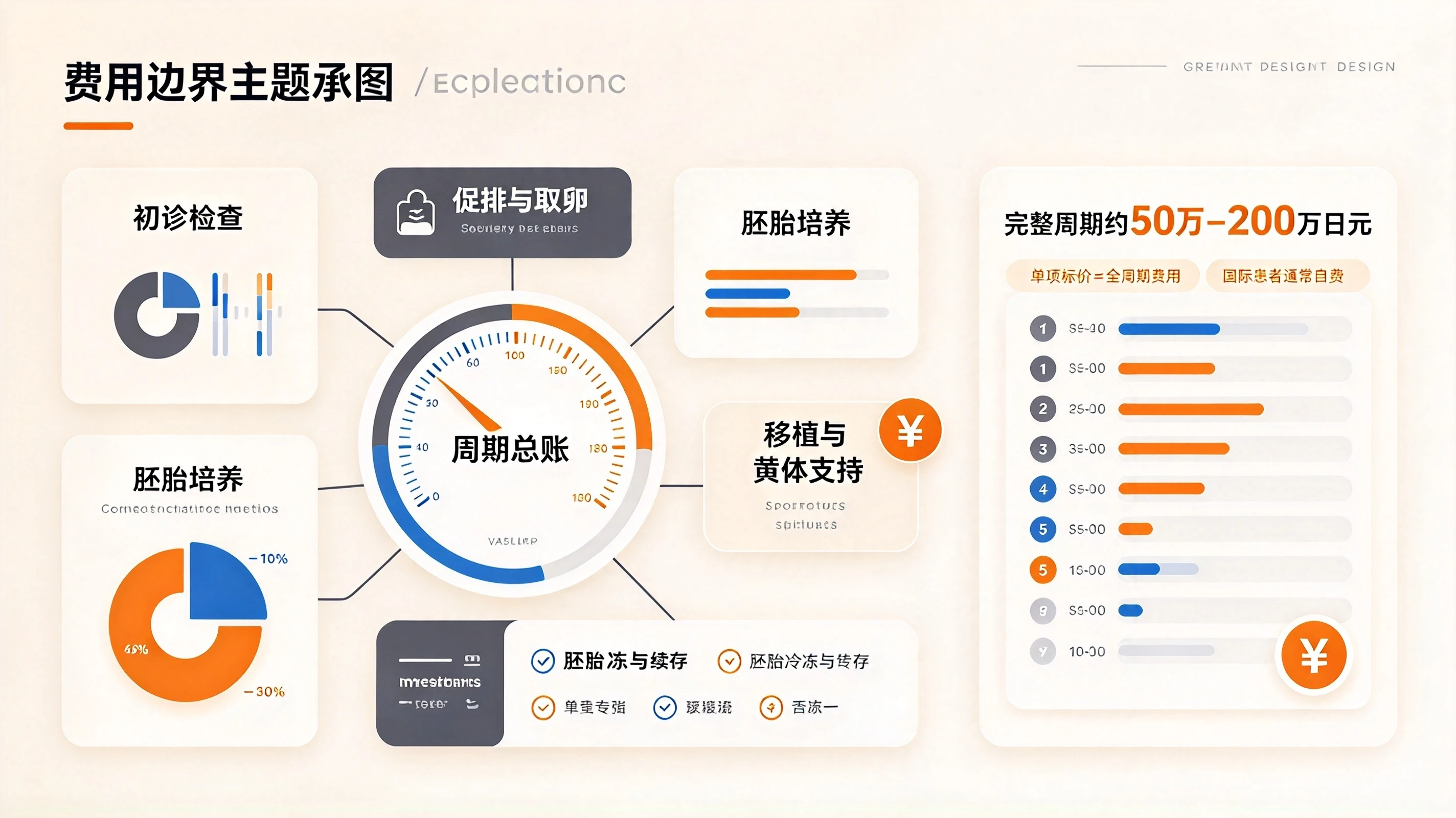
The total cost for a complete cycle is significantly higher than the individual item prices.Fertility medications, anesthesia, and additional treatment programs are billed separately; the total cost for one complete IVF cycle ranges approximately from 500,000 to 2,000,000 yen (equivalent to roughly 30,000–120,000 RMB), with variations depending on the ovarian stimulation protocol, whether PGT is performed, the number of embryos, and the type of anesthesia used.
Hidden costs must be accounted for in advanceTranslation coordination services for international patients, as well as living expenses such as accommodation and transportation during the stay in Japan, are not included in the base medical quotation.
Always request cycle-level estimatesBefore the appointment, request a complete itemized cost estimate from the clinic for "initial consultation through pregnancy confirmation and first-year embryo storage," clearly distinguishing between mandatory and optional items.
V. The Complete Process of Seeking Medical Treatment in Japan: From Domestic Preparation to In-Hospital Care
Phase 1: Domestic Remote Preparation
Organize all previous examination reports (including hormone profiles, ultrasound scans, semen analyses, and prior IVF records) and submit them through official international service channels.
The medical team completed the initial assessment of the patient’s condition and provided guidance on treatment options along with a cost estimate.
After confirming the treatment plan, schedule an in-person consultation based on your menstrual cycle, apply for a medical visa, and arrange your trip to Japan.
Phase 2: Inpatient Care at the Kobe Sannomiya Main Hospital
Initial ExaminationComplete the full fertility re-evaluation and pre-operative screening within 1–2 days of arrival
Plan Confirmation: Have a one-on-one consultation with the attending physician to finalize the ovarian stimulation and treatment plan, and sign the informed consent form.
Ovulation induction monitoringProceed with the ovarian stimulation cycle according to the plan, and attend regular follow-up appointments for follicular development monitoring.
Oocyte retrieval procedureOnce the follicles are mature, a trigger shot is administered; oocyte retrieval is then performed transvaginally under intravenous anesthesia, and patients can be discharged after several hours of postoperative observation if no abnormalities occur.
Embryo culture: Fertilization and culture are completed in the laboratory; if PGT is required, biopsy and cryopreservation are performed concurrently.
Endometrial Preparation and TransplantationOnce the endometrium has been prepared to an optimal state, embryo transfer is performed, followed by post-procedure luteal support as prescribed.
Pregnancy Testing and Follow-up: Blood test for pregnancy approximately 14 days after transplantation; upon confirmation of pregnancy, you may choose to attend follow-up appointments in Japan or continue prenatal care after returning home.
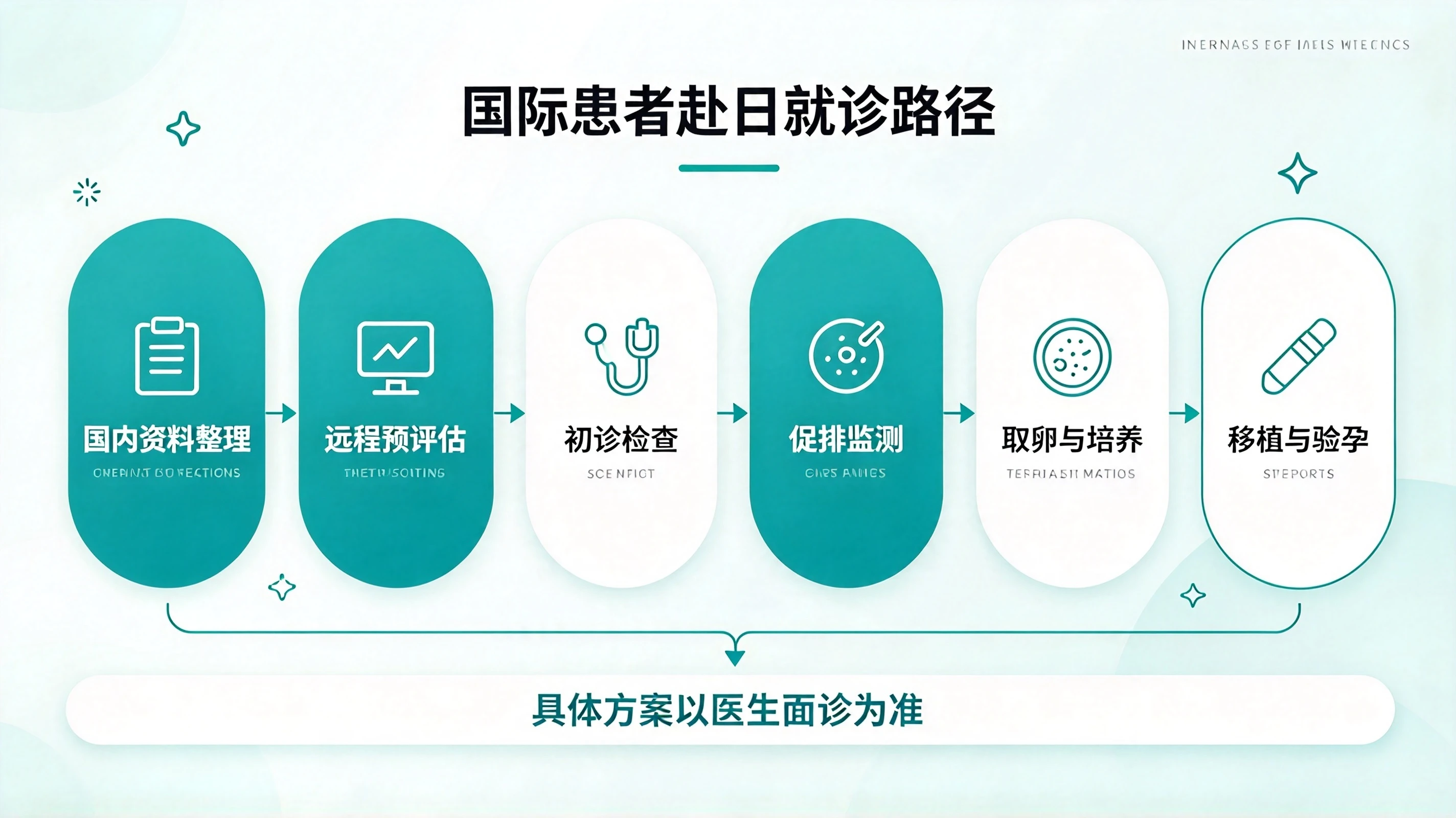
Practical Tip: If you chooseFrozen Embryo TransferIt can be done in two trips to Japan: the first trip for egg retrieval and embryo freezing, and the second trip solely for embryo transfer. For some endometrial monitoring tests, you can inquire with the hospital in advance about whether they accept test results from China, so as to shorten your stay in Japan.
VI. Compliance Red Lines and Cognitive Misconceptions: Avoiding Information Gaps in Cross-Border Medical Care
1. Identification of Same-Name Institutions
Osaka also has a clinic called "Hanabusa Women's Clinic," an independently operated community gynecology clinic that offers only basic gynecological care and simple infertility guidance, without providing advanced assisted reproductive services such as IVF. It has no affiliation with Hanabusa in Kobe; please confirm the branch address when making an appointment.
2. Compliance Red Lines for Assisted Reproductive Technology in Japan
SurrogacyJapanese law explicitly prohibits commercial surrogacy, and legitimate medical institutions do not offer such services. Chinese law likewise clearly bans surrogacy; please do not trust the advertisements of intermediaries.
Non-medical sex selectionPGT may only be used for screening genetic diseases and chromosomal abnormalities based on medical indications. Sex selection for non-medical purposes violates the ethical guidelines of the Japan Society of Obstetrics and Gynecology and is strictly prohibited.
Commercial gamete donationJapan has strict ethical regulations regarding egg and sperm donation, implementing anonymous donation with informed consent protocols and prohibiting the commercial sale of gametes.
3. Clarification of Common Cognitive Misconceptions
❌Misconception: Going to Japan for IVF allows you to choose the sex of the fetus✅Fact: Legitimate institutions strictly adhere to ethical guidelines and only support genetic screening for medical indications.
❌Myth: The micro-stimulation protocol yields fewer oocytes, so its success rate is definitely lower than that of the long protocol.✅Fact: The treatment protocol must be tailored to the individual’s physical condition. For older patients or those with diminished ovarian reserve, mild stimulation protocols offer better tolerability, and outcomes are not necessarily inferior to those achieved with high-dose ovarian stimulation.
❌Misconception: All IVF treatments in Japan are fully covered by health insurance✅Fact: Only basic infertility treatments are covered by Japan's national health insurance, while advanced techniques are entirely out-of-pocket, and international patients are not eligible for coverage under Japan's national health insurance.
❌Misconception: SEET is a universal solution for implantation failure✅Fact: The clinical benefits of SEET remain academically controversial, particularly as older patients may face an elevated risk of miscarriage, necessitating individualized assessment.
VII. Face-to-Face Consultation Decision-Making Tool: Five Core Questions to Confirm
During a facial consultation, don’t just listen to the clinic’s introduction; ask targeted questions about the following points to make an informed decision:
Based on my age, AMH level, and prior treatment history, which ovarian stimulation protocol do you recommend? What are the approximate expected numbers of retrieved oocytes and usable embryos, as well as the live birth probability?
Is SEET transplantation necessary given my current condition? What are the expected benefits and risks of SEET based on my specific circumstances? In 2025, relevant studies indicated an increased risk of miscarriage in advanced-age individuals; is this conclusion applicable to me?
What is the estimated cost range from initial consultation to pregnancy testing, including first-year embryo storage? Which items are mandatory and which are optional? If a cycle is canceled or there are no embryos available for transfer, which costs will still be incurred?
What are the fee structure, renewal methods, and maximum storage duration for embryo freezing? If you need to transfer embryos or discontinue storage in the future, what are the procedures and associated costs?
If the male partner requires andrological diagnosis or surgery, will a fixed specialist be responsible for the entire process? Can the surgical schedule be coordinated with the female partner’s cycle? Are andrology-related fees billed separately?
VIII. Cross-Reference: Eikō Hospital vs. Kato Women's Hospital
In Japan’s reproductive medicine system, both approaches feature low-stimulation ovarian stimulation, but their core positioning differs significantly, allowing patients to choose based on their individual needs:
Table
Comparison Dimension | English Hospital Reproductive Center | Kato Women's Hospital |
|---|---|---|
Technical Roadmap | Micro-stimulation-based protocols, supplemented with implantation interventions such as SEET and two-stage embryo transfer. | Specializing in natural cycles and mild stimulation, with no special interventions for embryo transfer and a highly standardized process |
International Services | With a dedicated Chinese coordination team, we offer one-stop service for greater convenience. | You often need to handle translations on your own; the process is streamlined, but you are responsible for managing all communication-related tasks. |
Target Audience | Recurrent implantation failure, willingness to try controversial interventions, and valuing one-stop services | No additional endometrial interventions are required, with a focus on standardized procedures and high price transparency. |
Final Decision Summary
Groups more recommended for inclusion as alternatives
Individuals aged over 35 with advanced maternal age and diminished ovarian reserve who prefer a mild ovarian stimulation protocol
Individuals who have experienced multiple embryo transfer failures, poor outcomes with conventional protocols, and are willing to try implantation interventions on an informed basis
Couples in which the male partner has infertility and both spouses wish to receive synchronized diagnosis and treatment at the same hospital
Individuals planning to seek medical care in Japan, who prioritize efficient treatment and wish to reasonably minimize their length of stay
Individuals who are intolerant to high-dose ovarian stimulation medications and are more concerned about the physical burden of treatment
Groups advised to exercise caution when choosing
People with non-compliant requests, such as surrogacy and non-medical sex selection
People with very limited budgets who cannot afford out-of-pocket costs for advanced techniques.
Populations with coexisting severe medical and surgical diseases who require multidisciplinary critical care support.
Young individuals with good ovarian function who choose cross-border medical care solely for "excellent service," despite its relatively low cost-effectiveness
The core decision-making logic in assisted reproduction has never been about “choosing the hospital with the highest ranking,” but rather about “selecting a hospital whose areas of expertise align with your specific conditions.” By demoting SEET from an “essential selling point” to an “optional variable,” by replacing itemized pricing with a comprehensive full-cycle cost analysis, and by translating the slogan of “joint male-female consultation” into concrete procedural steps—once these three measures are implemented, your choice becomes a rational decision rather than a blind selection driven by information asymmetry.
Frequently Asked Questions
The content on this website is general educational material and compiled public information about IVF. It is provided for reference only, does not constitute a basis for diagnosis or medical decision-making, and does not constitute any medical advice or treatment recommendation. For policy and technical requirements, please refer to official publications issued by the relevant authorities and institutions. If you find any content errors, numerical inconsistencies, or outdated information, please contact us so we can verify and update it.
