
From fit screening, credentials and legal red lines, and true success rate metrics, to fee structures, hidden risks, and side-by-side comparisons, this compiles a decision-making framework for choosing an IVF clinic in California, USA—complete with 10 must-ask questions for in-person consultations and a self-assessment checklist—to help you quickly determine whether Acacio Fertility Center is the right match for your fertility needs, minimizing cognitive biases and decision-making pitfalls.
Read allInstructions for Use
This article is based on publicly available information from the clinic's official website,California Assisted Reproductive TechnologyThis content is compiled from regulatory statutes, CDC industry registration data, and publicly available information from third-party healthcare platforms. It is intended to assist you in initial institution screening, budget assessment, and preparation of questions for consultations. Success rates, costs, cycle volumes, legal provisions, and certification statuses mentioned herein should ultimately be verified against the clinic’s written documentation, current California state regulations, and advice from qualified legal counsel. Figures labeled as “reference ranges” do not constitute individual guarantees by the clinic and cannot be equated with your personal probability of success. This article is provided for educational purposes only and does not constitute medical, legal, or investment advice.
I. Pre-screening: 3 questions to quickly determine whether it’s right for you
Start with a 30-second fit check to reduce decision-making costs.
Prioritize inclusion in the shortlist if you meet any 1 of the criteria
EncounterRecurrent implantation failure(RIF),Recurrent miscarriage, Polycystic Ovary Syndrome (PCOS) etc.Complex infertilitythe problem, and having previously sought treatment at other clinics without success;
I hope that the entire course of treatment is led by the same attending physician, and I dislike the assembly-line model of care in large institutions where doctors are frequently switched.
On a limited budget, seeking high-value-for-money assisted reproductive services while prioritizing the specialist qualifications of the attending physician;
Local to California, USABakersfieldand the Central Valley) for care, or out-of-area patients who are eligible for a remote initial consultation;
egg donation / sperm donation, surrogacyFertility Preservationdemand, and value California's policy friendliness, including for the LGBTQ+ community.
Proceed with caution if any one of the following applies to you
Pursue ultra-high annual patient volume and standardized services across large-scale chain clinics;
Must refer to CDC/SARTUse publicly available age-specific success rate data to make decisions;
No English communication skills; requires full-process Chinese-speaking medical escort service.
They place extreme importance on institutional scale, multi-campus configurations, and 24/7 emergency support.
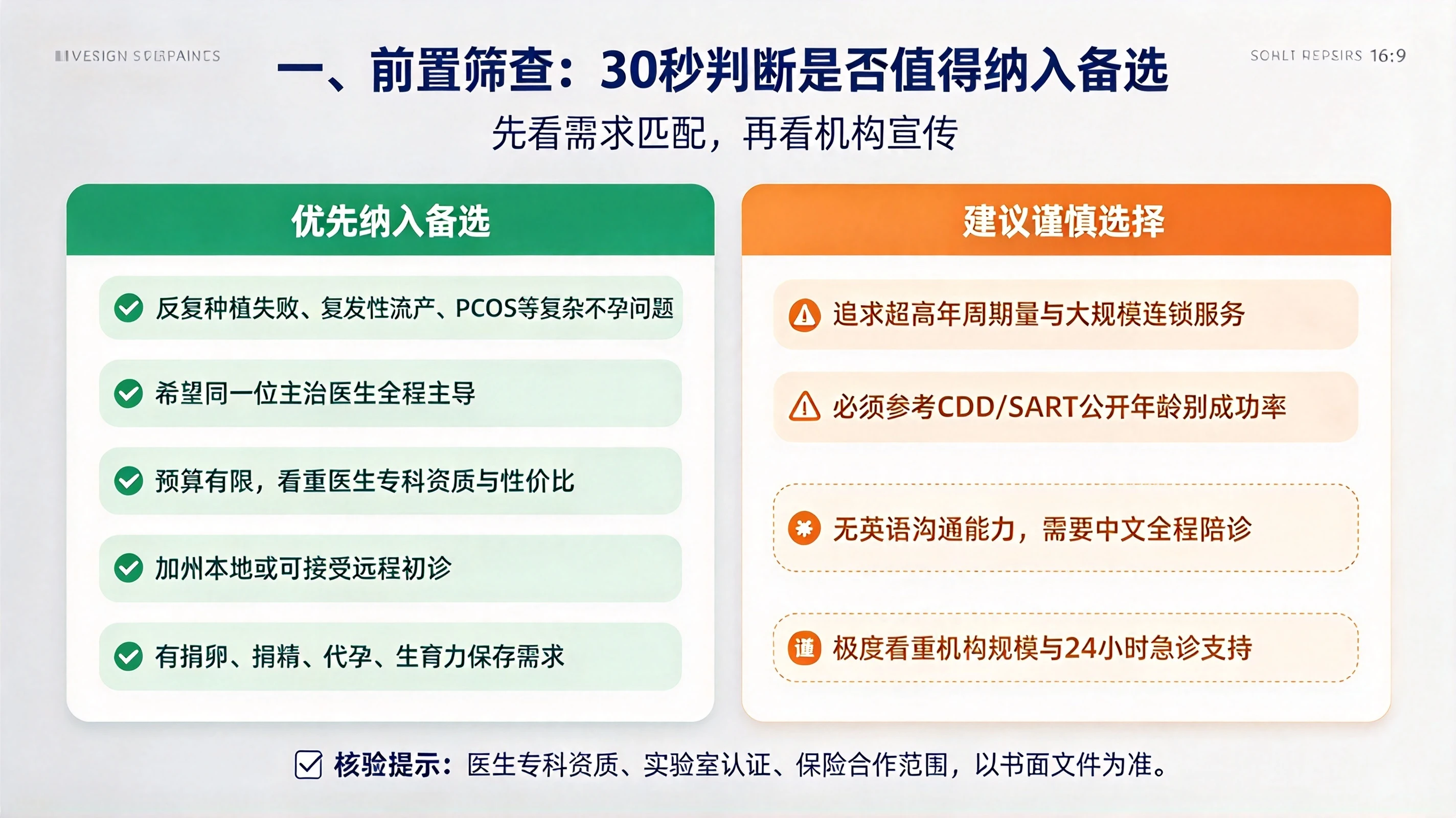
Verification Prompt: Request written documentation from the clinic before your consultation regarding doctors’ specialist qualifications, laboratory certifications, and insurance partnership coverage; do not rely solely on intermediary promotional materials.
II. Bottom-line Review: Qualifications, Legal and Compliance Risks
When engaging in overseas medical services, prioritize ethical standards before discussing outcomes. The first pitfall to avoid is treating intermediary marketing claims as legal facts.
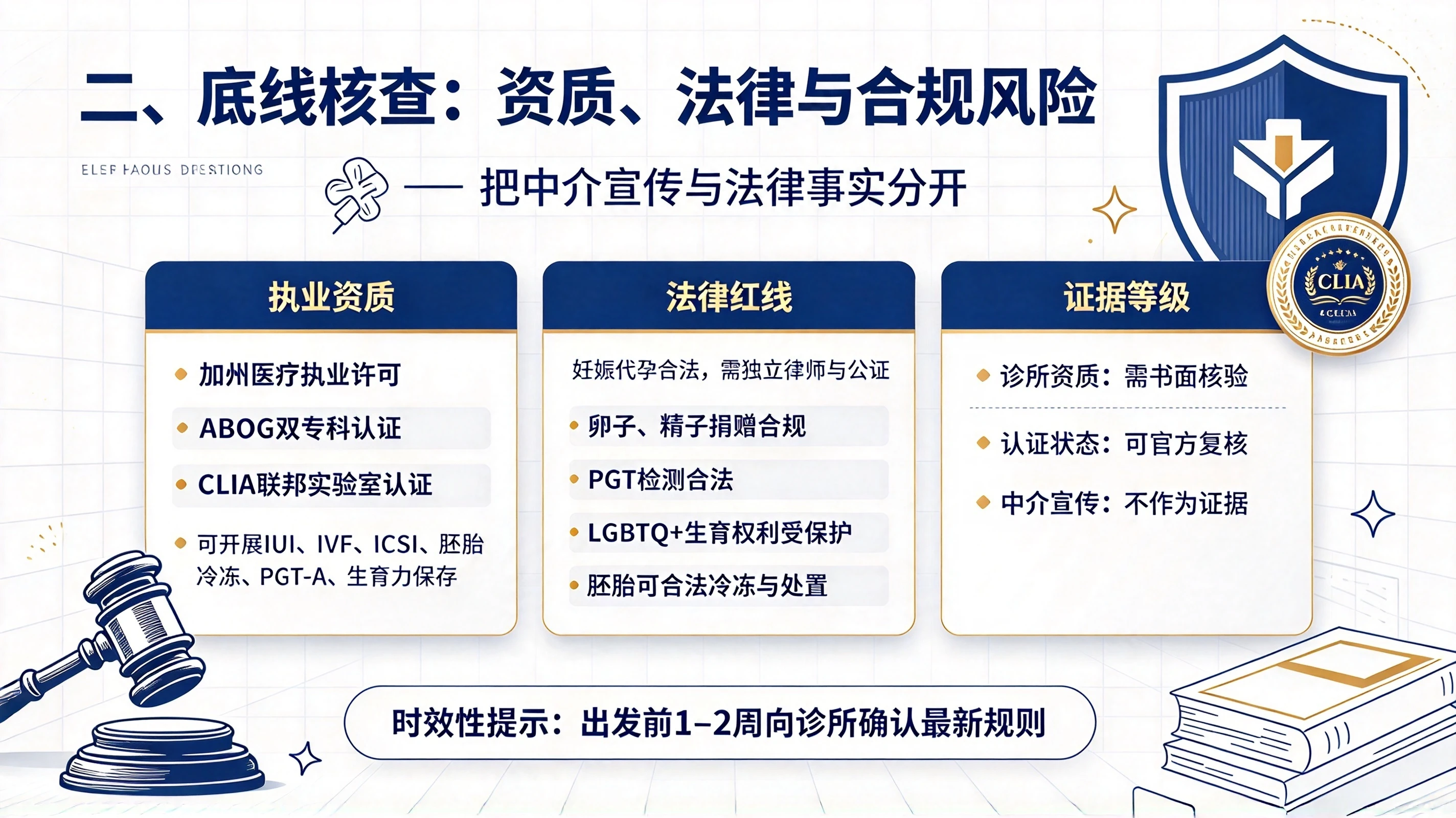
1. Professional Qualifications: A properly registered specialized clinic with a single-physician-led model
Acacio Fertility Centeris a professional in the Bakersfield area of California, USAReproductive EndocrinologyIn partnership with a reproductive endocrinology and infertility (REI) clinic that holds a California medical practice license, the core physicians are board-certified by the American Board of Obstetrics and Gynecology (ABOG) in both obstetrics and gynecology and reproductive endocrinology and infertility. The laboratory meets CLIA federal certification standards and is legally authorized to perform intrauterine insemination (IUI),IVF, ICSI,Embryo cryopreservation/PGT-AScreening, fertility preservation, and other assisted reproductive technology programs. The specific scope of permitted services shall be subject to the clinic’s current license and official registration information.
As of the verification of publicly available information, this clinic has not reported age-specific success rates to CDC/SART, and is a boutique-type clinic with a relatively low annual cycle volume.
Level of EvidenceClinic qualifications are subject to written verification; certification status is subject to official review; intermediary marketing materials shall not be considered as evidence.
2. Legal Red Lines: California’s Policies Are Business-Friendly, with Clear Compliance Boundaries
Current California regulations on assisted reproductive technology (ART) are primarily anchored in Section 7962 of the Family Code, supplemented by FDA and ASRM clinical guidelines. The following boundaries must be clearly defined. Specific provisions and their application to individual cases should be reviewed by a licensed California attorney; this article does not constitute legal advice.
Surrogacy:Gestational surrogacyThe agreement shall have full legal effect, allowing courts to issue preliminary rulings on parentage. It requires each party to retain independent counsel and be notarized upon signing. All legal procedures must be completed prior to embryo transfer.
Third-party donation: Gamete and sperm donation is compliant with FDA and ASRM guidelines, and donors can be matched through legitimate channels.
PGT TestingPreimplantation genetic screening/diagnosis is entirely legal, with no legal restrictions.
LGBTQ+ rightsSame-sex couples enjoy equal rights to fertility treatments as opposite-sex couples, and the legal recognition of parent-child relationships is protected by law.
Embryo attributes: Embryos are legally regarded as property and may be lawfully cryopreserved or donated, with disposal rights vested in the patient.
Industry AlertA favorable policy environment in California does not mean “no rules”; surrogacy and donation must still go through proper legal procedures, and so-called “shortcut operations” still pose risks to rights and interests.
Level of Evidence: Legal boundaries are matters subject to "official documents + lawyer review"; verbal promises made by intermediaries shall not serve as a basis.
Timeliness ReminderRelevant entry requirements and insurance policies may change due to regulatory adjustments. It is recommended to confirm the latest rules with the clinic 1–2 weeks before departure.
III. Value Breakdown: Are Its Core Selling Points Worth Your Choice?
An advantage is only valuable if it aligns with your needs. Let’s break down each one: what constitutes a genuine necessity versus marketing rhetoric.
1. Core Differentiation: Specialized Capabilities for Complex Cases + Single-Doctor Full-Cycle Responsibility
This is the clinic's most notable differentiating capability, a feature that many large chain fertility centers may not possess.
Attending PhysicianDr. Brian AcacioWith over 30 years of clinical experience, he/she isReproductive ImmunologyAn expert in reproductive medicine and recurrent implantation failure, also qualified to perform da Vinci robotic surgery. The center offers a seamless full-cycle service—from diagnosis and minimally invasive surgery to post-operative care and IVF assistance—all within one facility, and accepts numerous referral cases of treatment failures from other hospitals.
Truly essential scenarios:
Recurrent implantation failure and recurrent miscarriage, with multiple unsuccessful treatments at other hospitals;
When combined with organic lesions such as uterine fibroids and endometriosis, minimally invasive surgical pretreatment is required;
PCOS, diminished ovarian reserve, and other conditions have high individualized needs and are not suitable for standardized treatment protocols.
In large institutions, such cases often require referrals across different departments and doctors, resulting in weak continuity of care. Having a single doctor oversee the entire process can reduce information gaps and enable more precise adjustments to treatment plans. However, a single doctor has limited capacity, so appointments during peak hours may involve waiting times.
A completely unnecessary sceneFor primary infertility caused solely by ovulatory dysfunction, mild male oligoasthenozoospermia, and no complex medical history, a basic treatment protocol is sufficient to meet needs; this advantage is of limited significance to you.
2. Boutique, Small-Volume Model: High physician attention but limited margin for error
The clinic is a small, specialized facility with approximately one core attending physician, following a refined, customized approach.
Benefits:
There is a high probability that the attending physician personally follows up throughout the entire process, reducing instances of "expert consultations followed by procedures performed by general physicians."
Physicians have a high level of familiarity with patients' medical histories and ovarian responses, enabling highly targeted adjustments to treatment protocols.
The consultation environment is private, and waiting times are relatively manageable.
weakness:
Dr. Shan has limited capacity, with a ceiling on the number of patients he can see, so appointments during popular time slots require waiting;
When key personnel take leave, the pace of clinical care is directly affected, posing a “single point of failure” risk.
Small institutions have weaker redundancy capabilities for handling sudden complications and nighttime emergencies compared to large general hospitals.
3. Payment and Geographic Accessibility: Outstanding cost-effectiveness with high convenience for local patients
Access to multiple major U.S. insurance networks, covering certain diagnostic tests and treatments to reduce out-of-pocket costs;
Offer medical installment plans to reduce the burden of one-time payments; provide discounted initial consultations to lower the barrier to seeking care.
It is one of the few facilities in Bakersfield and the Central Valley with comprehensive reproductive surgery and sperm cryopreservation capabilities, eliminating the need for local patients to travel long distances to Orange County or Los Angeles.
IV. The Truth About Success Rates: Definitions and Exaggerations in Promotional Figures
Success rates are the easiest numbers to dress up with marketing spin. Understanding the statistical methodology matters more than the number itself.
1. The True Nature of the Data Published by the Clinic
The clinic’s website claims to be “one of the highest IVF success rate institutions in Bakersfield and the Central Valley,” but it has not reported publicly available age-specific success rate data to the CDC/SART, leaving this marketing claim without verification by official third-party data.
According to CDC reporting rules, clinics that do not submit data are typically those with low annual cycle volumes. In the absence of publicly available stratified data, a general claim of "high success rates" has limited reference value for three reasons:
The metric may be ambiguous: it is unclear whether it refers to the clinical pregnancy rate or the live birth rate, and whether the denominator is initiated cycles or transfer cycles;
No age stratification: Patients of different age groups are not distinguished, making the results susceptible to bias from younger patients with better baseline health conditions.
No stratification by etiology: Failure to distinguish between simple infertility and complex cases, as the proportion of complex cases significantly impacts overall data.
2. Real Industry Baseline Reference for the United States
The following data are reference figures from the U.S. CDC for 2022 in the assisted reproductive technology (ART) industry, representing live birth rates per egg retrieval using a patient’s own eggs. These are not individual clinic-specific data nor personal predictions. Specific assessments should be based on the clinic’s stratified reports and an in-person evaluation by your physician.
Table
Patient Age | Live Birth Rate per Egg Retrieval Cycle (U.S. National Average) |
|---|---|
Under 35 years old | Approximately 55.1% |
35–37 years old | Approximately 41.2% |
38–40 years old | Approximately 26.7% |
40 years and older (from egg) | Approximately 13.6% |
The success rates of small boutique clinics typically fluctuate more than those of large centers: if they carefully select high-quality patients, the figures can look very favorable; however, if they take on a higher proportion of complex cases, the numbers decline significantly. Therefore, requiring clinics to provide internal data stratified by age, etiology, and cycle type (initiation versus transfer) is far more meaningful than relying solely on an aggregate total.
3. Practical Methods for Spotting Success-Rate Marketing
Any institution reporting a success rate, ask three consecutive follow-up questions:
"Is the denominator for this success rate based on the number of patients who started ovarian stimulation or those who underwent embryo transfer?"
Is it the clinical pregnancy rate (detection of a gestational sac) or the live birth rate (successful delivery of a live infant)?
Which age group, which etiology, and which year range do the patients correspond to?
As long as the other party avoids giving a direct answer or responds vaguely, this number is inflated.
V. Cost Overview: The Real Expenses Behind High Cost-Performance
Low-price customer acquisition and vague pricing are common industry pitfalls; actual costs often vary depending on individual treatment plans. The following is a reference market structure, with the final cost subject to the itemized written quote provided by the clinic.
1. Official Benchmark Prices and Actual Cost Reference
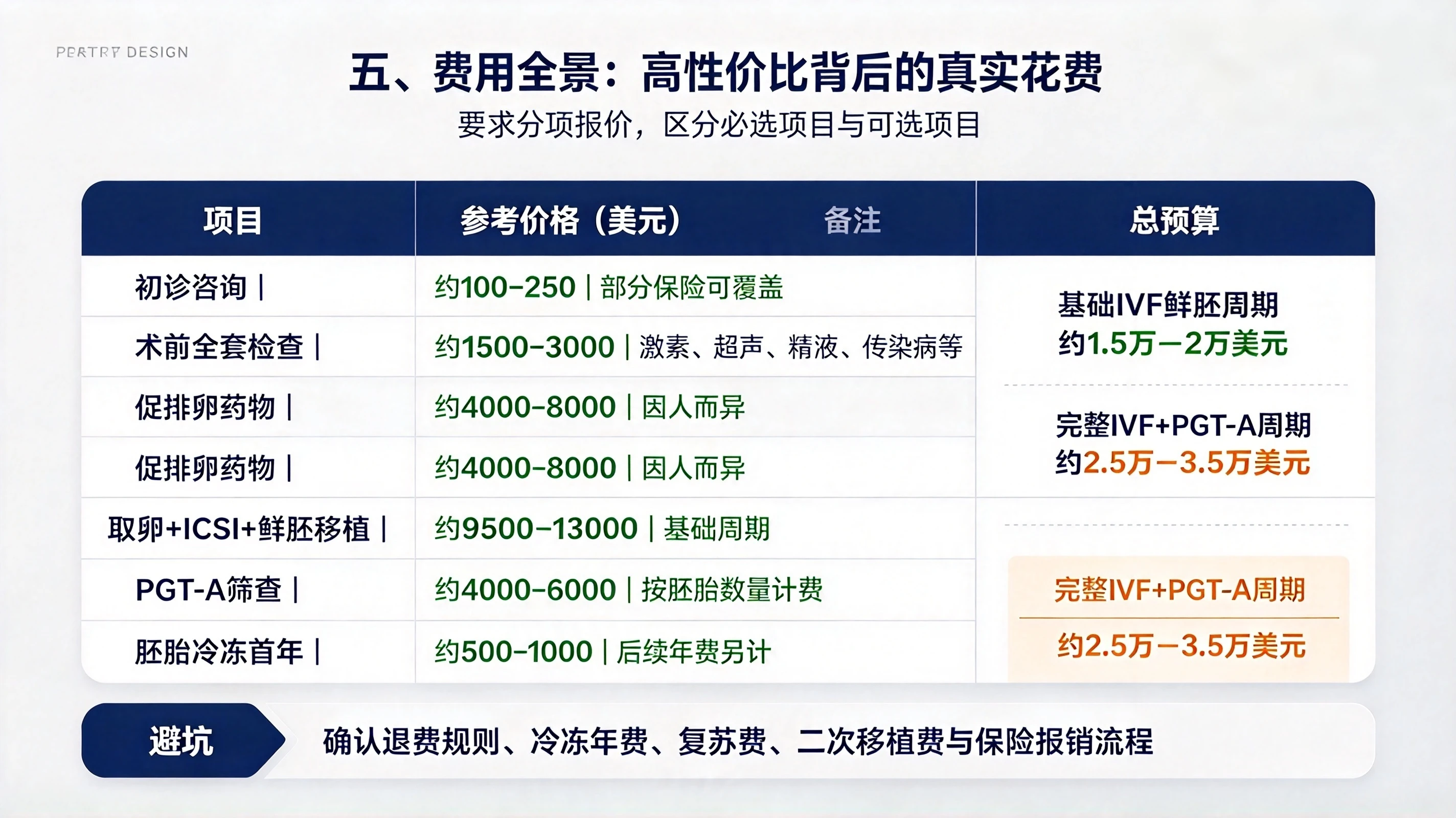
The clinic does not publish standardized pricing on public platforms; specific costs are determined after an in-person consultation based on individual treatment plans. Drawing on patient testimonials and regional pricing trends, the reference cost for a complete cycle is as follows:
Table
Project | Reference Price (USD) | Note |
|---|---|---|
Initial Consultation | Approximately 100–250 | Some insurance may cover it; the initial consultation fee is lower with promotional offers. |
Preoperative full examination (for both spouses) | Approximately 1,500–3,000 | Hormone, ultrasound, semen, infectious disease, and basic chromosome screening |
Ovulation induction medications | Approx. 4000–8000 | It varies from person to person; the poorer the ovarian function, the higher the dosage and cost. |
Egg Retrieval Surgery + Anesthesia + ICSI Fertilization +Fresh embryo transfer | Approximately 9,500–13,000 | BasicsIVF/ICSI (In Vitro Fertilization/Intracytoplasmic Sperm Injection)Cycle; specific boundaries require written confirmation. |
PGT-A Embryo Screening | Approximately 4,000–6,000 | Charged per embryo, commonly bundled within a set quantity |
Embryo Freezing (First Year) | Approximately 500–1,000 | A storage fee is required to be paid annually thereafter. |
Frozen Embryo Transfer Cycle | Approximately 2,500–4,500 | Drug-free |
Da Vinci Minimally Invasive Surgery | Approximately 3,500 cases | such as polyp removal and myomectomy, priced according to surgical complexity |
Total Budget Reference:
Basic IVF fresh embryo cycle (excluding PGT): approximately $15,000–$20,000 (out-of-pocket cost; lower if covered by insurance);
Full IVF + PGT-A cycle: Approximately $25,000–$35,000 (including medications and basic testing).
This price is on the lower-to-mid range among private reproductive specialty clinics in California, significantly below the average rates at mainstream clinics in core urban areas such as Orange County and Los Angeles. Prices vary depending on insurance coverage, medication protocols, and the number of embryos, and must be confirmed in writing.
Insurance Reminder: Specific reimbursement rates are subject to the terms of your individual insurance policy. It is recommended to verify the coverage items and out-of-pocket ratios at the time of your initial consultation.
2. The biggest cost trap: plan boundaries and extra add-ons
Fertility treatment packages often cover only the core procedures, while hidden add-ons can easily drive up the total cost.
Pitfall Avoidance Guide:
The quotation must be itemized, clearly marking "mandatory items" and "optional items," to avoid any mid-process additional charges.
Confirm long-term fees, including annual embryo cryopreservation fees, embryo thawing fees, secondary transfer fees, late storage penalty fees, anesthesia fees, and rules for medication fee adjustments;
Clearly define the specific items covered by insurance and the reimbursement process to avoid subsequent claims disputes.
Specify which fees are refundable and which are non-refundable in the event of cycle cancellation, no embryos available for transfer, or no transfer performed.
VI. Hidden Risks: Weaknesses No One Will Tell You About
When choosing an institution, don't just focus on its strengths; more importantly, consider whether you can accept its weaknesses.
1. Medical emergency response capabilities are relatively weak
As a small specialized clinic, it lacks an accompanying emergency department, ICU, or internal medicine critical care support system. In the event of severe ovarian hyperstimulation syndrome (OHSS), intraoperative bleeding, or other emergencies, the clinic may be unable to provide independent management and would need to refer patients to nearby general hospitals.
For elderly patients, those with underlying conditions, or those exhibiting ovarian hyperresponse, this risk must be factored in advance. During the consultation, request written documentation of the emergency referral protocol, partner hospitals, and after-hours contact information.
2. Insufficient transparency in publicly available data
Failure to report standardized success rate data to the CDC/SART prevents external verification of their actual clinical outcomes and case distribution. Patients can only assess quality based on word-of-mouth, physician credentials, and internal data, resulting in a higher degree of information asymmetry compared to large institutions with publicly available data.
3. Service Limitations of the Single-Doctor Mode
The attending physician is only permanently stationed at the Bakersfield campus, requiring patients from outlying areas such as Orange County to travel long distances or undergo remote follow-up care.
Doctors have limited energy, and responses may be delayed during busy periods; emergency scenarios rely on the on-duty team.
If a doctor is on leave or suspends consultations, the treatment cycle may be forced to postpone.
4. No Chinese language support
The clinic provides medical services exclusively in English and does not have dedicated Chinese interpreters or coordination staff. Patients with limited English proficiency are required to arrange their own interpreters, which may pose a risk of communication discrepancies.
5. Supplement key decision-making dimensions
In addition to price and success rate, you should also verify:
Is single embryo transfer recommended, and how are the risks of twin pregnancies managed?
OHSS Prevention Protocols (Antagonist Protocol, Triggering Methods, Whole Embryo Freezing Strategy, etc.);
Whether PGT-A is truly suitable for your situation, avoiding over-screening;
Whether travel insurance covers complications;
Embryo ownership, disposal of remaining embryos, and privacy clauses in the contract;
Dispute and complaint channels, clinic liability insurance, and emergency contacts.
VII. Cross-Comparison: Under the Same Requirements, What Other Types of Institutions Should Be Compared
Instead of simply asking, “Is Acacio Fertility Center good?” ask, “Given my specific situation, is it a better fit compared to alternative paths?”
Table
Institution Type | Advantages | weakness | Target audience |
|---|---|---|---|
Specialized clinics for complex cases (such as the subject of this article) | High physician engagement, strong capability in handling complex cases, cost-effectiveness, and end-to-end follow-up by a single physician | Weak emergency response capabilities, no publicly available success rate data, small scale with a limited service radius | Repeated failures, surgical indications, preference for one-on-one consultations, and limited budget |
Large Chain / University-Affiliated Reproductive Centers | Data is open and transparent, annual volumes are substantial, laboratories are stable, and multidisciplinary support is strong | Strong assembly-line feel, frequent doctor rotations, and high costs | Prioritize open data, high-risk elderly patients, and standardized processes |
Reproductive Center of a General Hospital | Strong emergency response capabilities, convenient multidisciplinary collaboration, and comprehensive hardware support | Long wait times, lack of personalization, and high costs | Elderly, high-risk patients with multiple underlying conditions and a risk of severe disease |
Cost-effective clinics in other regions | Pricing may be lower, with some offering Chinese-language services. | Physician qualifications vary widely, and compliance must be verified. | Extremely budget-sensitive and willing to spend time vetting institutions |
ConclusionIf you are a complex case involving repeated failures and gynecological surgical needs, and you value comprehensive physician follow-up and cost-effectiveness, this clinic is worth prioritizing for comparison. If you place greater trust in publicly available data, seek standardized services, or require Chinese-language support, large chain clinics or reproductive centers at general hospitals may be a better fit.
VIII. The Complete Visit Process: A Time Planning Guide for International Patients
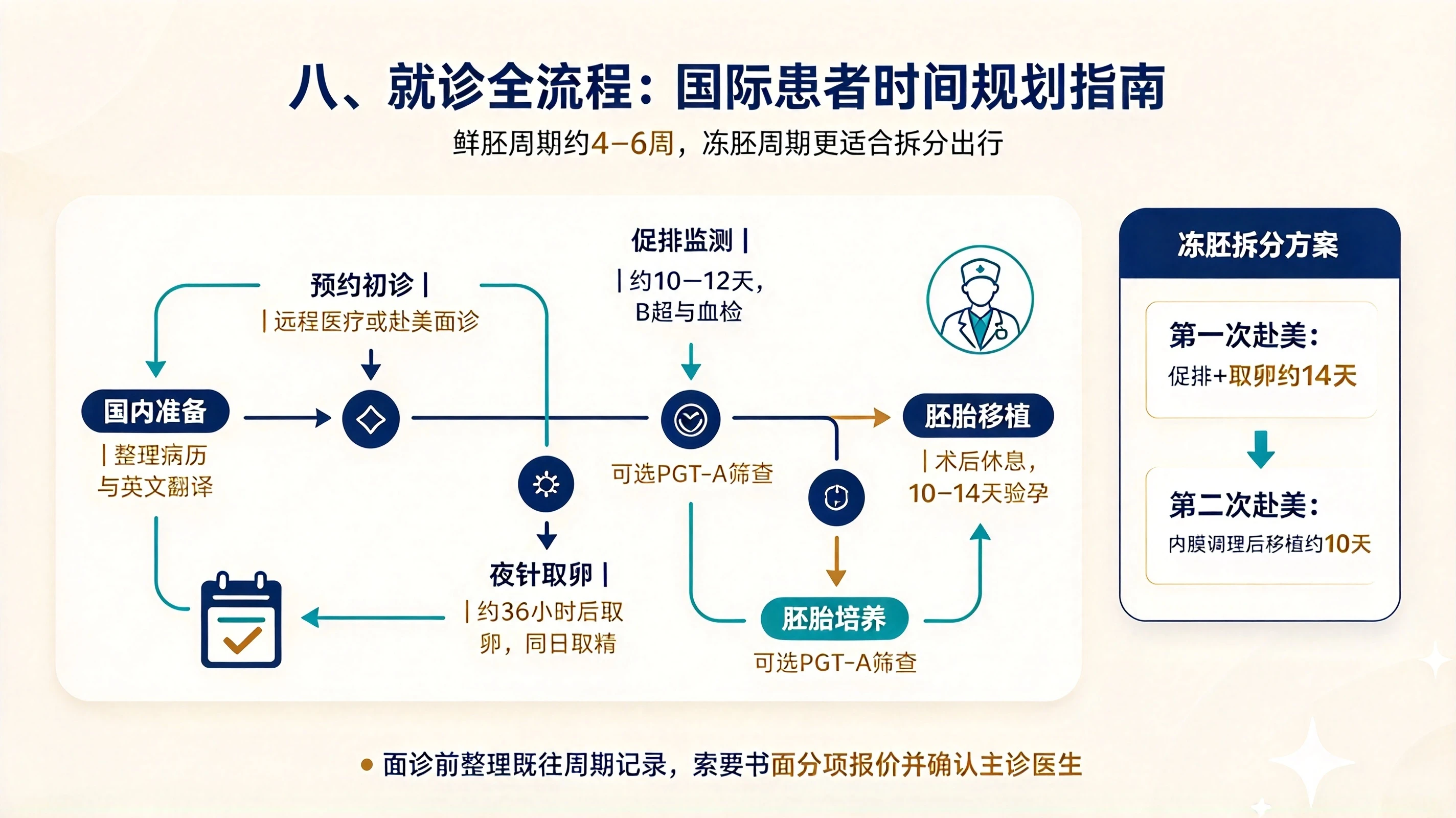
A complete fresh embryo IVF cycle takes approximately 4–6 weeks, while frozen embryo cycles can be split and are more suitable for individuals with tight schedules. The exact duration varies depending on the treatment protocol and individual bodily responses.
1. Domestic / Out-of-town Preparation Phase (1–2 Weeks Before the Appointment)
Organize the examination reports from the past three months: for the female partner, hormone panel (six items), AMH, and transvaginal ultrasound; for the male partner, routine semen analysis; and for both partners, infectious disease screening.
Schedule an initial consultation via the official website or by phone; a telehealth initial consultation is available, eliminating the need to travel to the United States immediately.
Confirm insurance coverage, preliminary plans, and budget estimates;
If you need to travel to the United States, arrange your visa, flights, and accommodation, and confirm the documents required for your medical appointment.
2. Local Treatment Phase (Fresh Embryo Cycle)
Visit the clinic on days 2–3 of your menstrual cycle: recheck hormone levels and baseline follicles, then start ovarian stimulation.
Ovulation induction monitoring (approximately 10–12 days): Self-administered injections of ovulation-inducing medications, with clinic visits every 3–4 days for ultrasound and blood tests to monitor progress.
Trigger shot + egg retrieval: Once the follicles are mature, administer the trigger shot; approximately 36 hours later, retrieve eggs under intravenous sedation, with sperm collection from the male partner on the same day.
Embryo Culture (3–5 days): Fertilization and culture are completed in a CLIA-certified laboratory, with optional PGT screening.
Embryo Transfer: Select high-quality embryos for transfer, and rest for 2–3 hours after the procedure.
After the transfer, you can wait 10–14 days locally for a pregnancy test, or return home to take one, with simultaneous online follow-up.
3. Frozen Embryo Splitting Protocol (Time-Saving)
First trip to the US: Arrive at the clinic on day 2 of your menstrual cycle for ovarian stimulation and egg retrieval, which takes approximately 14 days. Return home after egg retrieval; embryos are cryopreserved.
Second trip to the US: After endometrial preparation meets the required standards, proceed to the clinic for embryo transfer. The stay is approximately 10 days, with a return home after pregnancy testing.
9. Decision Implementation: 3 Must-Do Actions Before the Consultation + 10 Core Questions to Ask
Save this part and use it to ask questions during your consultation, so you won't be misled by sales pitches.
3 Things to Do Before Your Face Consultation
Organize all previous medical records and failed cycle histories, sort them chronologically, and annotate key indicators (AMH, antral follicle count, prior embryo status).
Request a written itemized quotation for the intended solution in advance via the official email address, and keep a record of all written communications.
Confirm that the consultation doctor is the attending physician, Dr. Brian Acacio, and clarify who will perform the egg retrieval, embryo transfer, and surgical procedures.
10 Core Questions You Must Ask During a Face-to-Face Consultation
Based on my age, AMH level, cause of infertility, and history of previous failures, what is the estimated live birth rate per stimulated cycle for me? Is the denominator the number of patients who started ovarian stimulation or the number who underwent embryo transfer?
What items are included in the total package price? Are ovulation induction medications, anesthesia for egg retrieval, the first year of embryo cryopreservation, and the initial pregnancy test all covered? What other mandatory additional fees apply?
Do I need to undergo surgery first? Who will perform the procedure? How long is the recovery period before starting the IVF cycle?
Is embryo culture performed in our CLIA-certified laboratory? How many years of experience do the embryologists have? Does the laboratory have a UPS backup power supply and 24-hour monitoring?
What technology platform is used for PGT testing? Is it performed in-house at our laboratory or outsourced to a third party? What information is included in the test report?
If severe ovarian hyperstimulation syndrome or other emergencies occur during treatment, what is the clinic’s protocol? Are there affiliated general hospitals available for urgent referrals? What are the contact numbers for after-hours assistance?
What is the annual storage fee for frozen embryos? What is the maximum preservation period? What is the procedure for handling embryos when opting to discontinue their use?
If the cycle fails, is there a refund policy? How are the remaining embryos and medications handled?
Is single embryo transfer recommended? How are the risks of twin pregnancies managed? What is the prevention protocol for OHSS?
What specific items are covered by the insurance? What is the claims process? How do the contract terms address embryo ownership, privacy protection, and dispute complaint channels?
Finally, the summary
Acacio Fertility Center’s Bakersfield branch is not the largest or most data-transparent reproductive medicine institution in California, but it is a distinctive boutique clinic specializing in complex cases. Its single-physician continuity-of-care model, expertise in handling difficult cases, and high cost-effectiveness make it a noteworthy option for patients with repeated implantation failure, those requiring gynecological surgery, or those who prioritize consistent care. However, its smaller scale, limited emergency response capabilities, lower transparency in publicly available data, and restricted language support mean that it may not be suitable for all patient groups.
The key to deciding on IVF in the United States is not finding the clinic with the biggest name, but rather one that best matches your medical condition, core needs, and risk tolerance. We recommend using this article as a preliminary screening framework, while treating written quotes from clinics, doctors' responses during consultations, and official credential documents as the final basis for your decision—look beyond marketing and make a rational choice.
Appendix: Quick Adaptation Self-Check Checklist
The more of the following criteria a clinic meets, the higher its compatibility with you: □ History of complex issues such as recurrent implantation failure or recurrent pregnancy loss, with unsuccessful treatment at other facilities □ Values one-on-one doctor-patient continuity throughout care and dislikes assembly-line medical services □ No serious underlying health conditions; not classified as an extremely high-risk pregnancy □ Limited budget; seeking cost-effective, legitimate specialty care □ Comfortable receiving care in English; does not require full-service Chinese language support □ No strict requirement for publicly disclosed CDC/SART success rate data □ Able to accept the emergency response capabilities and referral mechanisms typical of smaller institutions
Acacio Fertility Center Official Website – Bakersfield Campus Introduction
Acacio Fertility Center Official Website – Physician Profiles and Clinical Specialties
Acacio Fertility Center Official Website - Da Vinci Robotic Surgery Qualification Statement
WebMD Clinic Directory - Acacio Fertility Center Insurance List
FertilityIQ Patient Reviews – Feedback on Costs and Experience
California Legislative Information - AB 1217 Surrogacy Bill
Acacio Fertility Center Official Website – Contact Us and Clinic Locations
Acacio Fertility Center Official Website - Appointment and Cancellation Policy
Frequently Asked Questions
The content on this website is general educational material and compiled public information about IVF. It is provided for reference only, does not constitute a basis for diagnosis or medical decision-making, and does not constitute any medical advice or treatment recommendation. For policy and technical requirements, please refer to official publications issued by the relevant authorities and institutions. If you find any content errors, numerical inconsistencies, or outdated information, please contact us so we can verify and update it.
