
How to Choose Overseas Egg and Sperm Donation? A Comprehensive Analysis of Cross-Border Assisted Reproduction, Including Country Entry Requirements, Donor Genetic Screening, Anonymity Policies, Parentage Determination, Clinic Success Rates, and Documentation Coordination for Returning Home, Helping Chinese Families Scientifically Evaluate Overseas Fertility Options and Mitigate Medical and Legal Risks.
Read allFrom national policies and donor screening to post-birth identity alignment, we help prospective Chinese parents establish a scientific, compliant, and verifiable decision-making framework for cross-border assisted reproductive services.
For those consideringOverseas egg donationFor Chinese families opting for sperm donation, the real challenge often lies not in finding an overseas clinic, but in determining whether the entire fertility plan is truly suitable for them and ensuring that medical care, legal frameworks, and the future rights and interests of the child are adequately protected.
Faced with policies in different countries, donor profiles recommended by agencies, medical plans provided by clinics, and various legal documents, intended parents typically encounter a range of questions:
Which countries allow foreigners to receive donated eggs or sperm? Are the eligibility criteria the same for single individuals and married couples?
How should the donor’s health status, genetic background, and previous donation records be verified?
Can so-called anonymous donations guarantee long-term confidentiality of the donor's identity?
Is there a legal parent-child relationship between the donor and the child?
If one of the intended parents has no genetic connection to the child, how is legal parenthood established?
After a child is born overseas, how should the birth certificate, return documents, and domestic household registration procedures be coordinated?
These issues involve reproductive medicine, genetics, assisted reproduction laws, children’s rights, and cross-border document management, rather than ordinary overseas medical consumption. Therefore, when choosing overseas egg or sperm donation, one should not merely compare prices, success rates, and donor criteria, nor simply rely on an intermediary’s assurance that “it is legal locally with full-process protection.”
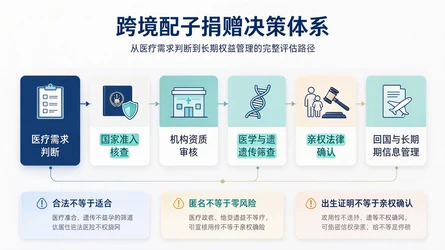
Truly rational decision-making requires establishing a framework that encompasses assessment of medical needs, national approval, institutional review, and medical screening.Determination of Parental Rightsfrom domestic arrival to long-term genetic information management, constituting a complete evaluation system. This article analyzes key issues in cross-border gamete donation by integrating relevant Chinese regulatory standards, professional guidelines from the American Society for Reproductive Medicine (ASRM), and official systems in countries such as the United Kingdom and Spain.
I. First, determine whether it is necessary to seek medical care abroad: Clearly define your medical needs before deciding on a cross-border healthcare pathway
Before discussing overseas countries, it is essential to first clarify a key question: Why is it necessary to accept gamete donations from overseas? Have the legitimate domestic medical channels already failed to meet one's own needs?
Partial household contactCross-Border Assisted Reproductive TechnologyThis is because overseas donors offer a relatively wide range of choices and more personalized information, or because domestic legitimate donation resources fail to meet their medical needs. However, an expanded range of options does not necessarily mean better medical safety or legal protection.
1. Sperm donation needs: First, understand the domestic formal sperm bank system
For families requiring donor sperm, priority should be given to understanding domestic accredited human sperm banks and medical institutions authorized to perform corresponding assisted reproductive technologies. China's "Measures for the Administration of Human Sperm Banks" sets out clear regulations regarding donor screening, semen cryopreservation, retesting, usage management, and record keeping, including:
Sperm from donors may only be provided to medical institutions approved to perform assisted reproductive technologies after being cryopreserved for six months and passing re-examination.
The sperm from a single donor may be used to impregnate no more than five women.
Sperm banks shall establish donor profiles and use computer systems to manage and permanently retain donor information and sperm usage records.
The quantity limit here is “providing insemination services to a maximum of five women,” and should not be simply interpreted as allowing the birth of no more than five children. These regulatory requirements address not only medical safety but also help mitigate risks associated with repeated use and difficulties in tracing genetic lineage among offspring. The specific list of approved institutions can be verified through the official government channels of the National Health Commission.
2. Egg donation demand: What are the restrictions on legitimate egg donations in China?
The management of egg donation differs from that of sperm donation. According to the Technical Specifications for Human Assisted Reproductive Technology and Human Sperm Banks published by the National Health Commission, egg donation in China is subject to strict medical and ethical conditions. The relevant specifications clearly state:
Egg donation is a humanitarian act, and commercial solicitation is prohibited.Egg donation者。
The source of donated oocytes is limited to those remaining from cycles of assisted reproductive technology treatment.
Egg donors must complete the relevant health examinations and informed consent procedures.
Each egg donor may result in pregnancy for no more than five women.
The clinical follow-up rate for oocyte donation must reach 100%.
As a result, domestic resources for legitimate egg donation are subject to certain restrictions, and families may face practical challenges in terms of donor selection and waiting times. Consequently, some families with clear medical needs have begun to consider overseas options.
However, it is necessary to distinguish between two types of situations:
Medical NecessityDue to ovarian function, age, genetic factors, or other medical reasons, the use of donor eggs is required following a physician's evaluation. Such families should prioritize medical safety, the donor's genetic background, clinic qualifications, and treatment plans.
Personalized selection needs: A desire to learn more about the donor’s appearance, height, educational background, and family history. These options may offer greater room for personalization but require additional verification of the authenticity of information, screening status, and related costs.
Physical appearance and educational background cannot directly predict a future child's health, intelligence, or overall developmental capabilities.
Core compliance red lines to be clearly defined: In accordance with the Administrative Measures for Human Assisted Reproductive Technology, China prohibits the buying or selling of gametes, zygotes, and embryos in any form, and medical institutions and healthcare professionals are prohibited from implementing surrogacy technologies of any kind. All legitimate assisted reproductive services must be provided on a medical basis within approved medical institutions, in full compliance with national ethical principles and relevant policy regulations.
3. Before deciding to go cross-border, you must consider three long-term issues
First, the cost of handling cross-border disputes. In the event of medical disputes, contract breaches, or fund-related controversies, issues such as the governing law of the contract, the venue for dispute resolution, evidence collection, and subsequent enforcement must be considered. Cross-border rights protection is typically more complex than ordinary domestic disputes.
Second, traditional anonymity systems have technical limitations. The development of consumer DNA testing, kinship databases, and social networks has made it increasingly difficult for traditional anonymous donation to guarantee lifelong identity confidentiality.
Third, the child’s genetic information and origins require long-term management. Future genetic health tracking, donor information inquiries, disclosure of origins, and potential biological connections all need to be considered in advance by the family.
Therefore, the successful birth of a child should not be regarded as the endpoint of the entire decision-making process.
II. Country Selection: Legality Does Not Equal Suitability; It Is Essential to Confirm the Actual Entry Eligibility for Foreigners
The most common misconception about overseas gamete donation is the belief that if a country permits egg or sperm donation, foreigners can freely access all assisted reproductive services there. In reality, gamete donation, assisted reproductive treatment, third-party surrogacy, and legal parentage are distinct legal matters that must be verified separately.
1. Do the prospective foreign parents meet the local eligibility requirements?
When selecting a destination, you must at least confirm:
Is it permitted for foreigners to receive donated eggs or sperm locally?
Are different conditions set for single individuals and married couples?
Are specific marital status or medical indications required?
Are there any age, residency status, or other eligibility requirements?
Do related assisted reproductive projects require special approval?
Do different family structures require different procedures for determining parental rights?
Particular attention must be paid to the following: permitting gamete donation does not equate to allowing third-party gestation; and allowing domestic residents to receive treatment does not automatically grant foreign clients the same access. Policy screenshots and clinic promotional materials provided by intermediaries should serve only as leads for further verification, and cannot substitute for current local laws and independent legal advice.
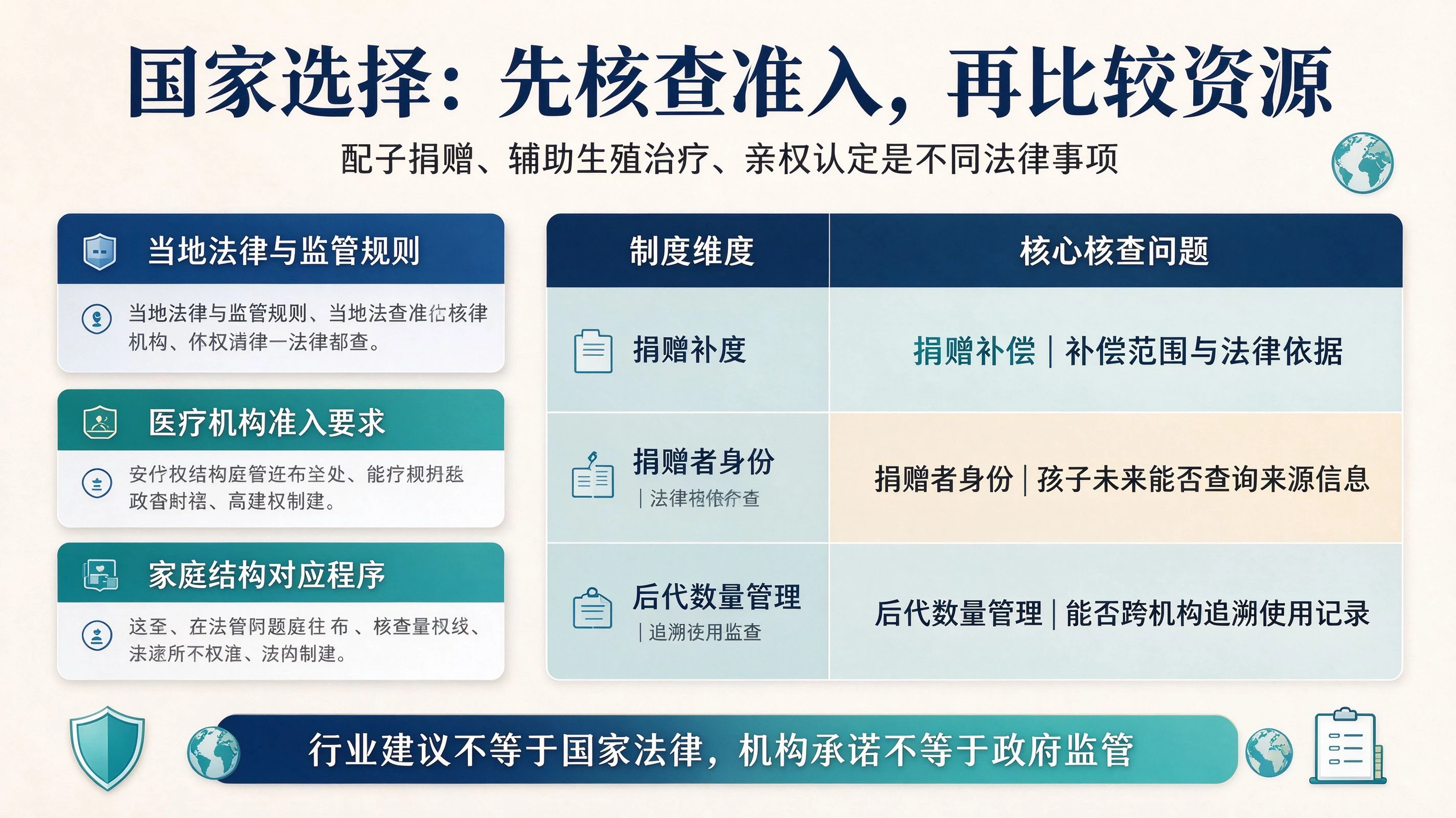
2. The gamete donation systems in different countries differ primarily along three dimensions.
Institutional Dimension | Key Differences | Core Verification Issues |
|---|---|---|
Donation compensation | Gratuitous donation, reimbursement of actual expenses, or a specific compensation scheme | What is the scope of compensation and its legal basis? |
Donor Identity | Anonymous, non-anonymous, or conditional disclosure | Will children be able to access source information in the future? |
Offspring Number Management | Statutory limits, industry recommendations, or internal management of institutions | Can usage records be traced across institutions? |
It is essential to note here that recommended standards set by industry associations do not constitute national laws, and internal commitments made by institutions do not equate to government regulation.
3. Understanding differences through case studies of specific national systems
Spain: The law stipulates anonymous donations and a limit on the number of offspring
Spain’s Law 14/2006 on Assisted Human Reproductive Technologies sets out clear provisions regarding gamete donation. According to Article 5 of this law:
A gamete donation contract is concluded between the donor and an authorized medical institution.
Donations are not of a commercial nature.
Financial compensation may only be used to reimburse related costs such as physical discomfort, transportation, and lost wages, and must not constitute an economic incentive.
Donations are, in principle, anonymous, and medical institutions and relevant registration systems must protect the identity information of donors.
In statutory special circumstances that endanger a child’s life or health, or where permitted under criminal procedure laws, the donor’s identity may be disclosed on a limited basis; however, this does not constitute public disclosure of their identity.
The law also stipulates that the number of children born from gametes donated by the same donor within Spain shall not exceed six. This statutory limit of six offspring applies only to gametes used within Spain; if the gametes of the same donor are simultaneously circulated and used in multiple countries or regions, this statutory limit does not cover scenarios outside Spain, leaving potential risks of consanguinity in cross-border contexts.
In addition, Article 6 of the Act provides that women aged 18 or older with full legal capacity may access assisted reproductive technologies in accordance with local regulations, without discrimination based on marital status or sexual orientation. However, this provision does not imply that all foreigners can unconditionally receive services; verification of healthcare institutions’ admission requirements and the specific legal status of each family remains necessary. Reference: Articles 5 to 8 of Spain’s Law 14/2006 on Assisted Human Reproduction Technologies.
United Kingdom: Donor identity disclosure has a clear time limit
The Human Fertilisation and Embryology Authority (HFEA) in the United Kingdom is responsible for regulating licensed assisted reproduction clinics and managing donor information. Since 1 April 2005, the UK has, in principle, ceased to accept new donors under the traditional anonymous donation system. According to the regulations published by the HFEA:
For qualifying donations, donors who are at least 16 years old may apply to receive certain non-identifying information.
Upon reaching the age of 18, individuals may apply to obtain identifying information such as the donor's name, date of birth, and last known address.
Donations made prior to 2005 remain, in principle, anonymous.
Due to exceptions such as transitional arrangements and the use of existing embryos, not all children born after 2005 are necessarily able to access donor identity information.
This indicates that a country’s system for managing donor identities may directly affect children’s future right to know their biological origins.
United States: Federal regulations, professional guidelines, and state laws must be understood separately
The gamete donation system in the United States should not be simply understood as a nationwide uniform assisted reproduction law, and primarily involves three levels:
First, federal regulation by the FDA. The U.S. Food and Drug Administration (FDA) incorporates relevant reproductive tissues into its regulatory framework for human cells, tissues, and cellular and tissue-based products (HCT/Ps), establishing requirements for donor screening, testing, and registration of applicable facilities within the scope of these regulations.
Second, ASRM Professional Guidelines. The 2024 “Guidelines on Gamete and Embryo Donation” published by the American Society for Reproductive Medicine provides professional recommendations regarding medical screening, genetic assessment, psychological counseling, and informed consent for egg donors, sperm donors, and recipients.
Third, state laws and parentage recognition. Different states in the United States may have varying regulations regarding gamete donation, intended parental status, birth certificates, and legal parentage.
Therefore, one cannot assume that the same legal procedures apply in all states simply because a clinic is located in the United States.
4. Special Note: Industry recommendations should not be treated as legally mandatory caps
The ASRM 2024 guidelines state that limiting the number of births to fewer than 25 per sperm donor within a service area of approximately 800,000 people is a previously proposed professional recommendation aimed at mitigating the risk of inadvertent consanguinity. However, this recommendation may need to be adjusted based on the geographic distribution and demographic structure of the population using these services.
ASRM also recommends that each egg donor undergo no more than six egg retrieval cycles, primarily due to the cumulative medical risks associated with repeated ovarian stimulation and egg retrieval.
These two figures correspond, respectively, to the number of offspring from sperm donors and the treatment cycles for egg donors; they are not the same metric. More importantly, the limit of 25 births is not a nationally mandated cap under U.S. federal law, nor can six cycles be interpreted as permitting a maximum of six children to be born.
The truly worthwhile destinations are not the countries with the most lenient marketing claims, but jurisdictions that offer clear and actionable legal pathways tailored to your family structure.
III. How to Screen Donors: Health Records and Genetic Background Are More Important Than Physical Appearance
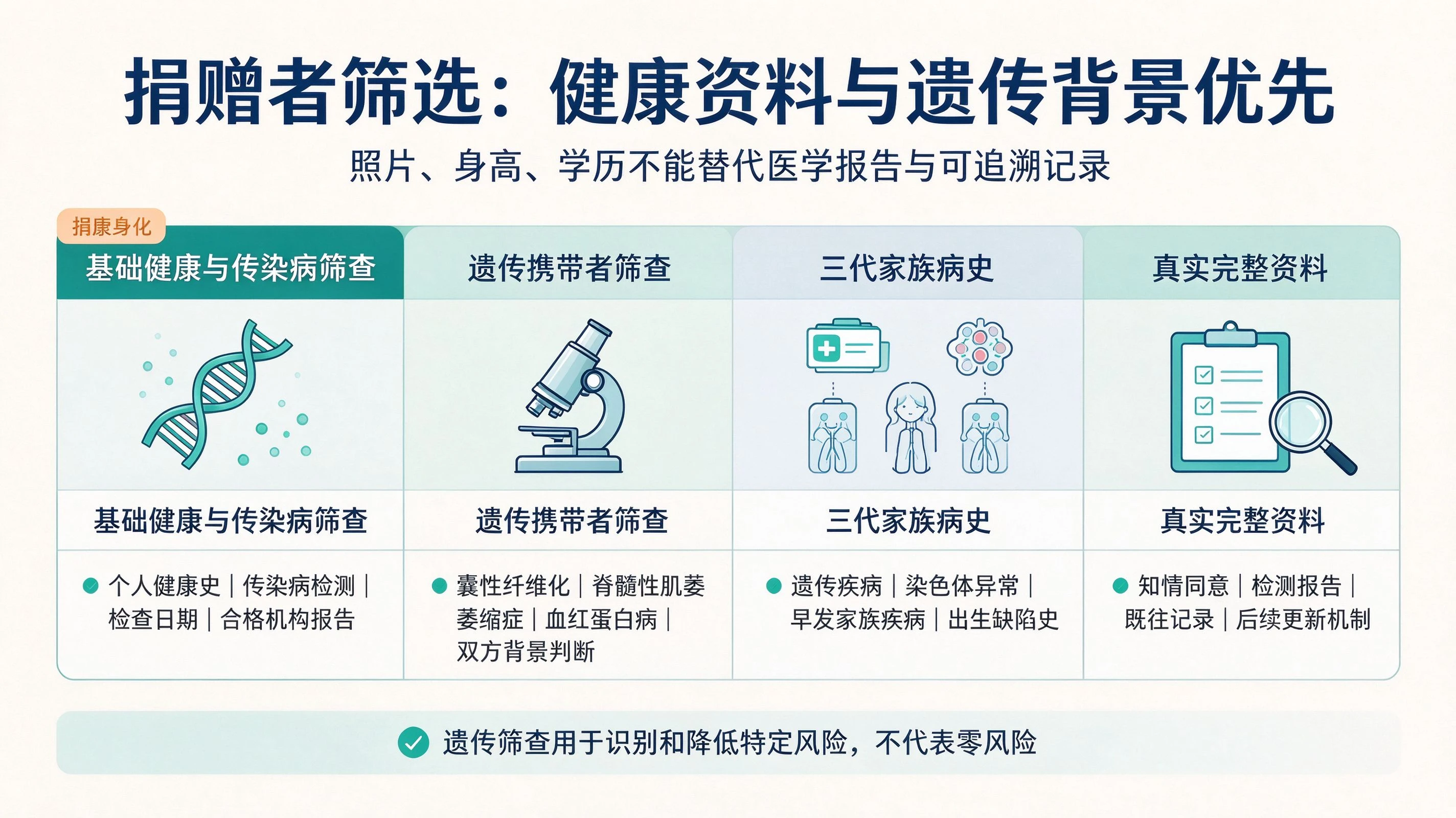
Once the destination is determined, the next most critical step is donor screening. Many agencies provide photos, height, education, occupation, and personal background information of donors. These details can help families understand the basic profile but should not be used as the primary basis for assessing medical quality. The four aspects that truly require attention are as follows.
1. Basic Health and Infectious Disease Screening
Require the institution to provide screening documents corresponding to the actual donors selected. Key verification points include:
Personal health history and past medical history;
Family disease history;
Reproductive health assessment;
Infectious disease testing required by local regulations;
Inspection and sampling date;
Whether the inspection report is issued by a qualified institution;
Whether a re-inspection or update is required.
The U.S. Food and Drug Administration (FDA) has specific requirements for the screening of reproductive tissue donors and infectious disease testing within its scope of applicability. The applicable requirements may vary depending on the type of donation, whether it is directed or non-directed, so a single checklist cannot be mechanically applied to all countries. Using U.S. regulatory rules as an example, the FDA requires that non-directed (anonymous) sperm donations undergo a mandatory six-month quarantine period, with full retesting for all infectious diseases required before the samples can be made available for use; directed (known) donations are exempt from mandatory quarantine requirements, but both parties must be fully informed of potential infection risks and complete the informed consent process.
2. Genetic Carrier Screening
The 2024 ASRM guidelines recommend conducting appropriate genetic carrier screening for egg and sperm donors, including screening for cystic fibrosis, spinal muscular atrophy, and thalassemia or other hemoglobinopathies. Expanded screening may be considered based on specific medical circumstances.
An important principle is that genetic assessment should not focus solely on the donor but must consider the genetic backgrounds of both parties. For example, if both the egg and sperm providers carry pathogenic variants for the same autosomal recessive disorder, a qualified genetic counselor must evaluate the risk of disease in the offspring. Therefore, one cannot conclude that there is no genetic risk simply because an institution claims to have completed comprehensive genetic screening.
3. Three-Generation Family Medical History and Genetic Counseling
ASRM recommends collecting three-generation family medical histories from donors whenever possible, reviewed by personnel with appropriate professional qualifications. Key areas of focus include:
Is there a clear genetic disease;
Is there any known chromosomal abnormality?
Whether there is a family history of early-onset or recurrent diseases;
Are there recurrent birth defects?
Are there any hereditary risks that could affect the health of future generations?
If family history suggests specific risks, further evaluation is needed to determine whether targeted testing is required.
4. Do not equate whole-genome testing with zero risk
Genetic screening is not a case of "the more tests, the better." Some diseases may not yet be identified, some variants may be undetectable with current testing methods, and other conditions are influenced by both multiple genes and environmental factors.
The ASRM guidelines also state that routine karyotyping of all donors is not necessary; however, further evaluation should be performed on a case-by-case basis if there is a history of recurrent miscarriages, familial chromosomal abnormalities, or findings suggestive of chromosomal rearrangements.
The true value of genetic screening lies in identifying and mitigating specific risks, not in promising the absence of any genetic disease.
5. Provide authentic, complete, and traceable information
Data Category | Items to be verified |
|---|---|
Personal Health History | Past Medical History and Reproductive Health Status |
Family medical history | As complete as possible three-generation family information |
Genetic screening | Scope of Inspection, Inspection Agency, and Report |
Infectious Disease Detection | Specific Items and Inspection Dates |
Donation Records | Previous Donations and Known Usage |
Follow-up Management | Medical Information Storage and Update Mechanism |
Informed consent | Donor Authorization and Related Rights and Obligations |
If an institution only displays donor profiles but cannot provide corresponding medical reports and source records, careful evaluation is required.
IV. Bloodline Risk Management: Cannot Rely Solely on the Anonymity System
The long-term risks of cross-border gamete donation extend beyond whether donors will contact the children in the future; they also include potential consanguinity among different recipient families and the inability to trace genetic health information later on. Management is recommended at three levels.
1. Review the donor’s previous usage records
Before selecting a donor, you should learn as much as possible about:
Number of previous donations;
The number of households receiving donations is known;
Known relevant birth information;
Does it involve multiple clinics?
Whether there is cross-regional or cross-border usage;
How institutions calculate and manage the number of offspring.
In particular, it is essential to clarify exactly what the institution means by “number of uses”—whether it refers to the number of donations, egg retrieval cycles, recipient families, pregnancies, or live births. These statistical measures are not equivalent.
2. Verify whether the institution has a long-term traceability mechanism
It is recommended to confirm with the institution:
Should a unique donor identification number be established?
Should gamete use and related pregnancy outcomes be recorded?
Is there an inter-agency information management mechanism?
Is there a long-term archive retention policy?
How will historical records be handled if the clinic ceases operations?
If new significant genetic disease information is discovered, can the relevant families be notified?
Relevant management commitments should be documented in formal records wherever possible.
3. Keep long-term medical records for your child
Families are advised to retain necessary de-identified medical and genetic records, provided that privacy is protected and local laws are complied with, for example:
Family medical history that donors can provide;
Completed genetic screening projects;
Important Genetic Test Report
Medical interpretation of known genetic risks;
Subsequent updates to medical information records.
These records may have practical value for the child’s future medical care, marriage and childbirth planning, and genetic counseling. Anonymity does not mean that medical information should not be preserved; the more a family prioritizes privacy protection, the more it should ensure the integrity of its long-term medical records.
V. Anonymous Donations and Future Reunion: Proactively Considering the Child's Right to Know
With the advancement of genetic testing technologies and kinship-matching databases, the traditional anonymity system faces practical challenges. The 2024 ASRM guidelines explicitly discuss the impact of consumer-grade DNA testing, social media, and related technologies on donor anonymity.
1. It is essential to distinguish between legal anonymity and technical anonymity
Legal Anonymityrefers to the protection of donors’ identity information by local laws under certain conditions.
Medical Information Storagerefers to the retention by an institution of necessary health and genetic records in accordance with the law.
Technical Identification Possibility, refers to the indirect identification of biological relatives through DNA testing and kinship databases.
These three concepts are not the same. Even if the law protects donor anonymity, it cannot guarantee that biological origins will not be indirectly identified through technological means in the future.
2. Confirm future disclosure rules before signing
Suggested questions to ask the institution:
Who maintains the donor's identity information?
Do children have the right to access relevant information after reaching adulthood?
Are there any legitimate channels for information inquiries?
Allow forwarding of future contact requests?
Does the donor consent to providing follow-up medical information?
How should existing donation records be managed when local laws change?
The systems for anonymity and information disclosure vary significantly across different countries and cannot be generalized.
3. Plan in advance how to inform your child about their origins
Families should carefully discuss before treatment begins:
Do you plan to gradually inform the child about the fact that they were conceived through donation?
How to explain things according to a child's developmental stage?
If the child wishes to learn about their biological origins in the future, how should the family respond?
How can support be provided if a child establishes contact with their biological relatives?
This is not only a legal issue, but also part of long-term family education and psychological planning.
VI. Legal Safeguards: Medical Compliance Does Not Equal Parental Rights Compliance
This is the most critical aspect to verify in advance throughout the entire cross-border assisted reproductive decision-making process. A clinic’s possession of a legal practice license does not guarantee that intended parents will necessarily obtain the expected legal status for their child after birth. Three distinct levels must be reviewed separately:
Whether medical procedures comply with local laws;
How the legal relationship between donors and children is defined;
How intending parents legally establish and prove their parental status.
1. Different family structures require different legal reviews
The following situations may involve different issues of paternity determination:
With egg donation, the man has a genetic connection to the child;
Using donor sperm, the woman bears the pregnancy;
When donor gametes are used, one parent has no genetic link to the child;
Single individuals receiving donated gametes;
Special arrangements involving third-party surrogacy.
These scenarios cannot be covered by a single, generic legal opinion.
2. Do not equate the donation agreement with confirmation of parental rights
Donation agreements are typically used to clarify the rights and obligations among donors, recipients, and medical institutions. However, whether such an agreement can exclude the donor’s parental status, sufficiently establish intended parenthood, or necessitate additional judicial proceedings depends on local laws.
Particular attention must be paid to the fact that gamete donation and third-party reproduction or surrogacy are distinct legal scenarios. Parentage orders, pre-birth orders, or other judicial arrangements designed for surrogacy should not be applied directly to ordinary egg or sperm donation without verificationTest tube baby.
3. Before the commencement of treatment, a written opinion from an independent lawyer is required.
It is recommended to select a lawyer who has no conflict of interest with the intermediary and holds local professional qualifications. The lawyer should be required to clearly answer, based on your actual family circumstances:
Does the current marriage and family structure meet the local eligibility requirements?
Is receiving donated eggs or sperm compliant with local laws?
How are the legal status and rights of donors defined?
Through what legal procedures do intended parents establish their legal parentage?
Are specific donation agreements or informed consent documents required?
Is a court judgment or other legal proceedings required?
What information can be registered on a birth certificate?
In the event of a dispute, which law shall apply, and which court or institution shall have jurisdiction?
True and reliable parental rights protection lies not in how formally a contract is drafted, but in whether the documents comply with local laws and can produce the intended legal effects under specific family circumstances.

VII. Return to China: The birth certificate, apostille, and household registration must each be verified separately
Many families devote significant effort to overseas medical care and their child’s birth, yet leave the preparation of documents for their return home until the last minute. This is a stage in cross-border processes where problems are very likely to arise.
1. A foreign birth certificate does not constitute complete legal proof of parentage
Birth certificates issued abroad typically record the child’s place and time of birth, as well as relevant parental information. However, the legal effect of such certificates must be assessed in accordance with the legal system of the issuing country and the specific requirements for processing within China.
In particular, for single-parent households, families using donated gametes where one parent has no genetic link, and other non-traditional family structures, identity verification issues cannot be assumed resolved solely based on the information registered on the birth certificate. It is recommended to verify in advance:
Official birth certificate;
Issuing authority and legal basis of the document;
Relevant documents for paternity determination;
Necessary certificates issued by medical institutions;
Other documents as required based on actual circumstances.
2. An Apostille does not constitute China's recognition of parent-child relationships
According to the official explanation from China’s Ministry of Foreign Affairs regarding apostilles (commonly known as Hague Convention certifications), an apostille primarily serves to certify the authenticity of the signature, the capacity in which the person signing the document acted, and, where appropriate, the identity of the seal or stamp on a public document. It does not attest to the truthfulness or legality of the content of the public document itself.
Therefore, obtaining an apostille does not mean that the parent-child relationship recorded on the birth certificate has been automatically recognized by all administrative authorities within China. Whether additional legal documents are required should be determined based on the specific circumstances of each case.
3. Consult separately for return-home documents and household registration
It is recommended that families complete the following three consultations before initiating medical treatment:
First, consult the Chinese embassy or consulate in your destination country to learn about the requirements for applying for return documents, as well as birth certificates and other relevant supporting materials.
Second, consult the household registration department of the public security bureau in your place of registered residence to explain the circumstances of being born overseas and undergoing assisted reproductive technology, and inquire about the required documents, including birth certificates, parents' identity materials, translations, authenticated documents, and any other potentially necessary materials.
Third, conduct case-by-case verification for special family structures. If the situation involves single parents, one parent lacking a genetic link, or other special arrangements, further confirmation of paternity/maternity documentation and household registration requirements is necessary.
It is recommended to retain all relevant written consultations and processing records. Do not assume that your family will follow the same procedures based solely on verbal promises from intermediaries or successful cases of other families.
VIII. How to Select Overseas Clinics and Service Providers? Establishing a Thorough Verification Mechanism
The cross-border assisted reproductive market suffers from significant information asymmetry. Many families lack the ability to independently verify the credentials of overseas clinics, donor profiles, medical reports, and legal documents. Therefore, when selecting an agency, one should conduct due diligence on three levels.
1. Level 1: Medical Institution Qualifications
Key confirmation:
Does the medical institution actually exist?
Is it legally registered locally?
Do you hold a valid practice license for the corresponding assisted reproductive technology (ART) programs?
Does the doctor hold the corresponding local practice qualifications?
Embryology LaboratoryDoes it comply with local regulatory requirements?
Can the relevant information be verified through official contact channels?
Different countries should use different regulatory channels. For example: in the United States, one can query FDA-related reproductive organization registration information and state-level medical regulatory data, combined with CDC ART clinic data to understand treatment outcomes; in the United Kingdom, one can check licensed clinics and their regulatory information through the HFEA; in Spain, healthcare institutions and approved technology scopes should be verified through relevant health authorities and official channels of autonomous communities.
Please be advised: FDA facility registration does not imply FDA approval of the facility or certification of all its medical services. The FDA’s public HCT/P lookup system also explicitly states that facility registration is not evidence of full compliance with all regulatory requirements.
2. Second Layer: Donors and Gamete Sources
Recommend obtaining from the institution:
Donor Informed Consent Document;
Personal Health Screening Records
Infectious Disease Report
Genetic Screening Report;
Available family medical history;
Previous donations and known usage records;
Mechanism for storing donor information and subsequent updates
Verify that the report corresponds to the actual selected donor, rather than a generic testing sample provided by the institution.
3. Third Tier: Contract and Financial Verification
All significant service commitments should be documented in writing. Key items to verify:
Who is the contracting party?
Which institution actually provides the medical services?
Who is responsible for preparing and coordinating legal documents?
Are the fees itemized?
To which entity are the funds ultimately paid?
Do you provide official invoices from overseas clinics?
How to handle treatment cancellations, cycle failures, or service breaches?
Is the applicable law and dispute resolution mechanism clearly specified?
Is the family permitted to hire an independent lawyer for review?
If third-party collections or fund escrow arrangements are involved, it is also necessary to verify the qualifications of the relevant entities, their authority over fund management, and exit mechanisms. Do not pay large sums based solely on promotional phrases such as "global resources," "official partnerships," or "full-process guarantees."
9. How to Assess a Clinic's Success Rate? Don't Just Look at One Percentage
Success rates are a key metric that families consider when choosing a clinic, but data published by different institutions may not be directly comparable. The U.S. CDC's ART data reports outcomes separately for treatments using patients' own eggs versus those using donor eggs or embryos. For treatments involving donor eggs or embryos, success rates are typically calculated per embryo transfer and presented in a non-cumulative manner.
The CDC specifically notes that patient demographics, treatment methods, case volumes, and admission criteria may vary across clinics; therefore, direct comparisons of success rates may not be meaningful. Additionally, data published by clinics do not represent the individual probability of success for any specific family.
Therefore, when choosing a clinic, you should focus on understanding:
What is the statistical metric for the success rate?
Is the statistic for clinical pregnancy rate or live birth rate?
Is it calculated per egg retrieval cycle, transfer cycle, or per patient?
Are fresh eggs or coldEgg freezingChild?
Do you distinguish between your own eggs and donated eggs?
What is the sample size?
Which year does the data correspond to?
Could you please provide a complete statistical explanation?
In particular, it is important to avoid focusing solely on the highest success rates touted in promotional materials while ignoring statistical sample sizes and patient conditions. The outcomes of assisted reproductive treatments are influenced by a variety of medical factors and should be assessed by physicians based on individual circumstances.
10. Cross-Border Egg/Sperm Donation Decision-Making Checklist: Mandatory Verification Before Launching a Project
Evaluation Phase | Verification Issues | Basis to be obtained |
|---|---|---|
Medical needs | Is there a clear need for egg or sperm donation? | Professional Medical Evaluation |
Domestic Route | Are you familiar with the legitimate domestic channels? | Relevant Domestic Standards and Instructions from Medical Institutions |
National Market Access | Can foreigners accept the relevant services? | Destination Country Laws and Qualification Opinions |
Family Structure | Are the requirements regarding marriage, identity, and age met? | Independent Legal Opinion |
Medical institution | Does it have specialized qualifications for assisted reproductive technology? | Official Registration and Professional License |
Medical Team | Are the doctors and laboratories qualified? | Practice and Qualification Documents |
Gamete source | Is the source of the donations legal? | Informed Consent and Provenance Records |
Medical Screening | Has a report from the actual donor been obtained? | Complete Check Data |
Genetic Assessment | Are the genetic backgrounds of both parties considered? | Genetic Counseling and Testing Report |
Descendant Management | Are you aware of the previous usage? | Traceable Records and Management Instructions |
Information Preservation | Is there a mechanism for updating subsequent medical information? | Formal Management System |
Anonymous System | Are you aware of the future identity disclosure rules? | Local Laws and Written Instructions |
Parental Rights Protection | How is legal parenthood for a child established? | Written Opinion of Independent Counsel |
Return to China | Have you consulted the embassy or consulate and the household registration authorities? | Requirements for Related Supporting Documents |
Contract Finance | Are the payment terms, refund policy, and liability for breach of contract clearly defined? | Formal Contract and Invoice |
The purpose of this checklist is not to encourage families to quickly check off every item, but to help them identify questions that still lack reliable answers. In particular, regarding foreigner access, gamete sources, paternity determination, and repatriation documents, if any critical aspect remains ambiguous, families should not initiate irreversible medical procedures based solely on verbal assurances from intermediaries.
Conclusion: What truly deserves to be chosen is a reproductive path that can withstand long-term scrutiny.
Overseas egg and sperm donation is not simply a matter of finding an overseas clinic with competitive pricing and abundant resources. It involves medical safety, genetic health, donor rights, the child’s sense of identity, the parents’ legal status, and long-term arrangements for the family’s future identity and life.
A cross-border assisted reproductive solution worth serious consideration should at least answer four questions.
First, why choose this country? Are the local laws and healthcare system truly suited to the family's specific needs, rather than just offering policy advantages touted in marketing materials?
Second, why choose this clinic? Can the institution’s qualifications, medical reports, gamete sources, genetic screening, and fund management be independently verified?
Third, after the child is born, who are the legal parents? Has the pathway for establishing parentage been clearly defined through local laws and independent legal counsel, rather than relying on an unverified standard contract?
Fourth, how will the child's future health and identity information be managed? Has the family considered preserving genetic information, disclosing origins, ensuring future identity recognition, and tracing biological lineage for descendants?
In cross-border assisted reproduction, what truly matters is not being told by others which country is the best, but rather your own ability to clearly understand the medical rationale, legal regulations, and long-term implications behind each choice. Truly professional services do not promise the absence of risk; instead, they help families identify risks, verify evidence, understand uncertainties, and make thorough preparations before every irreversible decision.
A child's future should not be built on a single promise from an intermediary, but rather on authentic medical records, clear legal grounds, and responsible long-term planning.
Scope
This article primarily discusses the donation of eggs or sperm for assisted reproductive treatments, and does not treat gamete donation as equivalent to third-party reproduction or surrogacy.
Disclaimer
This article is intended solely for informational and decision-making reference regarding cross-border assisted reproductive services and does not constitute medical or legal advice for any individual. Relevant regulations may vary across jurisdictions depending on time, region, and family structure. Before officially initiating treatment, you should verify the current laws of the destination country and consult with independent practicing lawyers in that jurisdiction, qualified reproductive medicine professionals, as well as relevant Chinese embassies, consulates, and household registration authorities.
Date of data verification: November 3, 2026.
American Society for Reproductive Medicine (ASRM): Gamete and Embryo Donation Guidance (2024)
U.S. Food and Drug Administration (FDA): What You Should Know—Reproductive Tissue Donation
U.S. Centers for Disease Control and Prevention (CDC): National ART Surveillance System
Centers for Disease Control and Prevention (CDC): How to Interpret ART Success Rates
Official Gazette of Spain (BOE): Law 14/2006, of May 26, on Assisted Human Reproduction Techniques
UK Human Fertilisation and Embryology Authority (HFEA): Rules Around Releasing Donor Information
Frequently Asked Questions
The content on this website is general educational material and compiled public information about IVF. It is provided for reference only, does not constitute a basis for diagnosis or medical decision-making, and does not constitute any medical advice or treatment recommendation. For policy and technical requirements, please refer to official publications issued by the relevant authorities and institutions. If you find any content errors, numerical inconsistencies, or outdated information, please contact us so we can verify and update it.
