
How Are Surrogate Mothers and Egg Donors Screened for Surrogacy in the United States? This article details screening for surrogate mothers’ obstetric history and uterine conditions, genetic screening for egg donors, FDA-mandated infectious disease testing, and verification of agency and clinic qualifications. Drawing on real U.S. legal cases, it analyzes fund escrow, false advertising, and contract risks to help intended parents reduce the risks of making surrogacy decisions in the United States.
Read allIn U.S. assisted reproductive technology (ART) programs, the gestational carrier (GC), commonly referred to as a "surrogate," andEgg donationScreening of both the recipient and the donor is a critical step that determines project safety and success rates: the former directly relates to maternal and fetal risks throughout pregnancy, prenatal management, and delivery outcomes, while the latter determines egg quality, genetic risks, and embryonic developmental potential.
For first-time contactSurrogacy in the United StatesFor families, the biggest challenge is often not finding candidates, but rather assessing the authenticity of their information, the completeness of medical screenings, the reliability of agencies, and whether contracts and financial arrangements can genuinely safeguard their rights and interests.
The U.S. assisted reproductive technology system is well-developed, butThere is no unified federal regulation covering the entire industry.: Rules governing the validity of surrogacy contracts, compensation for surrogate mothers, establishment of parental rights, and intermediary services vary significantly across states; a fertility clinic’s legal licensing does not guarantee that its partnered intermediaries, egg donation agencies, or fund escrow providers are equally compliant and reliable.
Therefore, screening must go beyond age, appearance, “success stories,” and package promotions, and instead establish a comprehensive system encompassing independent verification of medical records, professional interpretation of genetic risks, multi-source due diligence on agency backgrounds, and end-to-end risk control over contracts and funds. This article takes practical decision-making as its starting point, separately analyzing the core criteria for selecting gestational surrogates and egg donors, methods for verifying the credentials of various U.S. agencies, common industry pitfalls, and publicly available legal precedents, to help prospective parents establish actionable risk-control processes.
I. Why Should Surrogacy Screening Not Rely Solely on Agency Recommendations?
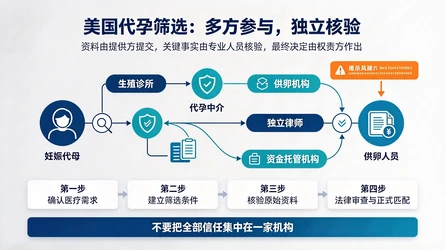
The U.S. surrogacy program is carried out by multiple independent entities with clear divisions of labor, no administrative subordination among them, and well-defined boundaries of responsibility:
surrogacy agencyResponsible for surrogate recruitment, initial screening, matching, end-to-end coordination, and project management
Fertility ClinicResponsible for ovulation induction, egg retrieval, embryo culture, embryo transfer, and full-cycle medical management
Egg Donation AgencyResponsible for recruiting egg donors, managing donor profiles, and coordinating donation processes
Gestational surrogate: undergo embryo transfer, and bear the processes of pregnancy and childbirth
Reproductive Law AttorneyResponsible for drafting and reviewing surrogacy contracts, as well as handling legal procedures for parental rights.
Escrow: Manage project funds independently in accordance with the contract, disbursing them at designated milestones
“One-stop full-service packages” are merely commercial branding and do not imply that a single agency is qualified to make professional judgments on all stages of the process: surrogacy agencies cannot replace reproductive medicine specialists in assessing pregnancy risks; egg donation intermediaries cannot replace genetic counselors in interpreting hereditary disease risks; and brokers certainly cannot replace independent lawyers in evaluating contractual fairness.
The American Society for Reproductive Medicine (ASRM) explicitly emphasized in its 2022 Committee Opinion on Gestational Surrogacy that third-party reproduction programs must be completedIndependent multi-party screening, encompassing the medical, psychological, and legal dimensions to safeguard the rights and interests of surrogates, intended parents, and children. This is an industry professional guideline; it does not constitute federal law and cannot replace specific state laws.
Core principle of filtering:Data is submitted by the provider, key facts are verified by independent professionals, and final decisions are made by those with corresponding authority and responsibility..
II. Screening of U.S. Gestational Surrogates: Core Verification Dimensions and Practical Methods
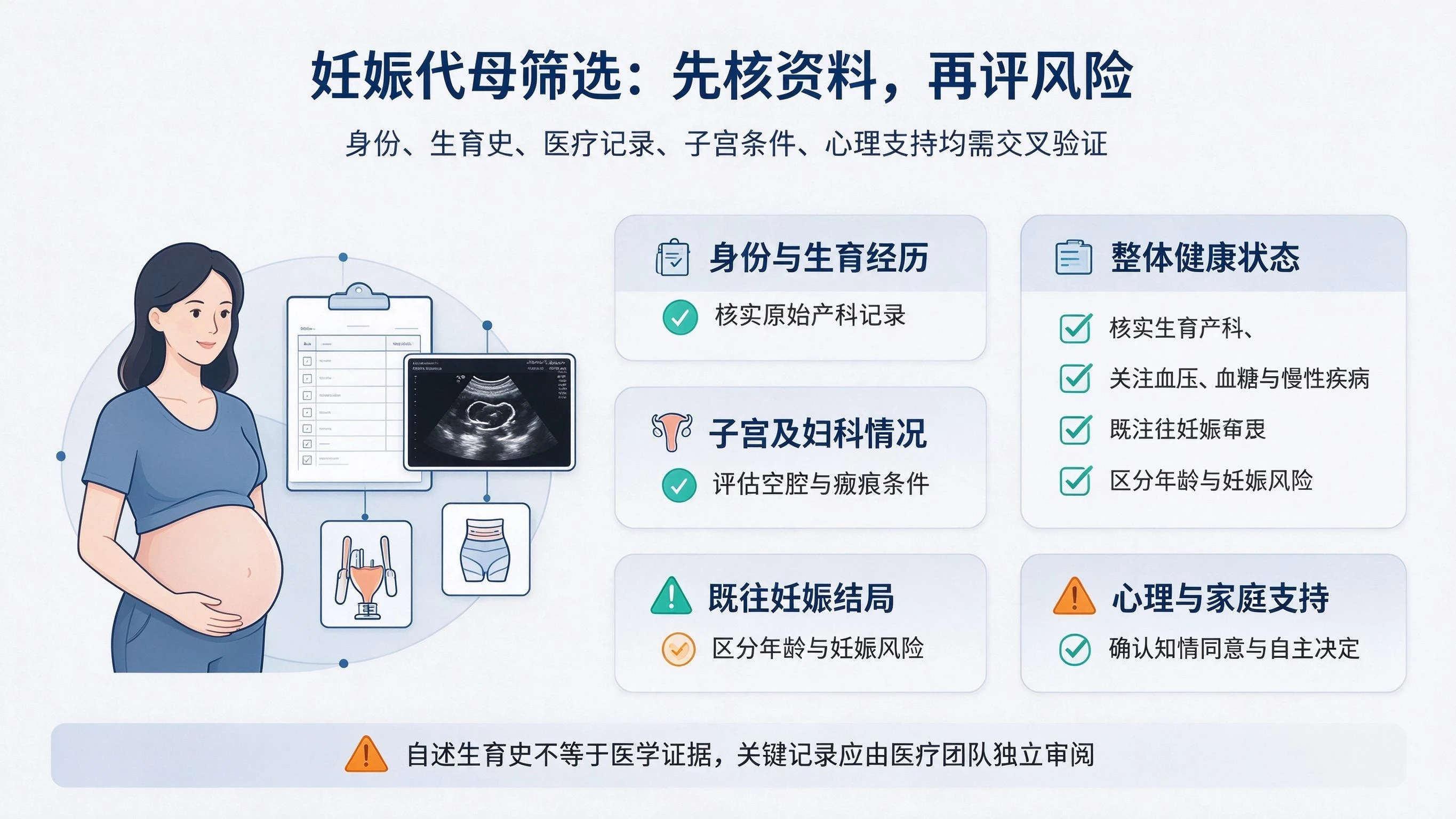
The core criterion for screening gestational surrogates is "pregnancy safety," which requires thorough verification across four dimensions: identity and qualifications, reproductive history, physical health, and psychological well-being. Reliance on photographs, self-reported information, or initial screening conclusions provided by agencies is not acceptable.
1. Verification of Basic Identity and Reproductive History (Primary Prerequisite)
The first step must be to verify the authenticity of identity and birth records, which is the foundation for excluding fraudulent documentation.
Table
Verification Items | Core Content | Purpose of Verification |
|---|---|---|
Identity Qualifications | Legal proof of identity, state of actual residence, age | Verify the authenticity of identity and clarify the applicable state legal framework |
Childbirth experience | Number of previous pregnancies, number of deliveries, and mode of delivery | Assessing Pregnancy Experience and Baseline Fertility |
Pregnancy outcomes | Term birth, preterm birth, miscarriage, stillbirth, and neonatal status | Predict recurrence risk and assess high-risk factors for pregnancy |
Original Medical Records | Complete prenatal check-up records, delivery records, and discharge summaries | Cross-validate the authenticity of reproductive history to rule out concealment. |
Gynecological history | Uterine fibroids, intrauterine surgery, endometrial lesions, pelvic diseases | Determine whether further specialist evaluation is needed |
Chronic diseases | Hypertension, diabetes, thyroid diseases, autoimmune diseases | Assess maternal health risks during pregnancy |
Medication and Allergies | Long-term medication history, drug allergy history, and previous major treatments | Investigate the potential effects of medications on pregnancy |
Social support | Family structure, partner attitudes, and residential stability | Assessing Support Conditions and Adherence During Pregnancy |
Key ReminderSelf-reported obstetric history lacks medical reference value. Original obstetric medical records must be accessed and reviewed directly by a fertility clinic or obstetrician, subject to obtaining proper legal authorization and ensuring privacy protection. If a candidate claims multiple uncomplicated deliveries but cannot provide corresponding hospital records, or if there are significant discrepancies in gestational timing, delivery methods, or gestational weeks across different documents, matching should be immediately suspended pending additional verification.
It should also be noted that a history of cesarean section, miscarriage, or mild conditions does not automatically result in disqualification; the suitability for pregnancy requires individualized assessment by a reproductive medicine specialist based on the complete medical history.
2. Assessment of Uterine Conditions and Overall Health
The uterine environment and overall health status of the gestational surrogate directly determine embryo implantation rate, pregnancy maintenance capacity, and delivery safety.
Gynecological and Uterine Specialized AssessmentFocus on identifying uterine cavity abnormalities that may affect embryo implantation and pregnancy maintenance, including uterine fibroids, adenomyosis, intrauterine adhesions, endometrial polyps, and a history of prior uterine cavity surgery. Clarify the number of previous cesarean sections and the healing status of uterine scars. Screen for other gynecological conditions that may increase pregnancy risks. When necessary, perform precise assessments using pelvic ultrasound, hysteroscopy, or other relevant examinations.
Comprehensive Health ScreeningIt covers the cardiovascular system (blood pressure, ECG), metabolic status (blood glucose, blood lipids, BMI), liver and kidney function, thyroid function, and screening for notifiable infectious diseases. BMI can serve as a preliminary reference but should not be used to set absolute, uniform thresholds—different clinics have varying acceptance policies, and final decisions must be made by physicians based on a comprehensive assessment of age, medical history, and pregnancy risks.
3. Previous pregnancy outcomes are more critical than age alone
The industry commonly holds the misconception that “younger age means lower risk,” but age is only one dimension of a comprehensive assessment, with a history of prior pregnancy complications carrying greater reference weight. High-risk medical histories requiring close attention include:
Severe preeclampsia and a history of gestational hypertension require assessment of the probability of recurrence.
History of gestational diabetes; risk assessment requires integration with current metabolic status
History of preterm birth and late miscarriage; gestational age at occurrence, precipitating factors, and subsequent pregnancy outcomes must be clearly documented.
History of multiple cesarean sections; assessment is required for the risk of uterine scar rupture and placental abnormalities.
History of severe obstetric complications such as postpartum hemorrhage and amniotic fluid embolism
Even if a candidate has a history of uncomplicated deliveries, it cannot be directly assumed that the next pregnancy will necessarily be safe; risk stratification must be performed by an obstetrician based on the complete medical history.
4. Psychological Assessment and Safeguarding the Right to Self-Determination
The ASRM explicitly requires that gestational surrogates undergo a professional psychological evaluation, with the core purpose being not to “ensure compliance with the intended parents’ arrangements,” but rather to confirm that they make their decisions autonomously, based on full informed consent and free from undue coercion. The key areas of assessment include:
Is it fully understood?Surrogacy Process, Medical Risks and Legal Liability
Whether the individual has the cognitive ability and willingness to cooperate with medical follow-ups and comply with prenatal management requirements
Whether one clearly understands their medical autonomy and right to informed consent
Whether family members are fully informed of and support their decision
Are there factors such as economic coercion or family pressure that affect autonomous decision-making?
It must be explicitly clarified that the gestational surrogate possesses full medical autonomy. Regarding medical matters such as prenatal care plans, mode of delivery, and termination of pregnancy, her right to informed consent must be respected, and these statutory rights cannot be deprived through contractual clauses.
5. Cross-verification methods for data authenticity
Establish a “three-way cross-verification” mechanism to avoid relying solely on files organized by intermediaries:
The obstetric history is consistent with the original hospital records (with matching gestational age, mode of delivery, neonatal birth weight, and discharge diagnosis).
Recent medical examination reports are from verifiable, legitimate medical institutions, with the sampling time and issuing institution clearly indicated.
Infectious disease screening and psychological assessments are conducted by qualified professionals, with traceable report sources.
The medical team directly reviews the original reports, rather than merely receiving summaries compiled by intermediaries.
If issues such as abnormal report dates, missing pages in documents, inconsistent identity information, or unverifiable institutions arise, the submission of original supporting documents or direct verification with the clinic must be required.
III. Screening of Egg Donors in the United States: Core Criteria and Risk Assessment
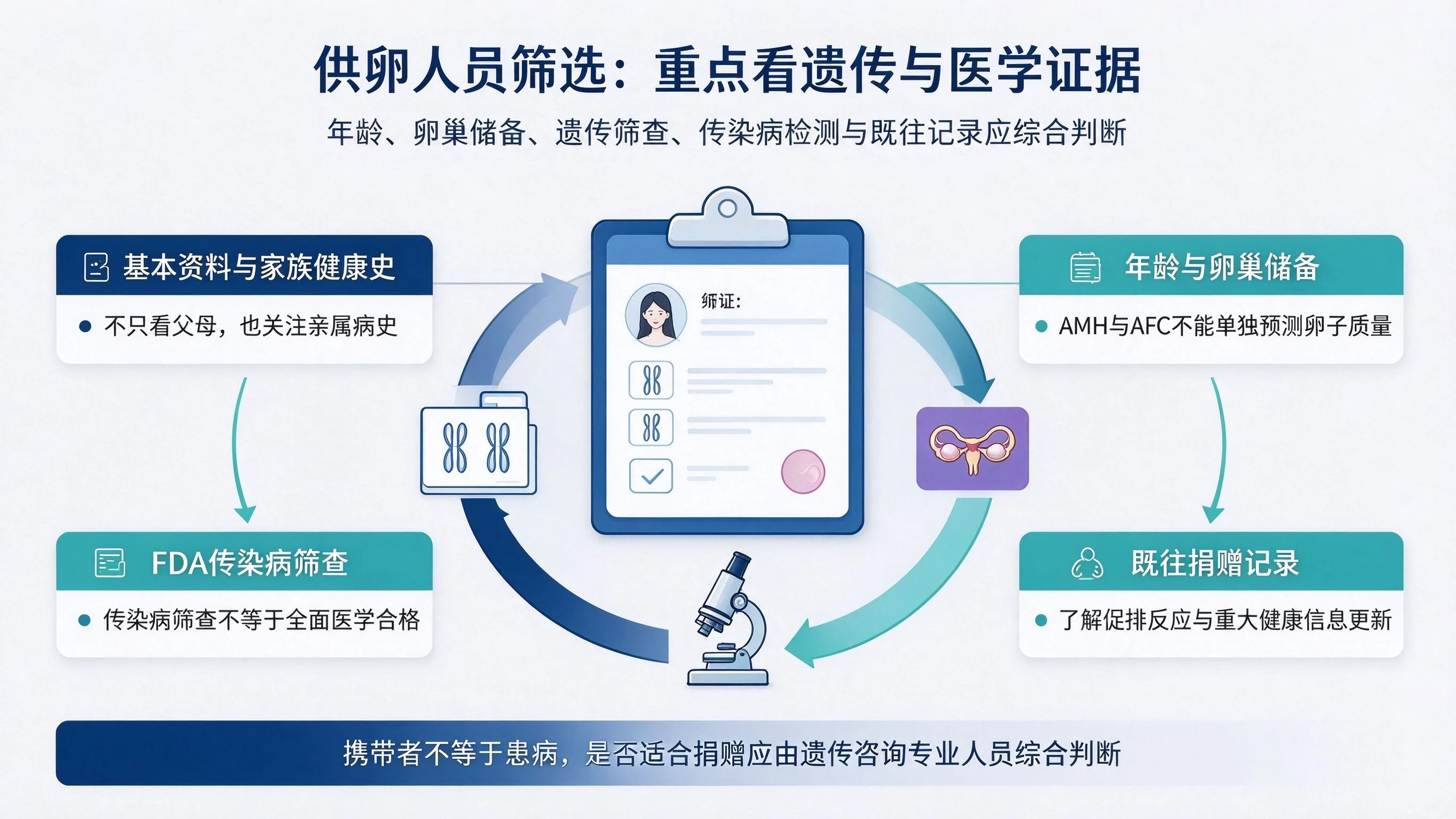
Unlike surrogate mothers, egg donors do not bear the responsibility for pregnancy and childbirth; the core of the screening process focuses onOvarian reserve, reproductive health, genetic risk, infectious disease screening, and psychological compatibilityFive dimensions.
1. Basic Information and Family Health History
The basic profile of the egg donor must cover:
Identity verification, age, and lifestyle habits (smoking, alcohol consumption, and history of substance abuse)
Menstrual history, previous pregnancy history, and gynecological disease history
Personal history of chronic diseases, surgical history, and long-term medication use
Family medical history of third-degree relatives: Not limited to parents, but encompassing siblings, grandparents, and other relatives, with a focus on screening for hereditary diseases, early-onset severe conditions, unexplained intellectual disabilities, and a history of recurrent miscarriages
If a family history of suspicious genetic disorders exists, a genetic counselor must assess whether additional specialized genetic testing is required.
2. Ovarian Reserve Assessment: Meaning of Indicators and Common Misconceptions
Age is an important factor in assessing egg donation potential, but it does not directly equate to egg quality. Clinics typically evaluate ovarian responsiveness by combining the following indicators:
AMH (Anti-Müllerian Hormone): A Core Serum Marker for Assessing Ovarian Reserve
AFC (Antral Follicle Count): The number of antral follicles counted by ultrasound during the early phase of the menstrual cycle
Six Sex Hormones: Basal Endocrine Status
Previous ovarian stimulation and egg retrieval records: actual number of oocytes retrieved, oocyte maturity, and history of complications
Key ClarificationsAMH and AFC can only predict ovarian response to ovulation induction; they do not directly reflect the euploidy rate of oocytes nor can they independently predict final live birth outcomes. High AMH does not guarantee that every oocyte has developmental potential, and slightly low values for a single marker do not necessarily indicate unsuitability for donation. A comprehensive assessment should consider age, medical history, and results from previous cycles.
3. Genetic Screening: The Core Defense Line in Egg Donor Evaluation
Genetic screening must not be based on appearance, education level, race, or family self-report; it must rely solely on laboratory test results. The basic screening panel recommended by the ASRM 2024 Guidelines for Gamete Donation includes cystic fibrosis (CF), spinal muscular atrophy (SMA), thalassemia, and other hemoglobinopathies. Additionally, targeted testing for conditions such as fragile X syndrome is suggested based on family history assessment, with optionalExtended carrier screeningCover more autosomal recessive genetic diseases.
Core Precautions:
Screening panels vary in coverage across different laboratories. If the egg provider and sperm provider use different testing packages, the results cannot be directly compared; a genetic counselor is required to harmonize and analyze them.
Focus on whether both parties are carryingPathogenic variants of the same autosomal recessive disease—— If both partners are carriers, their offspring face a risk of being affected; further genetic counseling and adjustment of reproductive plans are required.
Carrier ≠ DiseasedThe detection of genetic variants does not indicate that the egg donor has any health abnormalities, nor does it mean that the eggs are entirely unusable; a professional assessment is required, taking into account the inheritance pattern and the test results of both parties.
4. FDA infectious disease screening ≠ comprehensive medical clearance
This is the concept most easily confused. The U.S. FDA regulates human cells, tissues, and cellular and tissue-based products (HCT/Ps), which includes mandatory statutory requirements for infectious disease screening of egg donors and donor eligibility determination under eCFR regulations.
FDA-mandated required tests: HIV-1/2, hepatitis B, hepatitis C, syphilis, and reproductive tract-related Chlamydia trachomatis and Neisseria gonorrhoeae. For nucleic acid testing (NAT), sample collection must be completed within 30 days prior to egg retrieval.
Sperm donors are subject to additional testing requirements, including HTLV and cytomegalovirus (CMV), in accordance with current FDA regulations.
Boundaries That Must Be Clarified:
FDA Infectious Disease Screening ≠ Genetic Disease Screening
FDA donor eligibility ≠ guaranteed egg quality
FDA registration ≠ official certification of service quality for egg donation agencies
A negative infectious disease screening does not rule out all pregnancy and medical risks.
One cannot conclude that the egg donor has completed all necessary medical evaluations based solely on FDA test reports provided by intermediaries.
5. Past Donation Records and Information Updates
If the egg donor has a history of donation, special attention must be paid to verifying:
Previous donation history, ovarian stimulation protocol, number of oocytes retrieved, and embryo development
Has there been any occurrence of severe complications such as Ovarian Hyperstimulation Syndrome (OHSS)?
Complete results of previous genetic and infectious disease screenings
Whether important health information such as newly diagnosed hereditary diseases or critical illnesses has been added to the family history after donation
ASRM guidelines emphasize that donors are obligated to update clinics and recipient families when significant changes occur in their family medical history. It should also be noted that the United States does not have a nationally mandated statutory limit on the number of donations; specific limits are determined by individual clinics based on medical safety, genetic risks, and industry standards.
IV. Methods for Verifying the Qualifications of U.S. Surrogacy-Related Institutions
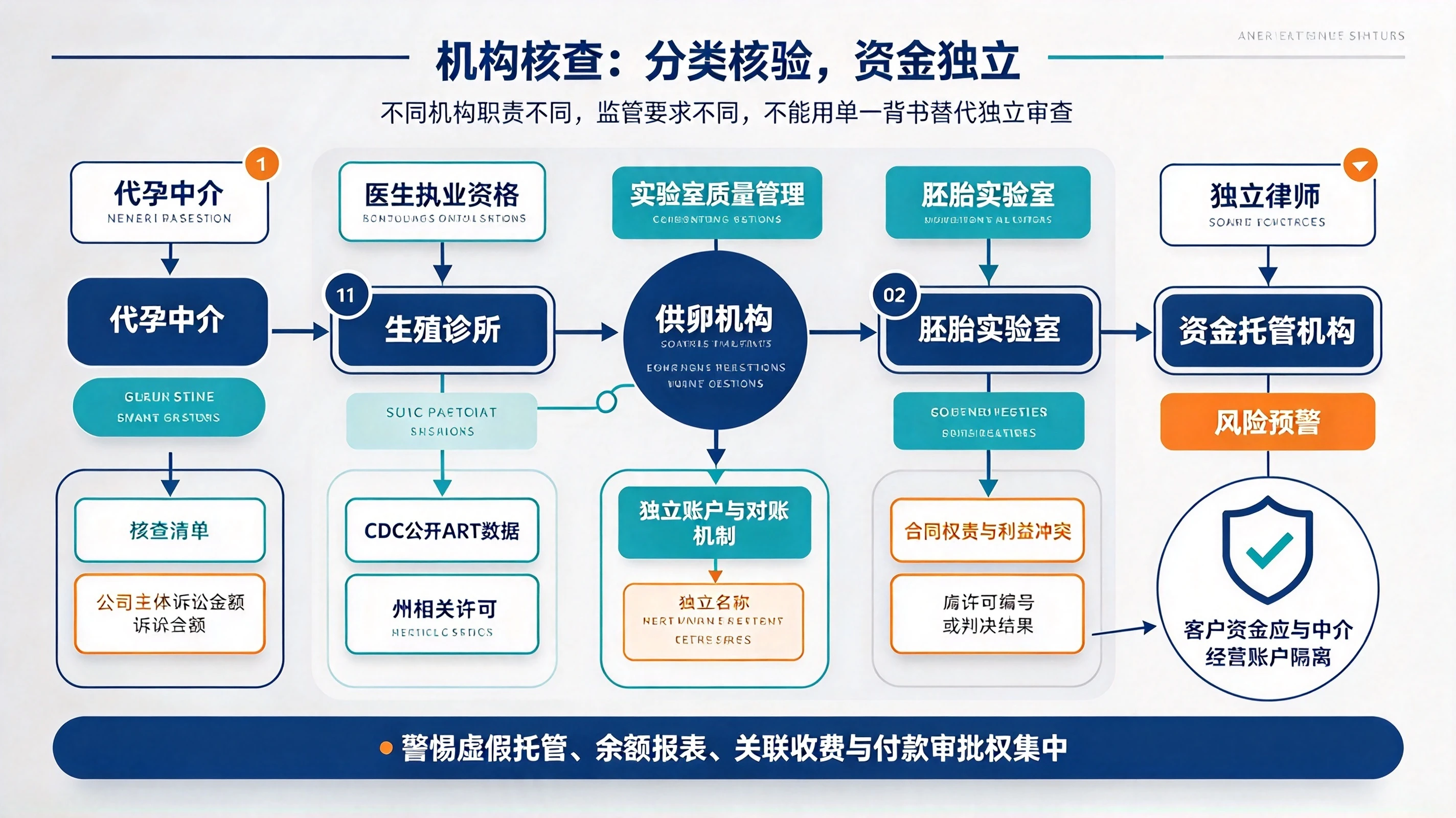
Many families refer to all service providers collectively as “surrogacy companies,” but the regulatory frameworks and qualification requirements vary significantly across different institutions, necessitating category-specific verification.
1. First, clarify the institution type and verification focus
Table
Institution Type | Core Responsibilities | Key Inspection Focus |
|---|---|---|
Surrogacy Agency / Matching Agency | Surrogacy recruitment, matching, and project coordination | Registered entity, business qualifications, litigation records, screening process, refund policy |
Fertility Clinic | IVFMedical procedures such as surgery, embryo culture, and transplantation | Medical license, CDC success rate data, laboratory qualifications, medical contracts |
Egg Donation Agency | Recruitment of egg donors, file management, and donation coordination | Screening procedures, file authenticity, and information disclosure mechanisms |
Embryo culture, cryopreservation, biopsy | Quality management system, personnel qualifications, and relevant certifications | |
Fund Custodian | Independent management and disbursement of project funds | Regulatory licenses, account segregation, reconciliation mechanisms, withdrawal permissions |
Reproductive Law Attorney | Contract review, paternity proceedings | State professional licenses, experience in relevant fields, conflict of interest checks |
2. Four-Step Method for Verifying Fertility Clinic Qualifications
Reproductive clinics are a core component of medical care, and qualification verification must be rigorous.
Step 1: Verify the physician's medical licenseVerify the attending physician's name, state of licensure, and specialty board certification status. License validity can be checked through the respective state medical board's website, and obstetric certification can be verified through the American Board of Obstetrics and Gynecology (ABOG).Reproductive EndocrinologySpecialty Certification
Step 2: Query CDC official ART dataThe U.S. CDC publicly reports ART success rates for clinics nationwide through the National Assisted Reproductive Technology Surveillance System (NASS), allowing consumers to access data on clinic cycle volumes, patient demographics, and outcomes by treatment type via the CDC website (CDC Archiv...). When reviewing this data, pay close attention to live birth rates for donor egg cycles, statistical definitions (per retrieval cycle vs. per transfer cycle), data years, and annual cycle volumes at each clinic.NoteThe CDC explicitly states that a clinic's historical success rates do not predict outcomes for individual families, as patient populations and case complexities vary significantly between clinics; therefore, one should not select a clinic based solely on rankings.
Step 3: Evaluate the quality of the embryo laboratoryCAP (College of American Pathologists) accreditation serves as an important reference for laboratory quality management systems, but it is not a mandatory requirement for all reproductive laboratories in the United States. CLIA certification applies to clinical laboratory testing and does not equate to comprehensive quality accreditation for embryology laboratories. A holistic assessment should consider factors such as staff qualifications, quality control systems, and cryopreservation-thaw survival rates.
Step 4: Review the medical service contractClearly define the cost boundaries for each item in the contract, including ovarian stimulation and egg retrieval, embryo culture, embryo transfer, cryopreservation, and embryo transportation; confirm the billing rules for complication management, additional examinations, and failed cycle retries; avoid focusing solely on the package total price without verifying the service details.
3. Verification of Surrogacy Agency Qualifications
The risks of surrogacy agencies are concentrated in the authenticity of parties, performance capability, fund management, and contractual liability.
Verify the company's registered entity, actual business address, and background of the person in charge; investigate for any records of bankruptcy, major litigation, or administrative penalties.
Verify compliance requirements in the state where the business is located: for exampleNew York State requires gestational surrogacy agencies to obtain an operating license issued by the Department of Health., and publicly disclose the list of licensed institutions. Projects involving New York State must verify licensing credentials; registration information from other states cannot be used as a substitute for New York S...
Clearly define the screening process, matching rules, re-matching fees, and refund percentages for mid-process termination.
Investigate whether there are any undisclosed affiliated companies or affiliated fees to avoid hidden charges
4. Verification of the Escrow Account
Financial security is the most easily overlooked yet most devastating risk point. It must be confirmed that:
The custody institution possesses legal qualifications, has no affiliation with surrogacy agencies, and maintains independence.
Client funds are fully segregated from intermediary operating accounts, with independent bookkeeping for each project.
Fund withdrawals must comply with the milestones and conditions specified in the contract, and corresponding payment vouchers must be provided.
Prospective parents have the right to directly verify account balances and transaction records with the custodial institution, and to obtain regular reconciliations.
When an intermediary suspends operations or goes bankrupt, the funds in its accounts may be lawfully retrieved and shall not be included in the intermediary’s liquidation assets.
Absolute contraindicationDirectly transfer large project funds into the ordinary corporate accounts of intermediaries; use only balance screenshots provided by intermediaries and self-made tables as proof of funds.
V. Six Common Pitfalls in U.S. Surrogacy Programs and How to Avoid Them
Trap 1: Surrogate profiles are embellished to conceal their reproductive history and high-risk medical conditions
Some agencies, to accelerate matching, provide only embellished profiles and conceal core risks: describing preterm births as full-term, underreporting the number of cesarean sections, hiding pregnancy complications, and using outdated reports to masquerade as recent screenings.WorkaroundOriginal medical records must be authorized before formal matching and independently reviewed by the reproductive clinic; key medical histories are verified directly with the issuing hospital, and verbal explanations from intermediaries are not accepted.
Trap 2: Over-packaged egg donor profiles with inflated or misleading information
Common tactics include: inability to verify educational credentials and identity, incomplete reporting of family medical history, providing only passing pages from genetic reports, using ovarian reserve indicators to advertise an “egg quality guarantee,” and concealing a history of prior donation complications.Workaround: Conduct basic verification of identity and educational background; require submission of complete original genetic and medical reports; have independent physicians or genetic counselors interpret the reports; do not equate physical appearance or educational qualifications with "superior genes."
Trap 3: Using FDA registration or partnerships with renowned clinics as authoritative endorsements
Agencies often advertise “FDA certification” and “partnerships with top clinics” to create a false impression of official endorsement. In reality, the FDA only oversees infectious disease safety for reproductive tissues; it does not issue licenses for intermediary operations nor endorse the quality of services provided by these agencies. Partnerships with clinics do not imply that the intermediaries themselves are compliant.Workaround: Require institutions to clearly specify their registered entity, regulatory category, and verifiable lookup pathways; verify directly through the official websites of the FDA and state health departments, and do not accept promotional screenshots as evidence.
Trap 4: Attracting customers with low-priced packages, then adding hidden fees at every step
At the time of signing, the quoted price is extremely low; however, after entering the process, additional fees are continuously added: re-matching fees, multiple embryo transfer fees, extra prenatal checkup fees, surrogate travel expenses, additional compensation for multiple pregnancies, cesarean section/premature birth complication fees, neonatal care fees, legal documentation fees, and more.WorkaroundPrepare a complete budget before signing the contract, clearly defining the boundaries between fixed and contingent costs, payment conditions, and approval processes; include these terms in the contract to prohibit unauthorized ad hoc price increases.
Trap 5: False Custody, with Funds Misappropriated and Embezzled
Collecting payments under the guise of “third-party escrow,” while actually commingling funds with the intermediary’s operating accounts, using them for personal expenses or to cover shortfalls in other projects, and deceiving clients through fraudulent financial statements. This represents the most frequent criminal risk in U.S. judicial cases.WorkaroundSelect an independent third-party escrow agent and establish a direct verification channel with the escrow provider; verify supporting documents for every expenditure; regularly request official statements of account; and immediately suspend payments and seek legal assistance in the event of delayed payments or refusal to reconcile accounts.
Pitfall Six: The contract unilaterally strengthens the rights of intended parents while stripping surrogates of their autonomy
Some contracts only stipulate the surrogate’s duty to cooperate, while avoiding her medical autonomy and right to informed consent; core matters such as multiple pregnancies, fetal reduction, termination of pregnancy, liability for complications, and insurance coverage are vaguely defined, ultimately shifting all risks onto the intended parents.Workaround: Retain an independent attorney familiar with reproductive law to review the contract; clearly define core clauses including the surrogate’s medical autonomy, insurance liability, allocation of responsibility for complications, embryo disposition, parentage establishment procedures, and dispute resolution; do not sign contracts using generic templates provided by intermediaries.
VI. Real Judicial Cases of Surrogacy Disputes in the United States and Risk Implications
The following cases are all sourced from public documents released by the U.S. Department of Justice, categorized as either sentenced or indicted based on case progress, and strictly adhering to the presumption of innocence.
Case 1: Markowitz Surrogacy Consulting Company Financial Fraud Case (2025, sentenced)
The U.S. Attorney's Office for the Southern District of California announced that Lillian Arielle Markowitz committed client fund fraud through three surrogacy consulting companies she operated, including My Donor Cycle and Surrogacy Beyond Borders. Her scheme involved submitting fraudulent withdrawal requests to escrow agents, forging client signatures to transfer funds, and commingling client money with personal accounts for personal expenses and other business costs, effectively operating as a Ponzi scheme. In May 2025, the court sentenced her to 24 months in federal prison and ordered restitution of $389,142 to the affected clients.Risk InsightsOperating history and industry reputation do not guarantee financial safety; claiming to use escrow does not mean funds are truly segregated; clients must have independent reconciliation channels, and intermediaries must not simultaneously control both the funds and approval authority.
Case 2: Kauffman Ponzi Scheme Fraud (2022, Indicted)
The U.S. Attorney for the Eastern District of California has indicted Darryl Lynn Kauffman, who falsely represented himself as a professional surrogate hosting agent despite lacking the requisite qualifications. The indictment alleges that Kauffman deposited clients' surrogacy funds into his personal commercial bank account, commingled them with his own funds and those from other projects, and deceived clients by providing false balance information, with losses exceeding $900,000.Note: This case involves allegations in a prosecution and has not resulted in a court conviction. Risk Insights: Do not trust the counterparty based solely on the title “custodian specialist” in the contract; you must verify the legal qualifications of both the custody institution and its personnel; customers should communicate directly with the custodian, without routing information through intermediary accounts.
Case 3: The Surrogacy Group Service Fraud Case (2021, sentenced)
A federal court in Maryland found Gregory Ray Blosser, operator of The Surrogacy Group, guilty of fraud and sentenced him to 32 months in federal prison. The case involved more than 40 victims worldwide and over $1.1 million in fraudulent losses. His scheme consisted of collecting full fees from clients, failing to advance surrogacy arrangements, fabricating matching progress and medical procedures, and prolonging the process until funds were exhausted. The court also ordered forfeiture of illegal proceeds and restitution of over $1.19 million to the victims.Risk InsightsDo not assess performance capability based solely on the number of “success cases” advertised; for projects with no substantial progress over a long period, require written progress reports and itemized expense details; before signing contracts, clearly define the triggering conditions for service termination and refunds.
Case 4: Surro Connections Embezzlement Case (2026, Federal Grand Jury Indictment)
The U.S. Attorney’s Office for the Northern District of California announced that individuals associated with Surro Connections have been charged with wire fraud and money laundering. According to prosecutors, the agency collected fees from clients for surrogacy-related medical services, surrogate compensation, legal costs, travel expenses, and other charges, claiming that the funds were held in secure escrow accounts. In reality, substantial amounts were misappropriated, and clients were provided with false balance statements. The total amount involved is several million dollars.Note: This case is currently under judicial proceedings, and the defendant is entitled to the presumption of innocence. Risk InsightsBalance sheets prepared by intermediaries lack evidentiary value; custodial institutions must be completely independent of intermediaries; and legal audits shall be immediately initiated upon occurrence of operational abnormalities or payment delays.
Summary of Commonalities in Cases
In all disclosed major cases, the core vulnerability was that clients placed their entire trust in a single institution without establishing independent verification mechanisms, thereby allowing service providers to simultaneously control funding authority, information access, and decision-making power. Effective risk management lies not in finding an "absolutely reliable" intermediary, but in ensuring that every critical step can be independently verified and subject to mutual checks and balances.
7. Practical Pre-Signing Checklist
1. Surrogacy Screening Checklist
□ Candidate's identity and residency information have been verified
□ Original prenatal, delivery, and discharge records have been retrieved and verified
□ High-risk factors such as cesarean section, preterm birth, and pregnancy complications have been clearly identified
□ The clinic has completed gynecological and overall health assessments
□ Complete and accessible screening reports for legally notifiable infectious diseases
□ Professional psychological assessment completed
□ Family support and living arrangements have been confirmed
□ Written medical suitability opinion issued by a reproductive medicine specialist
2. Egg Donor Screening Checklist
□ Identity information and basic data have been verified
□ Complete health history for the individual and third-degree relatives
□ Ovarian reserve assessment (AMH + AFC + endocrine) completed
□ Complete genetic screening report obtained and interpreted
□ All FDA-required infectious disease screenings passed
□ Previous records of ovulation induction and oocyte retrieval, as well as complication history, have been verified
□ The genetic counselor completes the risk assessment and comparison for both parties
□ The mechanism for subsequent health information updates has been clarified
3. Institutional and Funding Verification Checklist
□ The registration entity and business qualifications of the surrogacy agency have been verified.
□ Physician licenses and CDC data for fertility clinics have been checked
□ Embryology Laboratory Quality Management System understood
□ The institution complies with the regulatory requirements of the state where the project is located
□ Qualifications of the independent custodian and account arrangements have been verified
□ All service items and payment milestones have been clearly specified in writing
□ Mid-termination, refunds, and liability for breach of contract have been agreed upon
□ Independent reproductive law attorney has completed the initial contract review
4. Contract and Rights Protection Checklist
□ Surrogacy contract reviewed by a licensed attorney in the state where the program is located
□ The surrogate mother’s medical autonomy and right to informed consent are clearly stipulated.
□ Medical insurance coverage and exclusions have been verified
□ Cost-sharing for multiple births, preterm births, and complications has been clarified
□ Rules for embryo storage, transportation, and disposal are clear
□ Confirmation of Parental Rights and Post-Birth Legal Procedures Clarified
□ Remedies for breach and dispute resolution methods have been agreed upon
8. Standardized Security Screening Procedures
Rather than comparing dozens of candidates simultaneously, it is better to establish a phased screening mechanism to eliminate risks layer by layer. It is recommended to proceed in the following order:
Confirmation of Medical NeedsFirst, a reproductive specialist should determine whether egg donation or surrogacy is required and establish the basic medical treatment plan.
Establishing Screening CriteriaDevelop separate medical, genetic, psychological, and background verification standards for surrogate mothers and egg donors.
Preliminary Review of Candidate ProfilesObtain original medical, genetic, and identity records, excluding cases with incomplete information or those that cannot be verified
Independent Medical Assessment: Professional assessments are conducted by the clinics providing medical services, and are not based on preliminary screening conclusions from intermediaries.
Institution and Funding VerificationIndependently verify the qualifications of all service providers and confirm the fund escrow and payment processes.
Legal Review and Formal Matching: The formal matching process will commence only after both parties’ independent lawyers have completed the contract review and clarified their respective rights and responsibilities.
Never skip data verification to meet deadlines, and do not ignore identified medical or legal risks simply because fees have already been paid.
IX. Summary: Reliable screening is based on verifiable evidence
U.S. surrogacy programs span multiple professional fields, including medicine, law, and finance; screening surrogate mothers and egg donors is far more complex than simply comparing superficial criteria such as age and appearance.
For gestational surrogates, the core concerns are: actual obstetric history, uterine and overall health, pregnancy risks, and psychological autonomy.
For egg donors, the core focus is on ovarian reserve, genetic risks, infectious disease screening, and prior donation history.
For service providers, the core focus areas are: medical qualifications, compliance licenses, contractual rights and responsibilities, and independent fund custody.
What deserves the most vigilance is never that a single metric falls short of ideal standards, but ratherKey information cannot be verified, institutions refuse transparent disclosure, fund flows are unclear, and contracts shift all core risks onto prospective parents.
Truly reliable screening is not about finding a “perfect candidate,” but about ensuring that every key piece of information has an objective basis, every critical decision involves professional experts, and every project fund is subject to independent management and oversight.
Frequently Asked Questions
The content on this website is general educational material and compiled public information about IVF. It is provided for reference only, does not constitute a basis for diagnosis or medical decision-making, and does not constitute any medical advice or treatment recommendation. For policy and technical requirements, please refer to official publications issued by the relevant authorities and institutions. If you find any content errors, numerical inconsistencies, or outdated information, please contact us so we can verify and update it.
