
When selecting a cross-border assisted reproductive technology (ART) center, families planning for pregnancy should prioritize the qualifications of the embryology laboratory director. This article provides an impartial overview of Chen Dongfeng’s background at Moting Huishi Reproductive Medicine Center, its laboratory quality control measures, compliance risks, and suitable patient profiles, accompanied by a consultation checklist to aid in decision-making.
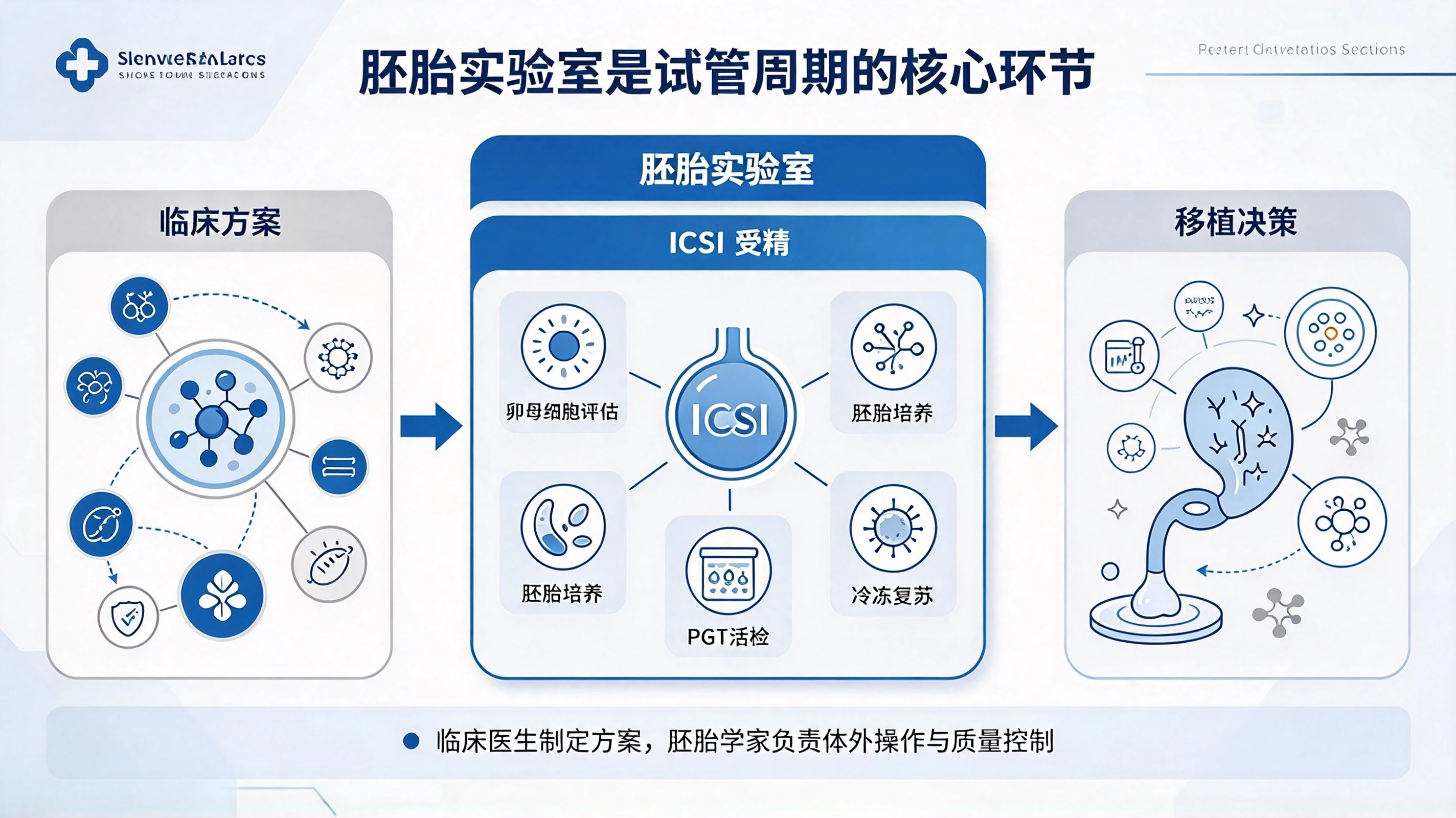
Read allMany couples planning for pregnancy prioritize the treatment plans of outpatient doctors when choosing assisted reproductive technology institutions, often overlookingEmbryology Laboratorycore role. From the moment the egg is retrieved from the body, oocyte sorting and assessment, sperm optimization, fertilization procedures, embryo culture, quality grading,Embryo biopsyAll critical steps, including cryopreservation and thawing, are performed by the embryology laboratory team. The technical proficiency of embryologists directly impacts fertilization success rates, embryo development quality, biopsy safety, and post-thaw survival rates, making it one of the core variables determining IVF outcomes.
Regarding the selectionCross-Border Assisted Reproductive TechnologyFor families, the problem of information asymmetry is even more pronounced. Rather than relying on the vague “success rates” promoted by institutions, gaining a clear understanding of the core laboratory leaders’ actual capabilities, technical boundaries, and quality control systems provides a more reliable basis for decision-making. From the perspective of individuals planning for pregnancy, this article comprehensively reviews relevant information by integrating publicly available academic data, local regulatory details, and disclosures made by the institutions themselves.Boten Huishi Reproductive HospitalDirector of the Reproductive Laboratory CenterChen Dongfengthe technical background, capability scope, and associated risks, providing neutral decision-making references for those in need.
I. Embryology Laboratory Director: An Indispensable Core Role in IVF Cycles
atTest tube babyThroughout the entire process, clinicians are primarily responsible for designing ovarian stimulation protocols and performing egg retrieval and embryo transfer procedures; all in vitro handling of gametes and embryos is led by the embryology laboratory team. For intracytoplasmic sperm injection (ICSI) and preimplantation genetic testing (PGT),PGT) as well as advanced age,Recurrent implantation failureFor such complex cases, the embryologist’s precision, experience, and emergency-handling skills are particularly critical to cycle outcomes:
Intracytoplasmic sperm injection (ICSI) is a micrometer-scale micromanipulation procedure, in which the operator’s proficiency and stability directly determine the success or failure of fertilization.
In the embryo biopsy stage of third-generation IVF, excessive force during manipulation can damage the embryos, while insufficient sampling may lead to failed genetic testing; this procedure is highly dependent on the operator’s experience and manual dexterity.
The cooling rate and operational techniques used in vitrification freezing directly determine the survival rate of embryos or oocytes after thawing.
From the perspective of technical quality control, the embryology laboratory director serves as the "technical gatekeeper" for IVF cycles, and their competence largely determines the upper limit of the laboratory's technical capabilities.
II. Multi-Dimensional Verification of Qualifications: Chen Dongfeng’s Technical Background and Information Discrepancies
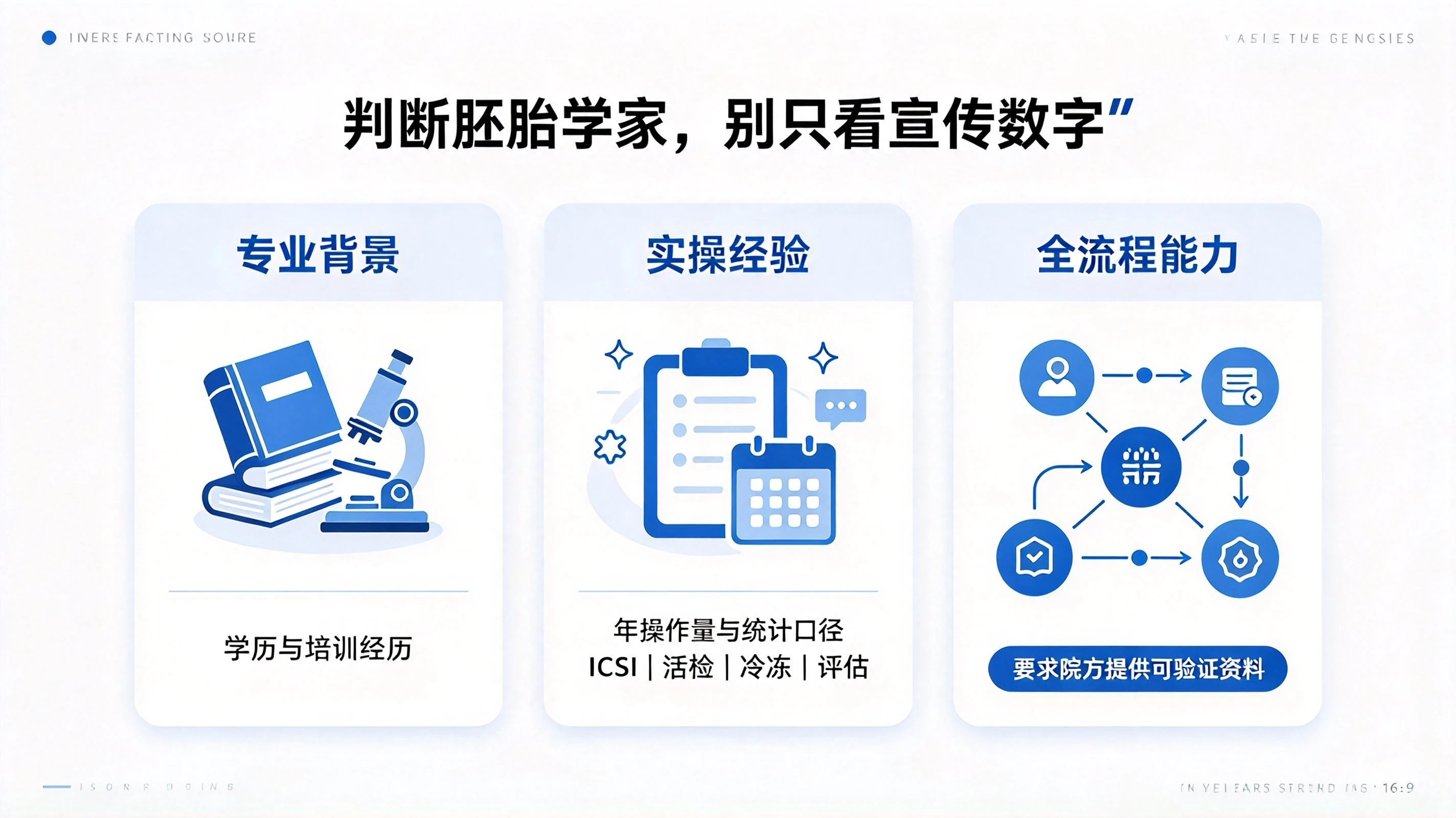
To assess the professional competence of embryologists, three core dimensions can be considered: the solidity of their academic background, the sufficiency of their hands-on experience, and the completeness of their technical coverage. By cross-referencing publicly available information with hospital promotional materials, several discrepancies worth verifying are identified; these are outlined below one by one.
1. Educational Background: Discrepancies Between Public Records and Official Statements
According to the hospital's public promotional materials, Chen Dongfeng graduated from the State Key Laboratory of Reproductive Regulation and Transgenic Technology at Guangxi Medical University, where he received systematic professional training in reproductive embryology.
Records retrievable from public academic databases indicate that Chen Dongfeng obtained his master’s degree in 2013 from the College of Animal Science and Technology, Guangxi University, majoring in Animal Genetics, Breeding, and Reproduction. His thesis focused on semen preservation techniques for boars. He was affiliated with the State Key Laboratory for Conservation and Utilization of Subtropical Agricultural Bioresources (Guangxi University), and his research field is animal reproductive technology.
Animal reproduction and human clinical embryology are distinct subfields, with clear differences in culture systems, operational protocols, and clinical requirements. It is recommended that patients verify the institution’s complete academic credentials and specialized training experience in human assisted reproductive technology prior to seeking care.
2. Practical Experience: "3,000 Cases per Year" Requires Clear Definition of Metrics and Quality Control Boundaries
The hospital’s promotional materials state that Chen Dongfeng has over 10 years of experience working in assisted reproductive technology (ART) embryo laboratories, independently completing more than 3,000 IVF embryo laboratory cycles per year. Embryo micromanipulation is a highly skill-dependent technique, with practical frequency directly correlating to stability; however, this data should be interpreted rationally from two perspectives:
First, it is necessary to clarify the statistical scope: individual operation volume or total team volume?At mainstream domestic reproductive centers, the typical workload for a single embryologist performing core micromanipulation procedures such as ICSI independently is approximately 1,000–2,000 cycles per year. A volume of 3,000 cycles handled by one individual over a full year would require processing more than 10 oocyte retrieval cycles per working day, representing a significantly higher operational burden than the industry average.
Second, there is a safety threshold for daily workload, and excessive burden can negatively affect embryo outcomes.A retrospective study published in Reproductive BioMedicine Online in 2025, which analyzed 4,651 ICSI cycles, found that when the number of oocyte pick-up (OPU) procedures performed on the same day was ≥5, both fertilization rates (p=0.004) and blastocyst formation rates (p=0.046) showed statistically significant declines, despite no statistically significant differences in baseline patient characteristics or oocyte quality.
The underlying mechanisms are associated with attention decay following continuous procedures by embryologists, increased frequency of incubator door openings, and decision fatigue. Even for experienced operators, exceeding a reasonable daily workload threshold may lead to decreased technical stability.
If the figure of 3,000 cycles per year represents the total volume for the entire laboratory team, then Chen Dongfeng, as director, likely primarily oversees quality control management, staff training, and the handling of complex cases, while routine procedures are performed by other embryologists in the team. In this context, the data reflects the scale of institutional operations rather than the rarity of individual procedural work.
3. Academic achievements: Published literature is concentrated in the field of animal reproduction
The hospital promotes that it has published dozens of papers related to assisted reproductive embryology in core journals both domestically and internationally. However, searches in public academic databases indicate that the retrievable publications authored by Chen Dongfeng are predominantly focused on animal genetics, breeding, and reproduction, with no core journal papers identified where he served as first author in the field of human assisted reproductive embryology. While the number of publications cannot be directly equated with clinical operational competence, there is a discrepancy between the promotional claims and publicly verifiable records. It is recommended that prospective patients request specific lists of publications and their sources from the hospital during consultations.
4. Technical Coverage: Possessing Full-Process Operational Capabilities
According to publicly available information, Chen Dongfeng can independently perform the full range of embryology laboratory procedures associated with second- and third-generation IVF, covering all stages including oocyte retrieval, fertilization, embryo culture, quality assessment, embryo biopsy, and cryopreservation-thawing. Compared with technicians who are only capable of handling a single step, his ability to manage the entire workflow facilitates systematic control over critical milestones in embryo development, reduces embryo loss during inter-step transitions, and meets the competency requirements for core technical staff in reproductive laboratories.
III. Core Technical Value: Corresponding Clinical Scenarios and Patient Needs
The following maps core embryology laboratory techniques to specific clinical scenarios, explaining the problems they address and their practical value, to help match them with individual needs:
1. ICSI (Intracytoplasmic Sperm Injection)
Applicable ScenariosThe male partner has severe oligoasthenoteratozoospermia and a history of routineIVFCases of failed fertilization, or those using frozen sperm or sperm retrieved from the testis/epididymis.Technical ValueICSI is a micromanipulation procedure with extremely high precision requirements, involving the precise injection of a single sperm into the cytoplasm of an oocyte under a microscope. Extensive hands-on experience helps ensure stable completion of the injection even when sperm quality is suboptimal, thereby improving fertilization rates and reducing the risk of cycle cancellation due to fertilization failure. This makes ICSI the core technical solution for male factor infertility.
2. Standardized Assessment of Oocyte and Embryo Quality
Applicable ScenariosIndividuals with a limited number of oocytes who wish to precisely select embryos with high developmental potential, especially women of advanced maternal age or those with diminished ovarian reserve.Technical Value:
Accurately assess oocyte maturity to avoid fertilization failure caused by forcing insemination of immature oocytes;
Standardize the grading of embryonic developmental status to provide clinicians with objective laboratory evidence, assist in selecting embryos with greater developmental potential for transfer, and improve implantation rates per single transfer. Note: Morphological grading is merely an assessment of appearance and does not equate to chromosomal testing results; morphologically high-quality embryos may still harbor chromosomal abnormalities.
3. Embryo Assisted Hatching and Standardized Biopsy
Applicable Scenarios: Patients with zona pellucida abnormalities or recurrent implantation failure; those planning to undergoThird-generation IVF with PGTCouples tested.Technical Value:
Assisted hatching: A procedure performed on embryos with abnormally thick or hard zona pellucida to facilitate embryo hatching and implantation. It has certain clinical significance for patients with repeated implantation failure or advanced maternal age, but it is not routinely required for all embryos.
Embryo biopsy: A standardized biopsy procedure can precisely obtain an adequate number of trophectoderm cells while minimizing damage to the inner cell mass, thereby ensuring both the sample adequacy and result accuracy for subsequent genetic testing, as well as reducing the impact of the biopsy on the embryo's developmental potential. This is a core guarantee of the safety and accuracy of third-generation IVF (PGT).
4. Vitrification Freezing and Thawing
Applicable Scenarios: YesFertility PreservationRequirements, PlansFrozen Embryo TransferIndividuals who need to cryopreserve their remaining embryos.Technical ValueVitrification cryopreservation is employed for the freezing and storage of embryos, oocytes, and sperm. Stable protocols achieve high post-thaw survival rates. Higher survival rates result in more available embryos, thereby reducing the physical and economic costs associated with repeated ovarian stimulation cycles.Decision PromptWhen consulting, it is essential to clarify the statistical criteria for survival rates after thawing—whether the data reflects all cryopreserved embryos or only high-quality ones, as the latter typically yields significantly higher rates than the former.
IV. Platform Capability Assessment: Hardware Configuration, Compliance Risks, and Hidden Costs
The performance of embryologists is highly dependent on the hardware infrastructure and management systems of their platforms, while choosing cross-border institutions requires additional attention to compliance and the hidden costs associated with seeking medical care abroad.
1. Laboratory Hardware: Configured to Industry Mainstream Standards
According to publicly available information from the hospital, Moding Huishi Fertility Hospital is located in the Financial Center of the Boten Special Economic Zone in Laos. The laboratory-related configurations are as follows:
Environment and Quality ControlFeaturing approximately 1,100 square meters of laminar flow embryo laboratories and reproductive genetics laboratories, with a quality management system established in accordance with international standards, the controlled temperature, humidity, and sterile environment provide fundamental assurance for in vitro embryo culture.
Equipment ProvisionEquipped with internationally mainstream instruments including Illumina sequencers, NARISHIGE micromanipulation systems from Japan, RI laser hatching systems from the UK, and IVFtech workstations, it supports micromanipulation procedures such as ICSI, embryo biopsy, and assisted hatching.
Detection capability: Build a molecular diagnostic platform based on next-generation sequencing (NGS), capable of performing tests such as karyotyping and single-gene disease screening. Embryo biopsy and genetic testing can be completed within the hospital, avoiding risks associated with sample transportation.
All of the above configurations are standard high-end setups for assisted reproductive technology (ART) laboratories, capable of supporting routine procedures for both second- and third-generation in vitro fertilization (IVF).
2. Compliance and Legal Risks: Dual Verification of Local and Home Country Regulations Required
Cross-border assisted reproductive technology involves the legal frameworks of both China and Laos, representing the most critical risk factor in decision-making; one should not rely solely on unilateral claims made by service providers.
Regulatory Landscape in Lao PDRBased on Laos’ publicly available medical regulations and official inspection activities in 2024–2025, the provision of assisted reproductive technology (ART) services is subject to strict qualification requirements, with only a limited number of public hospitals approved to offer such services. Starting in October 2024, Lao law enforcement authorities conducted targeted inspections of multiple private reproductive health institutions within the Boten Special Economic Zone; some were penalized for operating without specific ART practice licenses. While Boten Huishi Hospital claims to be “a high-end specialized hospital for assisted reproduction and genetics, established with approval from the Lao Ministry of Health,” its specific ART practice license number and scope of authorization cannot currently be verified through public channels. It is recommended that prospective patients require the hospital to present the ART-specific practice license issued by the competent Lao health authority before signing any agreement, ensuring clarity on which procedures are covered under the license (e.g., ICSI, PGT, gamete cryopreservation).
Legal Boundary Guidelines for ChinaChinese law explicitly prohibits fetal sex selection for non-medical purposes, bans surrogacy, and forbids any institutions or intermediaries from engaging inCross-border surrogacyillegal gender screening and other non-compliant services. When seeking assisted reproductive services abroad, individuals must comply with the relevant laws and regulations of both China and the host country, and remain vigilant about the legal risks and potential issues regarding rights protection associated with non-compliant services.
3. Hidden Costs and Procedural Risks of Cross-Border Medical Care
The hospital has an operational center in Kunming that provides services such as consultation coordination, itinerary arrangement, and full-process Chinese-speaking medical escort. Located near the Mohan Port in Yunnan Province, China, it offers relatively convenient travel for Chinese patients. However, it is important to note that cross-border medical care entails non-negligible hidden costs:
Some users have shared personal experiences on public social media platforms, stating that due to procedural issues with birth certificates and notarized documents, their children were stranded in Boten for several months after birth, incurring additional accommodation, living, and transportation costs, ultimately resulting in total expenses comparable to those incurred within China.
The notarization and document processing procedures involving both China and Laos suffer from uncontrollable progress and instances of institutional delays.
Budget tipThe “price advantage” of traveling to Boten for assisted reproductive services is highly dependent on a smooth process, first-time success, and timely return home. When formulating your budget, do not rely solely on comparing package prices; instead, include a total cost estimate for the scenario of a three-month stay, and factor in the time-related risks associated with document processing into your decision-making.
V. Self-Check for Suitable Candidates: Which Situations Warrant Focused Attention on This Team
If you meet any of the following criteria and can fully assess and accept the aforementioned compliance and procedural risks, you may include this institution and its laboratory team in your evaluation scope:
Families in which the male partner has severe oligoasthenoteratozoospermia or a history of conventional IVF failure, and for whom ICSI treatment is clearly indicated;
Couples planning to undergo third-generation IVF with PGT testing, who have high expectations for the safety of embryo biopsy and the accuracy of the testing;
Difficult cases involving advanced maternal age, recurrent implantation failure, and the need for refined embryo culture and quality assessment;
Individuals seeking fertility preservation with a need for cryopreservation of oocytes, sperm, or embryos, who prioritize the stability and reliability of cryopreservation and thawing technologies;
Ideal for cross-border medical families who prioritize Chinese-language services, convenient transportation, and seamless communication.
If you have stringent requirements for medical compliance, are highly sensitive to additional costs associated with prolonged stays, or are considering cross-border medical care solely because of lower prices, we recommend exercising caution and thoroughly weighing the risks before making a decision.
VI. Decision-Making Action Checklist: Core Questions to Ask and Principles for Judgment
Core List of Consulting Questions
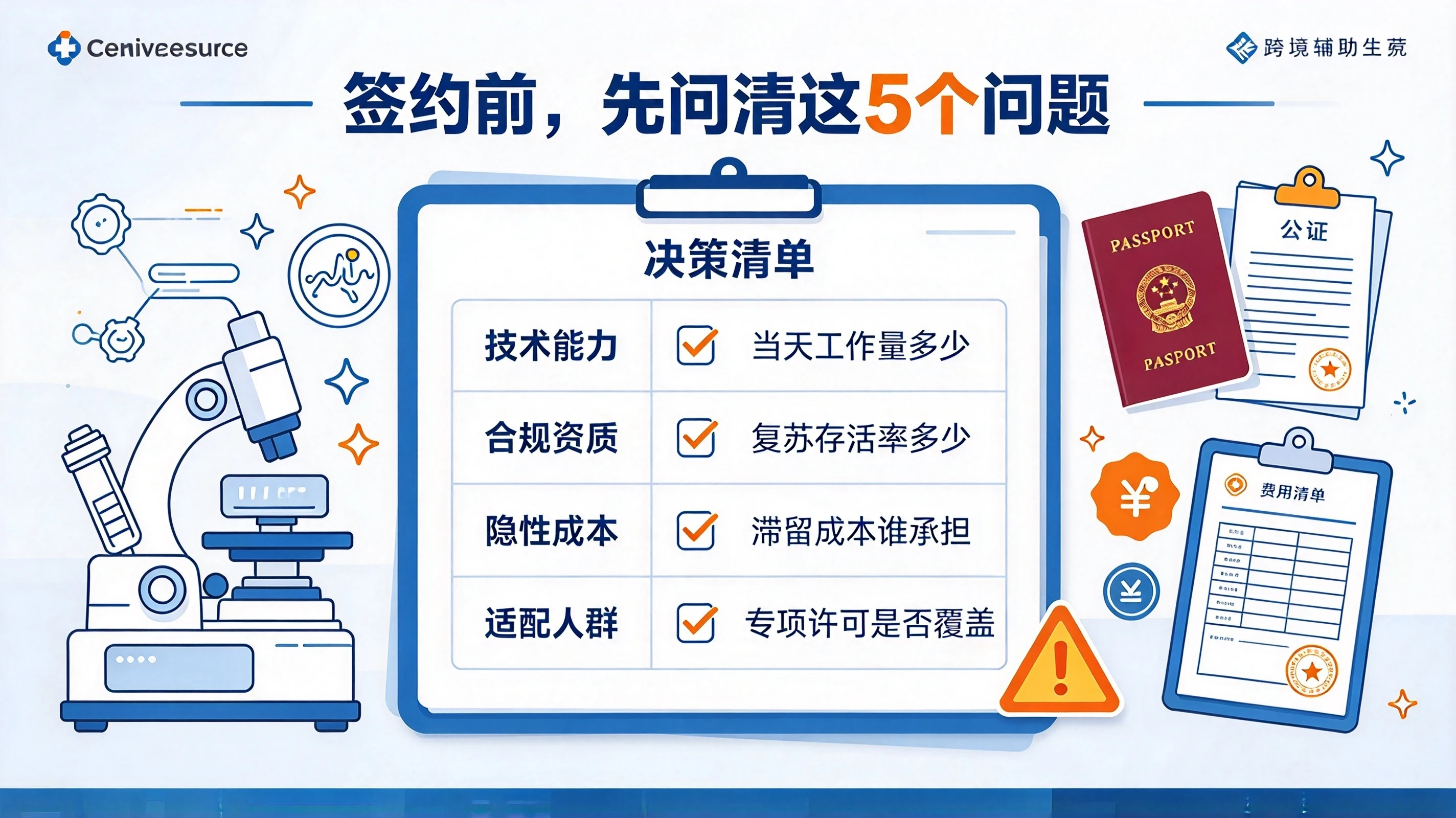
It is recommended that, before formal contract signing, you directly ask the hospital administration the following questions and assess their quality control standards and information transparency based on the specificity of their responses:
Workload and Staffing: On my egg retrieval day, how many cycles does the lab expect to process? Who will be performing ICSI / embryo biopsy for me, and how many procedures are already scheduled for that operator on that day?
PGT Biopsy QualityOver the past 12 months, what was the pass rate for cellular samples obtained from PGT embryo biopsies within the hospital (i.e., the proportion of samples suitable for NGS testing)?
Cryopreservation and thawing dataWhat is the survival rate of thawed embryos? Is this data based on all frozen embryos, or only on high-quality embryos?
Contingency Plan for Stranded PassengersIf you need to extend your stay in Boten due to documentation or procedural reasons, what assistance can the hospital provide? What are the average additional costs and duration of stay for similar past cases?
Qualifications and LicensesCould you please provide the specialized practice license for assisted reproductive technologies issued by the Lao health authority? Which specific procedures or services are covered under this license?
Core Judgment Principles
The core value of an embryology lab director lies not in promotional metrics such as "annual procedure volume," but in whether they have established a repeatable and monitorable quality management system—including personnel training thresholds, daily operational limits, dual-verification protocols, and full-process traceability mechanisms. If an institution can only market itself using "expert titles" or "high success rates," without providing specific quality control data and clear qualification documents, caution is warranted. Institutions that clearly articulate their standard operating procedures, quality control indicators, and risk contingency plans typically offer higher service reliability.
Frequently Asked Questions
The content on this website is general educational material and compiled public information about IVF. It is provided for reference only, does not constitute a basis for diagnosis or medical decision-making, and does not constitute any medical advice or treatment recommendation. For policy and technical requirements, please refer to official publications issued by the relevant authorities and institutions. If you find any content errors, numerical inconsistencies, or outdated information, please contact us so we can verify and update it.