
A Complete Pitfall Avoidance Guide for Egg Donation and Surrogacy Arrangements for Expectant Mothers in Hong Kong: Decoding Legal Red Lines in Reproductive Technology, Key Points of Medical Screening for Egg Donors, Methods for Verifying Licensed Institutions, Common Agency Scams, and Risks Associated with Cross-Border Gamete Transportation, Including Real Regulatory Cases and a Self-Check Checklist.
Read allIn understandingEgg donation, surrogate mother orCross-Border Assisted Reproductive TechnologyWhen seeking services, many people tend to prioritize comparing the age, physical health, and educational background of egg donors, or looking for surrogates with prior childbearing experience. However, in Hong Kong, China, what truly needs to be confirmed first is not "who has better qualifications," but three core prerequisites: whether the proposed assisted reproductive technology procedures comply with legal regulations, whether the relevant institutions hold the corresponding licenses, and whether personnel screening is conducted by a compliant medical team.
Unless these three issues are clarified, subsequent steps such as obtaining medical examination reports, signing service contracts, or even paying deposits do not imply that the relevant arrangements are lawful or can be smoothly implemented. It is particularly important to note that Hong Kong imposes strict legal restrictions on commercial surrogacy and the trade of gametes and embryos; the scope for legally permissible surrogate mother arrangements locally is extremely narrow and bears no resemblance to the “third-party egg donation plus surrogate pregnancy” service model commonly seen in the market.
This article provides a practical, actionable pre-verification decision reference across six dimensions: legal boundaries, screening of egg donors, eligibility criteria for surrogates, institutional qualifications, intermediary risks, and real-world regulatory cases.
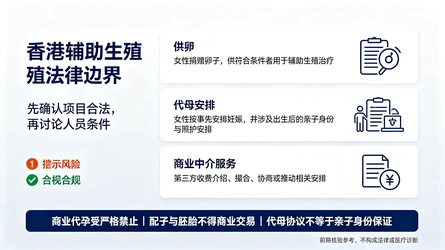
I. First, clarify the legal boundaries in Hong Kong: egg donation and surrogacy are not services that can be freely combined
Before screening personnel, it is essential to distinguish between three categories of conduct with different legal natures:
Egg donation: Eggs donated by women for use in assisted reproductive treatments by eligible recipients.
Surrogacy Arrangement: A pregnancy arranged in advance with a woman, involving arrangements for parental identity and childcare after the child’s birth.
Commercial Intermediary ServicesCharges collected by third parties for introducing, brokering, negotiating, or facilitating egg donation and surrogacy arrangements.
Three categories of conduct are subject to different legal rules, and it must never be assumed that the legality of egg donation implies the legality of a combination involving third-party egg donation and surrogacy.
Commercial surrogacy is comprehensively and strictly prohibited.
Section 17 of Hong Kong’s Human Reproductive Technology Ordinance (Cap. 561) explicitly prohibits commercial surrogacy arrangements. The prohibition extends not only to surrogates receiving remuneration, but also to all acts involving the negotiation, matchmaking, or compilation of information related to surrogacy arrangements for which fees are charged or paid, as well as activities such as recruiting paid participants and managing related organizations. The Hong Kong Special Administrative Region...
It is important to note that the provisions explicitly state that certain payment practices are subject to regulation whether carried out in Hong Kong or elsewhere. Individuals who knowingly participate in or advance arrangements involving prohibited payments, or who ought reasonably to have known of such involvement, may also face legal liability under The Medical... Therefore, merely having a surrogate mother located outside Hong Kong and signing contracts overseas does not provide complete immunity from Hong Kong law. Whether an offense has been committed must be determined through a comprehensive assessment of factors including the location of the parties’ conduct, the channels of payment, the degree of participation, and the level of knowledge.
Furthermore, the law also prohibits publishing or distributing advertisements related to surrogacy arrangements. Commercial surrogacy arrangements cannot evade legal constraints by changing the name of the contract, splitting payment items, or having payments received by overseas companies.
2. The scope of application for lawful surrogacy arrangements is extremely limited
Pursuant to Section 14 of the Human Reproductive Technology Ordinance and Paragraph 12.2 of the Code of Practice issued by the Committee on Human Reproductive Technology (CHRT), local reproductive technology procedures in Hong Kong used for surrogacy arrangements must simultaneously satisfy three core conditions:
The gametes used must all come from both parties to the marriage of the intended parents.The use of eggs or sperm donated by third parties is prohibited.;
My wife is unable to carry a pregnancy to full term.
For the wife, there are no other viable treatment options in human reproductive medicine...
This means that surrogacy arrangements under the local legal framework of Hong Kong inherently exclude the combination model of "third-party egg donation + surrogate." If intermediaries advertise "legal egg donation and surrogacy in Hong Kong," "local third-party egg donation combined with surrogacy in Hong Kong," or "commercial surrogacy completed through Hong Kong clinics," they should be required to provide clear legal basis, the names of licensed centers, and the scope of approved services. Oral explanations alone should not be accepted.
Additionally, pursuant to Section 15(5) of the Ordinance, Hong Kong prohibits providing reproductive technology procedures to individuals who are not in a marital relationship; consequently, single persons cannot legally access assisted reproductive services such as egg donation or surrogacy locally. Human Reproductive Technology...
3. Egg donation must not evolve into gamete trading
Section 16 of the Human Reproductive Technology Ordinance prohibits the commercial trading of gametes or embryos used in reproductive technology procedures. Egg donors cannot receive remuneration of a buy-and-sell nature based on the number of eggs, physical appearance, educational background, occupation, or so-called “high-quality egg sources.” The Hong Kong Special Administrative Region...
The permissible fee range under the law is limited to reasonable reimbursement for related costs such as egg retrieval, transportation, and storage, as well as donors’ direct expenses or loss of income arising from donation, with specific standards subject to Annex II of the Authority’s Code of Practice.
The following behaviors are all considered high-risk violation signals:
Pay additional compensation based on the number of eggs or their so-called quality grade;
Setting different "egg source prices" based on criteria such as educational background, appearance, height, and occupation;
Payments made by intermediaries to egg donors privately that are unrelated to the reimbursement of reasonable expenses;
Disguising the substantive gamete trade under names such as "nutritional subsidies," "gratitude payments," and "cooperation fees."
The key to making the determination lies not in the name of the fee, but in the true purpose of the payment, its calculation method, and the actual flow of funds.
4. The surrogacy agreement cannot guarantee that the intended parents will obtain parental rights.
Section 18 of the Human Reproductive Technology Ordinance explicitly stipulates that surrogacy arrangement agreements are not enforceable by courts. In other words, even if both parties have signed a contract, they cannot directly rely on the contract to demand that the surrogate mother hand over the child, nor can they seek court-ordered specific performance of all agreed terms under human reproductive technology...
Under the Parent and Child Ordinance (Cap. 429), the surrogate mother is the legal mother of the child at birth. If intended parents wish to obtain legal parental status, they must apply to the court for a parental order and satisfy a series of statutory conditions regarding residence, identity, and the welfare of the child. Any intermediary claiming that “signing the contract guarantees the child will be awarded to the intended parents” or “identity documents can definitely be processed directly after birth” constitutes misleading advertising that requires rigorous verification.
II. Screening of Egg Donors: The Core Focus is on Medical Risks, Not Physical Appearance or Educational Background
The core objective of egg donor screening is to minimize the risks of infectious disease transmission, genetic disorders, complications from egg retrieval, and inadequate informed consent. Sections 4.6 to 4.13 of the Code of Practice issued by the Human Reproductive Technology Authority of Hong Kong set out clear standards for gamete donor screening, age limits, consent, and counseling.
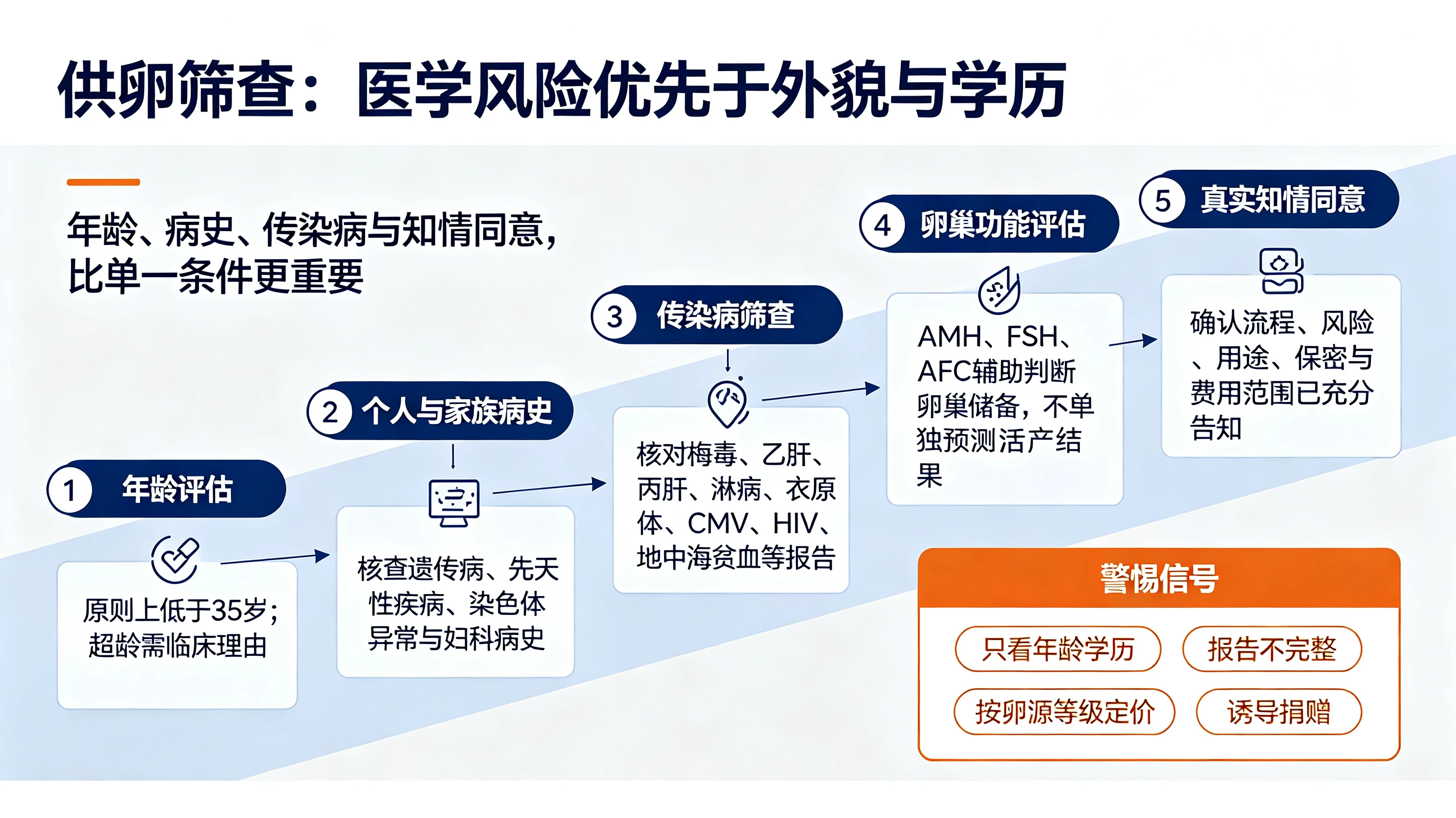
1. Age is a reference indicator, but not the sole criterion
The current code stipulates:
Female donors should, in principle, be under 35 years of age;
May be relaxed to candidates aged 35 and above where appropriate;
Only in exceptional circumstances may individuals over 40 be considered;
The reason for exceeding the age limit must be fully documented in the patient's medical record of the Human Reproduction Department...
Age affects the risk of chromosomal abnormalities in oocytes, but it alone does not determine oocyte quality. A proper assessment requires consideration of medical history, physical examination findings, ovarian reserve status, and clinical judgment by a healthcare provider. If an intermediary agency emphasizes only “youth,” “high educational attainment,” or “physical attractiveness” while failing to provide complete screening documentation issued by a qualified medical institution, such claims cannot be used to conclude that an egg donor is suitable for donation.
2. Focus on reviewing personal and family genetic medical history
Licensed centers should conduct a comprehensive assessment of the personal and family genetic disease history of potential donors, with core verification items including:
Whether there are hereditary diseases, congenital diseases, or known chromosomal abnormalities;
Is there a clear history of hereditary diseases in the family?
Is there a history of significant chronic diseases or major surgeries?
Whether there is any gynecological history that may affect the safety of egg retrieval;
Whether there are any mental or physical health issues requiring further medical evaluation.
It should be noted that,Extended carrier screening, karyotype analysis, and other tests should be conducted based on the doctor’s assessment of the patient’s medical history, familial risk, and clinical condition; they are not mandatory examinations uniformly required by Hong Kong law.
3. Infectious disease screening requires verification of the complete report, not verbal conclusions.
Appendix I of the Code of Practice explicitly outlines the infectious disease screening guidelines for egg donors, with the core items as follows:
Table
Check Category | Key Items for Verification |
|---|---|
Syphilis | Syphilis serological screening |
Hepatitis B | Hepatitis B surface antigen (HBsAg), Hepatitis B core antibody (anti-HBc IgG/IgM) |
Hepatitis C | Hepatitis C Antibody Test |
Gonorrhea | Pathogen Detection Associated with Neisseria gonorrhoeae |
Chlamydia | Chlamydia-related pathogen detection |
Cytomegalovirus | CMV IgG and IgM Antibody Detection |
AIDS | HIV Antibody Screening |
Thalassemia | Initial screening with mean corpuscular volume (MCV); further hemoglobin analysis if MCV is low |
Screening requirements vary across different use cases:
Fresh eggs: An HIV antibody-negative screening must be completed before donation; the guidelines recommend concurrent testing for HIV nucleic acid and hepatitis C virus (HCV) nucleic acid, but these two tests are recommended rather than mandatory in all scenarios.
Frozen donated eggs: Eggs must be quarantined for at least 180 days before they can be used for fertilization; the donor must confirm a negative HIV antibody test six months after donation, and only then may the eggs be used in accordance with regulations by the Department of Human Reproductive Medicine....
During screening and verification, institutions shall be required to clearly specify: which medical institution or laboratory performed the examination; whether the examination date complies with the validity period for use; whether the report includes complete items and results along with the institutional signature and seal; whether re-examination is necessary; and the evaluation or exclusion process for abnormal results.
4. Ovarian function assessment is not equivalent to egg quality
AMH, baseline FSH, and antral follicle count (AFC) help physicians assess ovarian reserve and response to ovulation induction; however, these markers do not directly equate to the euploidy rate of oocytes and cannot independently predict final live birth outcomes. If a clinic cites "high AMH" as the sole indicator of excellent egg quality or presents a single numerical value as a guarantee of success, patients should request that their physician explain the clinical significance and limitations of these metrics.
Meanwhile, egg donor screening must not only focus on whether recipients can obtain sufficient eggs but also assess the risks to donors from ovarian stimulation and egg retrieval itself, such as ovarian hyperstimulation syndrome, bleeding, infection, and anesthesia-related risks.
5. It must be confirmed that informed consent is genuine, complete, and voluntary.
Egg donors should be fully informed of the following: the complete process of ovarian stimulation and egg retrieval, potential pain, discomfort, and complications; screening tests and any health information they may reveal; the specific uses of the donated eggs; arrangements for identity confidentiality and data management after donation; and the scope and limitations of expense reimbursement.
It is strictly prohibited to induce donations from others by concealing risks, exaggerating benefits, applying economic pressure, or providing false information.
6. The number of times donated eggs are used must be verified for compliance.
Under the current code, gametes or embryos from the same donor may not be used in Hong Kong to produce more than three live birth events. Twins or triplets born from a single pregnancy are counted as one live birth event.
Licensed centres must apply to the Authority for approval before using donated gametes or embryos, in accordance with regulations, and maintain complete records of subsequent use, pregnancy outcomes, and births. If an intermediary claims that a particular egg donor has “donated only once,” but refuses to provide verifiable records from medical institutions or cannot explain previous donation history, licensed centres should be required to conduct further verification; reliance solely on oral assurances from intermediaries is insufficient for assessment.
III. Assessment of Surrogate Eligibility: First Confirm the Legality of the Arrangement, Then Discuss Medical Criteria
It must be particularly emphasized that the following content constitutes eligibility verification criteria for compliant surrogacy arrangements within the legal framework of Hong Kong, and does not encourage seeking or facilitating surrogates. Commercial surrogacy and related paid arrangements are prohibited by law, and this medical screening checklist should not be interpreted as an operational guide for commercial surrogacy.
1. Age and health must be assessed by an independent physician.
Paragraphs 12.3 and 12.4 of the Hong Kong Code of Practice stipulate that:
The eligibility of a surrogate mother should be determined byNot responsible for this surrogacy reproductive technology procedureindependent assessment by registered physicians
The assessment should cover marital status, pregnancy history, and physical and mental health conditions;
Women at high risk for pregnancy complications should not serve as surrogates;
The surrogate mother must be at least 21 years old.
The core principle is not simply to seek women who are “young and in good health,” but rather to have independent physicians comprehensively assess whether the pregnancy risks fall within an acceptable range.
2. A comprehensive assessment of pregnancy history and obstetric risks is required
The medical assessment should focus on understanding: whether there is a history of pregnancy and childbirth, whether severe pregnancy complications have occurred, whether there has been preterm birth, placenta-related diseases, or severe postpartum complications, whether there are uterine or other reproductive system disorders, whether there are underlying conditions that may increase pregnancy risk such as hypertension, diabetes, or cardiovascular disease, and whether the current physical condition is suitable for another pregnancy.
A prior history of successful pregnancy can serve as a reference for assessment, but “having at least one successful delivery” is not a mandatory requirement under Hong Kong law.
3. Psychological, familial, and social support require multidisciplinary assessment
Surrogacy arrangements involve not only the pregnancy itself but also post-birth family relationships, care arrangements, and potential psychological pressures. Under Hong Kong’s current guidelines, licensed centers are required to provide counseling through multidisciplinary teams for intended parents, surrogates, and their husbands (where applicable). These teams must include at least two registered doctors who are not the treating physicians, legal advisors well-versed in family law, social workers familiar with medical matters, and clinical psychologists who participate in assessments where appropriate.
Assessments must prioritize the child’s well-being, comprehensively evaluating all parties’ physical, mental, and social conditions; the availability of a stable support environment; their capacity to assume caregiving responsibilities; as well as family medical history, potential hereditary diseases, prenatal risks, and possible risks of neglect or abuse.
4. Marital status and spousal consent are mandatory procedural requirements
If the surrogate mother is married, Hong Kong’s current guidelines require that consent be obtained from both the surrogate mother and her husband. If an intermediary agency merely has the surrogate mother sign a simple letter of undertaking without disclosing her marital status, the requirement for spousal consent, or the legal implications, it cannot be considered compliant with the required procedures.
5. A surrogacy agreement cannot replace independent legal advice
The current Code of Practice in Hong Kong explicitly requires that both the commissioning couple and the surrogate mother be informed that the surrogacy arrangement agreement is not legally enforceable. Before signing the agreement, an independent lawyer familiar with Hong Kong family law should explain the following core issues:
Who is the legal mother at the time of the child's birth;
Procedures, time limits, and statutory conditions for the applicant to file a petition for a parentage order;
Legal consequences when a surrogate mother is uncooperative
Pathways for addressing health issues arising after a child’s birth, disputes over parentage, or conflicts regarding care.
Do not rely solely on the “standard contracts” or so-called “success cases” provided by intermediaries.
IV. Institutional Qualification Review: Licenses are the Core; Promotional Titles Cannot Substitute for Compliance
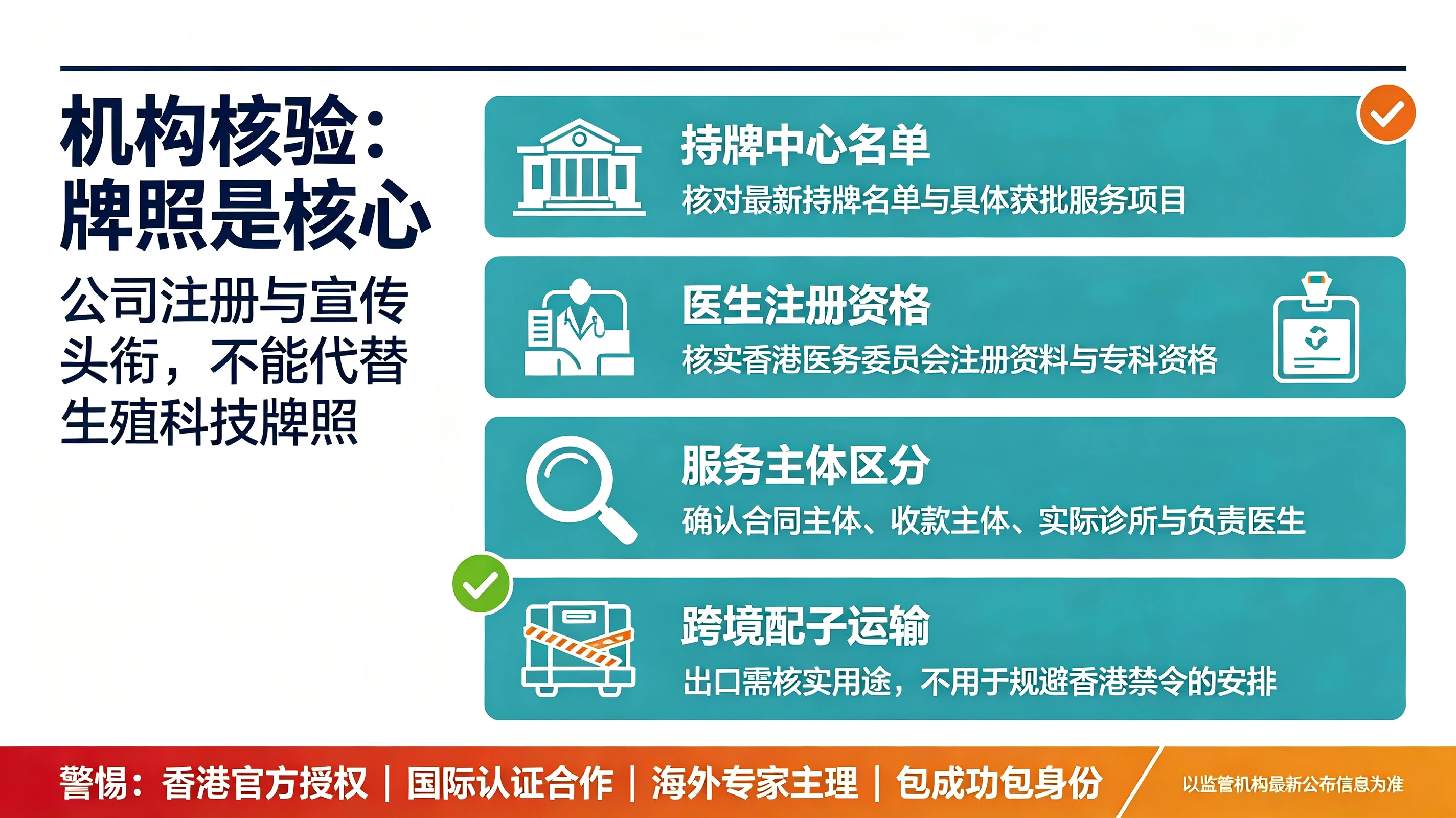
Reproductive technology services in Hong Kong are subject to strict licensing regulation. A company registration certificate, a business registration certificate, promotional materials of medical institutions, and overseas cooperation agreements cannot substitute for the relevant licenses issued by the Human Reproduction Technology Authority.
1. First, check the list of licensed centers and their service scope from the Regulatory Authority
All institutions in Hong Kong that legally carry out reproductive technology procedures are required to be registered with the Human Reproductive Technology Authority and hold a valid treatment licence. According to the publicly available list, there are 20 licensed treatment centres in Hong Kong, and the list also specifies the particular services each centre is authorised to provide.
It is important to note that holding a treatment license does not authorize the performance of all reproductive technology procedures. Each service intended for outsourcing should be carefully verified against the approved scope, including whether it has been authorized for implementation.IVF, whether oocyte retrieval is approved, whether embryo transfer is approved, and whether to proceedPGT, whether egg storage is approved, whether services related to egg donation are approved, etc.
According to publicly available licensing information, none of the 20 licensed centers have displayed an approved status for their “surrogacy arrangement” programs; therefore, any claims promoting “approved surrogacy centers in Hong Kong” are unsubstantiated. When verifying such information, rely on the latest list and scope of licenses published by the regulatory authority, and do not readily trust promotional terms such as “partner clinics,” “international certification,” or “official authorization” found on institutional websites.
2. Verify the doctor's Hong Kong registration and specialist qualifications
The doctor responsible for the treatment must be formally registered with the Medical Council of Hong Kong, and their specialist qualifications and actual practice status should be further verified. This can be done via the official website of the Medical Council of Hong Kong (https://www.mchk.org.hk/) to check doctor registration informationMedica...
Do not equate promotional titles such as “overseas expert,” “international consultant,” or “medical doctor” with legitimate practice qualifications in Hong Kong; doctors who are not registered in Hong Kong are prohibited from conducting assisted reproduction services locally.
3. Strictly distinguish between intermediary companies and licensed medical institutions
Agencies may provide ancillary services such as consultation, translation, appointment scheduling, and accommodation, but this does not authorize them to conduct regulated reproductive technology procedures. Before signing the contract, you must confirm the following information:
Who is the contracting party?
Who is the actual recipient of the payment?
Which licensed center provides the medical services;
Which registered physician is responsible for the specific medical services;
Does the clinic acknowledge its partnership with intermediaries?
Whether medical fees are collected directly by the clinic;
Whether the intermediary itemizes medical fees, service fees, and third-party charges separately.
If the intermediary refuses to disclose the actual clinic name or requires medical fees to be paid uniformly into a personal account, suspend payment and independently verify the information.
4. Cross-border gamete transport shall not be used as a means to circumvent the law.
Some institutions promote “egg retrieval in Hong Kong,Egg Freezing in Hong Kong...and then transported overseas for use," but cross-border transportation is not a legitimate way to circumvent Hong Kong's legal restrictions.
The current Code of Practice sets out explicit requirements for the use, transfer, and export of gametes and embryos. When handling relevant exports, licensed centres in Hong Kong must verify the intended use as prescribed and require clients to make a statutory declaration confirming that the gametes or embryos will not be used for purposes prohibited under sections 15, 16, and 17 of the Human Reproductive Technology Ordinance.
If an intermediary packages “first retrieving eggs or freezing embryos in Hong Kong, then transferring them overseas for commercial surrogacy” as a compliant solution, heightened vigilance is warranted. The legality of such intended uses must be verified through independent legal advice before any action is taken; one should not rely solely on the intermediary’s explanations.
V. Common Risk Traps: Identifying Concealment, False Advertising, and Last-Minute Price Hikes
1. Concealing the donor’s true health information
Common risks include: presenting only the conclusions of medical examinations without providing the full report, concealing previous donation history, failing to disclose a family history of hereditary diseases, using expired test reports in place of current screenings, and packaging health summaries created by intermediaries as if they were hospital reports.
Response approach: Require that the original records be reviewed by the licensed center actually responsible for treatment, and that physicians explain any abnormal findings and follow-up requirements. Documents involving personal privacy should be verified through compliant channels; intermediaries should not be asked to arbitrarily forward sensitive information such as others’ ID cards or medical records.
2. Replace medical screening with "high educational attainment and physical attractiveness"
Educational background, appearance, height, and occupation are not sufficient indicators of a donor egg’s genetic health or reproductive potential. If an agency markets attributes such as “elite university credentials,” “high attractiveness,” or “mixed-race genetics” as medical advantages without providing standardized screening protocols and risk disclosures, these claims should be regarded as marketing messages rather than medical evidence.
3. Exaggerating success rates or guaranteeing outcomes
All of the following statements constitute high-risk misleading claims: guaranteeing success on the first attempt, guaranteeing the acquisition of high-quality embryos, guaranteeing a live birth, guaranteeing the sex of the child, guaranteeing that no genetic diseases will occur, and guaranteeing that a specific residency status can definitely be obtained after birth.
Reproductive outcomes are influenced by various factors, including age, gamete quality, embryonic development, uterine conditions, and pregnancy complications. No institution should package uncertain medical outcomes as unconditional guarantees. Furthermore, Hong Kong prohibits non-medical sex selection of embryos; exceptions are permitted only to avoid severe sex-linked genetic diseases explicitly listed in the law, and subject to conditions such as written confirmation by a physician. The Hong Kong Special Administrative...
4. Low-price bait to attract customers, followed by step-by-step price increases
Common practices include: offering a low initial price to secure a contract, then charging various screening fees later; itemizing charges for medical fees, medication costs, anesthesia fees, and laboratory fees; adding unexpected compensation or coordination fees for egg donors at the last minute; raising prices under pretexts such as “special egg sources” or “priority matching”; and failing to clearly stipulate refund policies, repeat procedures, or alternative options in case of failure.
It is recommended to obtain a written breakdown of costs before making payment, clearly distinguishing at least medical fees, agency service fees, medication fees, examination fees, freezing and storage fees, cross-border transportation fees, and any potential additional expenses. Do not compare only the total price; also verify the service provider responsible for each cost item, the basis for the charges, refund conditions, and payment milestones.
5. Pressing for quick payment or refusing to provide a contract
If the other party repeatedly emphasizes "limited spots" or "if you don't pay today, no one will be selected," while refusing to provide a service contract, the actual name of the medical institution, licensing information, and refund terms, you should immediately halt the transaction. Legitimate medical decisions should not rely on creating anxiety or preventing independent verification.
VI. Real Cases: Both Legal Risks and Medical Process Risks Must Not Be Overlooked
Case 1: HSC v T — Parentage and the Limits of Legal Remedies in Cross-Border Surrogacy
The Court of First Instance of Hong Kong, heard in 2026HSC and Another v T [2026] HKCFI 770In one case, a couple arranged for surrogacy through a mainland intermediary, using the husband’s sperm and donated eggs. Two surrogate mothers became pregnant in Shenzhen and gave birth to two male infants. The case involved issues such as the surrogacy arrangement, parentage determination, and post-birth legal documentation. The court ultimately granted an extension of the application deadline based on the specific circumstances of the case and issued a parental order.
The core takeaways from this case are threefold:
The court explicitly found that the surrogacy arrangement in question involves commercial surrogacy regulated by Section 17 of Hong Kong’s Human Reproductive Technology Ordinance, and constitutes an arrangement that violates Hong Kong law;
The legal status of the mother at birth does not necessarily align with the expectations of the intended parents and must be confirmed through judicial proceedings.
The court’s granting of relief in individual cases based on the best interests of the child does not imply that the relevant surrogacy arrangements are thereby legalized, nor does it guarantee that other families can obtain similar outcomes.
Do not interpret the fact that “some individuals have resolved their identity issues through the courts” as evidence that “agencies can guarantee post-birth registration of legal status.” Ex post remedies involve high uncertainty and may also incur additional time, financial, and legal costs.
Case 2: Faking a Marriage to Secure a Birth Appointment – Criminal Risks of Identity Fraud
The Immigration Department of Hong Kong announced in September 2026 that a Hong Kong man was sentenced to 16 months' imprisonment for aiding mainland Chinese women in obtaining confirmation letters for delivery appointments at private hospitals in Hong Kong through sham marriages, conspiracy to defraud, and making false statutory declarations.
Although this case does not directly involve egg donation or surrogacy disputes, it highlights key risks: if service arrangements involve sham marriages, false statutory declarations, or the acquisition of medical services through deception, the individuals involved may face criminal liability. Consumers should not accept intermediaries’ suggestions such as “complete formal documents first,” “identity details can be supplemented later,” or “hospitals will not verify.” Any statements regarding marriage, parent-child relationships, identity, and medical appointments must be ensured to be true and accurate.
Case 3: Sample Misassignment Incident at Xiyu Reproductive Medicine Center — Holding a License Does Not Eliminate Process Risks
In 2026, an incident occurred at the Hong Kong Xi Yu Reproductive Medicine CenterEmbryo biopsySuspected mismatch incident involving tissue samples. According to a notification from the Human Reproductive Technology Authority, the incident involved embryonic biopsy tissue samples sent to laboratories for genetic testing. Verification confirmed that the embryos themselves were not mixed up and no erroneous implantation into human bodies occurred. Hong Kong SAR Government...
The authority subsequently suspended 14 of the center’s 17 treatment services, retaining only three storage services. In September 2026, the investigation findings were released, concluding that the incident was primarily caused by or involved deliberate unlawful acts by individuals, while also noting deficiencies in the center’s sample handling and storage protection protocols, as well as its failure to report significant risk events to regulators within 24 hours of identification as required. On October 6, 2026, the center resumed all services after implementing corrective measures. Hong Kong SAR Government...
This case illustrates that license verification must not be conducted only once at the time of contract signing; sample identification, double-checking procedures, storage management, and laboratory safety are equally critical. In the event of a risk incident, attention should be paid to regulatory investigation findings, corrective measures, and current licensing status, rather than equating "licensed institutions" with "zero operational risk."
7. Four-Level Pre-Signing Checklist
It is recommended to verify step by step according to the following priorities, rather than immediately diving into comparisons of egg donors' photos, educational backgrounds, and physical appearances.
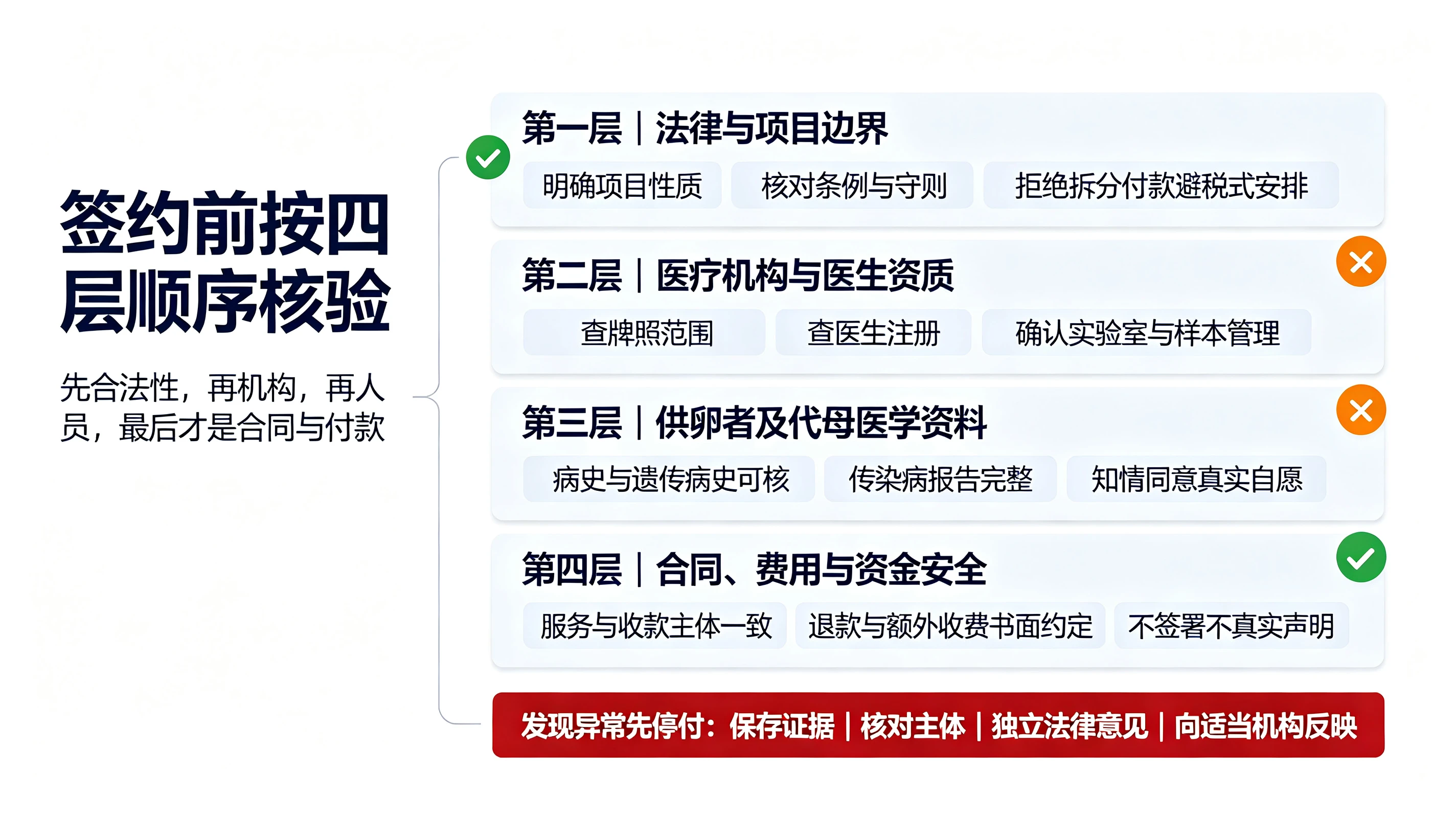
Layer 1: Legal and Project Boundaries
Clearly define the specific projects to be carried out: egg donation, IVF,Embryo cryopreservation, or arranged by the surrogate mother;
Confirm that the project complies with the Human Reproductive Technology Ordinance and the current Code of Practice;
If surrogacy arrangements are involved, confirm that all applicable conditions under Hong Kong’s local laws are satisfied;
Claims of circumventing the law through split payments, offshore contracting, or changing contract names are not accepted.
When gametes or embryos are used across borders, first verify the legal requirements of the exporting country and for the final intended use.
Level 2: Qualifications of Medical Institutions and Physicians
Check the list of licensed centres on the Human Fertilisation and Embryology Authority (HFEA) website.
Verify the center's license category and the specific approved services;
Verify that the location where medical procedures are actually performed matches the information on the license.
Verify the responsible doctor’s Hong Kong registration and specialist qualifications;
Confirm the laboratory, sample storage, and abnormal event handling mechanisms;
Determine whether the institution is subject to regulatory investigations, service suspensions, or rectification requirements.
Tier 3: Medical Records of Egg Donors and Surrogates
The egg donor's age, personal medical history, and family genetic disease history have been evaluated;
Infectious disease screening items and reporting dates comply with applicable requirements;
Items requiring re-examination or further evaluation have been clearly specified;
The egg donor fully understands the risks of ovarian stimulation and egg retrieval, as well as the consequences of donation.
The costs for egg donation only involve reasonable reimbursements in compliance with regulations;
If a surrogacy arrangement is involved, eligibility has been assessed by an independent registered physician;
Marital status, required spousal consent, and multidisciplinary counseling arrangements have been verified.
Level 4: Contracts, Fees, and Fund Security
The contract clearly specifies the service provider, medical institution, and actual payee;
Medical expenses, agency service fees, and third-party costs shall be itemized separately;
Payment milestones shall correspond to the actual progress of service delivery;
Refunds, cancellations, failures, and additional charges are subject to written agreements;
Do not make unexplained medical or intermediary payments to personal accounts;
Do not sign false declarations regarding marriage, parentage, medical matters, or purposes;
The contract has been reviewed by an independent attorney, particularly the provisions concerning overseas arrangements and parentage.
8. How to Handle Suspected Violations or Fraud
If you have already paid the fees, or if you suspect that the information provided by the intermediary may be false, it is not advisable to make additional payments or rush into signing a supplementary agreement. Please proceed with the following steps:
Preserve the evidenceRetain complete records of contracts, payment vouchers, bank statements, chat logs, promotional pages, emails, medical examination reports, and license documents provided by the other party;
Verify the subject: Verify whether the payee company, contracting company, actual clinic, and healthcare provider are consistent;
Seek Independent Legal Advice: When commercial surrogacy, cross-border gamete transportation, parentage issues, or false declarations are involved, consult a lawyer familiar with the relevant laws in Hong Kong;
Report to the regulatory authoritiesFor inquiries or complaints regarding services or codes of conduct at licensed reproductive technology centers, contact the Human Reproduction Technology Authority; for issues concerning professional conduct by doctors, consult the Medical Council of Hong Kong for complaint procedures; for suspected fraud or forged documents, report to the Hong Kong Police Force.
Handle refund recovery with cautionIf a contract involves arrangements that may be illegal, whether the funds can be recovered and whether the contractual terms are enforceable must be determined based on the specific facts and legal advice; such judgments cannot rely solely on intermediary promises or a refund agreement. In particular, do not continue to participate in false statements, fabricated identities, or other potentially illegal operations in an attempt to recover the funds.
Conclusion
In Hong Kong, egg donation and surrogacy arrangements are primarily governed by laws, licensing requirements, and medical regulations. While the age, health status, and genetic history of egg donors are important, such information must be screened and interpreted by compliant medical institutions; similarly, the physical and psychological suitability of surrogate mothers cannot be determined solely by intermediaries based on a medical examination report.
The truly prudent sequence for assessment should be as follows: first, confirm the legality of the project; second, verify that the institution is properly licensed and approved; third, validate the medical qualifications of the personnel involved; and finally, review the contract, payment terms, and cross-border legal implications. If a service provider urges clients from the outset to select egg donors or surrogates while refusing to disclose the legal basis of the program, the actual clinics involved, and the scope of their licenses, the issue typically lies not with inadequate personnel qualifications, but with the fact that the arrangement itself is not worth pursuing.
Electronic Hong Kong Laws (Cap. 561, Human Reproductive Technology Ordinance)
Center for Human Reproduction Technology (CHRT) Official Website
Medical Council of Hong Kong Official Website (Doctor Registration Verification)
Electronic Version of the Laws of Hong Kong (Cap. 429, Parent and Child Ordinance)
Immigration Department of the HKSAR Government Official Website
Frequently Asked Questions
The content on this website is general educational material and compiled public information about IVF. It is provided for reference only, does not constitute a basis for diagnosis or medical decision-making, and does not constitute any medical advice or treatment recommendation. For policy and technical requirements, please refer to official publications issued by the relevant authorities and institutions. If you find any content errors, numerical inconsistencies, or outdated information, please contact us so we can verify and update it.