


I. Organization Profile: From In Vitro Clinic to LeaderMed
IN VITRO CLINIC(currently branded asLeaderMed) is an assisted reproductive medicine clinic located in Tbilisi, the capital of Georgia. Formerly known as In Vitro Clinic, it primarily offers in vitro fertilization (IVF), egg donation, sperm donation,Embryo cryopreservationSave andGestational surrogacyand other services.
According to historical records published on the official website, In Vitro Clinic was founded in 1998 and performed Georgia's first case in 2000.Test tube babyBirth. Subsequently, the institution gradually introducedEgg donation, surrogacy, and gamete cryopreservation, among other assisted reproductive technologies.
In 2012, the original team focused on "In Vitro" human reproductive health andArtificial inseminationThe clinic continued to provide specialized services under its original name; in 2021, the institution expanded its scope of medical services and officially operated under the LeaderMed brand, gradually developing into a comprehensive medical facility offering assisted reproductive technology, gynecology, outpatient care, surgery, and obstetric services.
The institution’s official website also states that it has been operating as an affiliated clinic of Tbilisi State Medical University since 2010. While this history and affiliation are part of the institution’s public disclosures, it is recommended to request supporting documentation from the institution regarding the specific nature of the cooperation and its current status.
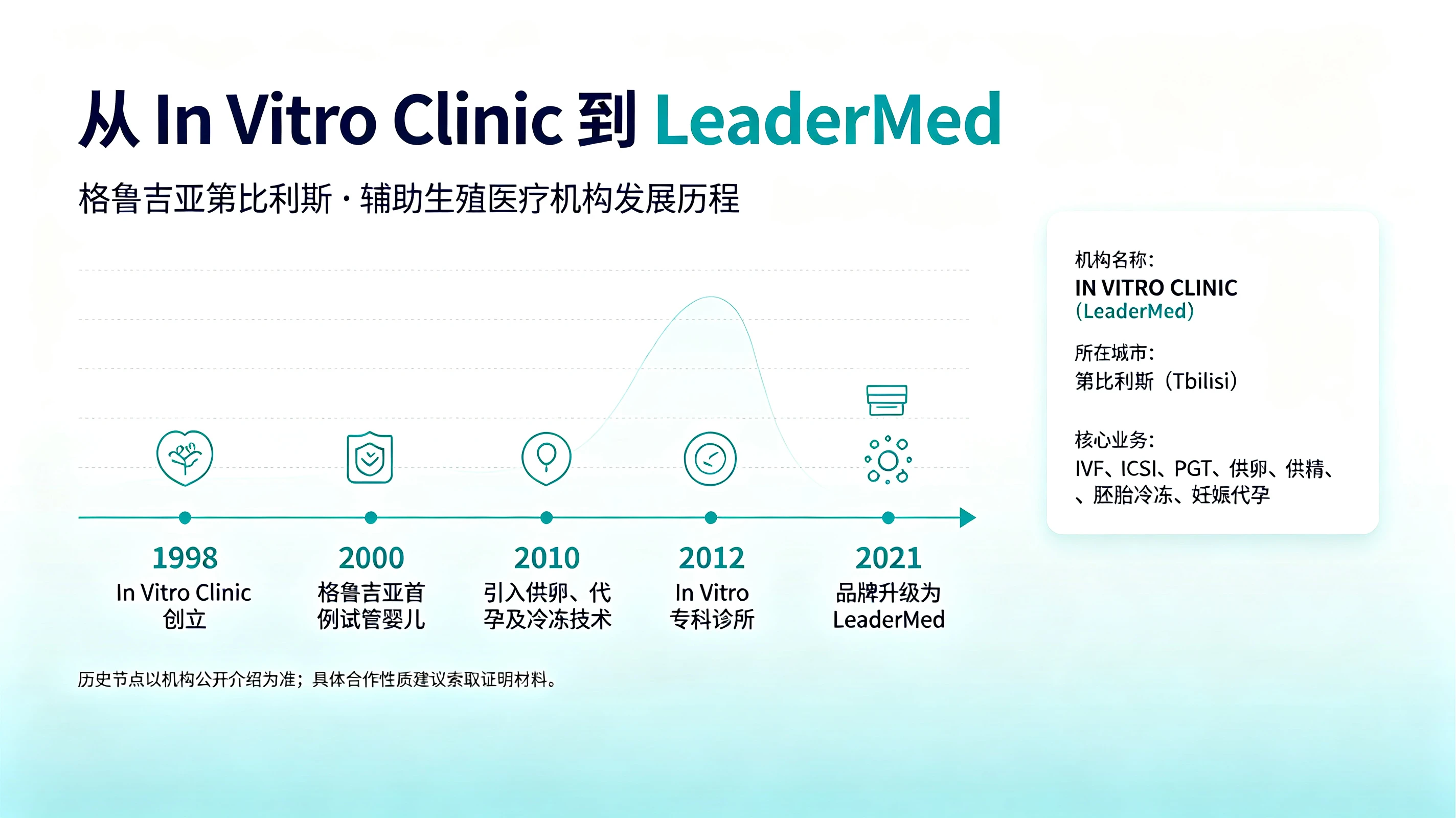
Basic Information of the Institution
Project | Institutional Information |
|---|---|
Institution Name | IN VITRO CLINIC (LeaderMed) |
Former name | In Vitro Clinic |
Country | Georgia |
City | Tbilisi |
Year of Foundation | 1998 (published on the official website of the institution) |
Brand Upgrade | 2021 |
Founder | Professor Natalia Khonelidze (as listed in the institution and related introductions) |
Core Business | IVF,ICSI/PGTegg donation, sperm donation, embryo cryopreservation, gestational surrogacy |
Medical Type | Assisted Reproductive Technology and Multidisciplinary Comprehensive Medical Care |
Official website |
Development History of the Organization
Time | Key Development Milestones |
|---|---|
1998 | In Vitro Clinic founded |
The year 2000 | Institution announces birth of Georgia's first IVF baby |
2005 | The institution claims to be the first to introduce egg donation, surrogacy, and cryopreservation of sperm and eggs. |
2010 | The institution announced that it has become an affiliated clinic of the National University Hospital. |
2012 | Continue operating under the name In Vitro Specialty Clinic |
2021 | The brand has been upgraded to LeaderMed, expanding into a multidisciplinary medical institution. |
It should be noted that the aforementioned pioneering achievements are primarily derived from the institutions’ own historical accounts and cannot yet all be regarded as industry rankings or uniqueness conclusions verified by independent historical archives.
II. Qualifications and Medical Team
1. International Medical Accreditation
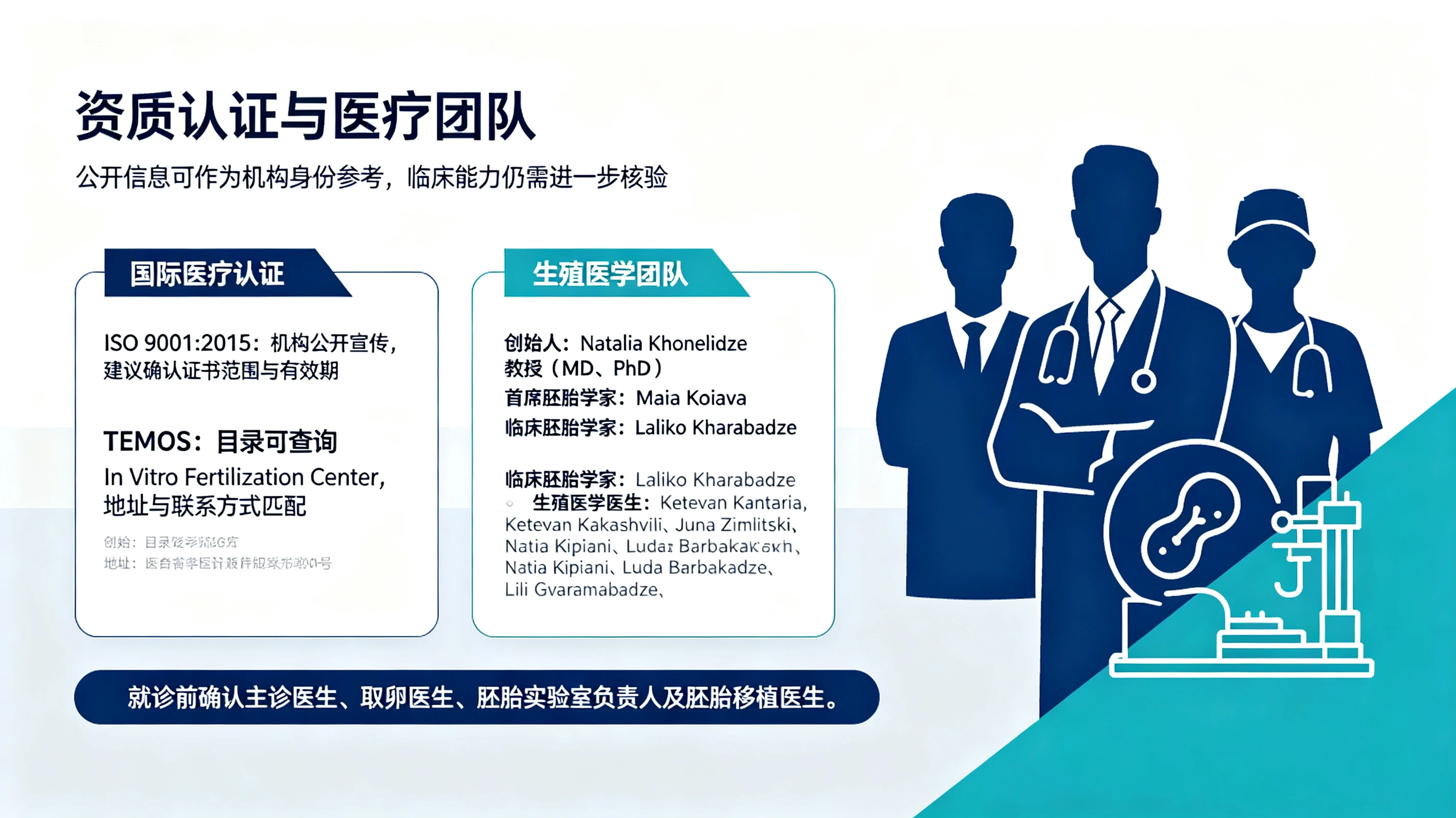
LeaderMed has publicly disclosed information on quality management and healthcare service certifications, including ISO 9001:2015 and TEMOS International Healthcare Accreditation.
Among them, the official TEMOS directory lists a Georgian medical institution named In Vitro Fertilization Center, whose registration details match LeaderMed’s contact information and address.
The public information in the TEMOS directory includes:
Institution Name: In Vitro Fertilization Center
City: Tbilisi;
Country: Georgia;
Address: Nodar Bokhua Street
Tel: +995 322157777
Type of Medical Institution: Secondary Care
Registered beds: 39
Opening time of the directory record: February 2021.
It is necessary to distinguish here: TEMOS directory registration can serve as supporting evidence for an institution's identity and its medical service-related records, but it cannot be directly equated with certification of clinical outcomes in reproductive medicine.
Regarding ISO 9001:2015, although the institution has publicly advertised its certification, the validity period and specific scope of the current certificate cannot be confirmed solely based on the promotional webpage. It is recommended to request the certificate number, certification scope, and expiration date before your visit.
2. Core Medical Team
The institution’s founder and historical overview mention Professor Natalia Khonelidze (MD, PhD), who is positioned by the institution asAssisted Reproduction in GeorgiaAn early pioneer in the field of medicine.
The reproductive medicine team currently publicly listed on LeaderMed’s official website includes:
Healthcare workers | Public office |
|---|---|
Maia Koiava | Chief Embryologist |
Laliko Kharabadze | Clinical Embryologist |
Ketevan Kantaria | Obstetrician-gynecologist, reproductive medicine specialist |
Ketevan Kakashvili | Obstetrician-gynecologist, reproductive medicine specialist |
Juna Zimlitski | Obstetrician-gynecologist, reproductive medicine specialist |
Natia Kipiani | Obstetrician-gynecologist, reproductive medicine specialist |
Luda Barbakadze | Obstetrician-gynecologist, reproductive medicine specialist |
Lili Gvaramadze | Obstetrician-gynecologist, reproductive medicine specialist |
The above list is compiled based on the publicly available personnel introductions on the institution's current official website and does not represent a complete roster of all employees across the entire institution.
Medical Advice: The patient should further confirm the actual attending physician, egg retrieval doctor,Embryology LaboratoryThe person in charge and the embryo transfer physician, rather than assessing treatment capabilities solely based on the founder's credentials or the number of team members advertised.
III. Core Assisted Reproductive Technologies
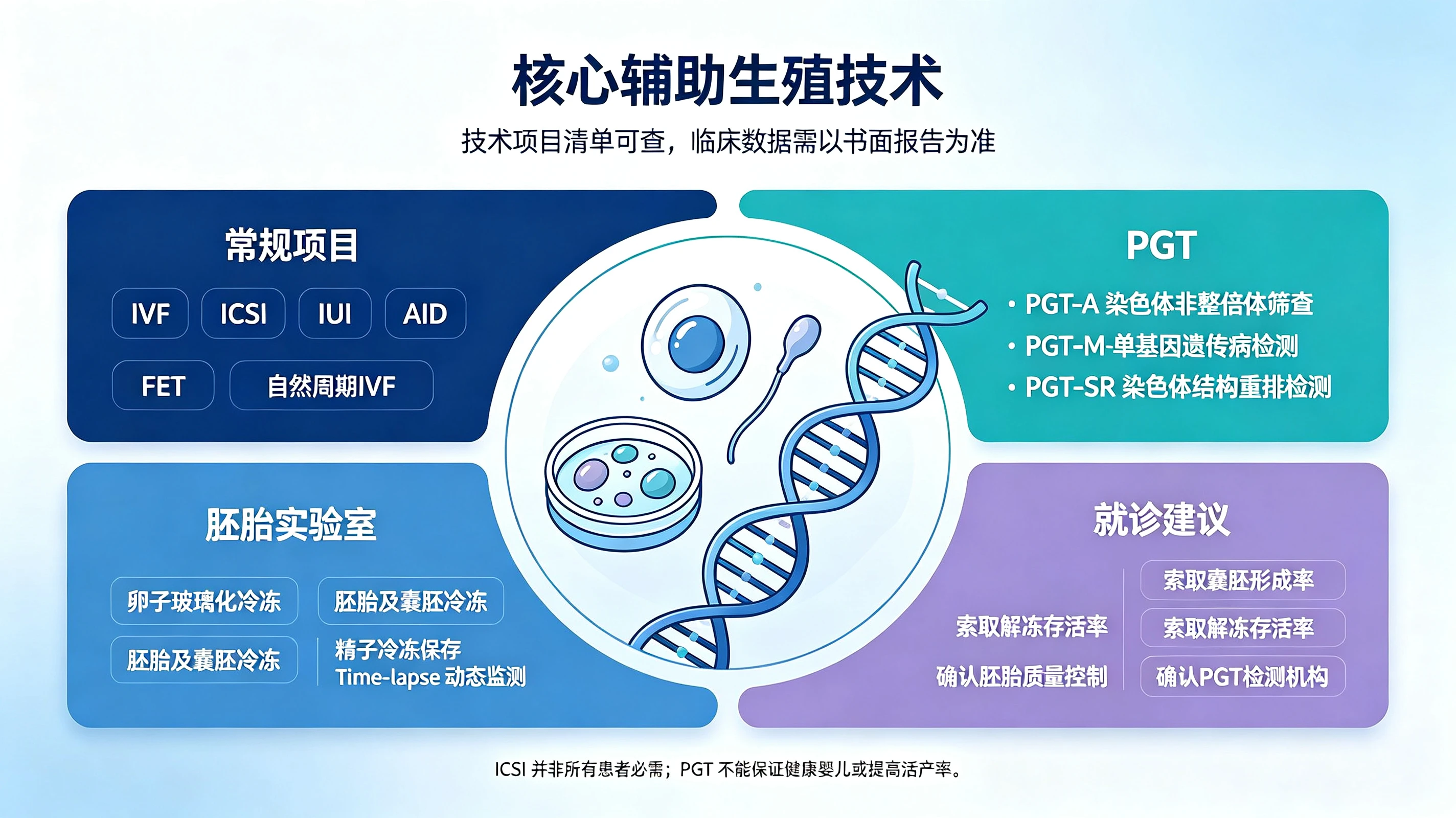
The assisted reproductive technologies publicly listed on LeaderMed's official website include conventional IVF, ICSI, preimplantation genetic testing, and gamete and embryo cryopreservation.
1. Conventional Assisted Reproductive Technology (ART) Procedures
Technology | Main functions |
|---|---|
IVF (In Vitro Fertilization) | The union of egg and sperm is completed within the laboratory. |
ICSI (Intracytoplasmic Sperm Injection) | Injecting a single sperm into an egg, applicable to cases of male factor infertility |
IUI (Intrauterine Insemination) | Inject the processed sperm into the uterine cavity |
AID (Artificial Insemination by Donor) | Artificial insemination using donor sperm |
FET (Frozen Embryo Transfer) | Embryo transfer after thawing cryopreserved embryos |
Natural cycle IVF | Conduct treatment under natural ovulation or with minimal pharmacological intervention |
It should be emphasized that ICSI is not a technique required for all IVF patients. The choice between conventional IVF and ICSI should be determined by the physician based on the male partner's semen analysis, previous fertilization history, and specific medical indications.
2. Preimplantation Genetic Testing (PGT)
The institution's official website publicly offers the following genetic tests:
Project | Detection Content | Main applicable scenarios |
|---|---|---|
Embryo Chromosome Aneuploidy Screening | Assess based on age and clinical condition | |
PGT-M | Detection of Specific Monogenic Genetic Diseases | The couple has a clear risk of genetic diseases. |
PGT-SR | Detection Related to Chromosomal Structural Rearrangements | The presence of chromosomal translocations, inversions, and other such abnormalities |
PGT can help identify specific genetic risks, but it does not guarantee a healthy baby, nor does it mean that the live birth rate will increase for all patients who undergo PGT.
In particular, the value of performing PGT-A should be assessed based on factors such as maternal age, number of embryos, genetic background, and prior treatment history; it should not be routinely recommended for all patients.
3. Embryology Laboratory and Assisted Reproductive Technologies
The institution's official website also lists:
Vitrification cryopreservation of oocytes;
Cryopreservation of embryos and blastocysts;
Sperm cryopreservation
Time-lapse embryo dynamic monitoring
Surgery related to sperm retrieval;
Preimplantation Genetic Testing
These technologies serveFertility Preservation, including different needs such as embryo culture observation and male factor infertility.
Please note that a public list of technical projects cannot replace the laboratory’s quality report. It is recommended that patients request further information:
Head of the Embryology Laboratory and Professional Qualifications
Blastocyst formation rates in different age groups;
Embryo freezing and thawing survival rate;
Laboratory quality control and sample verification system;
PGT testing institutions and a complete sample report.
IV. Egg Donation, Sperm Donation, and Gestational Surrogacy
A distinctive feature of LeaderMed's business is that, in addition to conventional IVF, it openly offers programs related to egg donation, sperm donation, and gestational surrogacy.
1. Egg donation service
Egg donation is typically indicated for cases of severely diminished ovarian function, age-related decline in egg quality, or other conditions that make the use of a patient’s own eggs unsuitable for treatment.
According to the LeaderMed official website, its egg donor screening includes:
Assessment of past medical history and physical condition;
Gynecological examination and ultrasound
Screening for infectious diseases;
Chromosome karyotype analysis
Carrier genetic disease screening
The official website states that carrier screening covers up to 2,000 genetic disorders; however, this figure refers to the institution’s advertised testing scope and should not be interpreted as meaning that all donors undergo the same panel of tests, nor does it guarantee the exclusion of all genetic risks.
Key items for the patient to verify:
Whether egg donors are fully informed and voluntarily participate;
Whether there is an independent informed consent procedure;
Can de-identified screening results be viewed?
Whether the source of the eggs and the rules for their use are clearly specified;
Is there a mechanism for addressing the health risks and medical complications of egg donors?
2. Sperm Donation Services
According to the institution’s official website, its sperm sources include Cryos International and European Sperm Bank.
Before actual treatment, verify the source of sperm bank samples, screening for infectious and genetic diseases, sample transport conditions, costs, and usage authorization. Partner channels do not imply that all patients can select samples without restriction.
3. Gestational surrogacy
The surrogacy programs publicly listed on LeaderMed’s official website include:
Use of gestational surrogacy with oocytes from the intended parents;
Pregnancy surrogacy using donated eggs;
Surrogacy protocols for HIV-positive patients;
Use frozen transport embryos for surrogacy.
The surrogacy screening criteria published by the agency include:
Age 25–38;
At least one biological child;
The number of cesarean sections should not exceed one;
Undergo gynecological and ultrasound examinations;
Undergo screening for infections such as HIV, hepatitis B, hepatitis C, and syphilis;
Undergo tests including a complete blood count, thyroid function, and blood glucose.
These are the project selection criteria publicly disclosed by the institutions, not the nationally unified statutory surrogacy standards in Georgia.
Please note: The provision of a specific surrogacy service by an agency does not imply that all nationalities, marital statuses, and family structures meet local legal requirements. Client eligibility must be verified before discussing treatment plans and pricing.
V. Medical Facilities and Comprehensive Diagnostic and Treatment Services
LeaderMed has expanded from a specialized assisted reproductive medicine institution to a multidisciplinary medical institution.
The relevant medical services listed in TEMOS's public directory include:
Assisted Reproductive Technology and Obstetrics & Gynecology;
General Surgery;
Plastic Surgery;
Nephrology;
Gastroenterology;
Cardiology;
Hematology;
Tumor-related diagnosis and treatment;
Diagnosis and treatment related to infectious diseases;
Ultrasound and imaging examinations.
The TEMOS directory simultaneously records 39 beds.
For patients undergoing assisted reproductive technology, the key aspects to focus on are the egg retrieval operating room, anesthesia support, embryology laboratory, post-procedure observation, and emergency complication management capabilities, rather than the number of general departments.
VI. Clinical Success Rate: Publicly Advertised Data Cannot Replace Live Birth Rates
LeaderMed's official website has announced promotional data stating that over 15,000 babies have been born.
However, no complete clinical statistical report has yet been found that can independently verify the following metrics:
Live birth rates for autologous IVF across different age groups;
Live birth rate per initiation cycle
Live birth rate per embryo transfer;
Live birth rate per oocyte donation cycle;
Live birth rate after PGT-A treatment
Embryo thawing survival rate and blastocyst formation rate.
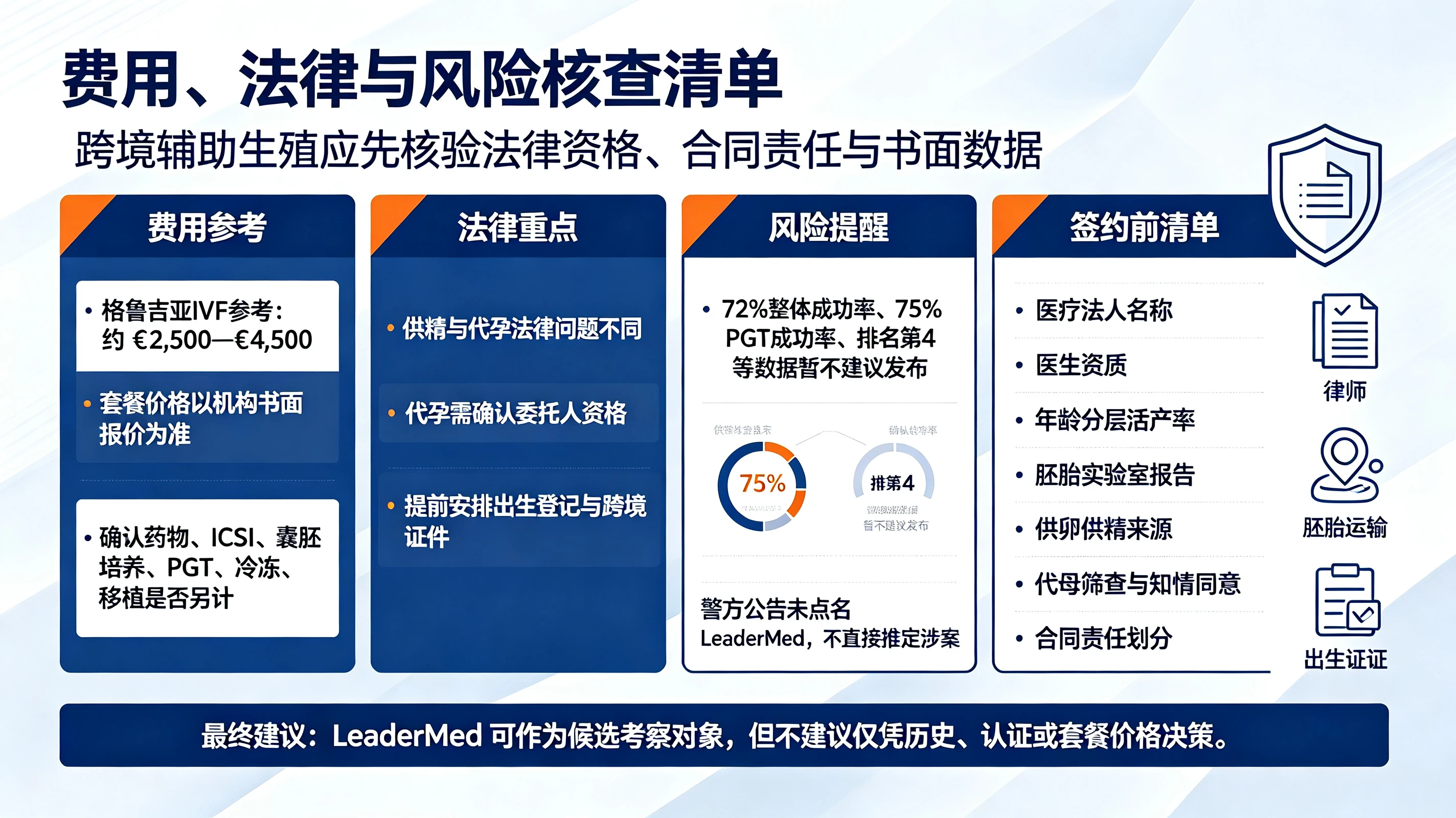
Therefore, the data in the original materials—including the overall success rate of 72%, the success rate for younger patients of 65%, the PGT success rate of 75%, and Georgia's ranking at No. 4—is not recommended for publication.
When comparing different institutions, patients should first standardize the statistical criteria.
Metrics | Representational Meaning |
|---|---|
Clinical pregnancy rate | Proportion of patients achieving clinical pregnancy criteria after treatment |
Embryo transfer pregnancy rate | Pregnancy rate per embryo transfer |
Live birth rate per cycle | The proportion of live births per initiated treatment cycle |
Cumulative Live Birth Rate | The proportion of live births achieved after a defined treatment cycle or multiple transfers |
It is recommended to request age-stratified live birth data from the institution for the most recent two to three years, and to require that the number of cases, the statistical period, the source of oocytes, and the number of embryo transfers be clearly specified.
To determine whether a fertility center is right for you, look at live birth data that matches your age, egg source, and treatment plan, rather than just the cumulative number of births.
7. Fee Reference: Based on Written Quotation
The FAQ published on the LeaderMed official website states that the average cost of IVF in Georgia is approximately:
€2,500–€4,500
The average reference fees for IVF in Georgia published on the institution’s official website are not fixed prices for all treatment programs at LeaderMed.
This fee varies depending on the patient’s condition and treatment plan. The institution’s FAQ does not provide a complete price list that covers all stages of treatment.
Main Cost Components
Project | Charges to be confirmed |
|---|---|
In vitro fertilization (IVF) using autologous oocytes | Check-up, ovarian stimulation medications, egg retrieval, fertilization, and embryo culture |
Egg donation IVF | Donor Screening, Egg Processing, and Related Medical Costs |
Sperm donation | Sperm Bank Sample, Transportation, and Storage Fees |
PGT | Embryo biopsyGenetic testing and re-examination fees |
Embryo cryopreservation | Initial Freezing and Subsequent Storage Fees |
Endometrial preparation, medication, and transplantation costs | |
Surrogacy | Surrogacy screening, medical management, delivery, and legal service fees |
The EUR 5,580 package in the original materials, along with fees ranging from RMB 70,000 to 170,000, lack sufficient official hospital quotation evidence and should not be directly labeled as LeaderMed’s official pricing standards.
We recommend confirming before signing the contract.
Does the quotation include ovulation induction medications?
Whether ICSI is included;
Whether blastocyst culture is included;
Is PGT charged separately?
How are the costs for embryo freezing and storage calculated?
Does frozen embryo transfer require an additional fee?
How fees are charged when a cycle is canceled or no transferable embryos are obtained;
Does the surrogacy package include legal services for childbirth and post-birth matters?
For international patients, separate budgets should be allocated for visas, round-trip airfare, accommodation, translation services, and local transportation.
VIII. Georgia's Assisted Reproductive Technology Laws: Distinguishing Between Sperm Donation and Surrogacy
Assisted reproductive technology in Georgia is primarily governed by Articles 141–144 of the Georgian Law on Public Health.
This version is based on the consolidated text published by the Georgian Official Legislative Gazette platform as of June 10, 2026.
1. Article 141: Sperm Donation
Article 141 permits the use of donated sperm under conditions prescribed by law, including for single women undergoing donor insemination.
Under the provisions, a single woman who undergoes related treatment after obtaining written consent shall be legally recognized as the mother of the child born following such treatment, and the donor shall not thereby acquire the status of father.
This indicates that Georgian law has clear provisions regarding single women receiving sperm donation treatment.
However, this does not directly imply that single women can also be accepted for gestational surrogacy.
2. Article 143: IVF and Gestational Surrogacy
Article 143 stipulates that IVF may be used for the treatment of infertility and in cases where there is a risk of transmitting genetic diseases, using gametes or embryos from either both spouses or donors, provided that written consent is obtained from both spouses.
For gestational surrogacy, the provisions stipulate that in cases where a woman lacks a uterus, an embryo formed may be transferred to another woman’s uterus, subject to the written consent of both spouses.
Upon the birth of a child, spouses who meet the requirements of this article shall be deemed the legal parents, and neither the donor nor the surrogate mother shall thereby acquire parental status.
This point requires especially careful understanding:
Single women receiving sperm donations and single women seeking surrogacy are distinct legal issues;
The provision of Article 141 cannot be directly extended to allow single individuals to use surrogacy;
Article 143 explicitly mentions the written consent of both spouses and the situation where the woman has no uterus.
Should notSurrogacy in GeorgiaThis is summarized as being freely available to all foreigners, unmarried partners, or same-sex partners.
Therefore, prior to the actual application, a local independent attorney should provide a written opinion based on the client’s marital status, nationality, medical condition, and the latest administrative requirements.
3. Article 144: Cryopreservation of Gametes and Embryos
Article 144 permits the use of cryopreserved male and female gametes and embryos for assisted reproductive treatment.
For patients undergoing cross-border transportation of frozen embryos, the following should also be verified:
Records of the initial formation and preservation of embryos;
Written authorization from the person to whom the embryo belongs;
Transport agreement between the originating clinic and the receiving clinic;
Transportation temperature and sample handover records
Relevant import/export and customs requirements.
4. Post-Birth Documents and Repatriation Procedures
Georgian law establishes parental status for intended parents who meet the eligibility criteria, but this does not mean that international patients automatically receive all post-birth documents.
Chinese national families should consult local lawyers and the Chinese Embassy in Georgia in advance:
How is a birth medical certificate issued?
What documents are required for birth registration?
Is it necessary to entrust both parents to be present?
Whether the document requires certification and translation;
How to apply for applicable ChinaTravel Documentpiece;
How to determine a child's nationality and complete the procedures for returning to China.
It is recommended that responsibility for birth registration and cross-border documentation be clearly established before embryo transfer, rather than addressed on an ad hoc basis after the child’s birth.
IX. Visit Process and Schedule
According to the FAQ on LeaderMed’s official website, a standard fresh embryo transfer cycle typically takes about 18–20 days from the start of ovarian stimulation to the transfer. International patients usually need to stay in Georgia for approximately 10–14 days.
Standard IVF Procedure
Remote Initial Consultation: Submit prior medical records, AMH levels, hormone tests, ultrasound reports, and semen analysis results.
Arrival in Tbilisi: Complete the necessary medical examinations and confirm the treatment plan.
Ovulation Induction: Develop an ovulation induction protocol based on ovarian reserve and previous treatment history.
Egg and sperm retrieval: Complete egg retrieval, and proceed with conventional IVF or ICSI as appropriate.
Embryo Culture: Observe fertilization and embryo development.
Embryo Transfer or Cryopreservation: The decision between fresh embryo transfer and frozen embryo transfer is made based on the condition of the endometrium and embryos.
Pregnancy Test Follow-up: Perform blood HCG tests and subsequent ultrasound examinations as scheduled by the doctor.
If PGT is required, embryo biopsy, testing, and frozen embryo transfer scheduling must also be considered, which may prolong the actual treatment cycle.
Surrogacy Program Timeline
The average cycle time for surrogacy programs, as published in the agency's FAQ, is approximately 16–18 months. Egg-donor surrogacy programs may also require an additional preliminary waiting period of about 2–3 months.
The actual time is affected by the following factors:
Donor and surrogate matching;
Medical screening;
Embryo preparation;
Number of transplants;
Pregnancy and delivery status
Birth registration and cross-border document processing.
The above times are reference values provided by the institution and are not guaranteed completion deadlines.
X. Institutional Disputes and Risks: What Needs to Be Verified?
1. 2025 Investigation into Surrogacy Involving Thai Women in Georgia
On February 6, 2025, the Ministry of Internal Affairs of Georgia issued a statement announcing that, pursuant toBangkokInformation provided by Interpol has been used to launch investigations into cases suspected of human trafficking.
The announcement disclosed that police questioned several foreigners, and three Thai women stated they were unwilling to continue serving as surrogate mothers; police subsequently transferred them to a victim shelter. The case remained under investigation at the time of the announcement.
It should be specifically noted that this announcement by the Georgian police did not name LeaderMed, nor did it provide evidence that the clinic was involved in any related criminal activities. Therefore, this incident cannot be directly presented as a fact implicating LeaderMed.
But this incident hasCross-Border Assisted Reproductive TechnologyThe industry serves as a cautionary tale: informed consent for egg donors and surrogates, recruitment channels, safeguarding of personal identification documents, medical coverage, and the right to withdraw voluntarily should all be key components of institutional oversight.
2. Risks related to contracts and birth certificates
Cross-border surrogacy involves not only medical contracts, but also agency agreements, surrogate mother contracts, birth registration, and the processing of relevant documents.
Before signing the contract, it should be clearly defined:
Which legal entity provides the medical services;
Does the intermediary have the right to collect payments on behalf of the clinic?
Will the intermediary’s outstanding debts affect the medical services already purchased by patients?
Who is responsible for keeping the medical records, embryo data, and birth-related documents;
How to protect patients' rights when payment disputes arise;
Who is responsible for the specific delivery of the birth certificate.
In particular, it is essential to avoid conflating medical service contracts with intermediary service contracts. Payments for medical expenses, compensation for the surrogate mother, legal services, and other service fees should be itemized separately.
Regarding isolated disputes over birth documents between certain Chinese clients and institutions that have circulated online, there is currently insufficient independent public information to verify the course of events or assign responsibility. It is therefore not advisable to present these as established facts of institutional violations.
3. Authenticity of promotional data
Currently, some data on different pages of the institution may cause misunderstandings:
Promotional Content | Publishing Processing |
|---|---|
Established in 1998 or 1999 | Based on the 1998 date listed on the main historical page of the official website |
Cumulative number of births | May be labeled as institutional self-report; not to be used as independent clinical evidence |
72% overall success rate | Lacking statistical basis, not published |
75% PGT success rate | Lack of statistical methodology; not released |
Georgia ranks 4th | Due to the lack of authoritative ranking sources, it will not be published. |
8 doctors and 3 embryologists | Subject to the current list of personnel available on the official website |
€5,580 Package | No official pricing without a formal quote from the clinic. |
Such discrepancies in information cannot directly prove that the institution has committed any violations, but they indicate that patients should request verifiable original documents from the institution.
XI. Which Patients Should Consider This?
Patient Needs | Suggestion |
|---|---|
Conventional IVF treatment | Can be included in the list of candidate institutions, with a focus on verifying live birth rates |
Male factor infertility | Understanding ICSI and sperm retrieval options |
Clear risk of genetic disease | Verify the actual testing procedures for PGT-M and PGT-SR |
Egg or embryo freezing required | Verification of frozen storage and thawing management |
Egg donor needed | Focus on verifying donor screening and informed consent |
Sperm donation needed | Verify the source of the sperm bank and sample transportation |
Gestational surrogacy is required | Legal qualification review must be completed first |
Sperm donation for single women | Further consultation may be conducted in accordance with Article 141. |
Surrogacy Application for Single Individuals | Eligibility should not be determined solely based on institutional claims. |
Patients positive for HIV, hepatitis B, or hepatitis C | Individual medical assessments are required; all applicants cannot be automatically accepted. |
XII. Pre-Visit Checklist
Before formal contract signing, it is recommended that patients request the following documents from LeaderMed:
Verification Items | Items to be confirmed |
|---|---|
Institutional Qualifications | Medical Corporation Name, Registration, and Medical License |
Doctor Qualifications | Primary Physician's Medical License and Professional Experience |
Laboratory | Head of the Embryology Laboratory and Quality Control System |
Clinical outcomes | Age-specific live birth rate |
Embryo culture | Blastocyst formation rate and thawing survival rate |
PGT | Testing agencies, scope of projects, and sample reports |
Egg donation | Donor Screening and Informed Consent |
Sperm donation | Source and Transportation Records of the Sperm Bank |
Surrogacy | Client Eligibility and Independent Legal Opinion |
Charges | Full project quotation and additional fees |
Contract | Allocation of Responsibilities Between Medical Institutions and Intermediaries |
Postnatal Services | Birth registration, document delivery, and cross-border certificate processing |
XIII. Institutional Address and Contact Information
IN VITRO CLINIC (LeaderMed)
Address: 21 Nodar Bokhua Street, Tbilisi, Georgia
Tel: +995 32 2 157 777
Official Website:https://www.leadermed.net/
14. Comprehensive Evaluation: Historical Accumulation Does Not Equal Clinical Effectiveness; Service Completeness Deserves More Attention
IN VITRO CLINIC (LeaderMed) is one of the earliest medical institutions in Georgia to offer assisted reproductive services. With a long-standing history in the industry, it has developed a comprehensive service system centered on IVF, encompassing egg donation, sperm donation, embryo cryopreservation, genetic testing, and gestational surrogacy.
Based on publicly available information, its main features include:
First, it has a long history in the assisted reproductive technology industry. The institution's official website traces its development history back to 1998, citing Georgia's first IVF baby in 2000 as a key milestone.
Second, the technical services cover a wide range. The official website publicly offers procedures including IVF, ICSI, PGT-A, PGT-M, PGT-SR, as well as gamete and embryo cryopreservation.
Third, there are queryable records in the third-party medical institution directory. The official TEMOS directory lists an In Vitro Fertilization Center whose address and contact information match those of LeaderMed.
Fourth, multiple ancillary services are provided for international patients, including remote consultations, egg donation, sperm donation, surrogacy, and coordination for international patients.
However, the institution's history, accreditation records, and technical projects do not directly prove clinical success rates. The currently available public information is insufficient to support previously promoted data such as an overall success rate of 72%, a PGT success rate of 75%, and a ranking of fourth.
For conventional IVF patients, age-stratified live birth rates, embryology laboratory quality, and treatment costs should serve as the primary criteria for decision-making. For egg donation recipients, particular attention should be paid to verifying donor rights and screening documentation. For surrogacy arrangements, an independent legal review of intended parents’ eligibility, contractual responsibilities, and post-birth certificate processing must be completed prior to initiating treatment.
Final Recommendation: LeaderMed can be considered as a candidate for evaluation among Georgian assisted reproductive technology (ART) clinics. However, it is not advisable to make treatment decisions based solely on its historical standing, the number of technologies offered, or package prices. The key factors in determining whether it is suitable for you are the transparency of medical outcomes, the protection of third-party rights, and the smooth coordination of cross-border legal procedures.
Photos and videos
View all 5 photos
Business Highlights
Core Advantages
Facilities
More
History of the LeaderMed Institution
LeaderMed IVF Technology and Medical Team
Introduction to LeaderMed's Egg Donation and Surrogacy Services
LeaderMed Official FAQ and Fee Description
LeaderMed Official Contact Information
TEMOS International Directory of Medical Institutions
TEMOS In Vitro Fertilization Center Institutional Profile
Official Legislative Gazette of Georgia: Law of Georgia on the Protection of Health
Frequently Asked Questions
The content on this website is general educational material and compiled public information about IVF. It is provided for reference only, does not constitute a basis for diagnosis or medical decision-making, and does not constitute any medical advice or treatment recommendation. For policy and technical requirements, please refer to official publications issued by the relevant authorities and institutions. If you find any content errors, numerical inconsistencies, or outdated information, please contact us so we can verify and update it.