


I. Institutional Overview: A Specialty Clinic Centered on Reproductive Medicine
Wang Jiawei Obstetrics and GynecologyClinic for Reproductive Medicine andTest tube babyCenter (brand abbreviationW BestIVFEnglish nameDr. Wang Reproductive Fertility Center) is located in Xinyi District, Taipei City, Taiwan, China. It is a private specialty clinic dedicated to infertility diagnosis, assisted reproductive technology (ART) treatments, and fertility preservation.
The center was founded by Dr. Wang Jiawei,Officially opened in 2016After ten years of development, it has established a comprehensive system covering reproductive medicine outpatient services and WEmbryology Laboratorya comprehensive healthcare system encompassing nursing care and international patient services. Compared with general hospitals, this institution focuses on womenReproductive Endocrinology/Diagnosis and Treatment of Infertility, in vitro fertilization and related reproductive technologies, with highly specialized services.
As of 2026, the Center celebrates its tenth anniversary, with a brand philosophy that"Best IVF, We do our best", emphasizing medical professionalism, individualized treatment, and comprehensive patient care.

Basic Institutional Information
Table
Project | Institutional Profile |
|---|---|
Chinese Name | Wang Chia-Wei OB/GYN Clinic Reproductive Medicine and IVF Center |
English name | Dr. Wang Reproductive Fertility Center |
Brand Name | |
Year of Establishment | 2016 |
Nature of the Organization | Private Obstetrics, Gynecology, and Reproductive Medicine Specialty Clinic |
Core Business | Infertility diagnosis and treatment,IVFIUIFertility Preservation |
Person in Charge | Dr. Jiawei Wang |
Core Laboratory | W Embryology Lab (W Lab) |
International Services | An international medical zone and dedicated consultation channels are available. |
Official website |
Two clinical locations
The center has two affiliated medical facilities, both of which are listed on the roster of licensed assisted reproduction institutions published by the Taiwan Society for Reproductive Medicine (updated as of November 2025):
Wang Jiawei Obstetrics and Gynecology ClinicNo. 60, Section 2, Keelung Road, Xinyi District, Taipei City, Tel: 02-2758-6966, Emailbivfservice@gmail.com
Jiawei Fertility Clinic1st Floor, No. 525, Guangfu South Road, Xinyi District, Taipei City; Tel: 02-2758-6162
Medical AdviceDifferent treatment procedures may be performed at different campuses. Please confirm your actual clinic location and surgical arrangements before your initial visit.
II. Core Medical Team
Jiawei Wang, Dean | Founder
Dr. Chia-Wei Wang is the center’s founder and core medical director, with comprehensive specialist training in obstetrics and gynecology as well as reproductive endocrinology:
Educational BackgroundGraduated from the Department of Medicine at National Taiwan University; holds a PhD in Clinical Medicine from the Institute of Clinical Medicine at Taipei Medical University
Key Experiences:
Former Director of the Department of Infertility and Deputy Director of the Department of Obstetrics and Gynecology at Taipei Medical University Hospital
Senior Attending Physician in the Department of Obstetrics and Gynecology at Linkou Chang Gung Memorial Hospital
Reproductive Endocrinology and Infertility Research Scholar at New York University (NYU)
Associate Professor of Clinical Medicine at Taipei Medical University
Director of the Taiwan Society of Reproductive Medicine and Secretary-General of the Asia-Pacific Association for Gynecologic Endoscopy and Minimally Invasive Gynecology
Official materials state that Dr. Wang Jiawei has over 20 years of clinical experience, while the international page indicates nearly 30 years of medical experience, reflecting slight differences in statistical methodology.

Medical Team Staffing
In addition to the Director, the Center has a complete team of specialist physicians:
Xie ChangzhiVice President
Chen Qianwen, Vice Dean
Vice President Lu Beijia
Dr. Yang Zonghan, Attending Physician
Dr. Zhuang Zhiji
Huang Zhenying, Attending Physician
Chen Yuru, Anesthesiologist
Staffed with senior embryologists, nurses, consultants, and international medical service personnel to cover all roles throughout the assisted reproductive process.
Medical AdviceWhen selecting an institution, do not focus solely on the dean's reputation; it is recommended to verify details in advance.Actual attending physician, oocyte retrieval surgeon, embryology laboratory director, and embryo transfer physicianThe stability and communication efficiency of the person in charge at each stage directly impact the treatment experience.
III. Major Clinical Services and Technical Support
1. In Vitro Fertilization (IVF)
In vitro fertilization (IVF) is the core service, with a standard process that includes:
Fertility Assessment and Ovarian Reserve Testing
Individualized Ovulation Induction Protocol Design
Follicle Monitoring and Medication Dosage Adjustment
Oocyte retrieval (under anesthesia)
Sperm Processing and In Vitro Fertilization
Embryo Culture and Quality Grading
Fresh embryo transfer or full-embryo cryopreservation
Post-Transfer Pregnancy Testing and Early Pregnancy Monitoring
The center emphasizes individualized treatment, tailoring protocols for patients with advanced maternal age, diminished ovarian reserve, and recurrent failures. Ovarian stimulation strategies are based on scientific data, typically targeting 10–15 oocytes per retrieval cycle to maximize cumulative pregnancy rates.
2. ICSI (Intracytoplasmic Sperm Injection)
Intracytoplasmic sperm injection (ICSI), in which a single sperm is directly injected into the oocyte cytoplasm via micromanipulation, is suitable for:
Severe oligoasthenozoospermia
Abnormal sperm morphology with risk of fertilization failure
Prior conventional IVF fertilization failure
Cases requiring intracytoplasmic sperm injection (ICSI) after surgical sperm retrieval
NoteICSI is not mandatory for all IVF patients, and its routine use is not recommended in the absence of clear medical indications.
3. Preimplantation Genetic Testing (PGT)
Provided by the centerPGTRelevant technical services are classified under clinical standards as follows:
Table
Technology | Purpose of Detection | Main Applicable Scenarios |
|---|---|---|
Embryo Chromosome Aneuploidy Screening | Advanced age, recurrent miscarriageRecurrent implantation failurePending evaluation | |
PGT-M | Single-Gene Genetic Disease Testing | A couple carrying a clear pathogenic gene |
PGT-SR | Detection of Chromosomal Structural Rearrangements | One spouse has a chromosomal structural abnormality such as translocation |
Important NoticePGT-A cannot guarantee implantation or live birth, nor can it exclude all genetic disorders. The decision to undergo testing should be made by comprehensively considering factors such as age, the number of embryos available, medical history, and cost; when the number of usable embryos is limited, it is particularly important to weigh the potential benefits against the risk of embryo loss.
4. Intrauterine Insemination (IUI)
Inject sperm that have been optimized through processing into the uterine cavity to shorten the distance for sperm-egg meeting. Applicable to:
Mild male factor infertility
Infertility persists after ovulation induction for ovulatory dysfunction
Unexplained Infertility
At least one fallopian tube is patent
Decision ReferenceFor women with advanced age, tubal abnormalities, or severe male factor infertility, the benefits of IUI are limited; direct evaluation for IVF is recommended.
5. Egg Freezing and Fertility Preservation
Central ProposalEgg donationOocyte vitrification and freezing services, suitable for needs such as delaying childbearing and medically indicated preservation.Egg freezingPre-implementation Assessment:
Actual Age and Ovarian Reserve (AMH, Antral Follicle Count)
Expected Number of Oocytes Retrieved and Required Number of Egg Retrieval Cycles
The complete cost of future thawing, fertilization, culture, and transplantation
Rational CognitionEgg freezing preserves eggs at a specific age, not permanent fertility. The ultimate success rate is influenced by multiple factors, including survival after thawing, fertilization, embryo development, and transplantation.
6. Embryo and Sperm Cryopreservation
Covers cryopreservation of sperm, eggs, and embryos. Please confirm before treatment:
Cryopreservation and Annual Storage Fee Standards
Retention Period and Renewal Rules
Transport Conditions for Reproductive Materials
Agreed Disposition in Special Circumstances
Feasibility and Procedures for Inter-Institutional Transfers
7. Consultation regarding egg donation
The center features a dedicated page introducing egg donation and egg borrowing services, offering consultations for patients with premature ovarian failure, poor egg quality, or genetic risks.But special attention must be paid to legal boundaries:
Taiwan implements a system of gratuitous donation and prohibits the commercial trading of oocytes.
Donors aged 20–40 must pass a health screening.
The recipient must meet the legal eligibility requirements and complete the relevant legal procedures.
Not all overseas patients may be eligible; case-by-case confirmation is required.
Legal Risk WarningThe service items listed on the institution's website do not imply that they are open to all overseas patients. Before traveling to Taiwan, please ensure that you meet the current eligibility requirements for undergoing the procedure in Taiwan.
IV. W Lab Embryology Laboratory and Technical Configuration
The embryology laboratory is the core competitive advantage of assisted reproductive institutions. The Wang Jiawei Center features an in-houseW Embryology LabThe publicly available key technical configurations include:
Table
Technology / Equipment | Function Description |
|---|---|
Time-lapse Embryo Monitoring Culture System | Continuously record embryonic development images to minimize disturbance from opening the incubator |
ISO Class 100 Cleanroom | High-standard clean environments to reduce contamination risks |
Electronic Verification and Validation System | Reduce the risk of sample mismatch |
Spindle Observation Device | Observing the oocyte spindle during ICSI to improve procedural precision |
Micromanipulator | Perform intracytoplasmic sperm injection (ICSI) |
Personalized Hypoxic Plate Incubator | Cultivating embryos under simulated in vivo hypoxic conditions |
Liquid Nitrogen Storage System | Long-term cryopreservation of germ cells and embryos |
Vitrification | Rapid Cryopreservation of Oocytes and Embryos |
The laboratory uses commercial culture media and cryopreservation reagents from brands such as Vitrolife. Among these, the RapidVit/RapidWarm oocyte vitrification system features a calcium-free formulation, which helps minimize the impact of freezing on the zona pellucida of oocytes.
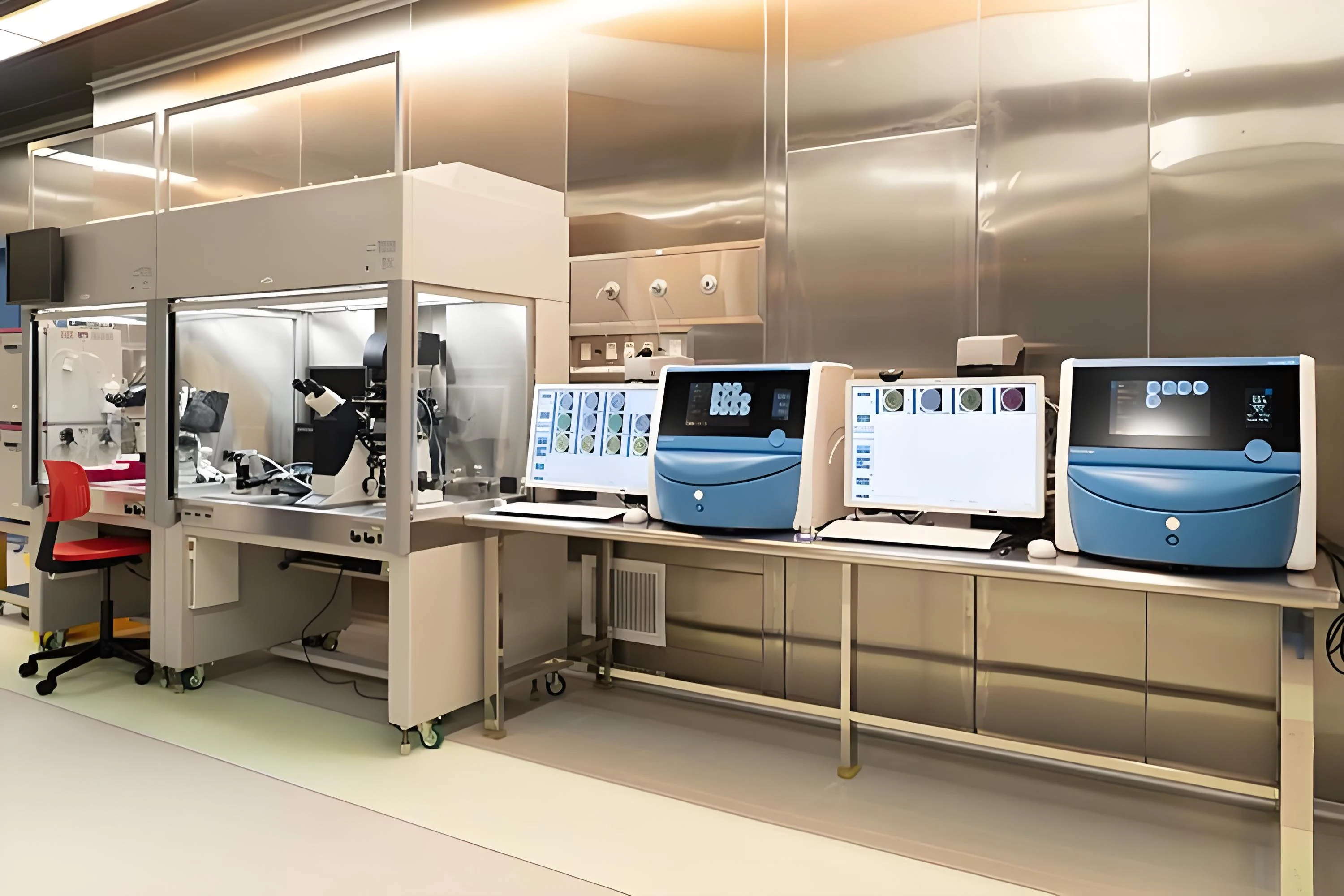
Rational AssessmentAdvanced equipment does not equate to high success rates. The core metrics that deserve greater attention include age-specific fertilization rates, blastocyst formation rates, post-thaw survival rates for frozen embryos, laboratory quality control systems, and the continuity of annual data. Currently, publicly available information does not explicitly mention third-party international certifications such as CAP or JCI.
V. IVF Success Rates: Focus on Live Birth Rates, Be Wary of Promotional Figures
Current Status
The center’s official website features numerous success stories and patient testimonials, claiming a patient satisfaction rate of 99%, butCurrently, no publicly available, independently verifiable, complete statistical table of annual live birth rates by age group has been released.Therefore, the success rates circulating online should not be directly regarded as official clinical data from the center.
Distinguishing Key Metrics
Table
Metrics | Statistical Significance | Clinical Value |
|---|---|---|
Fertilization rate | Fertilization rate of mature oocytes | Reflects the efficiency of fertilization |
Blastocyst formation rate | The proportion of fertilized eggs that develop into blastocysts | Reflects embryonic culture capability |
Clinical pregnancy rate | Proportion of confirmed intrauterine pregnancies after transplantation | Not equal to the final live birth |
Live birth rate per single transfer | Live birth rate per transfer | Evaluate the outcomes of a single transplant |
Cumulative Live Birth Rate | Live birth rate after transferring all embryos from a single oocyte retrieval cycle | Evaluate the full cycle value |
The Taiwan National Health Administration publishes the Annual Report on Assisted Reproductive Technology Results each year. The latest complete annual report is for 2023 (Republic of China Year 112), released in December 2025. This data reflects island-wide statistics and cannot directly represent the performance of individual clinics.
Five Data Questions That Must Be Asked at the First Visit
Is live birth rate data provided by age group (<35, 35–37, 38–40, 41–42, ≥43 years)?
Are self-oocytes and donor oocytes reported separately?
Should both the live birth rate per single transfer and the cumulative live birth rate be reported?
Does the statistics include patients with canceled cycles, no blastocysts, and no transferable embryos?
Can you provide comparable data for three consecutive years?
Special Reminder: Elderly patients and those with poor ovarian responseThe cumulative live birth rate is far more meaningful as a reference than the pregnancy rate per single embryo transfer..
VI. Taiwan’s Legal Framework for Assisted Reproduction: Must-Read Before Visiting
1. Current recipients
The current Artificial Reproduction ActMarried couples who meet the eligibility criteriaTo be eligible as a primary recipient, medical assessment must confirm infertility or the risk of a major genetic disorder. Additional eligibility criteria and procedural requirements apply when using donated reproductive cells.
2. Latest Progress on the 2026 Legislative Amendments
The Executive Yuan approved the draft amendment to the Artificial Reproduction Act in December 2025, proposing to expand the scope of eligible recipients. The latest legislative progress as of October 2026:
Surrogacy-related provisions have been removed from this legislative amendmentRemove, which will be addressed through separate legislation
Approved by the committee on first review (7:2), to be prioritizedUnmarried women and married same-sex female partnersApplicability of Assisted Reproduction
The bill has not yet completed its third reading, and its official effective date remains undetermined.
Key ConclusionsAs of November 2026, the legal status of single women and female same-sex couples seeking assisted reproductive technology in Taiwan has not yet been finalized; therefore, one should not hastily arrange travel plans based solely on news reports or institutional promotions.
3. Legal Provisions Related to Donations
Table
Project | Statutory requirements |
|---|---|
Age of female donors | Aged 20 to under 40 |
Age of Male Donors | Aged 20 or older but under 50 |
Nature of Donation | Voluntary donation, with compensation for necessary medical examinations, healthcare costs, transportation expenses, and lost work hours. |
Designated Donation | The recipient couple shall not designate a specific donor. |
Record Management | Medical institutions shall establish donation archives in accordance with the law and accept inspections by competent authorities. |
4. On Surrogacy
Taiwan's current Artificial Reproduction ActSurrogacy is not availableThe surrogacy issue remains highly contentious. During the 2026 legislative amendments, it was decided to separate surrogacy into standalone legislation, making its passage unlikely in the short term. Any arrangements involving surrogate mothers require careful assessment of legal risks and should not be conflated with services such as egg donation or embryo cryopreservation.
7. Fees and Subsidy Policies
Cost Composition Reference
The complete official price list for 2026 has not yet been obtained. It is recommended to request a written itemized quote from the clinic, with particular attention to confirming the following items:
Table
Expense Category | Contains content |
|---|---|
Initial Examination | Physician examination, ultrasound, hormone testing, AMH, semen analysis, etc. |
Ovulation induction | Ovulation induction medications, follicle monitoring, and blood test tracking |
Oocyte retrieval procedure | Surgical fees, anesthesia fees, and operating room consumables |
Fertilization and Culture | Conventional IVF or ICSI, embryo culture, blastocyst culture |
Genetic testing | PGT biopsy and testing fees (typically charged per embryo) |
Cryopreservation | Egg/Sperm/Embryo Freezing Fee + Annual Storage Fee |
Embryo transfer | Thawing fee, transplantation surgery, and luteal phase support medications |
Follow-up Tracking | Pregnancy Testing, Early Pregnancy Ultrasound, and Related Examinations |
Easily Overlooked Hidden Costs
Cost of another ovarian stimulation cycle when no embryos are available
Additional costs for thawing and transfer after whole embryo cryopreservation
Significant cost increase for PGT testing
Cumulative costs of multiple transplants
Transportation, accommodation, translation, and extended stay costs for overseas patients
2026 IVF Subsidy 3.0+
Taiwan will implement [the policy/regulation] starting September 1, 2026.IVF Subsidy 3.0 + New SystemEligible couples may apply for government subsidies. In addition, some local governments offer supplementary subsidies for egg freezing. Eligibility criteria, subsidy amounts, and application procedures are subject to the latest official announcements; it is recommended to confirm with clinics or relevant authorities before undergoing treatment.
Budget RecommendationRequest the clinic to provide a complete package breakdown, clearly distinguishing between base fees and optional add-ons, to avoid frequent additional charges during treatment.
8. Appointment Methods and Visit Procedures
Booking Channels
Official website:www.bestivf.com.tw(With online appointment and international medical service areas)
Appointment Phone Number: 02-2758-6966
LINE Official Customer ServiceThe clinic offers a LINE instant consultation channel.
Standard Five-Step Consultation Method
Step 1: Preliminary Consultation and Document Preparation
Organize previous test reports (AMH, sex hormones, antral follicle count, uterine ultrasound, fallopian tube examination, semen analysis, etc.)
International patients may first send their medical records via email for a preliminary assessment of treatment options and travel arrangements.
Step 2: Initial Diagnosis and Treatment Plan Development
Complete assessment of both parties
The doctor determines the treatment pathway (IUI/IVF/ICSI/PGT, etc.) based on age, medical history, and test results.
Inform the estimated cost, timeline, and risks
Step 3: Ovulation Induction and Egg Retrieval
Initiate ovulation induction on days 2–3 of the menstrual cycle
Regular follow-up visits to monitor follicular development and hormone levels
After follicle maturation, administer an ovulation trigger injection and retrieve the oocytes within 36 hours.
Step 4: Embryo Culture and Evaluation
Culture for 3–5 days after in vitro fertilization
Arrange fresh embryo transfer or full embryo cryopreservation as appropriate.
If PGT is required, perform embryo biopsy and submit for testing.
Step 5: Embryo Transfer and Pregnancy Test
Endometrial preparation followed by transplantation
Luteal phase support after transplantation
Blood test for pregnancy in approximately 12-14 days
Continue early pregnancy monitoring after confirming the pregnancy.
Key Points for Itinerary Planning for Cross-Border Patients
It is not advisable to blindly trust the oversimplified claim that "the entire IVF process can be completed in 2–3 weeks." The actual duration of stay depends on the following factors:
Ovarian Stimulation Protocol and Follicular Development Rate
Whether to perform PGT testing (requires additional waiting time)
Fresh transfer or frozen transfer
Is it necessary to visit Taiwan multiple times over different periods?
Travel Itinerary SuggestionsBefore departure, confirm with the International Medical Department: which tests can be completed locally, how many days are required for the egg retrieval stage, whether a second trip to Taiwan is necessary for the embryo transfer stage, possible delay scenarios, and alternative plans.
9. Service Experience and Reputation
Service features publicly promoted
Reproductive Medicine Specialty: Focused on Infertility Diagnosis and Treatment
The hospital has its own in-house embryo laboratory, ensuring controllable technical processes.
Individualized treatment, not one-size-fits-all
Appointment-based visits to reduce wait times
Dedicated service window for international patients
Emphasize humanistic care and psychological support
View word-of-mouth objectively
Table
Source of information | What can it reflect | It cannot directly prove anything. |
|---|---|---|
Google / Platform Reviews | Medical experience, service attitude, communication efficiency | Clinical live birth rate |
Self-reported satisfaction by institutions | Internal Service Quality Control Results | Third-party medical quality |
Success Stories | Positive experiences of individual patients | Overall success rate |
Official clinical data | Treatment Outcomes Under Specific Statistical Definitions | Individuals will inevitably succeed |
Decision RecommendationsRather than focusing on ratings and the number of positive reviews, pay closer attention to whether the doctor communicates thoroughly, whether the treatment plan is evidence-based, whether fees are transparent, and whether professional post-failure analysis is available.
10. Which groups of people are suitable for choosing this institution?
Table
Patient Type | Reference value | Key Items to Confirm |
|---|---|---|
First IVF Treatment | Can be included as an alternative | Basic Assessment and Solution Design Approach |
Pregnancy Planning at an Advanced Maternal Age | Can be included as an alternative | Age-Specific Live Birth Rates and Expected Oocyte Yield |
Diminished Ovarian Reserve | Can be included as an alternative | Ovulation Induction Strategies and Cumulative Pregnancy Chances |
Male factor infertility | Can be included as an alternative | Indications for ICSI and Laboratory Data |
Recurrent implantation failure | For further inquiries | Should the cause be systematically investigated rather than proceeding directly to immunotherapy? |
Recurrent miscarriage | For further inquiries | Diagnostic Workflow for Genetic and Uterine Cavity Factors |
Egg freezing demand | Can be included as an alternative | Expected number of oocytes retrieved and preservation costs |
Egg donation demand | Eligibility must be confirmed first | Eligibility for Recipients and Donation Waiting Period |
Single / Same-sex partner | A prudent assessment is required | Latest Legal Status and Institutional Admission Policies |
Special Reminders Regarding Immune-Related Infertility
Patients with recurrent failures are often attributed to immune issues, but abnormal immune markers do not necessarily indicate the direct cause of infertility. Before undergoing immunotherapy, it is essential to first rule out:
Embryonic chromosomal factors
Uterine Structure and Endometrial Issues
Endocrine and metabolic abnormalities
Established etiologies such as the prethrombotic state
Immune intervention protocols lacking sufficient evidence-based support are not recommended for long-term or high-cost implementation.
11. Pre-Visit Checklist
Medical and Laboratory
Confirm the identities of the attending physician, egg retrieval physician, and embryo transfer physician.
Confirm the specific campus for treatment and surgery
Inquire about the age-specific live birth rates for the past three years
Understanding Blastocyst Formation Rate and Post-Thaw Survival Rate
Confirm the PGT testing partner laboratory and reporting turnaround time
Treatment and Costs
Obtain a written treatment plan and time estimate
Request an itemized fee schedule
Confirm whether medications, anesthesia, PGT, etc., are charged separately
Clarify embryo freezing and annual storage fees
Understand the fee structure for repeat egg retrieval / embryo transfer
Law and Cross-Border
Ensure compliance with Taiwan’s current regulations on assisted reproductive technology
Confirm Required Marriage and Identity Documents
Clarify which checks can be completed at the residence
Plan the number of days for your stay in Taiwan and alternative itineraries
Understanding the possibilities and limitations of cross-border transportation of reproductive materials
XII. Comprehensive Evaluation and Selection Recommendations
Wang Jiawei Obstetrics and Gynecology Reproductive Medicine and IVF Center is aA private reproductive medicine clinic in Taiwan established in 2016Centered on Dr. Wang Jiawei, the facility features a comprehensive reproductive medicine team and an in-house W embryo laboratory, offering a full spectrum of assisted reproductive services including IVF, ICSI, PGT, egg freezing, and donor egg consultations.
Institutional Advantages
Clear positioning of the specialty: Specializing in reproductive medicine and infertility, with a continuous and comprehensive diagnostic and treatment chain
The technical configuration is fairly comprehensive.Covering mainstream assisted reproductive technologies, with an in-house embryo laboratory
Maturity of international servicesA dedicated international medical zone is established to support preliminary consultations for cross-border patients.
Convenient locationLocated in the heart of Xinyi District, Taipei, near Taipei 101, with convenient transportation and accommodation.
Objective limitations
Age-specific live birth rates and complete annual clinical outcomes have not yet been independently verified.
Official full price lists are not easily accessible, and cost transparency could be further improved.
Having been established for ten years, it has a moderate operational history compared to some long-established institutions.
Final Decision Recommendation
If you are considering traveling to Taiwan for assisted reproductive treatment, include the Wang Jiawei Center in your preliminary consultation list, while simultaneously comparing it with 2–3 other medical institutions of similar tier that hold artificial reproduction licenses.Core Comparison DimensionsIncluding: live birth data for cohorts of the same age and etiology, quality control standards in embryology laboratories, total cost per treatment cycle, and convenience and communication efficiency for cross-border medical care.
The essence of choosing a reproductive institution is not about picking the one with the best marketing, but rather finding one that can provide [services tailored] to your specific physical conditions.Evidence-based, traceable, and continuously adjustablemedical team responsible for the treatment plan.
Photos and videos
View all 4 photos
Business Highlights
Core Advantages
Facilities
More
Official Website of Wang Jiawei Reproductive Medicine and IVF Center
Wang Jiawei Obstetrics and Gynecology – Medical Team Introduction
Wang Jiawei Obstetrics & Gynecology – Services
Wang Jiawei Obstetrics and Gynecology – Introduction to IVF Treatment
Wang Jiawei Obstetrics and Gynecology – Introduction to Egg Donation
Wang Jiawei Obstetrics and Gynecology – International Medical Services
Taiwan National Laws and Regulations Database – Artificial Reproduction Act
Frequently Asked Questions
The content on this website is general educational material and compiled public information about IVF. It is provided for reference only, does not constitute a basis for diagnosis or medical decision-making, and does not constitute any medical advice or treatment recommendation. For policy and technical requirements, please refer to official publications issued by the relevant authorities and institutions. If you find any content errors, numerical inconsistencies, or outdated information, please contact us so we can verify and update it.